
Imagine living in a cell where the heat runs non-stop in July, the toilets don't flush, and you’re locked down for 23 hours a day because there aren’t enough guards. Now imagine that a judge has ordered the government to fix it, but they’re dragging their feet. This isn’t hypothetical; it’s the daily reality for thousands of inmates across the United States. When internal oversight fails, court-enforced consent decrees become the last line of defense for human rights behind bars. These legal agreements aren’t just paperwork-they are powerful tools that force corrections departments to change how they operate, often under the watchful eye of federal judges.
You might wonder why we need courts to tell prisons how to run themselves. The answer is simple: politics rarely prioritizes prisoners. Elected officials want to look tough on crime, not soft on funding. That’s where the Civil Rights of Institutionalized Persons Act (CRIPA) comes in. Passed in 1980, this law gave the U.S. Department of Justice the power to sue states and localities over unconstitutional conditions. But lawsuits take years. A consent decree skips much of that battle. It’s a settlement where the institution admits fault (or agrees to avoid trial) and promises specific fixes in exchange for the case being dropped or paused. If they break the promise, the judge can hold them in contempt. That threat changes behavior fast.
What Exactly Is a Consent Decree?
Think of a consent decree as a legally binding contract between the government and a court. It’s not a new law passed by Congress. Instead, it’s a judicial order that outlines exactly what a prison or jail must do to stop violating the Constitution. Typically, these violations fall under the Eighth Amendment, which prohibits cruel and unusual punishment, or the Fourteenth Amendment, which guarantees due process for pretrial detainees.
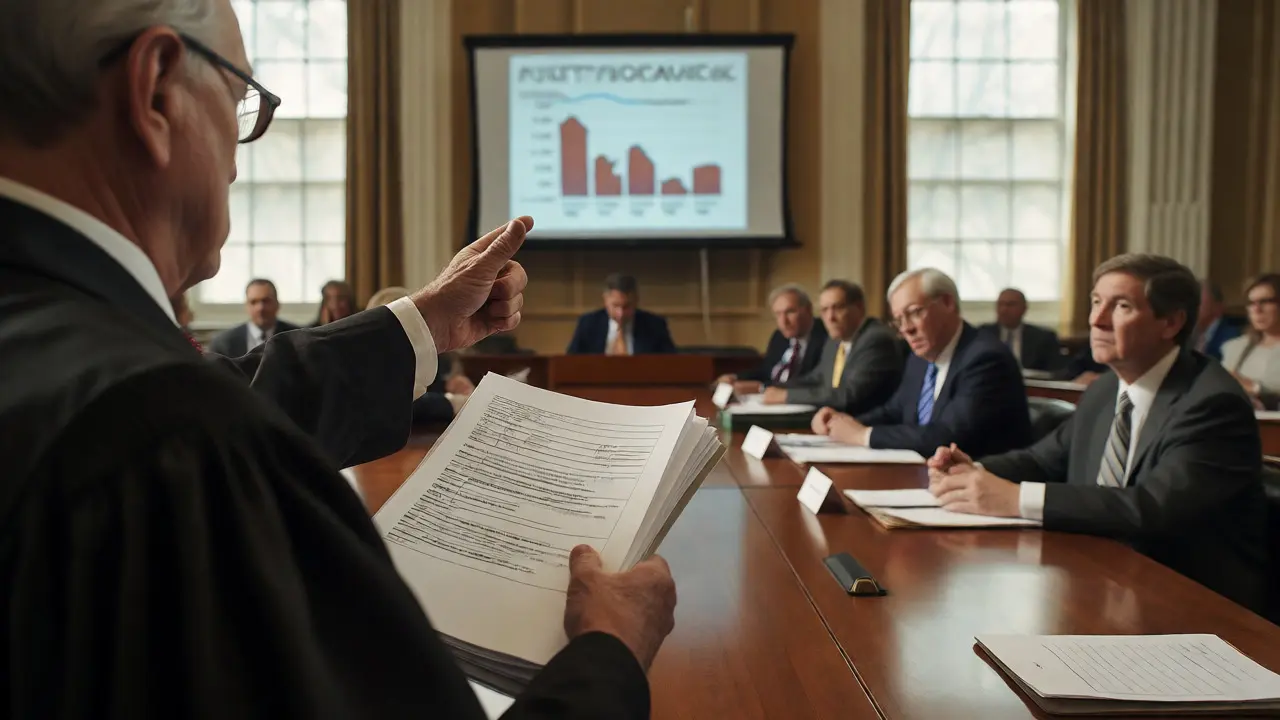
The structure is rigid. First, the DOJ or a private plaintiff files a complaint alleging systemic failures-like excessive use of force or medical neglect. Then, both sides negotiate a plan. This plan becomes the decree. Crucially, a federal judge signs off on it. This gives the decree teeth. Unlike a voluntary policy change, which a new warden can ignore, a decree requires ongoing compliance. Judges often appoint independent monitors who report back to the court every few months. If the prison doesn’t meet benchmarks, fines pile up, or control of the facility shifts entirely to the court.
Why Do Prisons End Up Under Court Orders?
Most facilities don’t wake up one day deciding to violate constitutional rights. It usually starts with small cracks. Budget cuts lead to fewer staff. Fewer staff means longer lock-downs. Longer lock-downs cause mental health crises. Crises lead to violent incidents. Violence leads to more aggressive policing inside the walls. Before long, you have a pattern of abuse that individual grievance procedures can’t fix.
Data from the Bureau of Justice Statistics shows that self-reported rates of sexual victimization and physical assault remain stubbornly high in many state systems despite decades of reform efforts. When internal audits fail to produce results, external pressure becomes necessary. For example, if a jail has a suicide rate three times the national average, that’s a red flag. Courts step in when the risk of harm is "deliberate indifference"-meaning officials knew about the danger and chose to ignore it.
It’s also worth noting that consent decrees aren’t just for overcrowded urban jails. Rural counties with outdated infrastructure face similar issues. Lead paint in cells, lack of HVAC systems, and insufficient medical care trigger lawsuits everywhere. The key factor isn’t location; it’s the severity and duration of the neglect.
Key Areas Addressed by Modern Decrees
While every decree is tailored to specific problems, most focus on four critical pillars. Understanding these helps you see what “compliance” actually looks like on the ground.
| Area of Concern | Typical Violation | Required Remedy |
|---|---|---|
| Medical Care | Delays in treatment, lack of specialists, poor record-keeping. | Hiring licensed nurses, establishing triage protocols, electronic health records. |
| Mental Health | Suicide attempts, untreated psychosis, isolation of vulnerable inmates. | Increased staffing ratios, crisis intervention teams, alternative housing units. |
| Use of Force | Excessive beatings, untrained staff, lack of body cameras. | New training curricula, mandatory reporting, independent review boards. |
| Physical Environment | Mold, extreme temperatures, broken plumbing, vermin infestations. | Capital improvements, regular inspections, pest control contracts. |
Let’s dig into the medical side, because it’s often the biggest hurdle. In many older facilities, healthcare is provided by contractors who cut corners to save money. A consent decree might mandate that all inmates receive an intake health screening within 24 hours of arrival. It could require that chronic conditions like diabetes or hypertension be managed by board-certified physicians, not just general practitioners. These specifics matter. Without them, a prison might claim they “provide healthcare” while doing the bare minimum.
Mental health is another flashpoint. With the deinstitutionalization of psychiatric hospitals in the late 20th century, prisons became the largest providers of mental health services in America. Yet, many jails treat mentally ill inmates like disciplinary problems rather than patients. Decrees now frequently require specialized units where inmates with severe disorders get therapy instead of solitary confinement. This shift saves lives and reduces recidivism, proving that humane treatment aligns with public safety goals.

The Role of Independent Monitors
Who checks if the prison is actually following the rules? Enter the independent monitor. This is usually a retired judge, a former correctional director, or a specialist consultant hired by the court. Their job is to audit the facility regularly. They interview staff and inmates, review incident reports, and inspect physical conditions.
Monitors publish public reports, which creates transparency. In places like Cook County Jail in Illinois, recent monitoring revealed persistent issues with violence and staffing shortages, leading to extended court supervision. These reports aren’t just bureaucratic noise; they influence budget allocations and political debates. When a monitor says a facility is failing, legislators pay attention because ignoring it invites further legal action.
However, monitors aren’t perfect. Sometimes they’re too lenient, accepting superficial changes without addressing root causes. Other times, they’re too rigid, demanding unrealistic timelines for construction projects. The best monitors strike a balance, working collaboratively with prison leadership while maintaining strict accountability. If you’re tracking a specific case, look for the monitor’s quarterly updates-they’re gold mines for real-time data on progress.
Political Pushback and Legal Challenges
Consent decrees often face stiff resistance. Governors and sheriffs argue that federal judges are overreaching, imposing expensive mandates that drain state budgets. They claim local control is undermined. This tension came to a head during the Trump administration, which sought to roll back many Obama-era reforms. Some states tried to end decrees early, arguing they had achieved "substantial compliance." Courts weren’t always convinced.
The Prison Litigation Reform Act (PLRA) of 1996 added hurdles for plaintiffs seeking relief. It requires exhaustion of administrative remedies before filing suit and limits the scope of injunctive relief. Critics say the PLRA makes it harder to protect inmate rights. Supporters argue it prevents frivolous lawsuits. Today, the debate continues over whether decrees should be terminated once basic standards are met or if they must persist until systemic culture changes.
Consider the case of Alabama’s prison system. Despite a 2017 ruling declaring conditions unconstitutional, implementation stalled for years due to political gridlock and budget disputes. It wasn’t until 2024 that significant hiring initiatives began to take effect, reducing officer vacancies from nearly 50% to manageable levels. This timeline shows how slow justice can move, even when the verdict is clear.
How to Track Progress in Your State
If you want to understand the impact of these decrees in your community, start with public records. Most active consent decrees have a dedicated website or a portal hosted by the district court clerk. Look for:
- Monitor Reports: Read the latest executive summary. Focus on metrics like staff retention rates, use-of-force incidents per 100 inmates, and time-to-treatment for medical issues.
- Court Dockets: Check for motions to modify or terminate the decree. Frequent hearings suggest ongoing friction.
- Budget Documents: See if the legislature has allocated funds specifically for decree-related expenses, such as overtime pay for understaffed shifts or capital improvements.
Don’t rely solely on press releases from the Department of Corrections. Compare their claims against monitor findings. Often, there’s a gap between official narratives and on-the-ground realities. Community advocates play a vital role here, translating complex legal jargon into accessible information for families and taxpayers.
Beyond Punishment: The Cost-Benefit Analysis
Opponents often cite cost as the primary drawback of consent decrees. Hiring more officers, upgrading buildings, and providing better healthcare does require upfront investment. However, studies suggest that improved conditions reduce long-term costs. Safer environments mean fewer lawsuits for wrongful death or injury. Better mental health care lowers emergency room visits. Reduced violence decreases worker’s compensation claims for staff.
Moreover, humane treatment correlates with lower recidivism. When people leave prison with stable health and no trauma-induced behavioral issues, they’re less likely to return. Investing in conditions isn’t charity; it’s smart fiscal policy. As of 2026, several states have begun using savings from reduced litigation payouts to fund educational programs inside prisons, creating a positive feedback loop of improvement.
What happens if a prison ignores a consent decree?
If a prison fails to comply, the court can impose sanctions. These may include daily fines, holding officials in contempt of court, or placing the facility under direct receivership, where the court takes over management operations. In extreme cases, judges may order the release of certain inmates to alleviate overcrowding.
Are consent decrees permanent?
No, they are designed to be temporary. Once the institution meets all benchmarks for a specified period (often two to three consecutive years), the decree can be terminated. However, some decrees extend for decades if systemic issues prove difficult to resolve.
Can citizens file complaints about prison conditions?
Yes. Individuals can file grievances internally first, then pursue federal civil rights lawsuits under 42 U.S.C. § 1983. Additionally, organizations like the ACLU or the DOJ itself can initiate investigations based on citizen reports.
Do consent decrees apply to private prisons?
Yes, but with caveats. Since private companies act under color of state law when managing public facilities, they are subject to constitutional requirements. Courts can enforce consent decrees against private operators, though termination processes may involve contractual negotiations with the state.
What is the difference between a consent decree and a policy manual?
A policy manual is an internal guideline that can be changed at will by administrators. A consent decree is a court order. Changing a decree requires judicial approval, ensuring that reforms aren’t easily reversed by new leadership or political shifts.