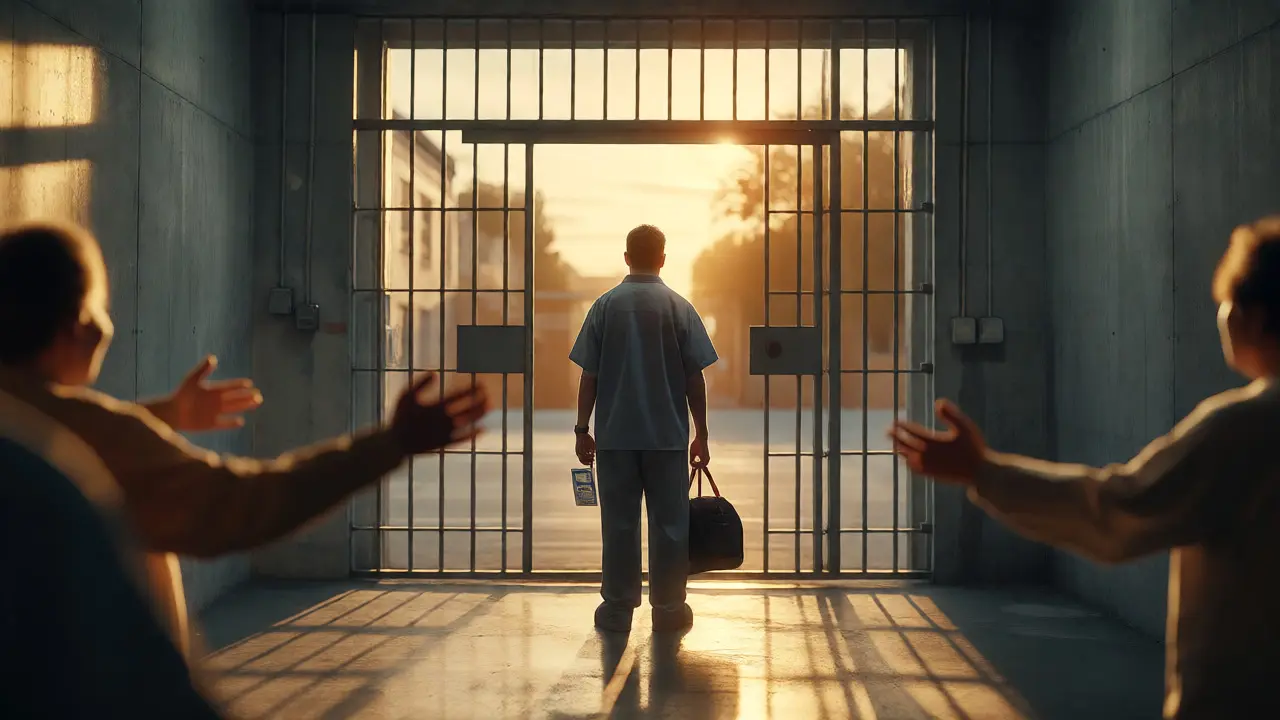
You walk out of a maximum-security facility after five years. The gate clangs shut behind you. You have $40 in your pocket, a bus pass, and a felony record that makes every landlord hesitate. Now imagine if, six months before release, you had already secured a job interview through a local trade union, completed a certified welding course taught by community college instructors inside the prison walls, and started therapy sessions with a counselor who agreed to continue seeing you on the outside.
This isn't a utopian dream. It's the reality when Community Partners actively integrate into correctional systems to deliver specialized rehabilitation services. Prisons are experts at containment. They are rarely experts at connection. That gap is where non-profits, educational institutions, healthcare providers, and private businesses step in. When these external groups collaborate effectively with state departments of corrections, they don't just add programs-they fundamentally change the trajectory of reentry.
The Resource Gap in Modern Corrections
Let's be honest about the numbers. In many US states, the per-inmate budget for educational or vocational programming has stagnated or decreased over the last decade, even as inflation eats away at purchasing power. A typical state prison might allocate funds for basic GED preparation, but what about coding bootcamps? What about trauma-informed cognitive behavioral therapy? What about specific certifications like OSHA safety training or HVAC licensing?
Correctional Facilities operate under strict security protocols and limited budgets. They often lack the agility to hire specialized vendors quickly or update curricula to match current labor market demands. This creates a vacuum. Without external help, inmates leave with outdated skills or untreated mental health issues. Community Organizations fill this void by bringing specialized expertise, flexible funding models, and existing relationships with employers.
Think of it this way: The prison provides the venue and the security; the community partner provides the content and the post-release bridge. This division of labor allows each entity to do what it does best.
Key Types of Community Partnerships
Not all partners look the same. Successful expansion of services usually involves a mix of different organizational types, each addressing a specific need in the rehabilitation pipeline.
| Partner Type | Primary Contribution | Example Service | Impact Area |
|---|---|---|---|
| Higher Education Institutions | Accredited credentials & academic rigor | Associate degrees, ESL courses | Cognitive development, employability |
| Non-Profit Reentry Agencies | Case management & continuity of care | Housing placement, family mediation | Stability, recidivism reduction |
| Healthcare Providers | Specialized clinical treatment | Addiction counseling, dental care | Physical/Mental well-being |
| Private Employers/Unions | Job training & direct hiring pipelines | Apprenticeships, soft-skills workshops | Economic independence |
Universities, for instance, bring credibility. An associate degree from a state university carries weight with employers that a generic "prison certificate" might not. Non-profits, on the other hand, excel at the messy human side of reentry-helping someone navigate Medicaid enrollment or find an apartment that accepts felons. Private employers are crucial because they close the loop; they train people for jobs they actually intend to offer.
Overcoming Security and Bureaucratic Barriers
If you've ever tried to get a volunteer badge into a county jail, you know the headache. Background checks take weeks. Insurance requirements are strict. Visitation schedules are rigid. These barriers often discourage potential partners from even trying.
However, successful systems have learned to streamline this process. Some states now use "vendor pre-qualification" lists, where organizations undergo vetting once and can then deploy multiple staff members without individual red tape for every new instructor. Others create liaison positions within the Department of Corrections whose sole job is to facilitate external partnerships. This person acts as a translator between the rigid language of security protocols and the flexible needs of educators or therapists.
Technology also plays a role here. Video conferencing platforms allow mentors or counselors to meet with inmates remotely, reducing the logistical burden of physical visits. While not a replacement for face-to-face interaction, hybrid models expand access significantly, especially for rural prisons far from urban centers where most specialists reside.

The Economic Case for External Investment
Policymakers often ask: Why should taxpayers pay for private contractors or subsidize non-profit work inside prisons? The answer lies in long-term cost savings. Recidivism-the rate at which released prisoners return to custody-is the single biggest driver of correctional spending.
According to data from the Bureau of Justice Statistics, roughly two-thirds of released prisoners are rearrested within three years. Every time someone returns, the state pays for intake, housing, and processing again. Effective community-led rehabilitation reduces this churn. A study published in the Journal of Quantitative Criminology found that participation in educational programs reduced recidivism by up to 43%. When community partners drive these programs, they often achieve higher engagement rates because they are perceived as less punitive and more supportive than institutional staff.
Consider the math. If a community partnership costs $5,000 per participant but saves the state $30,000 in avoided incarceration costs per year, the return on investment is clear. This financial argument helps secure grant funding and legislative support, creating a sustainable model rather than a charity case.
Real-World Implementation: From Theory to Practice
How does this actually look on the ground? Let's look at a hypothetical but realistic scenario based on common best practices in Oregon and similar regions.
A regional technical college partners with a medium-security prison. The college offers a certified nursing assistant (CNA) program. The prison provides classroom space and security escorts. The college handles curriculum, instruction, and grading. Upon completion, inmates sit for the state board exam. Crucially, the partnership includes a "warm handoff" agreement. Local home health agencies, which are struggling to find staff, agree to interview graduates before they are released. This ensures that the moment an inmate walks out, they have a concrete path to employment.
Another example involves mental health. Instead of relying solely on prison psychologists who may have caseloads of 100+ patients, a community mental health center sends licensed clinical social workers into the facility. These clinicians specialize in substance abuse. They start treatment inside and continue it outside through outpatient clinics. The continuity prevents the dangerous gap in care that often occurs immediately after release.

Challenges and Pitfalls to Avoid
It's not always smooth sailing. One major risk is "program fragmentation." If ten different non-profits enter a prison without coordinating, inmates receive disjointed messages. One group teaches anger management using one framework; another uses a conflicting approach. This confuses participants and dilutes effectiveness.
To avoid this, correctional administrators must act as gatekeepers and coordinators. They need a centralized intake system for partners. Another pitfall is short-termism. Many grants fund pilot programs for only one or two years. When the money runs out, the program dies, leaving participants stranded. Sustainable partnerships require multi-year contracts or diversified funding sources.
Finally, there is the issue of trust. Inmates are skeptical of outsiders. They've been burned before by promises that didn't materialize. Community partners must demonstrate consistency. If a mentor says they will show up every Tuesday, they must show up every Tuesday. Reliability builds rapport faster than any fancy curriculum.
Measuring Success Beyond Recidivism
We often judge these programs by whether someone goes back to prison. But that's a lagging indicator. It takes years to see true recidivism rates. We need leading indicators to gauge success in real-time.
- Completion Rates: How many people finish the program versus drop out?
- Post-Release Employment: Are graduates getting hired within 90 days?
- Continuity of Care: Did the inmate connect with community services within one week of release?
- Participant Satisfaction: Do inmates feel respected and supported by the external partners?
Tracking these metrics allows for quick adjustments. If employment rates are low, maybe the training doesn't match local industry needs. If dropout rates are high, maybe the scheduling conflicts with shift work or meal times. Data-driven iteration is key to expanding services effectively.
The Future of Collaborative Rehabilitation
The trend is moving toward integrated ecosystems. We are seeing more public-private partnerships where corporations sponsor specific wings or programs in exchange for talent pipelines. Technology companies are piloting remote coding labs inside prisons. Healthcare systems are integrating prison health records with community electronic health records to ensure seamless medical history transfer.
For community partners, the opportunity is vast. By stepping into correctional facilities, you aren't just doing charity. You are solving labor shortages, improving public safety, and restoring human dignity. The infrastructure exists. The demand is there. What's missing is often just the initial handshake between the institution and the community.
Do community partners need special insurance to work in prisons?
Yes, typically. Most correctional facilities require external partners to carry general liability insurance and professional malpractice insurance (if providing clinical services). Policies must name the Department of Corrections as an additional insured. Requirements vary by state, so checking with the specific facility's vendor office is essential.
How do background checks affect volunteer access?
Background checks are rigorous and can take 4-8 weeks. They include fingerprinting and criminal history reviews. Volunteers with certain past convictions may be disqualified depending on the nature of the offense and how recent it was. Planning ahead is critical; you cannot simply walk in off the street.
Can technology replace in-person community partnerships?
Technology supplements but rarely replaces in-person interaction. Secure video kiosks allow for remote tutoring and counseling, which expands reach. However, building trust and teaching hands-on skills often requires physical presence. Hybrid models that combine digital tools with regular in-person visits tend to yield the best outcomes.
What is the biggest barrier to starting a partnership?
Bureaucratic inertia and misaligned incentives. Prisons prioritize security above all else, while community partners prioritize service delivery. Finding a liaison officer within the DOC who understands both worlds is the most effective way to overcome this cultural and procedural clash.
How is funding usually structured for these programs?
Funding is often a mix of federal grants (like Second Chance Act funds), state corrections budgets, private philanthropy, and corporate sponsorships. Some programs use a fee-for-service model where the state pays per graduate, while others rely on donated services from non-profits.