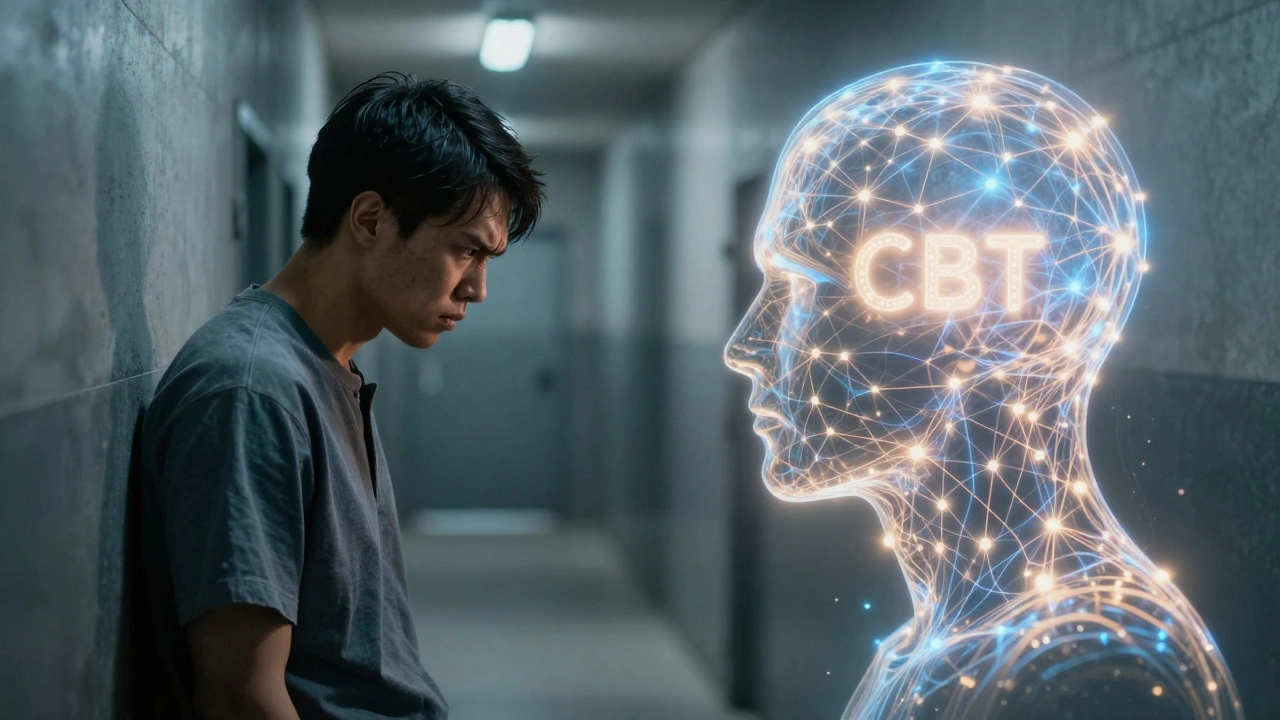
Imagine a high-stress environment where a single misunderstood look or a perceived slight can trigger a violent outburst. In jails and prisons, this isn't just a scenario-it's a daily reality. For many incarcerated individuals, the inability to pause between a feeling and an action leads to a cycle of punishment and instability. However, changing the way a person thinks about their anger can actually change how they behave. Cognitive Behavioral Therapy is a psychological treatment that helps people identify negative thought patterns and replace them with healthier, more adaptive behaviors. Also known as CBT, it has become a cornerstone of modern correctional rehabilitation because it targets the root cause of aggression: the thought process.
How CBT Breaks the Cycle of Aggression
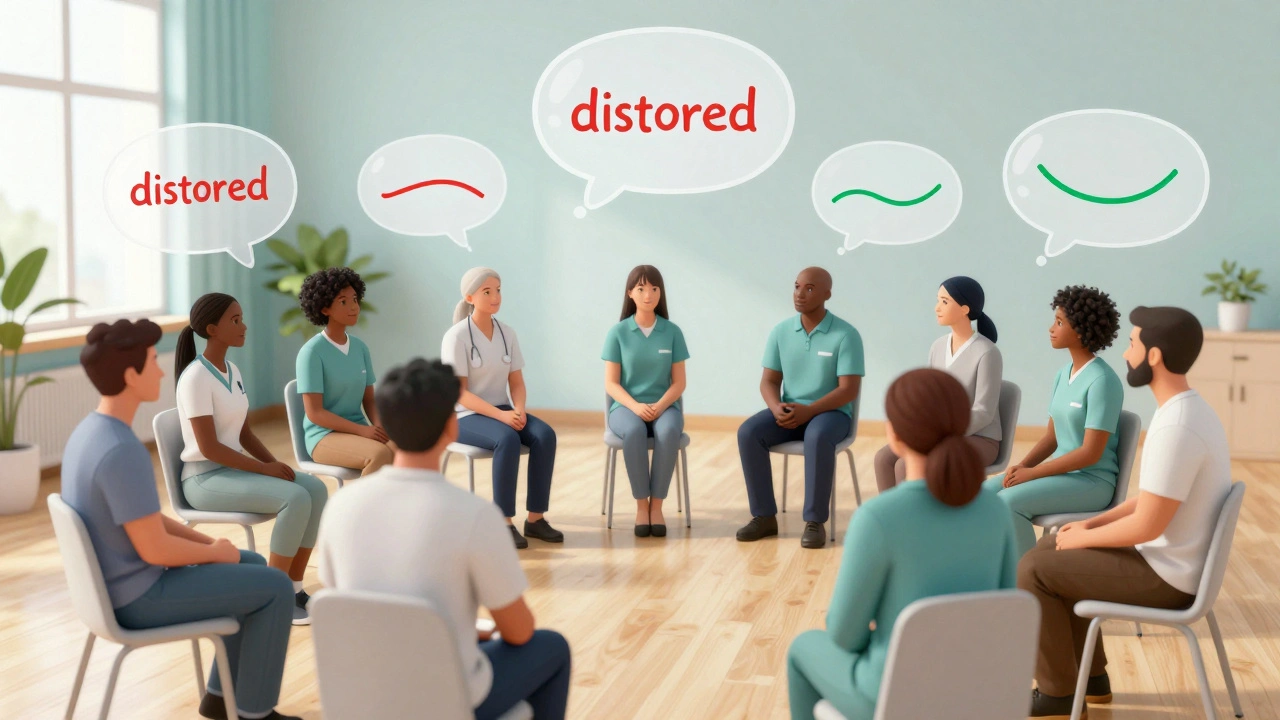
Most people think anger is a reflex, but it's actually a process. CBT teaches incarcerated individuals that while they can't always control the situation they are in, they can control their interpretation of it. By focusing on Cognitive Behavioral Therapy, programs help inmates recognize "cognitive distortions"-those skewed ways of thinking that make a situation seem more threatening than it is.
When an inmate learns to identify a "trigger," they can use cognitive restructuring to challenge their initial reaction. For example, instead of thinking, "That guard is trying to disrespect me on purpose," a person trained in CBT might think, "The guard is stressed and talking to everyone this way." This small shift in perspective prevents an impulsive reaction and reduces the likelihood of a violent incident. The goal isn't to stop feeling anger, but to manage it so it doesn't lead to a cell lockdown or a lost parole opportunity.
Specialized Approaches: The Role of DBT-CM
Standard CBT works for many, but some populations-specifically those with high impulsivity or personality disorders-need something more robust. This is where Dialectical Behavioral Therapy-Corrections Modified comes in. DBT-CM is a specialized adaptation of CBT designed for difficult-to-manage and aggressive correctional populations, focusing on emotional regulation and distress tolerance. Often referred to as DBT-CM, it emphasizes that two opposing ideas can be true at once: a person can be doing their best and still need to do better.
Research shows that DBT-CM is particularly effective. In a 16-week skills treatment group, participants showed a significant drop in aggressive behaviors. Unlike general courses, DBT-CM often includes coaching and case management, providing a support system that helps the individual apply these skills in the chaotic environment of a prison. For women in high-security settings, these programs have led to better emotional control and a marked decrease in impulsivity, results that often last well beyond the end of the program.
Measuring Success: Recidivism and Re-arrest Rates
The real test of any prison program is whether it keeps people from coming back. The data suggests that CBT is one of the most effective tools we have for reducing recidivism. Meta-analyses indicate that CBT can reduce the rate of re-offending by about 25%. In some cases, recidivism rates dropped from 40% in control groups to 30% among those who completed the therapy.
Specific anger management interventions have shown an even stronger impact on violent crime. For male offenders, CBT-based anger management has been linked to a 23% risk reduction in overall recidivism and a specific reduction in violent re-offending. Even more surprising is the effect on high-risk offenders. While you might think the "hardest" cases are the least likely to change, the evidence shows that high-risk individuals often benefit more from CBT than low-risk offenders, provided they complete the sessions and the quality of the program is high.
| Feature | CBT-Based Programming | Punitive Behavior Modification |
|---|---|---|
| Primary Goal | Cognitive restructuring & skill building | Compliance through rewards/penalties |
| Approach to Anger | Identifying triggers and reframing thoughts | Suppression via punishment |
| Impact on Recidivism | Significant reduction (approx. 25%) | Limited or negative long-term impact |
| Focus | Internal psychological change | External behavioral control |
What Makes a Prison Program Actually Work?
Not all CBT programs are created equal. Some are just "check-the-box" courses that don't move the needle. The most successful programs share a few specific traits. First, they target higher-risk offenders who have the most to gain. Second, they are time-intensive; a few hours of class once a month isn't enough. The "gold standard" typically involves two sessions per week for about 16 weeks.
Implementation quality is the biggest variable. Programs with motivated staff, low dropout rates, and a mix of group and individual attention perform best. On the flip side, programs that focus too heavily on victim impact or rely on a "carrot and stick" reward system often see worse outcomes. The most effective approach combines cognitive restructuring-changing the thought-with anger control and interpersonal problem-solving skills.
Real-World Implementation: Federal and State Systems
Across the U.S., these theories are being put into practice. For instance, all federal prisons now offer CBT-based options, including tracks for emotional self-regulation and criminal thinking. Under the First Step Act, federal inmates can even earn time credits for completing these recidivism-reduction programs, giving them a tangible incentive to engage with the material.
California has taken a similar route with tiered programs. They offer a 14-week CBT course for those closer to release and a more intensive seven-month program for those with a year left. These programs require a serious time commitment-two hours daily, three days a week-covering everything from anger management to family planning. By treating the behavioral patterns rather than just the crime, these systems aim to return citizens to the community with a socially appropriate skill set.

Practical Steps for Applying CBT Skills in Custody
For an individual in a jail or prison setting, the application of CBT often looks like a series of mental exercises. It starts with "Thinking Reports"-writing down what happened during a behavioral incident, what was thought at the time, and how that thought led to the action. This creates a distance between the person and their impulse.
The process generally follows these steps:
- Observation: Noticing the physical signs of anger (e.g., clenched fists, racing heart).
- Identification: Naming the thought causing the anger (e.g., "He thinks I'm weak").
- Challenge: Asking if that thought is a fact or a distortion (e.g., "Do I have proof he thinks I'm weak, or am I just feeling insecure?").
- Replacement: Choosing a more helpful thought (e.g., "His opinion doesn't control my future").
- Action: Choosing a response that doesn't result in a disciplinary report.
The Future of Correctional Mental Health
The shift toward CBT and mindfulness-based therapies marks a move away from the "warehouse" model of incarceration toward a rehabilitative one. While these therapies have shown modest success in treating depression and anxiety among prisoners, their primary value lies in safety. When inmates have the tools to manage their impulses, the environment becomes safer for both the incarcerated population and the staff.
As we refine these programs, the focus is shifting toward "collaborative implementation." This means correctional officers and mental health professionals working together rather than in silos. When the staff reinforces the skills the inmates learn in therapy, the rate of success skyrockets. The evidence is clear: when we treat the mind, we change the outcome.
Does CBT actually reduce the chance of someone returning to prison?
Yes. Comprehensive reviews show that CBT can reduce recidivism by approximately 25%. In some specific studies, the rate of re-offending dropped from 40% in control groups to 30% for those receiving the treatment.
What is the difference between CBT and DBT-CM?
While DBT-CM is based on CBT, it is specifically modified for the correctional environment. It places a stronger emphasis on dialectics (balancing acceptance and change) and is designed for individuals with higher levels of impulsivity, aggression, or personality disorders that might not respond to standard CBT.
Are these programs mandatory for inmates?
Technically, many behavioral theory classes are optional. However, in practice, inmates are often encouraged or subtly coerced into attending because completing these programs can be a condition for parole eligibility or early release.
Who benefits most from CBT in prison?
Surprisingly, high-risk offenders-those most likely to re-offend-often show the most significant improvement. When high-quality CBT is implemented with low dropout rates, these individuals frequently show a greater reduction in recidivism than low-risk offenders.
How long does it take for CBT to work in a jail setting?
While some immediate changes in awareness occur, most effective programs run for at least 16 weeks. Long-term success is usually measured at 6 to 36 months post-treatment to ensure that the skills are being used in the real world.