| Trigger Category | Specific Red Flag | Likely Legal/Operational Impact |
|---|---|---|
| Infrastructure | Widespread leaks, crumbling walls, lack of HVAC | Emergency funding mandates and facility repairs |
| Sanitation | Lack of menstrual products, toilet paper, or clean water | Constitutional scrutiny under 8th Amendment |
| Safety | High rates of violence or organized gang control | Specialized intelligence and security overhauls |
| Management | Staffing shortages and failure to implement rehab tools | Corrective action mandates and policy rewrites |
The Infrastructure Breaking Point
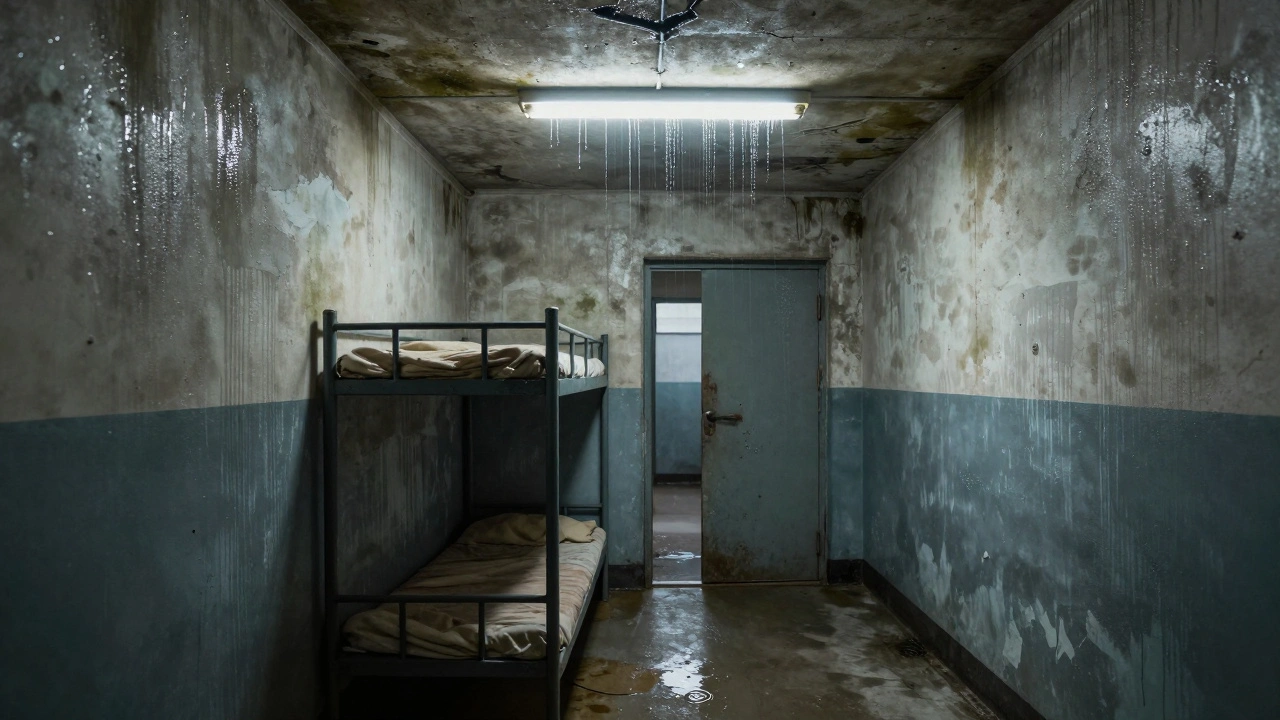
Physical decay is often the most visible trigger for action. When the Office of Inspector General (OIG) conducts unannounced inspections, they aren't just looking for cleanliness; they are looking for structural failures that make confinement inhumane. Take the case of FCI Tallahassee. Inspectors found that inmates in the female prison were living in units where roofs leaked routinely. This isn't just a maintenance issue; it's a quality-of-life failure. When the OIG documents these deficiencies, it creates a paper trail that the DOJ cannot ignore. In that specific instance, the investigation helped trigger the allocation of roughly $3.6 million to replace windows in two housing units. When you see similar patterns at other sites-like FCI Sheridan or FCI Lewisburg-it signals a systemic failure in the Federal Bureau of Prisons (BOP) management rather than a local problem.Basic Needs and Constitutional Red Lines
There is a legal line between "unpleasant" and "unconstitutional." Federal investigations are often triggered when a facility fails to provide basic hygiene and sanitation, which ties back to landmark legal standards. If a prison consistently runs out of soap, toilet paper, or essential sanitary pads and tampons, it moves into the realm of constitutional violations. Legal precedents like Estelle v. Gamble (which dealt with medical care) and Hutto v. Finney (which addressed nutrition and overcrowding) provide the framework for these investigations. When the Vera Institute of Justice documents that people are being deprived of basic necessities, it provides the evidence needed to argue that a "pattern or practice" of neglect exists, which almost always triggers federal scrutiny.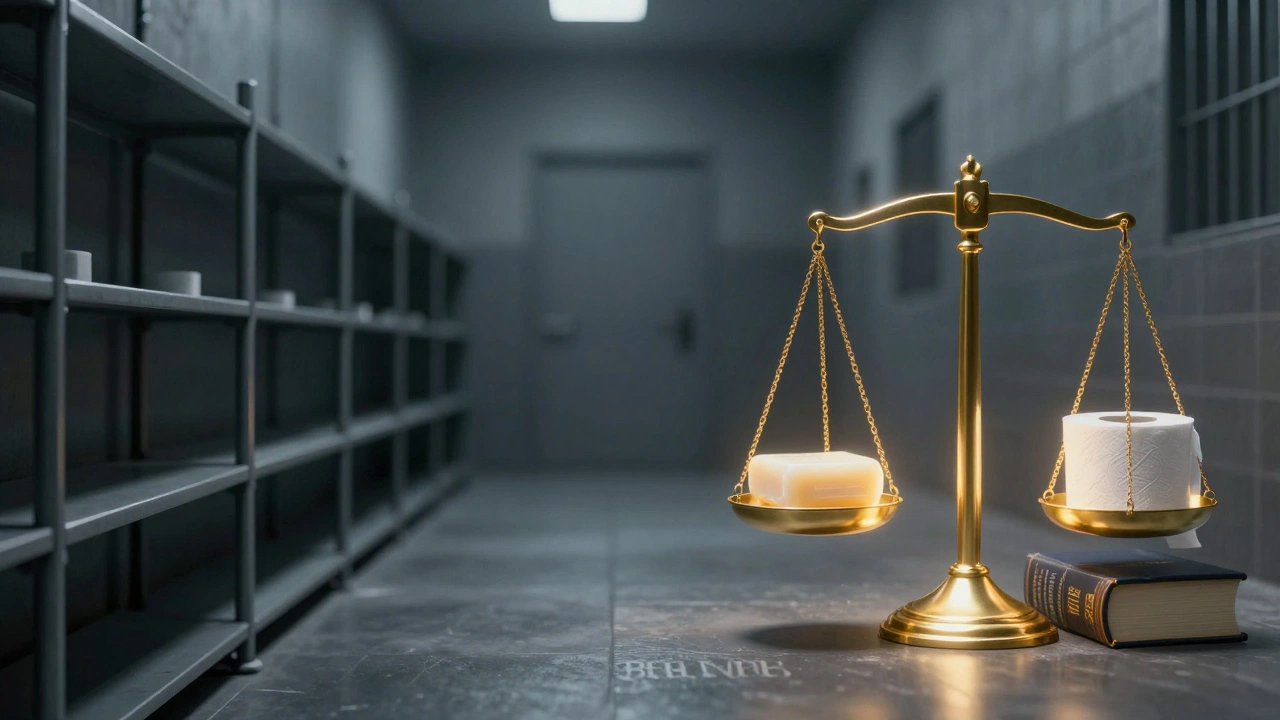
The Influence of Prison Climate
It's not just about the walls and the soap; it's about the atmosphere. The "prison climate" refers to the daily psychological and social environment. Researchers have started using tools like the Prison Climate Questionnaire (PCQ) to measure things like autonomy, safety, and the quality of human relationships within the walls. When data shows a systematic lack of meaningful activity or a total absence of safety across multiple units, it serves as a trigger. For example, if inmates report high levels of stress and zero contact with the outside world across an entire state system, the DOJ can use that data to justify an investigation into whether the facility's operational philosophy is causing psychological harm or increasing recidivism.Violence, Misconduct, and Criminal Enterprises
High rates of disciplinary infractions are a double-edged sword. While some might see them as evidence of "bad inmates," investigators look at them as symptoms of a toxic environment. When violence spikes, investigators ask: Is this happening because of the people, or because the conditions-like extreme overcrowding or lack of staffing-are creating a pressure cooker? This becomes even more critical when Criminal Enterprises take hold. In a limited space, rival gangs often battle for resources. When the state loses control of the facility to these organizations, it triggers specialized investigations. These aren't just about making arrests; they are about determining if the institution's failure to provide safety has enabled these criminal networks to operate, thereby endangering both employees and incarcerated people.
The Gap Between Investigation and Reality
Here is the hard truth: triggering an investigation doesn't always lead to immediate victory. Even with the Prison Rape Elimination Act (PREA), federal oversight has struggled to change deep-seated prison cultures. You can have a report that says a system is failing-like the 2026 report from Connecticut's Office of the Correction Ombudsman which stated the system was in a state of "sustained institutional failure"-but changing how a prison actually runs is a slow, grinding process. One way forward is the adoption of Core Correctional Practices. These are evidence-based techniques designed to reduce recidivism through better relationship building between staff and inmates. When a facility completely ignores these practices and relies solely on punishment, that gap in rehabilitation becomes another documented trigger for federal intervention.What is the difference between a standard prison lawsuit and a pattern-or-practice investigation?
A standard lawsuit usually focuses on an individual's specific injury or rights violation (e.g., "I didn't get my medication"). A pattern-or-practice investigation looks at the system as a whole. It examines policies, training manuals, and data across the entire agency to see if the violation is a routine occurrence rather than an isolated mistake.
Who actually conducts these investigations?
They are primarily led by the Department of Justice (DOJ). The Office of Inspector General (OIG) often provides the initial "trigger" through unannounced inspections and reports that highlight systemic failures.
Can a lack of toilet paper actually trigger a federal investigation?
Yes, if the deprivation is systemic. While one missing roll of toilet paper isn't a federal case, a documented pattern where thousands of people lack basic sanitary supplies can be viewed as a violation of the 8th Amendment (cruel and unusual punishment), which is a primary trigger for DOJ action.
Do these investigations always result in better conditions?
Not always. While they can trigger funding (like the $3.6 million for windows at FCI Tallahassee), changing a prison's internal culture is incredibly difficult. Even with laws like PREA, implementation often lags behind the initial investigative findings.
What are Core Correctional Practices?
These are a set of evidence-based skills and techniques used by correctional staff to change inmate behavior and reduce the risk of re-offending. They focus on relationship building rather than just discipline.