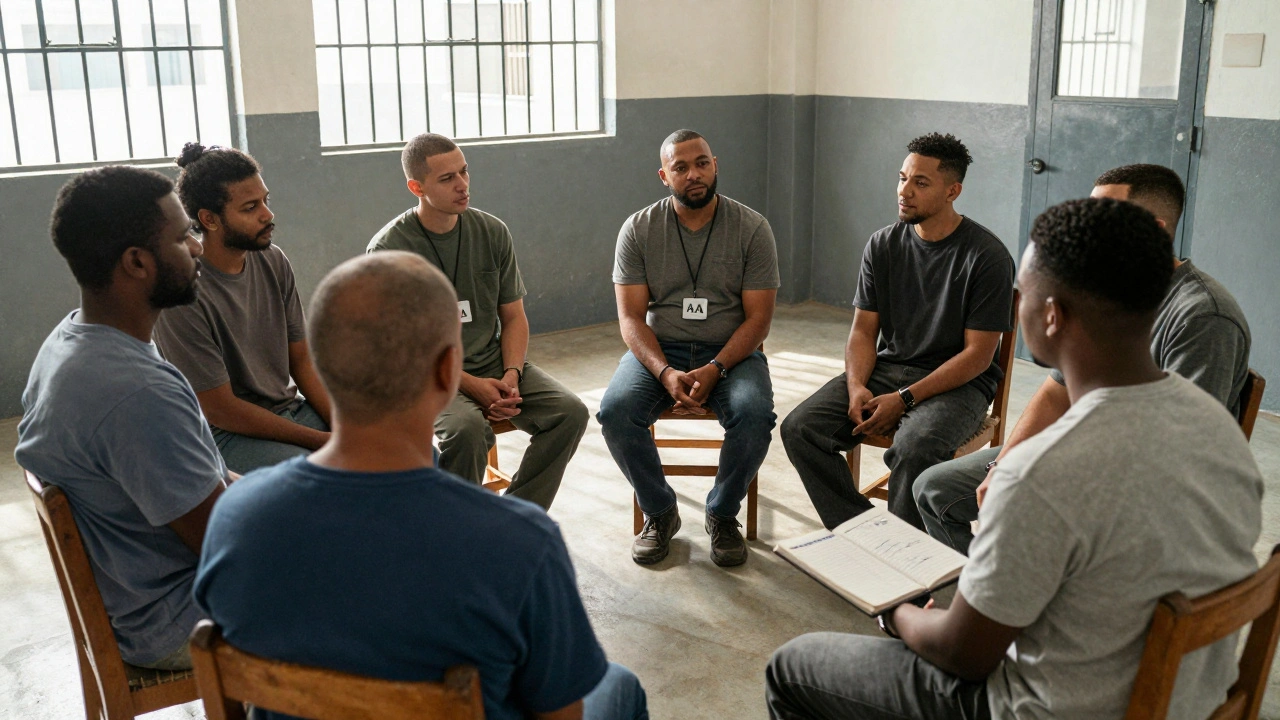
When someone enters prison with a substance use disorder, they’re often stuck in a cycle: use, arrest, jail, release, use again. But what if there’s a simple, low-cost way to break that cycle? Twelve-Step Facilitation (TSF) isn’t just another program-it’s one of the most proven tools we have for helping incarcerated people stay sober after they get out.
TSF isn’t about forcing people to believe in a higher power or making them sit through endless sermons. It’s a clinical approach that gets people to show up at meetings-AA, NA, or similar peer-led groups-and stick with them. The goal? Connect them to a network of people who’ve been where they are and know how to stay clean. And it works.
How TSF Actually Works in Prison
In correctional settings, TSF usually involves 4 to 12 sessions led by trained staff. These aren’t lectures. They’re conversations. Facilitators ask: Have you been to a meeting? What did you think? Who can you call if you feel like using? They help inmates track their attendance, find sponsors, and even arrange for volunteers from outside groups to come in and meet one-on-one.
One study of 72 incarcerated women showed that even a single meeting with a volunteer from a local AA group made a difference. The women said the sessions felt real, not forced. They liked hearing from people who had been through it-not just counselors telling them what to do. The meetings mirrored what happens outside prison: someone calls, someone listens, someone shows up.
This matters because incarceration gives a rare window: enforced abstinence. While locked up, people aren’t using. TSF uses that time to build habits that last. It’s not about punishment. It’s about preparation.
Why It Outperforms Other Treatments
A Cochrane review of 27 studies involving over 10,000 people found that TSF and AA-based programs produced better long-term abstinence than cognitive behavioral therapy or motivational enhancement therapy. Not just slightly better-significantly better. At 12 months, the number needed to treat (NNT) was just 13.6. That means for every 14 people you help with TSF, one extra person stays sober compared to other treatments.
And the results keep growing. At 24 and 36 months, TSF users were still more likely to be clean. Why? Because they kept showing up. People who attended meetings weekly had 60-70% abstinence rates over six months before their 24-month check-in. Those who went rarely? Only 20-30% stayed clean.
TSF doesn’t just reduce drug use. It reduces hospital visits, ER trips, and re-arrests. One study found that people who engaged with 12-step groups used fewer public health services. That’s not just better for them-it saves taxpayers money.
The Gap Between Encouragement and Action
Here’s the problem: even when programs push TSF, people don’t always show up.
In residential treatment, 75% of alcohol users had been to AA before-but only 16% had actually worked through any of the 12 steps. In outpatient programs for cocaine use, only 30% attended 12-step meetings. In inpatient, it was 40%. That’s not a failure of the program-it’s a failure of implementation.
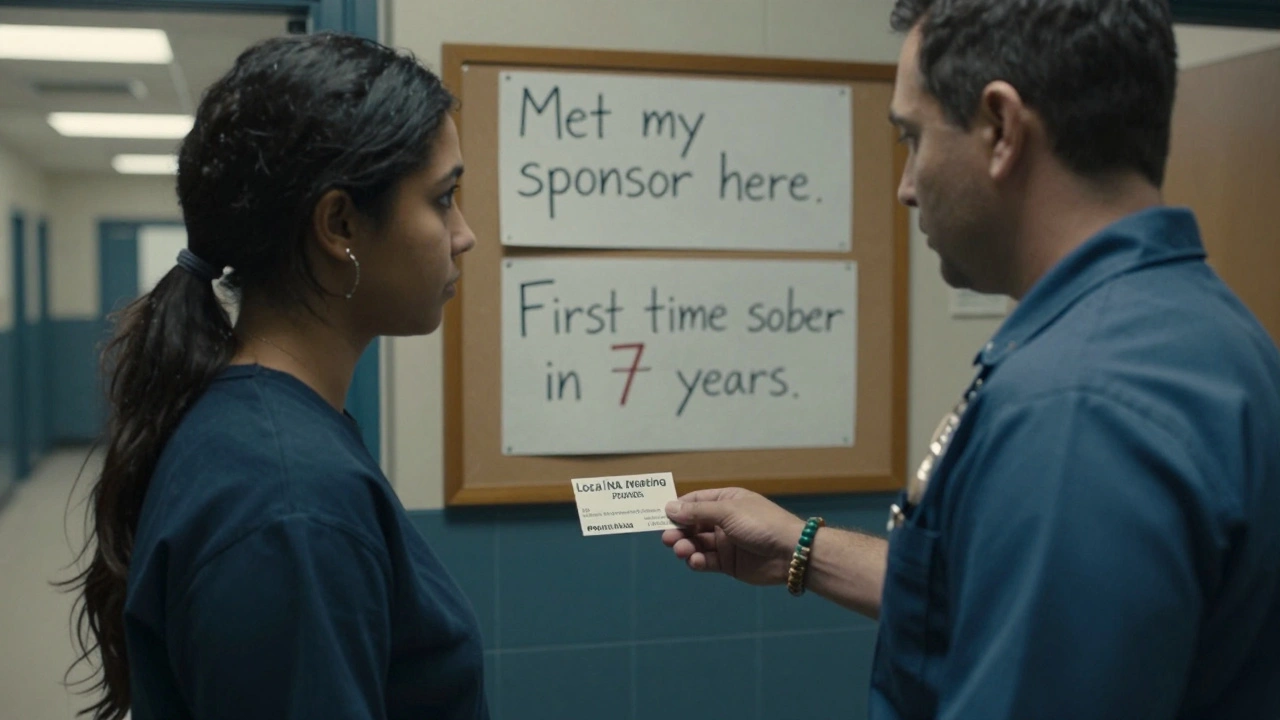
Many correctional programs say they support TSF. They hand out flyers. They mention AA in orientation. But they don’t follow up. They don’t track attendance. They don’t connect people to sponsors. They don’t have volunteers coming in. Without active facilitation, TSF just becomes another box to check.
The key difference? Programs with staff who are in recovery themselves are far more likely to refer people to meetings. Why? Because they’ve been there. They know what works. They can say, I was in your seat. This helped me. That’s powerful.
What Works Best in Prison
Not all TSF programs are equal. Research points to three proven methods for boosting participation:
- Twelve-Step Facilitation (TSF) from Project MATCH: structured, manualized sessions focused on engagement.
- Group Drug Counseling + Individual Drug Counseling (GDC + IDC): combines group support with one-on-one coaching.
- Systematic Encouragement and Community Access (SECA): links inmates directly to community groups before release.
Programs that use these methods see higher participation rates-and better outcomes. A prison that just says, “We support AA,” and does nothing else? That’s not TSF. That’s noise.
The best programs don’t wait for inmates to ask. They build bridges. They coordinate with local AA/NA chapters. They train correctional staff to talk about recovery like it’s normal-not like a religious ritual. They give people a phone number to call the day they walk out.
It’s Not Just for Adults
Most studies focus on adults, but TSF shows promise for younger people too. One trial with teens and young adults combined TSF with motivational therapy and cognitive behavioral techniques. The group using TSF showed more engagement with 12-step meetings-and fewer negative consequences from substance use over time.
They didn’t use less drugs than the control group. But they were more likely to have a support system. More likely to have someone to call. More likely to stay out of trouble. That’s not just recovery. That’s rebuilding a life.

Why This Matters for Correctional Systems
Prisons are broke. Staff are stretched thin. New programs cost money. TSF doesn’t. AA and NA are free. Volunteers show up. The infrastructure already exists. All correctional systems need to do is connect.
Imagine this: A man gets released from prison. He’s got no job, no home, no family. He walks into a community center. There’s a sign: “NA Meeting Tonight.” He goes. Someone there says, “I was in your cell last year.” He gets a sponsor. He starts working the steps. He stays clean.
That’s not magic. That’s TSF.
Correctional systems that treat recovery like a side note are wasting a chance to save lives. TSF isn’t a luxury. It’s the most cost-effective, evidence-backed recovery tool we have for people behind bars. And it’s available right now-no new funding needed, no fancy tech required.
What Needs to Change
Here’s what actually works:
- Staff trained to facilitate, not just refer.
- Regular visits from AA/NA volunteers-especially those in long-term recovery.
- Attendance tracking: who went, how often, who had a sponsor.
- Pre-release planning: meeting schedules, contact info, transportation help.
- Partnerships with local groups: not just “we support you,” but “we’ll be there when you get out.”
If you’re running a correctional substance abuse program and you’re not doing at least three of these, you’re not really using TSF. You’re just talking about it.
The data is clear. The method is simple. The cost is near zero. And the stakes? Lives. Families. Communities. This isn’t about ideology. It’s about results.