
Quick Summary / Key Takeaways
- Consent decrees are court-enforced agreements that fix systemic failures in prison medical and mental health care.
- These plans often result from lawsuits claiming violations of the Eighth Amendment (cruel and unusual punishment) and the Americans with Disabilities Act (ADA).
- Common requirements include specific timelines for psychiatric evaluations, restrictions on isolation, and the creation of therapeutic housing units.
- States like Alabama, Louisiana, and Oklahoma have faced significant penalties or mandated bed expansions to comply with these decrees.
- Enforcement relies on court monitoring, with financial penalties sometimes imposed for noncompliance.
Imagine being locked in a cell with a severe mental illness. You're screaming for help, but the nearest doctor is three months away. That was the reality for many inmates across the U.S. until the courts stepped in. Medical and mental health remedial plans in prison consent decrees are the legal tools that force correctional systems to stop neglecting vulnerable people. These aren't just suggestions from a health inspector; they are binding court orders that dictate exactly how a state must treat its incarcerated population.
If you're reading this, you might be a legal professional, an advocate, or just someone trying to understand how the justice system handles its sickest members. The situation is messy, but these decrees are designed to bring order to the chaos. They turn vague promises of "adequate care" into specific, measurable actions. We're going to break down how these agreements work, why they exist, and what they actually look like on the ground in facilities across the country.
What Exactly Is a Consent Decree?
Think of a consent decree is a legal agreement between two parties that is approved by a court as a type of settlement. Instead of fighting a long, expensive trial where a judge decides who is right, the government agency (like a Department of Corrections) and the plaintiffs (often civil rights groups or inmates) agree to a set of rules. The court signs off on it, making it enforceable law.
In the context of prisons, these decrees usually happen after investigations reveal that the state is failing to provide constitutionally adequate care. It's an admission that the system is broken. The decree outlines the specific steps the state must take to fix it. It's not enough to say, "We will try harder." The decree demands, "You must hire X number of psychiatrists by this date" or "You must build Y number of therapeutic beds by next year."
These documents are comprehensive. The Alameda County Jail Consent Decree, for example, is a 104-page document. That's not a typo. It covers everything from how staff screen new detainees to the physical design of the cells. It represents a massive overhaul of how the facility operates. When a state signs one of these, they are essentially handing over control of their mental health protocols to the court for a period of years.
Why Do These Decrees Exist?
The driving force behind these agreements is the U.S. Constitution. Specifically, the Eighth Amendment prohibits cruel and unusual punishment. The Supreme Court has ruled that deliberate indifference to serious medical needs of prisoners violates this amendment. If a prison knows an inmate is having a psychotic break and does nothing, that's a constitutional violation.
Then there's the Fourteenth Amendment, which guarantees due process. Inmates with mental disabilities have a right to accommodations under the Americans with Disabilities Act (ADA). If a jail puts someone with severe schizophrenia in a solitary confinement cell without any treatment, they are discriminating against that person's disability.
These decrees emerge when lawsuits prove that the system isn't just failing accidentally; it's failing systematically. Maybe the state doesn't have enough psychiatrists. Maybe the waiting list for a competency evaluation is nine months long. Maybe the cells are designed in a way that makes suicide easy. When the evidence stacks up, the Department of Justice or private attorneys file class-action lawsuits. The consent decree is the solution that avoids a trial but forces change anyway.
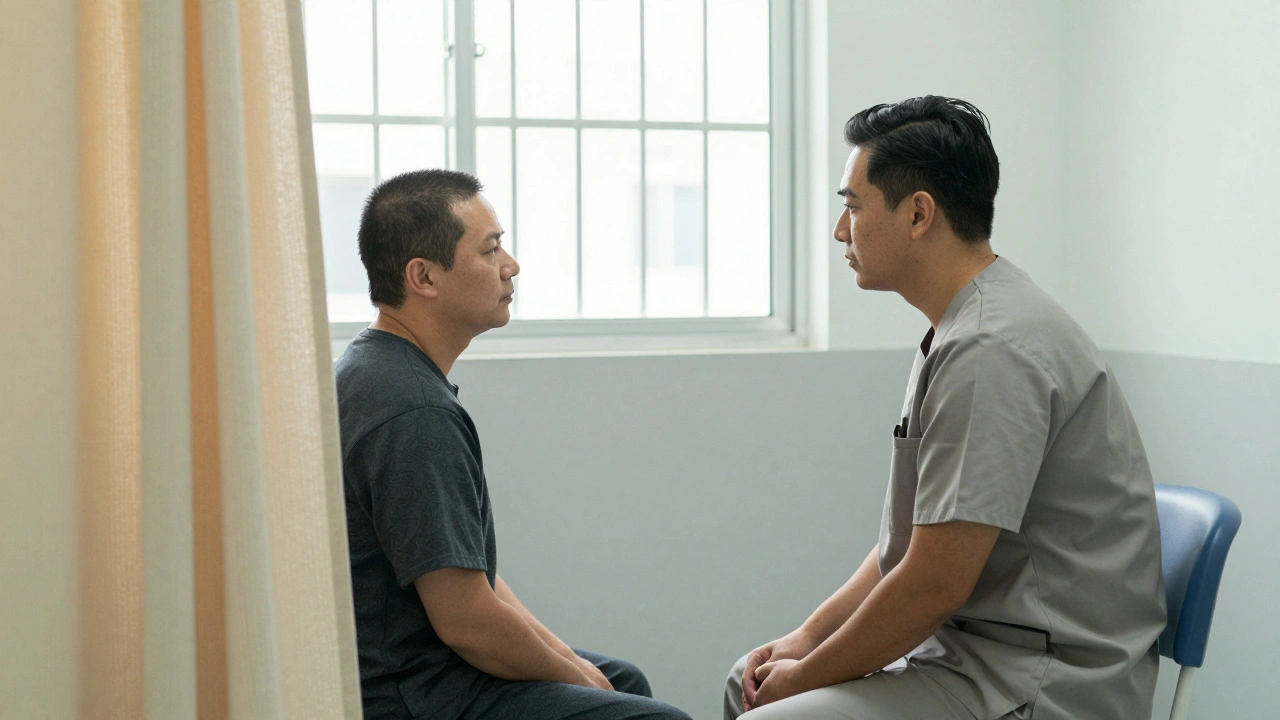
Real-World Examples of Remedial Plans
To understand the scope of these plans, we need to look at where they've been implemented. Different states have faced different problems, leading to different requirements.
California: The Alameda County Jail
On February 7, 2022, the U.S. District Court for the Northern District of California approved a major decree for Alameda County. The lawsuit accused jail officials of using isolation cruelly against people with mental health diagnoses. The remedy? A complete redesign of intake and housing.
The decree mandates a new classification system. Instead of just putting everyone in a general population or solitary, staff must conduct face-to-face interviews to screen for suicidality. Detainees are classified as "Emergent," "Urgent," or "Routine." If someone meets the criteria under California's Welfare and Institutions Code Section 5150, they are deferred to psychiatric care and not admitted to the jail at all.
Physically, the jail had to change too. They needed to build new Therapeutic Housing Units. Clinical encounters must happen in confidential settings, not right there in the cell. They also had to install working call buttons in suicide-resistant cells. The goal is to move away from punishment and toward treatment.
Alabama: Eliminating the Wait
In Alabama, the problem was time. People awaiting transfer to state mental health facilities faced waits of up to nine months. During that time, they sat in county jails that couldn't treat them. Some became non-verbal. Some self-harmed.
The consent decree fixed the timeline. The Alabama Department of Mental Health (ADMH) is now required to provide mental evaluations and competency restoration treatment within 30 days of receiving court orders. To make that possible, they had to add 100 forensic hospital and community beds. This shows a common theme: you can't fix the care without fixing the capacity.
Louisiana: The 15-Day Rule
Louisiana's Department of Health (LDH) faced similar issues with waitlists. The settlement agreement requires LDH to expand bed capacity within eight months. The hard rule is that inmates with mental illness committed to LDH care must be admitted to the state hospital within 15 calendar days. If they need acute or emergency care, that drops to two days. This agreement is set to remain in place for at least four years.
Oklahoma: Paying the Price
Oklahoma's decree introduced a financial stick. The state Department of Mental Health must meet specific performance standards for competency evaluations. If they fail, they pay. The decree mandates a $100 per day fee for each person waiting more than 30 days for an evaluation. In November 2024, a federal judge found the state was failing to implement requirements, and they were fined nearly $1 million. This proves that consent decrees have teeth.
| State/Jurisdiction | Key Requirement | Timeline Target | Enforcement Mechanism |
|---|---|---|---|
| Alameda County, CA | Therapeutic Housing Units | Immediate implementation | Court monitoring & policy changes |
| Alabama | Competency Restoration | Within 30 days | Bed expansion (100 beds) |
| Louisiana | State Hospital Admission | Within 15 days | 4-year agreement duration |
| Oklahoma | Evaluation Timelines | Within 30 days | $100/day penalty per person |
Common Elements in Remedial Plans
While every state has its own issues, the remedial plans share a lot of DNA. If you read through the Alameda, Alabama, and Louisiana decrees, you'll see the same recurring elements. These are the standard tools used to fix the system.
- Timely Access: Almost every decree sets a specific day-based target for psychiatric evaluations. It's rarely "as soon as possible." It's usually 15 to 30 days.
- Intake Screening: Protocols are established to screen for mental health status, suicidality, and self-harm risk the moment someone walks through the door.
- Therapeutic Housing: General population is often unsafe for those with serious mental illness. Decrees mandate specialized units separate from the general population.
- Isolation Restrictions: There is a heavy push to prohibit or severely restrict isolation for individuals with serious mental illness. Solitary confinement is seen as a form of torture for this demographic.
- Confidentiality: Clinical encounters must happen in private, not cell-side assessments where everyone can hear.
- Transition Planning: Care doesn't stop at the gate. Plans must connect incarcerated individuals to community-based mental health services before release.
- Staff Training: Guards and medical staff need new training on de-escalation techniques and suicide precautions.
Ohio's historic consent decree, for instance, commits the Department of Rehabilitation and Correction to using the "least restrictive environment" available for care. This is a foundational principle that guides all the specific rules. It means if you can treat someone in a group setting, you shouldn't lock them in a room.
Enforcement and Monitoring
A decree on paper is useless without oversight. How do we know the state is actually doing what they promised? Most decrees include a monitoring mechanism. This often involves a third-party expert or a court-appointed special master who visits the facility regularly.
They check the numbers. Are the wait times actually down? Are the new beds built? In Oklahoma, the financial penalty acts as a direct motivator. The state pays $100 per day for every person waiting too long. That adds up fast. It forces the bureaucracy to prioritize these cases.
However, implementation can be slow. In Louisiana, wait times improved under an earlier decree but then grew worse after it expired, leading to new lawsuits. This is why the duration of the decree matters. The Louisiana settlement is locked in for four years to prevent backsliding. Sacramento County Jail and Los Angeles County also reached sweeping settlements with the Justice Department, showing this is a national issue, not just a regional one.

Impact on Inmates and Staff
For the inmate, these plans change the daily reality. Instead of waiting months for a diagnosis, you might get one in a month. Instead of being isolated in a dark cell, you might be placed in a therapeutic unit with access to programming. You get a written plan addressing housing and community services upon release. It's a shift from punishment to rehabilitation.
For the staff, it means more work but also more structure. The Alameda decree required hiring a dedicated ADA Coordinator. Staff need to learn new classification systems. They need to know how to use secured cut-down tools for suicide precautions. It professionalizes the environment. However, it also puts pressure on the system. If the state doesn't hire enough staff, they are in violation of the decree.
Challenges in Implementation
It's not all smooth sailing. Building new facilities takes time and money. Hiring qualified psychiatrists is difficult in a competitive market. Sometimes, the state argues that they don't have the budget to comply. The court has to weigh the state's financial constraints against the inmates' constitutional rights.
There's also the issue of "competency restoration." Many inmates are held not because they committed a crime, but because they can't understand the proceedings against them. They need to be restored to competency to stand trial. If the state can't provide the treatment, they are effectively holding people indefinitely without a trial. This is a major focus of the Alabama and Oklahoma decrees.
Frequently Asked Questions
What happens if a state violates a consent decree?
If a state violates the terms, the plaintiffs can return to court. The judge can impose sanctions, which may include financial penalties like the $100/day fine in Oklahoma, or appoint an outside receiver to run the facility's mental health program.
How long do these decrees typically last?
There is no fixed duration. They can last for years or even decades until the court is satisfied that the violations are fully cured. For example, Louisiana's agreement is set to remain in place for at least four years, but others may extend longer depending on progress.
Do consent decrees apply to all prisoners?
Usually, they apply to specific classes of people. This often includes individuals with serious mental illness, intellectual disabilities, or those awaiting competency evaluations. The Alameda decree, for instance, specifically targets those with mental health diagnoses and psychiatric disabilities.
Can these decrees stop the use of solitary confinement?
Yes, many decrees severely restrict or prohibit isolation for individuals with serious mental illness. The goal is to eliminate cruel and unusual punishment, and prolonged isolation for the mentally ill is often deemed unconstitutional under these agreements.
Who negotiates these agreements?
They are typically negotiated between the state's Department of Corrections or Mental Health, the U.S. Department of Justice, and counsel representing the plaintiff class (often disability rights organizations like the ACLU).
These remedial plans represent a critical intersection of law, medicine, and human rights. They acknowledge that locking someone up doesn't mean stripping them of their right to health. While the process is slow and often contentious, the existence of these decrees provides a roadmap for a more humane correctional system. As we move forward, the focus will remain on whether these promises translate into real-world improvements for the most vulnerable people in our society.