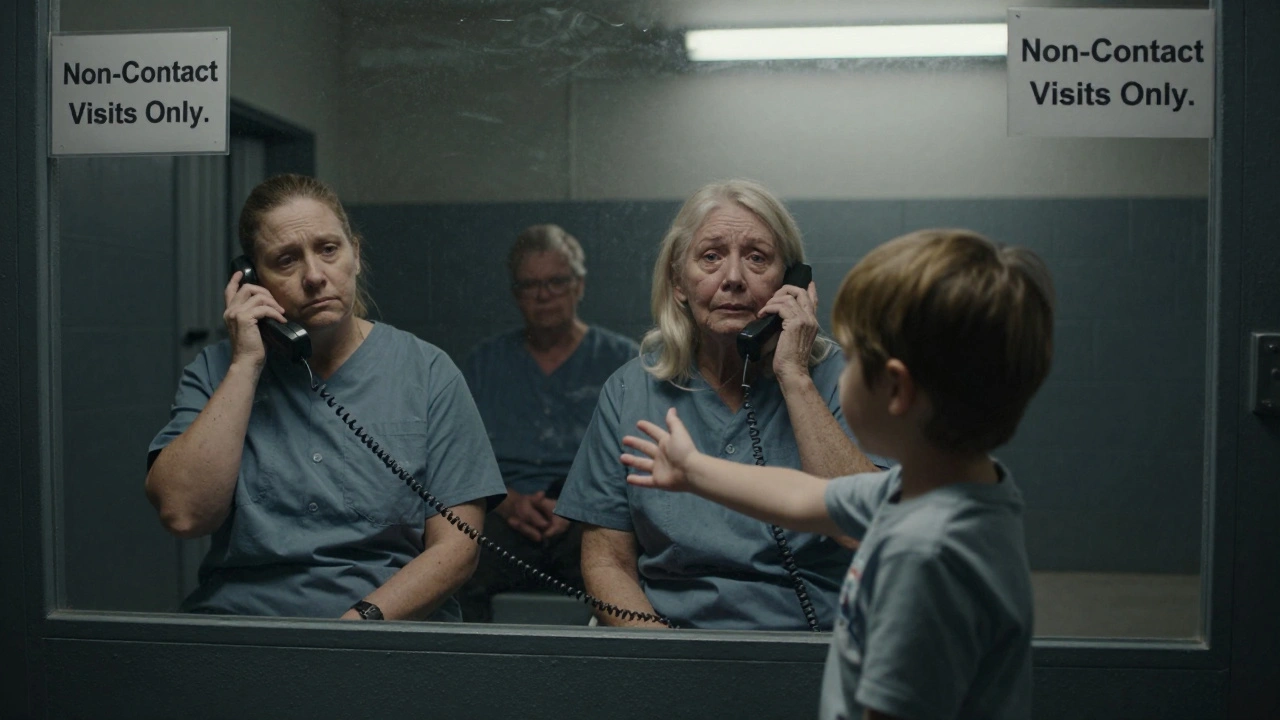
When someone you love is moved from one prison to another, it doesn’t just change their location-it changes everything about how you stay connected. The rules, the hours, the distance, even who’s allowed to visit-none of it stays the same. And if you’re not prepared, that sudden shift can break a bond that took years to build.
Distance Isn’t Just a Number-It’s a Barrier
A transfer can move someone hundreds of miles away. One day they’re in a facility 40 minutes from your home. The next, they’re in a remote town with no public transportation, no bus stops, and no nearby hotels. The prison visitation rules don’t change for you just because the prison did. You still have to show up, still have to pay for gas, still have to take time off work. But now, it takes eight hours round-trip instead of one. For families living paycheck to paycheck, that’s not just inconvenient-it’s impossible. Research shows that when incarcerated people lose regular contact with their families, especially children, their chances of returning to prison go up. Visits reduce fights in prison. They help people stay mentally stable. They give kids a sense of stability when everything else feels broken. But when transfers happen without warning-and often without regard to family proximity-that progress vanishes overnight.Visiting Hours Change. Always.
You can’t assume the schedule you knew still applies. A facility that allowed visits every day? Now it’s only weekends. A place that let you visit for four hours? Now it’s capped at two. Maximum security prisons might have daily visiting, but medium security ones lock down visits to Saturdays and Sundays. Shock incarceration units? Only every other weekend. If they’re placed in a Special Housing Unit (SHU) or Residential Rehabilitation Unit (RRU), they’re limited to one visit per week. And don’t forget: non-contact visits are common after a transfer. That means隔着玻璃,隔着电话,没有拥抱,没有握手,没有触碰。No physical contact at all. Even if you’ve hugged them every visit for years, the new facility might require you to sit across a plexiglass divider with a phone in your hand. It feels like being locked out of their life.Who Can Visit? The Rules Get Tighter
Not everyone who used to visit can still visit. Some prisons only allow immediate family: parents, spouses, children. Others let in siblings, in-laws, even close friends-if they’ve visited before. But after a transfer, your name might not be on the new facility’s approved list. You might need to reapply. Wait 30 days. Fill out new forms. Provide new IDs. If you’re the child’s grandmother, and you’ve been visiting for five years, you might suddenly be told you need written permission from the child’s parent to come in. In New York, for example, grandchildren must be accompanied by an approved adult. Step-grandchildren? Even more paperwork. In-laws? Possible-but not automatic. You need to prove you’ve visited consistently. And if you’re under 18? You need a parent’s signature, unless you’re married. Then you need proof of marriage. No exceptions. No flexibility.
Video Visits Help-But They’re Not the Same
Some prisons offer video visiting through tablets or kiosks. North Carolina, for example, lets families schedule video calls from home. It’s better than nothing. But studies show it’s not a replacement. The emotional impact of a hug, a shared laugh, the way a child leans into their parent’s shoulder-it doesn’t translate through a screen. Video visits are useful when travel is impossible, but they’re not a cure for isolation. And not all prisons offer them. Some don’t even have the equipment. Others charge extra fees. And if you don’t have reliable internet or a smartphone? You’re left out.What About the Family Reunion Program?
Some states, like New York, have programs designed to keep families close. The Family Reunion Program lets certain incarcerated people have extended, contact visits with their families. But here’s the catch: if you’re transferred to a new facility, you lose your place in line. Even if you were already approved at your old prison, you have to reapply. And if you didn’t participate before, you’ll wait 30 days just to be considered. The program requires proof of recent visits: three visits in the past 12 months. If you couldn’t make it because of distance, illness, or work, you might not qualify. Elderly grandparents, children with disabilities, families living over 300 miles away-they get some flexibility, but only if you ask. And if the person is within 90 days of release? You’re shut out. No exceptions. No mercy.Why Do These Transfers Even Happen?
Most of the time, transfers aren’t about helping the person or their family. They’re about filling beds. Managing overcrowding. Moving someone out of a facility that’s too full or too dangerous. Sometimes, it’s punishment. A fight. A rule violation. A transfer to a higher-security prison. No warning. No explanation. Just a notice: “You’re moving.” The First Step Act says federal prisoners should be housed within 500 miles of their families. That’s a good rule. But it’s not always followed. And in most states? There’s no rule at all. Placement decisions are based on security level, program availability, bed space-not family ties. You can’t appeal. You can’t request. You just wait.
What Can Families Do?
It’s not fair. But you still have options.- Call the facility immediately. Ask for the visiting coordinator. Get the new rules in writing. Don’t trust a verbal answer.
- Check if video visiting is available. If it is, sign up right away. Even if it’s not perfect, it’s connection.
- Reapply for any programs. If they had access to education, counseling, or family programs before, ask if they can transfer those benefits.
- Document everything. Keep records of visits, calls, letters. If you’re trying to prove a consistent relationship for a program, you need proof.
- Reach out to advocacy groups. Organizations like The Marshall Project or Prison Policy Initiative can help you understand your rights and connect you with legal aid.
It’s Not Just About Visiting-It’s About Survival
When you visit someone in prison, you’re not just showing up. You’re keeping them alive. Studies show that people who receive regular visits are less likely to act out. Less likely to be violent. More likely to finish their education. More likely to get a job after release. Children who maintain contact with incarcerated parents are less likely to end up in foster care. Less likely to repeat the cycle. But when transfers happen without warning, without care, without regard for family ties-they don’t just move a person. They break a system of survival. And too often, the people who pay the price aren’t the ones who made the decision.What’s Changing? And What’s Not
The rules change. The distance changes. The schedule changes. But the need doesn’t. Families still need to see their loved ones. Children still need their parents. Partners still need to hold each other. The system may not care-but you still do. And that’s what keeps these bonds alive.What should I do if my loved one is transferred without notice?
Call the new facility’s visiting office immediately. Ask for the visiting coordinator and request a copy of their current visitation rules. Write down the date, time, and name of the person you spoke with. If they’re eligible for a family program like the Family Reunion Program, ask how to reapply. Don’t wait. Delays can mean losing access for weeks or months.
Can I still visit if I live more than 300 miles away?
Yes, but it may be harder. Some prisons offer video visiting as an alternative. Others may allow visits from distant family members if you can prove a history of consistent contact-like letters, phone calls, or past visits. In New York, for example, distance is considered a valid reason for flexibility in the Family Reunion Program. But you must ask. Don’t assume you’re automatically excluded.
Why can’t my child visit without me if they’re 17?
Most prisons require minors under 18 to be accompanied by a parent or legal guardian unless they’re married. Even if your child is 17 and has visited before, they still need written permission from a parent or guardian if they’re not with you. This rule exists to prevent unauthorized visits and protect the child. If the parent is also incarcerated or unavailable, contact the facility’s social services office-they may have exceptions for special circumstances.
Is video visiting as good as in-person visits?
No. Research from the Urban Institute and other studies shows that in-person visits have a far greater impact on mental health, behavior, and reentry success. Physical touch, eye contact, and shared space create emotional bonds that screens can’t replicate. Video visits are a lifeline when travel isn’t possible, but they’re not a substitute. Use them as a bridge-not a replacement.
Can I appeal a transfer decision?
In most cases, no. Prison transfers are administrative decisions, not disciplinary ones, and inmates rarely have the right to appeal them. The only exceptions are if the transfer violates federal law (like the First Step Act for federal prisoners) or if it’s clearly retaliatory. Even then, appeals are complex and require legal help. Contact a prison advocacy group or attorney if you believe the transfer was unjust.
Are there any laws that protect family contact during transfers?
Only in limited cases. The First Step Act requires federal prisons to house inmates within 500 miles of their families when possible. A few states, like New Jersey and Florida, have laws saying corrections departments should "make every effort" to consider family proximity. But in most states, there’s no legal requirement. Placement is based on security, capacity, and program availability-not family ties. You can’t count on the system to protect your relationship.