When someone is released from prison, they don’t just walk out with a jail uniform and a bus ticket. They walk out with a record, few job skills, and a system that often pushes them back into crime-not because they want to, but because they have no other path. That’s where workforce readiness coaching changes everything. It’s not about pity or second chances. It’s about practical, proven strategies that connect incarcerated people with real jobs, real pay, and real stability.
Studies show that if a person has a job within the first year after release, their chance of returning to prison drops by nearly 60%. That’s not a guess. That’s data from the Operation New Hope Ready4Work program in Florida, which placed over 1,700 people into jobs and cut recidivism from 67% down to 29%. This isn’t an outlier. It’s a pattern. And the key is not just training-it’s coaching that ties training directly to employer needs.
How Workforce Readiness Coaching Works in Prisons
Workforce readiness coaching in correctional settings isn’t a single program. It’s a system. It starts with assessment. Before any class begins, staff evaluate each person’s education level, work history, interests, and barriers-like lack of ID, past substance use, or mental health challenges. Then, they match them to a pathway.
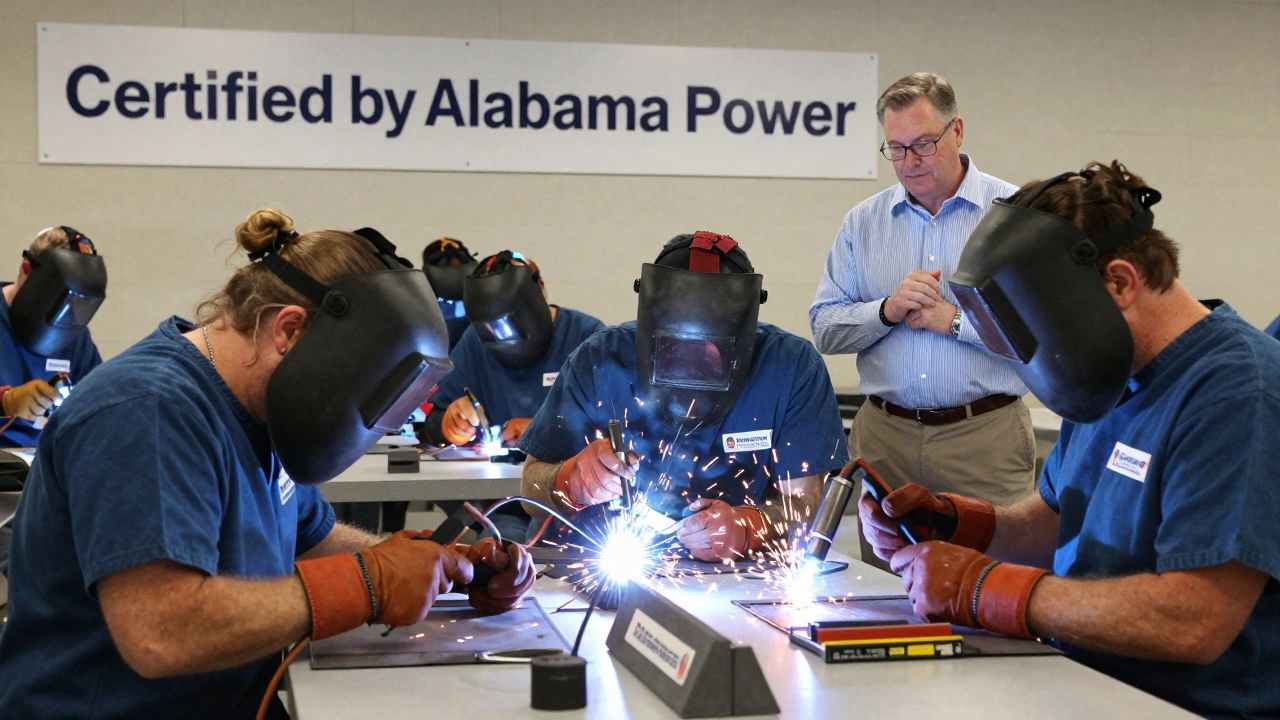
Some go into welding. Others learn HVAC or electrical systems. In Nevada’s Southern Desert Correctional Center, a $10 million vocational village is being built with labs for plumbing, welding, and commercial driver’s license training. But here’s what sets it apart: employers from those industries are involved from day one. They help design the curriculum. They certify the skills. And they promise interviews-sometimes even jobs-to graduates before they even walk out the gate.
It’s not just technical skills, though. A 2026 Reentry 2030 report found that employers care more about soft skills than certificates. Punctuality. Communication. Conflict resolution. Showing up on time. These are the things that keep someone employed. That’s why programs like RISE in Nebraska spend six months teaching character development, workplace etiquette, and resume writing-not just as lessons, but as daily practices.
Real Programs, Real Results
Look at Perry County PREP Center in Alabama. It’s a 90-day residential program for people just leaving prison. But it doesn’t stop there. Participants get mental health counseling, substance abuse treatment, and CTE training in welding and utility tree trimming-all while working with Alabama Power, a major employer in the region. The credential isn’t just a piece of paper. It’s a ticket to a job with benefits.
WIN Learning’s system, used in over a dozen states, delivers digital and academic skills through tablets inside prisons. People can start a module during lockdown, finish it during recreation time, and earn portable credentials that employers recognize. No more “I learned this in prison” skepticism. These are nationally recognized competencies in digital literacy, math, and workplace behavior.
And it’s not just low-level offenders. Programs that used to exclude medium- and high-security inmates are changing. Why? Because those are the people who get released too. If you don’t prepare them, they’ll end up back in prison-and the system will pay the cost again.

Why Employers Are Getting Involved
Some people think employers won’t hire people with records. But that’s changing. Companies like CoreCivic, Alabama Power, and regional manufacturers are seeing the math: trained, coached, supported workers are more reliable. They have lower turnover. They stay longer.
One reason? Pre-release mentoring. At Lake City Correctional in Florida, participants are matched with mentors who meet monthly for six months before release. These mentors aren’t volunteers-they’re trained case managers who help with housing, transportation, childcare, and job applications. That’s not charity. That’s risk reduction for employers.
And when employers are part of the design? They get workers who already know their culture. A welder trained in a prison lab that mirrors the actual shop floor doesn’t need six weeks of onboarding. They’re ready on day one.
The Hidden Cost of Doing Nothing
The U.S. spends over $80 billion a year on incarceration. For every $1 invested in correctional education and workforce coaching, states save $4 to $5 in reduced reincarceration costs. That’s not a theory. That’s from the Manhattan Institute’s 2015 study and confirmed by Reentry 2030 data in 2026.
Think about it: if you lock someone up for three years, that’s $75,000 in taxpayer money. If you spend $5,000 to train them in welding and connect them to a job, you’re not just saving money-you’re building a taxpaying, law-abiding citizen.
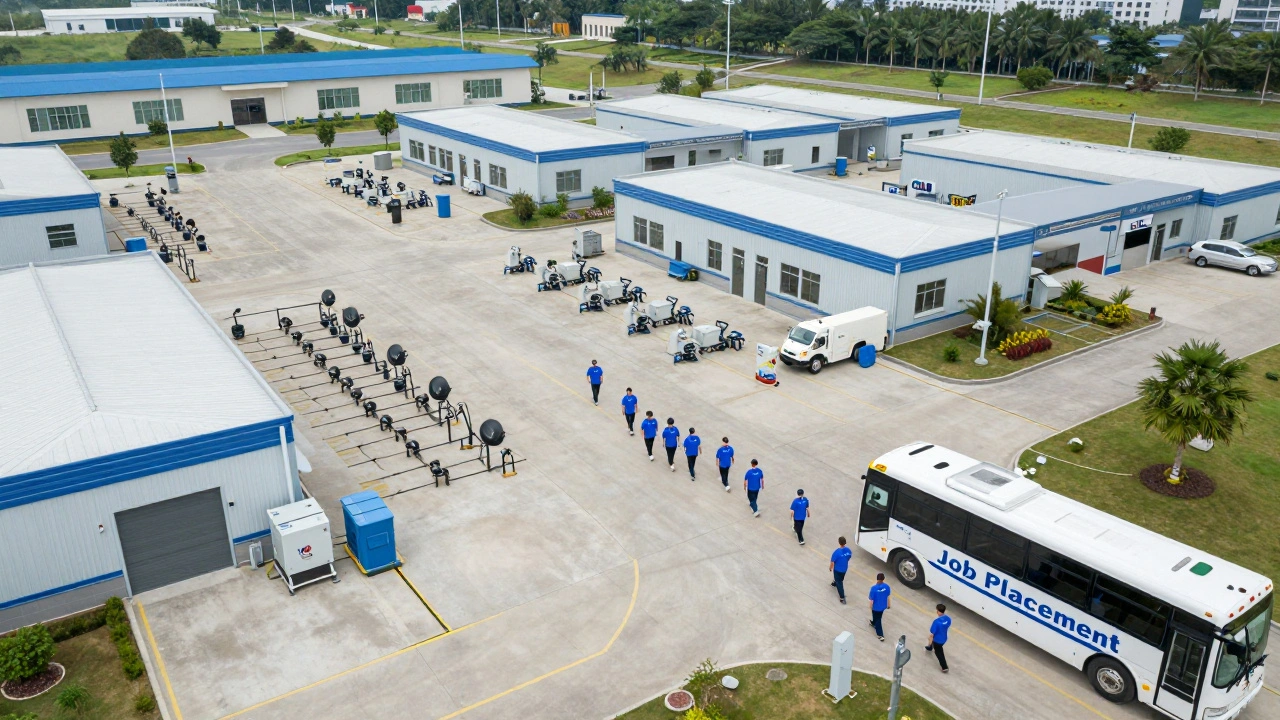
States like Nebraska, Alabama, and Florida are already scaling these programs. The U.S. Department of Education is funding bridges between prison classrooms and community colleges. Workforce development agencies are aligning job openings with prison training tracks. It’s becoming a coordinated system-not a patchwork of good intentions.
What Still Needs to Change
Not every prison has a welding lab. Not every state funds coaching beyond the walls. And too many programs still treat education as an add-on, not a core part of reentry.
The biggest gaps? Sustainability. Many programs die when funding runs out. Coordination. Corrections, education, and labor agencies often don’t talk to each other. Employer trust. Some businesses still fear liability, even when the person has a clean record for six months.
The solution? Start small. Build partnerships. Use data. Track who gets hired. Track who stays hired. Let employers see the results. Once they see that 8 out of 10 trained graduates are still employed after a year, they’ll stop asking questions-and start recruiting.
What’s Next for Correctional Workforce Programs
By 2027, we’ll see more stackable credentials-like earning a GED, then a OSHA 10, then a certified welding license-all tracked on one digital platform. We’ll see mobile coaching units that follow people after release, connecting them to local job fairs and housing services. We’ll see correctional systems using AI to match skills to regional job openings in real time.
But the most powerful change won’t be technological. It’ll be cultural. When communities stop seeing formerly incarcerated people as risks, and start seeing them as workers-qualified, trained, ready-we’ll stop talking about recidivism and start talking about renewal.
Does workforce coaching in prisons really reduce recidivism?
Yes, and the data is clear. Programs like Operation New Hope in Florida cut recidivism from 67% to 29%. A 2015 Manhattan Institute study found that job-focused training reduced rearrest rates by 38%. States that invest in these programs see $4 to $5 saved for every $1 spent. It’s not about hope-it’s about outcomes.
What kinds of jobs do people get after prison training?
They get jobs in high-demand, skilled trades: welding, HVAC, electrical work, plumbing, commercial driving, and utility tree trimming. Some enter IT support, warehouse logistics, or manufacturing. The key is matching training to regional job markets. A person trained in welding in Alabama will find work with local utilities. Someone trained in logistics in Ohio will land at distribution centers. Employers help choose the skills.
Are these programs only for low-level offenders?
No. Early programs focused on non-violent offenders, but research now shows that medium- and high-security inmates benefit just as much-and often need it more. Many are serving longer sentences and have fewer family or community supports. Programs are now expanding to include them because they’re the ones who will be released next.
How do employers get involved in prison training programs?
Employers help design the curriculum, provide equipment for labs, offer internships or job shadowing, and commit to hiring graduates. Some even send supervisors to teach. In Alabama, Alabama Power helps train workers in utility tree trimming. In Nevada, HVAC companies donate tools. This isn’t charity-it’s workforce planning. Employers get skilled workers. The system gets lower recidivism.
What happens after someone is released?
Coaching doesn’t stop at the prison gate. Many programs offer six months of post-release support: case management, mentoring, help with transportation or housing, and access to counseling. Some have satellite offices in cities like Tampa or Tallahassee. The goal is to prevent the first 90 days after release-the most dangerous period-from becoming a return trip to prison.
Workforce readiness coaching in prisons isn’t a feel-good project. It’s a smart economic strategy. It’s a public safety tool. And most of all, it’s a way to turn people who’ve made mistakes into people who build things-homes, roads, systems, and communities.