Imagine spending years mastering sociology or business law behind bars, only to find out that the credits you earned don't count once you're released. For a long time, this was the harsh reality for thousands of people. Education in prison often felt like a dead end-a way to pass the time rather than a bridge to a career. But the landscape changed drastically in 2023, turning what used to be a gamble into a legitimate academic pathway.
The biggest hurdle isn't usually the difficulty of the coursework; it's the academic accreditation is the formal recognition that an educational program meets specific quality standards set by an external agency . Without it, a course is just a hobby. With it, that course becomes a portable asset. If you or a loved one are navigating this system, understanding how credits move from a correctional facility to a civilian college is the key to making that degree actually mean something in the job market.
| Feature | Standard PEP Process | Potential Red Flags |
|---|---|---|
| Accreditation | Regionally accredited agency | Non-accredited "certificate" programs |
| Funding | Eligible for Federal Pell Grants | Out-of-pocket or facility-funded only |
| Transcript | Identical to on-campus records | Notes mentioning "prison" or "corrections" |
| Transferability | Pre-approved by receiving college | Credits accepted only by the providing school |
The 2023 Shift: Pell Grants and Federal Rigor
For nearly three decades, the federal government banned Pell Grants from being used by people in prison. This didn't just stop students from paying for class; it stopped colleges from caring about prison programs. Why invest in a high-quality curriculum if no one can afford it? When the FAFSA Simplification Act restored these grants in 2023, it triggered a domino effect. Suddenly, higher education became financially viable for incarcerated learners, and colleges had a reason to standardize their offerings.
To prevent a flood of "degree mills" in prisons, the federal government implemented strict rules under 34 CFR 668 Subpart P. Now, any college starting a Prison Education Program (or PEP) must have their accreditor evaluate the program. Whether the teacher is in the room or the student is using a tablet for distance learning, the academic rigor must be identical to the main campus. If a course is too easy or the standards are lowered for prisoners, it fails accreditation, and the credits become worthless for transfer.
How Credit Transfer Actually Works
Here is the truth: no single entity "forces" another college to accept a credit. Every university has its own transfer policy. However, the gold standard is credit transfer based on regional accreditation. If you earn a credit from a school like Adams State University, which is regionally accredited, other accredited schools are far more likely to recognize it.
Most institutions have specific caps on how much they will take. For example, some programs allow up to 90 transfer hours for a Bachelor's degree or 45 for an Associate's. But there are nuances. Many schools also accept CLEP (College-Level Examination Program) or DSST exams, which allow students to test out of general education requirements. A student might take 15 credits via CLEP and 30 through a prison-based course, combining them to fast-track their degree.
One major pitfall is the "expiration date" on credits. In the academic world, some knowledge spoils. Many colleges consider general education credits over 10 years old to be acceptable, but they might reject a 10-year-old credit for a core major requirement (like a nursing or accounting course) unless a department chair signs off on it. This is a critical detail for those who started college years before their incarceration.
Avoiding the "Prison Stigma" on Transcripts
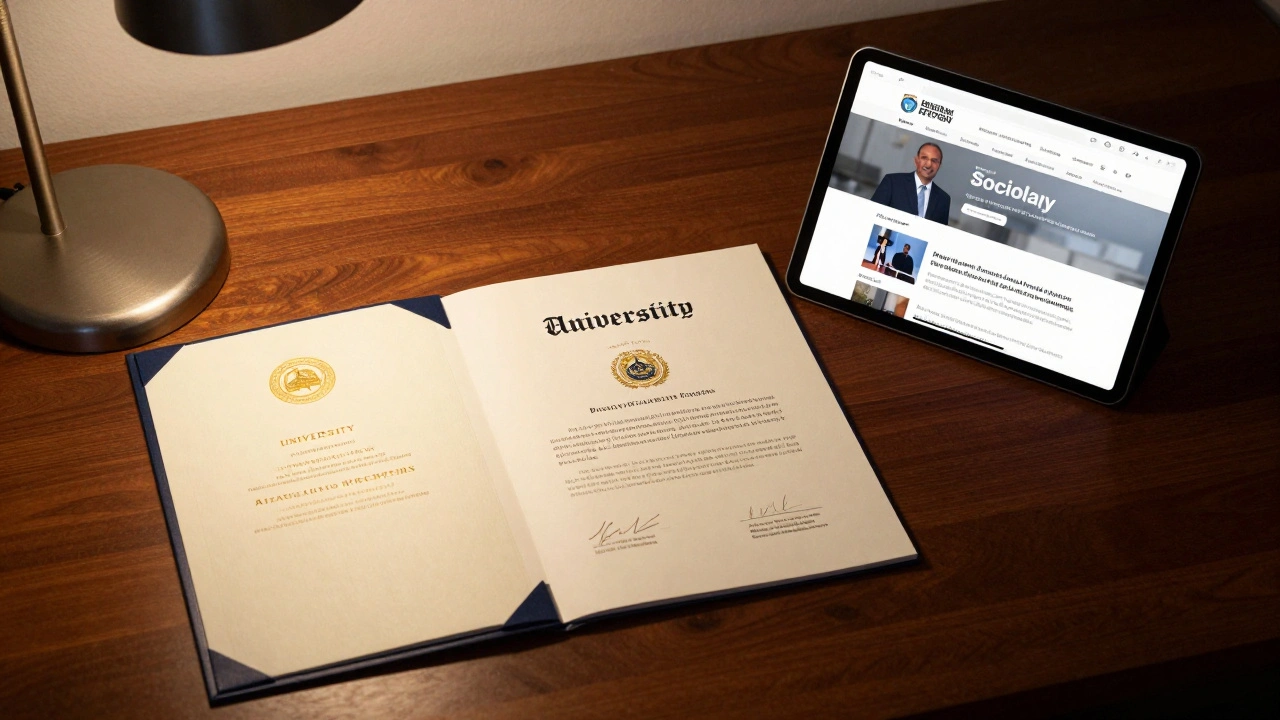
A degree is a tool for reentry, but a transcript that screams "I was in prison" can sometimes act as a barrier. Modern, progressive programs are fighting this by using non-stigmatizing documentation. In high-quality programs, the transcript looks exactly like any other student's record. It lists the course name, the credit value, and the grade. There is no mention of the correctional facility or the student's status.
The same applies to the diploma. When a student graduates from a PEP, they receive the same piece of paper as someone who sat in a lecture hall on a quad. This is a deliberate strategy to ensure that the educational achievement is the focus, not the location where the achievement happened. When you apply for a job or a graduate program, the employer sees a degree from an accredited university, not a certificate from a prison.

The Pre-Approval Strategy: Don't Guess, Verify
The worst thing a student can do is complete an entire degree and then find out the receiving university won't accept the credits. The solution is a "pre-approval" process. Before enrolling in a distance degree program, students should request an unofficial evaluation of their previous college work. This is essentially a "mock transfer" where an advisor shows where the credits fit into the degree map.
If you are planning to move from a prison program to a traditional campus after release, follow these steps:
- Request a full, official transcript from the prison program provider.
- Contact the Admissions Office of the target university.
- Ask for a "Transfer Credit Evaluation."
- Verify if the courses are classified as "General Education" or "Electives," as this affects how many credits you need to graduate.
The Reality of Access and the Road Ahead
Despite these improvements, the gap is still huge. Only a small fraction of state prisons provide access to postsecondary education, and even fewer colleges participate. This creates a bottleneck. If you are in a facility that doesn't offer accredited courses, your options are limited, and your credits may not transfer because the program lacks the necessary federal oversight.
However, organizations like the American Association of Collegiate Registrars and Admissions Officers (AACRAO) are working to professionalize these pathways. They are treating prison education not as a charity project, but as a standard part of the higher education ecosystem. This shift toward "learner mobility" means that the administrative side of transferring credits is becoming more seamless and less prone to bureaucratic errors.
Do all courses taken in prison transfer to other colleges?
No. Only courses from programs with proper academic accreditation are likely to transfer. If a course was part of a non-accredited vocational program or a facility-run hobby class, most colleges will not accept it for credit. Always check if the providing institution is regionally accredited.
Can I use Pell Grants for any college course in prison?
Since 2023, Pell Grant eligibility has been restored for incarcerated individuals, but the program must be approved by the Department of Education and meet specific accreditation standards to be eligible for this funding.
Will my diploma say I earned it while incarcerated?
In most reputable Prison Education Programs, the diploma is identical to the one given to on-campus students. There is typically no notation of incarceration on the diploma or the official transcript.
What are CLEP exams and how do they help?
CLEP (College-Level Examination Program) exams allow students to earn college credit by demonstrating knowledge through testing. Many prison programs encourage these because they are a faster way to earn transferable credits without taking a full semester-long course.
What happens if my credits are more than 10 years old?
General education or elective credits are often still accepted. However, core major requirements (like specialized science or math) may be rejected if they are too old. You would need approval from the department chair of your intended major to use them.