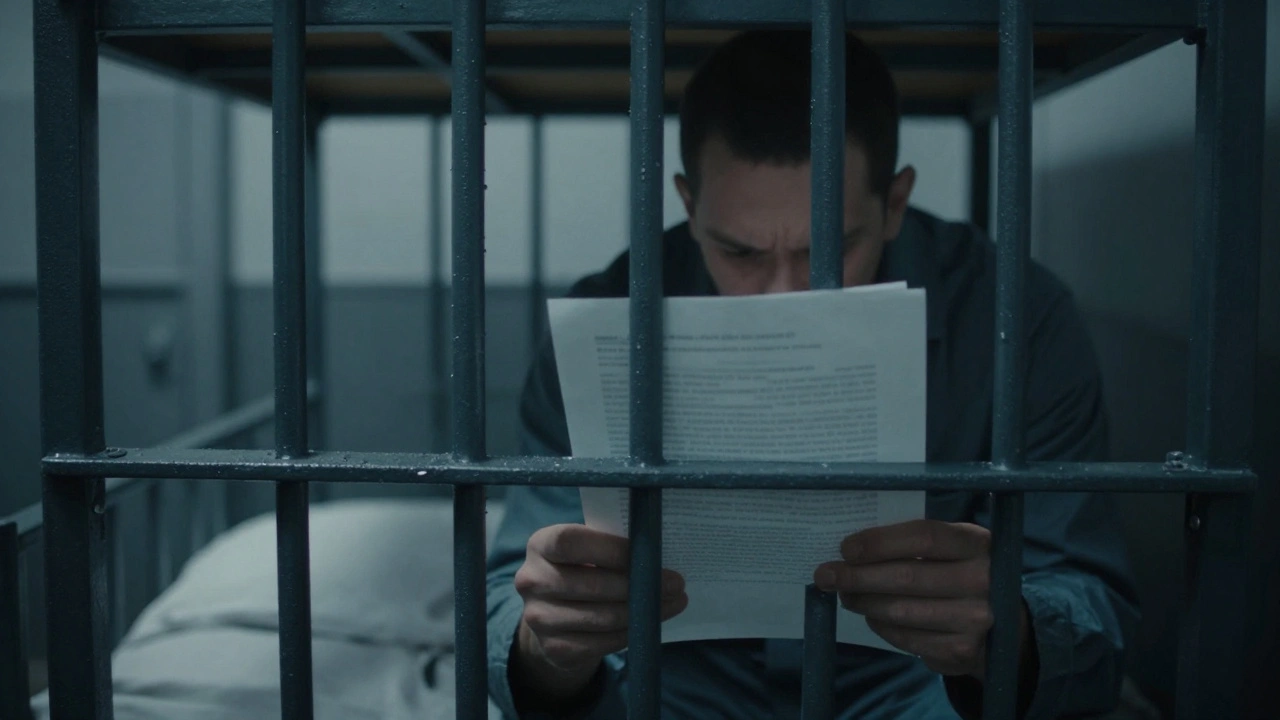
Imagine sitting in a holding cell, your vision blurring to the point where you can't read your legal documents, or trying to understand a disciplinary hearing while wearing hearing aids that get confiscated. For millions of incarcerated people in the United States, these aren't hypothetical scenarios-they are daily realities. Accessing optometry and hearing services behind bars is not just a matter of comfort; it is a critical component of due process, health maintenance, and basic human dignity.
Yet, the system for delivering these services is often fragmented, slow, and legally complex. Whether it involves scheduling an eye exam through a federal bureau or fighting for a qualified interpreter during a medical appointment, the path to care is rarely straightforward. This guide breaks down how these services work, who is entitled to them, and the practical challenges that define coverage in correctional facilities today.
The Legal Backbone: Why These Services Are Mandatory
You might assume that because someone is incarcerated, their right to healthcare diminishes. The law says otherwise. Two major pieces of legislation form the foundation for vision and hearing care in prisons: Section 504 of the Rehabilitation Act of 1973 and Title II of the Americans with Disabilities Act (ADA).
Section 504 prohibits discrimination against individuals with disabilities in programs receiving federal financial assistance. Since most state and local correctional agencies receive some form of federal funding, they must provide equal access to services for inmates with visual or hearing impairments. If a prison offers general medical care, it cannot categorically deny needed eye or hearing services to disabled inmates.
The ADA Title II goes even further. Enacted in 1990, it applies to all state and local government entities, including those that do not receive federal funds. This means every one of the 50 state prison systems and thousands of local jails must ensure their programs are accessible. The U.S. Department of Justice clarified this in 1991, explicitly stating that detention agencies must provide qualified interpreters and auxiliary aids for deaf and hard-of-hearing individuals in rehabilitation, education, and medical contexts.
The bottom line? Denying an inmate an eye exam or refusing to provide an interpreter for a hearing test isn't just poor policy-it's illegal. However, knowing the law exists and having it enforced on time are two very different things.
How Optometry Care Is Scheduled and Delivered
Vision problems are rampant in the prison population. Many inmates enter custody without ever having had a routine eye exam. Conditions like uncorrected refractive errors, cataracts, and diabetic retinopathy go undiagnosed until they become emergencies. To address this, correctional systems use three primary models for delivery: on-site clinics, external referrals, and increasingly, telehealth.
| Model | Description | Pros | Cons |
|---|---|---|---|
| On-Site Clinics | Employed or contract optometrists visit the facility regularly. | Full scope of practice; coordinated with other health services. | Requires staffing multiple remote facilities; high overhead. |
| External Referrals | Inmates are transported to community providers. | Access to specialized surgery or high-tech equipment. | Security risks; expensive transport; long wait times. |
| Tele-Optometry | Remote exams via secure video conferencing (e.g., DigitalOptometrics). | Reduces transport costs; covers multiple facilities simultaneously. | Limited physical examination capabilities; tech dependency. |
The Federal Bureau of Prisons (BOP) outlines its approach in Program Statement 6031.05 "Patient Care". Under this policy, optometry is generally categorized as a "routine screening consultation." This means it is scheduled non-emergently, initiated by inmate request or clinical referral, and processed according to priority guidelines. Vision-related emergencies, such as acute trauma, are handled immediately under emergency protocols.
For pre-trial detainees held by the U.S. Marshals Service (USMS), the process is more complex. The USMS uses dedicated Optometry/Ophthalmology Prisoner Operation Resources to coordinate care among the marshals, the holding facility, and outside providers. This multi-actor coordination often leads to delays compared to the more stable environment of a long-term BOP institution.
The Rise of Tele-Optometry in Corrections
Geographic isolation is a huge hurdle for prison healthcare. A small rural jail might not justify hiring a full-time optometrist, and transporting inmates to a city clinic is costly and risky. Enter tele-optometry.
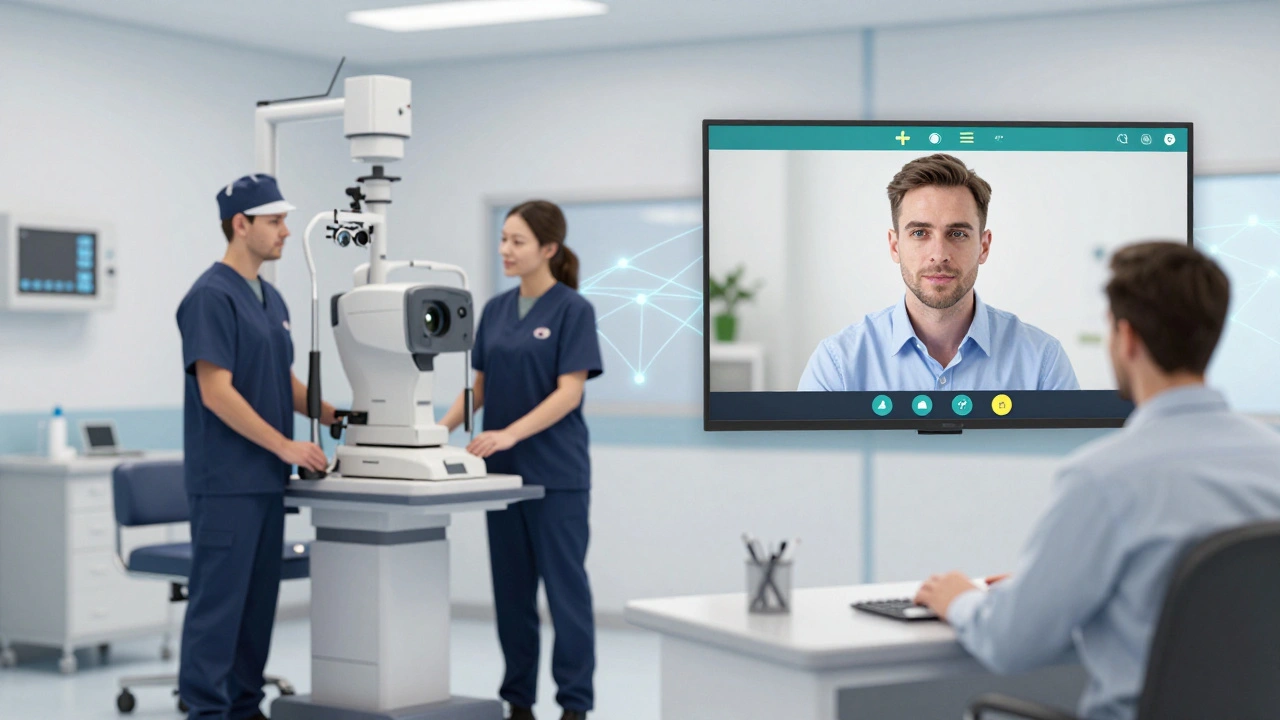
Companies like DigitalOptometrics have developed platforms specifically for correctional facilities. Their model allows a single licensed optometrist to conduct real-time video exams across multiple facilities without ever stepping foot inside. This "shared-coverage model" addresses the scheduling bottleneck by consolidating appointments into centralized provider schedules.
Instead of waiting weeks for a specialist to drive out to a remote prison, inmates might get an exam during a weekly digital health window. The platform uses secure video and digital exam equipment located inside the facility. While this doesn't replace the need for physical procedures (like surgery), it drastically improves access to routine diagnostics and prescription updates. It also frees up correctional officers from escort duties, allowing them to focus on security rather than logistics.
Hearing Services: More Than Just Interpreters
If vision care is about logistics, hearing services are about communication rights. The National Association of the Deaf (NAD) has long reported that deaf and hard-of-hearing inmates are frequently denied due process because they cannot effectively communicate with staff, lawyers, or medical providers.
Under the ADA, prisons must provide "qualified interpreters"-defined in 28 C.F.R. § 35.104 as someone who can interpret effectively, accurately, and impartially using specialized vocabulary. This isn't just for casual conversation. It applies to:
- Medical diagnoses and medication instructions
- Disciplinary hearings
- Educational and vocational training classes
- Religious services
Beyond interpreters, facilities must provide auxiliary aids. This includes assistive listening devices, captioned telephones, and text telephones (TTYs). The regulations at 28 C.F.R. § 35.161(d) require public entities offering outgoing calls to make TTYs and videophones available upon request. Crucially, deaf inmates must have the same hours of access to these devices as hearing inmates have to standard phones. If hearing inmates can call home seven days a week, so must deaf inmates using relay services.
Coverage Gaps and Administrative Hurdles
Even when the law is clear, administrative red tape can block access. Take eyeglasses, for example. In Illinois, the Department of Healthcare and Family Services requires prior approval if eyeglasses are fabricated by a supplier other than the Department of Corrections. This rule, documented in Chapter O-200 of their provider handbook, means that getting glasses isn't just a matter of getting a prescription. It involves submitting documentation, waiting for review, and navigating supply chain constraints within the prison system.
This creates a significant delay. An inmate might get diagnosed with a severe refractive error on Monday but not receive corrective lenses until weeks later due to the approval process. During that time, their ability to participate in educational programs or even navigate their living space safely is compromised.
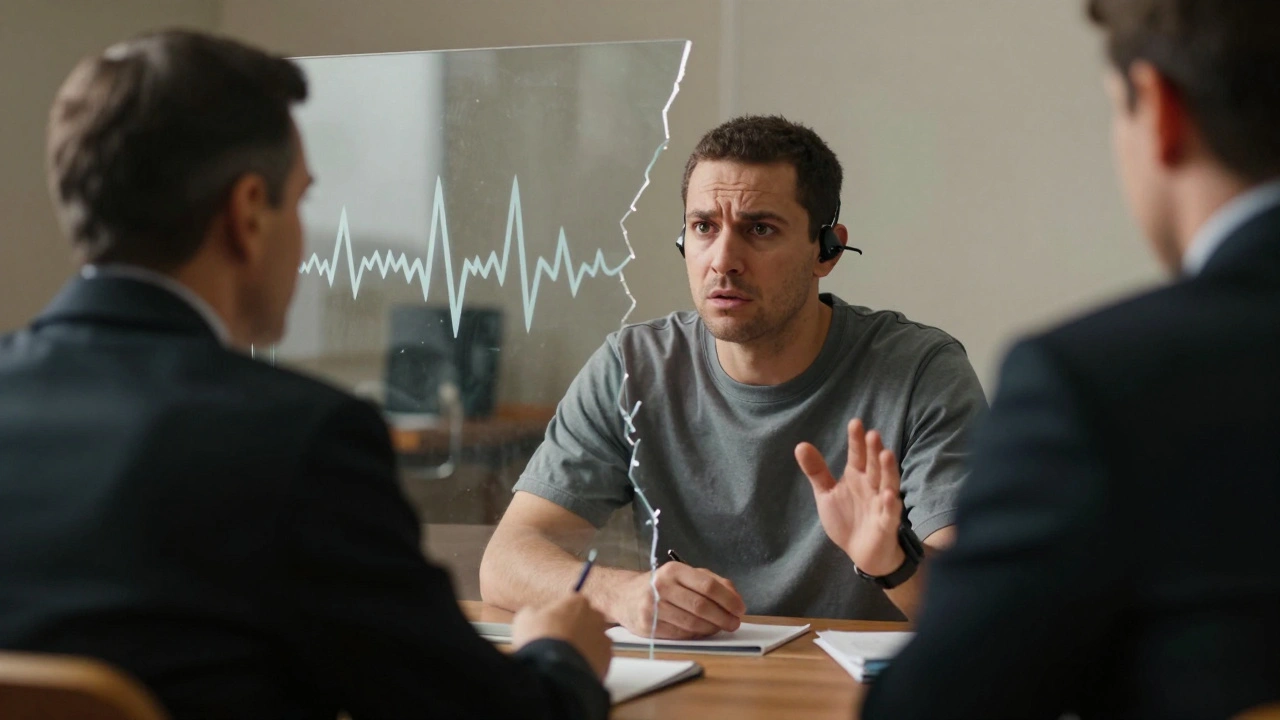
Furthermore, there is a stark contrast between policy and practice. While optometrists working in prisons often report positive experiences-citing flexible scheduling and full scope of practice-inmates with hearing impairments frequently face barriers. NAD notes that many inmates must file formal complaints with the U.S. Department of Justice’s Civil Rights Division to secure basic accommodations like interpreters or TTY access. This suggests that enforcement is reactive rather than proactive.
What Does This Mean for Inmates and Advocates?
Understanding the landscape of optometry and hearing services in prisons reveals a system that is improving technologically but still struggling with equitable implementation. Telehealth offers a promising solution for vision care, reducing bottlenecks and expanding reach. However, for hearing services, the reliance on human interpreters and specific hardware means that gaps persist.
For advocates and families, the key takeaway is documentation. Keep records of requests for interpreters or eye exams. Note dates, times, and the names of staff involved. If a facility fails to provide a qualified interpreter for a disciplinary hearing or denies an eye exam without medical justification, these records are essential for filing grievances or DOJ complaints.
The future of correctional healthcare will likely see more integration of digital tools. We may see AI-assisted triage for vision issues or improved video-relay services for deaf inmates. But until then, the burden remains on the institutions to comply with the laws already on the books. Access to sight and sound is not a privilege; it is a fundamental requirement for justice.
Are prisoners entitled to free eye exams?
Yes. Under constitutional standards and federal policies like the BOP Program Statement 6031.05, prisons must provide medically necessary healthcare, including routine vision screenings and optometric services. While the cost is borne by the correctional system, inmates may sometimes be asked to pay small co-pays depending on state regulations, but denial of service due to inability to pay is prohibited.
What should I do if my deaf family member is denied an interpreter?
First, document the incident thoroughly, including dates and staff names. You can file a grievance through the prison's internal system. Additionally, you can file a complaint with the U.S. Department of Justice, Civil Rights Division, Disability Rights Section, as failure to provide a qualified interpreter violates Title II of the ADA and Section 504 of the Rehabilitation Act.
How does tele-optometry work in prisons?
Tele-optometry uses secure video conferencing platforms to connect inmates with remote licensed optometrists. Digital exam equipment is installed in the facility, allowing the doctor to perform comprehensive eye exams without being physically present. This reduces transportation needs and allows specialists to cover multiple facilities efficiently.
Do prisons have to provide hearing aids or glasses?
Prisons are required to provide medically necessary treatments and devices. This includes prescribing and providing eyeglasses and ensuring access to hearing aids if prescribed. However, policies vary by state regarding whether the prison fabricates the glasses themselves or contracts with outside suppliers, which can affect wait times.
Is there a difference between federal and state prison healthcare?
Yes. Federal prisons follow BOP policies, which are standardized across all facilities. State prisons operate under individual state laws and Medicaid/Medicare reimbursement rules, leading to significant variation in scheduling, coverage, and the availability of services like telehealth or on-site specialists.