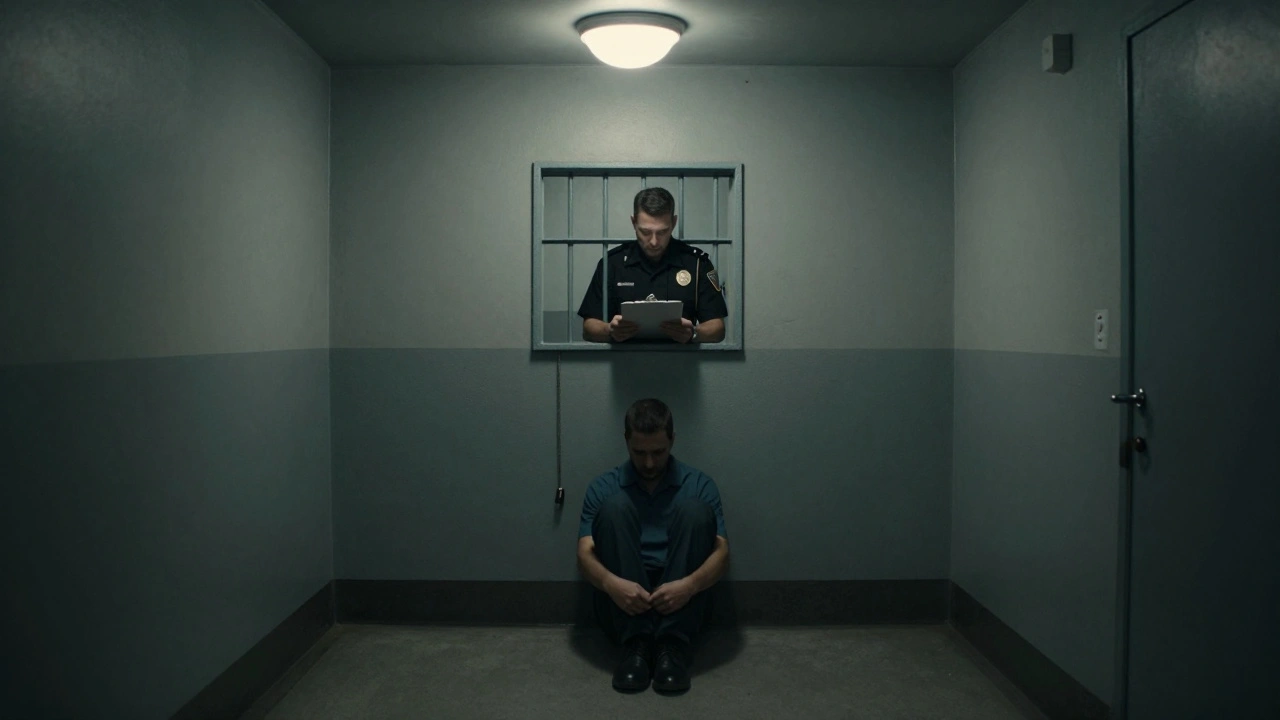
Every year, more than 7,000 people die by suicide in U.S. jails and prisons. That’s more than the population of a small town-and most of these deaths are preventable. The problem isn’t just that inmates are mentally ill; it’s that the systems meant to protect them often fail because staff aren’t trained, observations are inconsistent, and communication breaks down. Suicide prevention in correctional facilities isn’t optional. It’s a legal and moral obligation, and it starts with how staff are trained and how inmates are monitored.
Why Jails and Prisons Are High-Risk Environments
People entering jail or prison are already more likely to struggle with mental illness than the general population. About 20% have a serious psychiatric condition, and 5% are actively psychotic when they arrive. Many are isolated, scared, and cut off from support systems. The environment itself-loud, unpredictable, and controlled by fear-can push someone over the edge. Cells are small. Lights stay on. No one is truly alone. Yet, paradoxically, inmates often feel completely unseen.
Research shows that suicide risk spikes in the first 24 to 72 hours after booking. That’s when people are most likely to feel hopeless, confused, or overwhelmed. If screening doesn’t happen quickly, or if staff miss the signs, the window for intervention closes fast.
Training Isn’t Optional-It’s the Foundation
Every correctional officer, nurse, administrator, and even food service worker needs training. Not because they’re therapists, but because they’re the first line of defense. The National Commission on Correctional Health Care recommends 8 hours of initial training for all staff, plus 2 hours every year after that. That’s not a suggestion. It’s the standard.
Good training doesn’t just teach staff to spot someone crying in a corner. It teaches them to recognize subtle shifts: an inmate who stops talking during yard time, who starts giving away personal items, who refuses meals but suddenly asks for a blanket. It teaches them that denial is common. Many suicidal inmates will say, “I’m fine,” because they’re ashamed-or because they’ve been punished for speaking up before.
The Bureau of Prisons takes this further. They require three mock suicide emergencies each year-one on each shift, and one specifically in the Special Housing Unit (SHU), where the most vulnerable inmates are held. These aren’t drills to check a box. They’re real-time simulations where staff must respond as if it’s real: calling for medical help, removing potential means of harm, and initiating constant observation. The Captain and Chief Psychologist must lead these exercises together. That sends a message: this isn’t just custody work. It’s health work.
How Monitoring Works-And How It Often Fails
Once an inmate is flagged as high risk, they’re placed under continuous observation. That means a correctional officer must check on them at least every 30 minutes. But here’s the catch: the checks must be random. If an inmate learns the schedule, they can time their actions. A smart person might wait until after the 30-minute mark to try to harm themselves. That’s why observation isn’t clockwork-it’s unpredictable.
Some facilities use electronic monitoring: motion sensors, pressure pads, or cameras. But technology doesn’t replace human judgment. A camera can show someone standing still. It can’t tell if they’re breathing, if they’re shaking from anxiety, or if they’ve tied a sheet around their neck. That’s why trained staff are still essential.
High-risk inmates are moved to special observation cells-bare, with no sharp objects, no cords, no bedding that can be torn into strips. Even their clothing is checked. A single shoelace can be deadly. These precautions aren’t cruel. They’re lifesaving.
The Role of the Program Coordinator
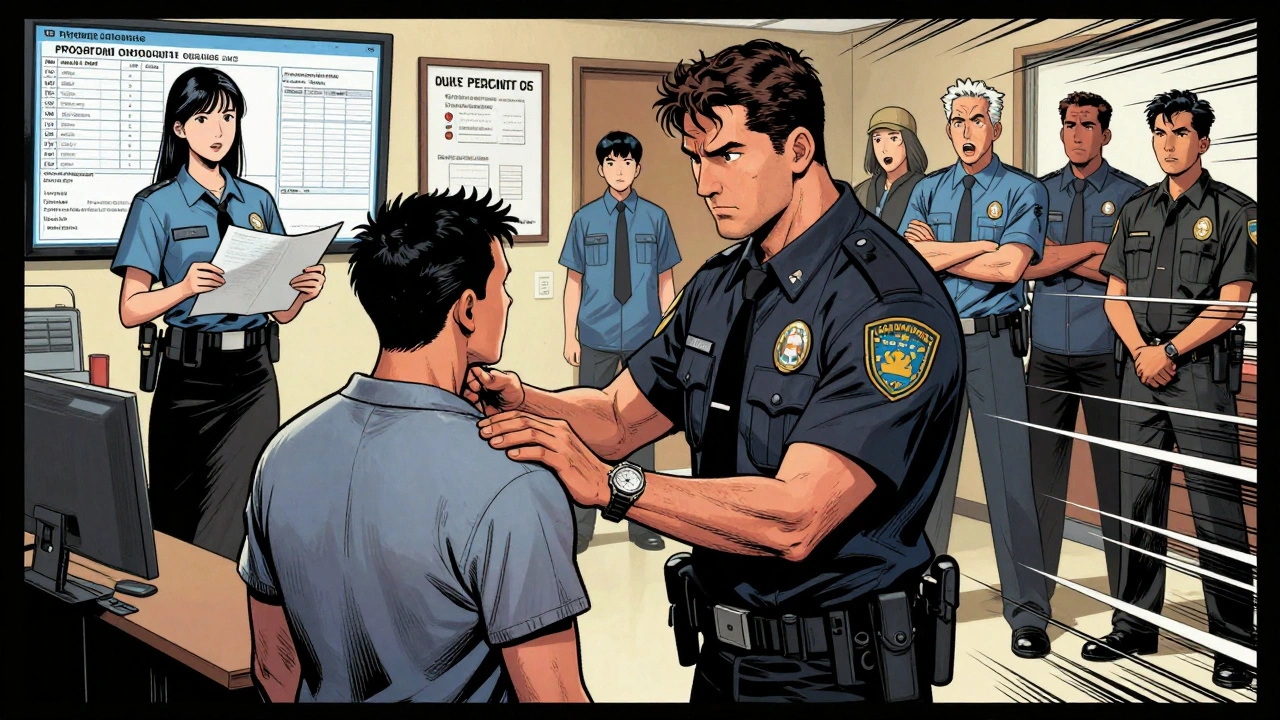
Every facility must have a designated Program Coordinator. This person doesn’t just file reports. They’re the glue between custody, medical, and mental health teams. They make sure training happens. They review each suicide attempt or death. They track whether staff are following protocols. They ensure that when an inmate is transferred to another unit or facility, their risk level goes with them.
Too often, risk information gets lost in handoffs. An inmate is moved from general population to the medical wing, then to segregation. The paperwork gets misplaced. The next officer doesn’t know the person tried to hang themselves two days ago. That’s how deaths happen-not because no one saw the signs, but because no one connected the dots.
What Makes a Prevention Program Work
Studies show that programs with multiple components reduce suicide deaths by up to 70%. Single interventions-like just screening or just training-don’t cut it. You need all ten evidence-based strategies working together:
- Screening inmates within 24 hours of intake
- Training all staff in crisis intervention and CPR
- Observing high-risk inmates every 15-30 minutes
- Improving communication between shifts and departments
- Removing access to ligatures, glass, and sharp objects
- Providing mental health treatment, not just observation
- Debriefing staff after a suicide attempt
- Reviewing each death to find systemic failures
- Using inmate observers (trained peers who report concerns)
- Changing policies based on what you learn
The most successful programs treat suicide prevention like infection control. You don’t just treat the sick-you clean the environment, train everyone, and monitor constantly. It’s not about punishment. It’s about protection.
What Happens After a Suicide
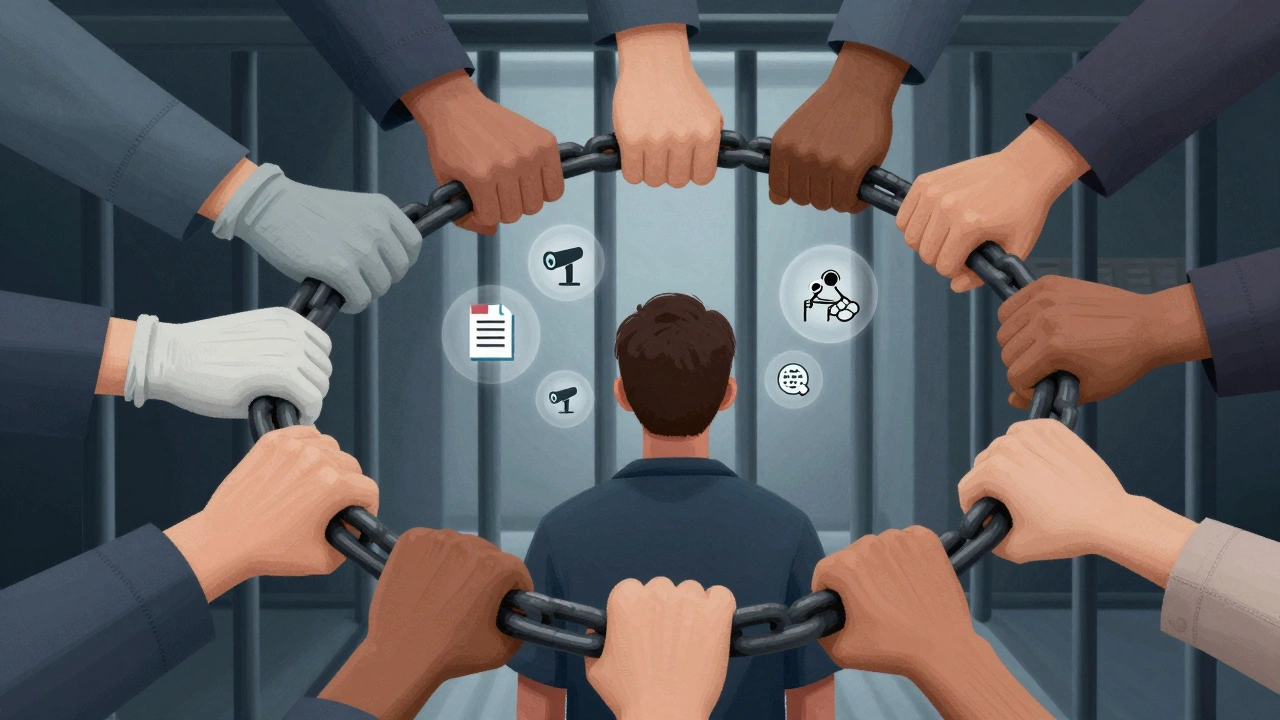
When an inmate dies by suicide, the work doesn’t stop. In fact, it intensifies. Facilities are required to conduct a full administrative review. That means examining everything: Did the screening happen? Was the inmate observed? Was mental health consulted? Were staff trained? Was the environment safe?
These reviews aren’t about blame. They’re about learning. One facility found that six suicides over two years all happened after inmates were moved to a new unit-and no one updated their risk status. That led to a policy change: every transfer triggers a full reassessment.
Staff debriefings are equally important. Officers who find a body don’t just walk away. They need counseling. They need to talk. Many carry that moment for years. Ignoring their trauma doesn’t make the system stronger-it makes it more fragile.
The Bottom Line
Suicide in jails and prisons isn’t inevitable. It’s a system failure. And fixing it doesn’t require more money or new laws. It requires consistent training, honest monitoring, and a culture that doesn’t treat mental health as an afterthought. Every inmate, no matter their crime, deserves to be seen. To be heard. To be kept alive.
When staff are trained to recognize the signs-and when observation isn’t just a checkbox but a lifeline-deaths drop. Not because we’re miracle workers. Because we’re doing our job.
How often should correctional staff receive suicide prevention training?
All correctional staff should receive 8 hours of initial training and 2 hours of refresher training annually. This includes custody officers, medical personnel, and administrators. The training must cover risk factors, warning signs, communication techniques, and facility-specific protocols. The Bureau of Prisons goes further, requiring three live emergency drills per year, including one in the Special Housing Unit.
What are the key warning signs of suicide risk in inmates?
Key signs include sudden withdrawal from social interaction, giving away personal belongings, expressing hopelessness, refusing meals, increased agitation, sleeping too much or too little, and making direct or indirect statements like, "I won’t be here much longer." Many inmates deny suicidal thoughts, so staff must rely on behavioral changes, not just what’s said aloud.
Why is observation every 30 minutes not enough on its own?
Observation every 30 minutes is the minimum, but it’s not foolproof. Inmates can learn the schedule and time their actions. That’s why checks must be random and unpredictable. For high-risk inmates, observation may need to be every 15 minutes or even constant. The goal isn’t to count checks-it’s to ensure someone is always watching, listening, and responding.
What role do inmate observers play in suicide prevention?
Inmate observers are carefully selected and trained peers who report unusual behavior among other inmates. They often notice changes before staff do-because they live in the same environment. Their reports are taken seriously and used to trigger staff intervention. This system builds trust and extends surveillance beyond what officers can physically manage.
Can suicide prevention programs really reduce deaths?
Yes. Studies show that comprehensive programs with multiple components-screening, training, observation, and mental health access-can reduce suicide deaths by up to 70%. Programs that treat prevention like a health protocol, not a paperwork exercise, are the ones that save lives. It’s not about luck. It’s about consistency.
What should happen after an inmate dies by suicide?
A full administrative review must be conducted to identify where the system failed. This includes reviewing screening records, observation logs, communication between departments, and whether staff were trained. The findings should lead to policy changes-not discipline. Staff also need mandatory debriefing and counseling. Ignoring trauma weakens the entire system.