Imagine trying to build a house without tools. You have the blueprints in your head, but no hammer, no saw, and no wood. That is essentially what happens when an incarcerated person tries to file a lawsuit or appeal their conviction without access to legal resources. For decades, this wasn't just a hypothetical struggle-it was a constitutional violation.
The right to legal access in prisons isn't a luxury; it is a fundamental requirement of the U.S. justice system. But if you look at the ground reality, the picture is messy. One state might offer thirty hours of weekly library time, while another restricts inmates to four hours. Some facilities have digital databases; others rely on outdated print books that fall apart after a few uses. Understanding how these systems work-and where they fail-is crucial for anyone navigating the criminal justice system from behind bars.
The Constitutional Foundation: Bounds v. Smith
To understand why law libraries exist in prisons, you have to go back to 1977. The Supreme Court case Bounds v. Smith changed everything. Before this ruling, many states assumed that once a sentence began, an inmate’s ability to challenge that sentence ended unless they had money for a lawyer.
The Court ruled that prisoners possess a constitutional right of adequate access to the courts. This doesn't mean every prisoner gets a free lawyer for every minor grievance. Instead, it means the state must provide either assistance from persons trained in the law or access to adequate law libraries with assistance in preparing legal papers. Think of it as a safety net. If you can't afford counsel, the state must ensure you aren't locked out of the judicial process entirely.
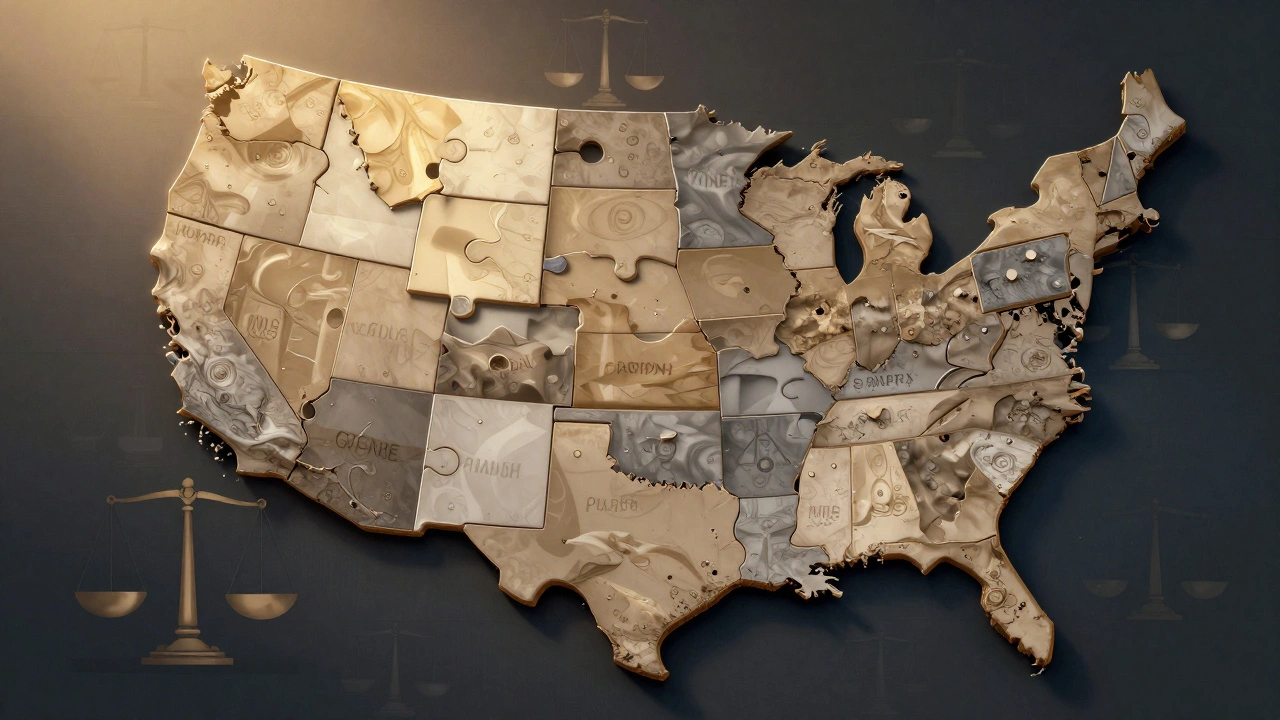
However, the decision left room for interpretation. What counts as "adequate"? How much time is "reasonable"? These questions are still being answered by lower courts today, leading to a patchwork of policies across the country.
Federal Standards vs. State Realities
At the federal level, the rules are somewhat clearer. The Bureau of Prisons operates under Title 28 CFR § 543.11, which mandates that wardens make legal materials available whenever practical, including evenings and weekends. Inmates are supposed to conduct research during leisure time-when they aren't working or attending scheduled programs. Where possible, document preparation should happen in living quarters.
But state prisons operate differently. A national study revealed a stark lack of uniformity:
- Only about 25% of states have specific provisions defining law library operating hours.
- Another 25% leave the decision up to individual facilities, meaning two prisons in the same state can have wildly different schedules.
- A full 50% of states don't reference law library hours in their policies at all.
This ambiguity creates a lottery system. Your ability to pursue justice often depends less on the merits of your case and more on which zip code your correctional facility sits in.
Case Study: Georgia’s Structured Approach
Georgia offers one of the most detailed examples of how modern prison law libraries function. The state requires probation detention centers and county institutions to provide at least two hours of access per week. Crucially, the libraries themselves must be open for a minimum of twenty hours weekly. Note that meal times and count times (security headcounts) are excluded from this total, reflecting the tension between security protocols and legal rights.
Access isn't walk-in. Inmates must submit written requests to the librarian and get added to an official call-out list. Once called, they face strict limits:
- Inmates can borrow up to two items at a time.
- They cannot use print and electronic resources simultaneously.
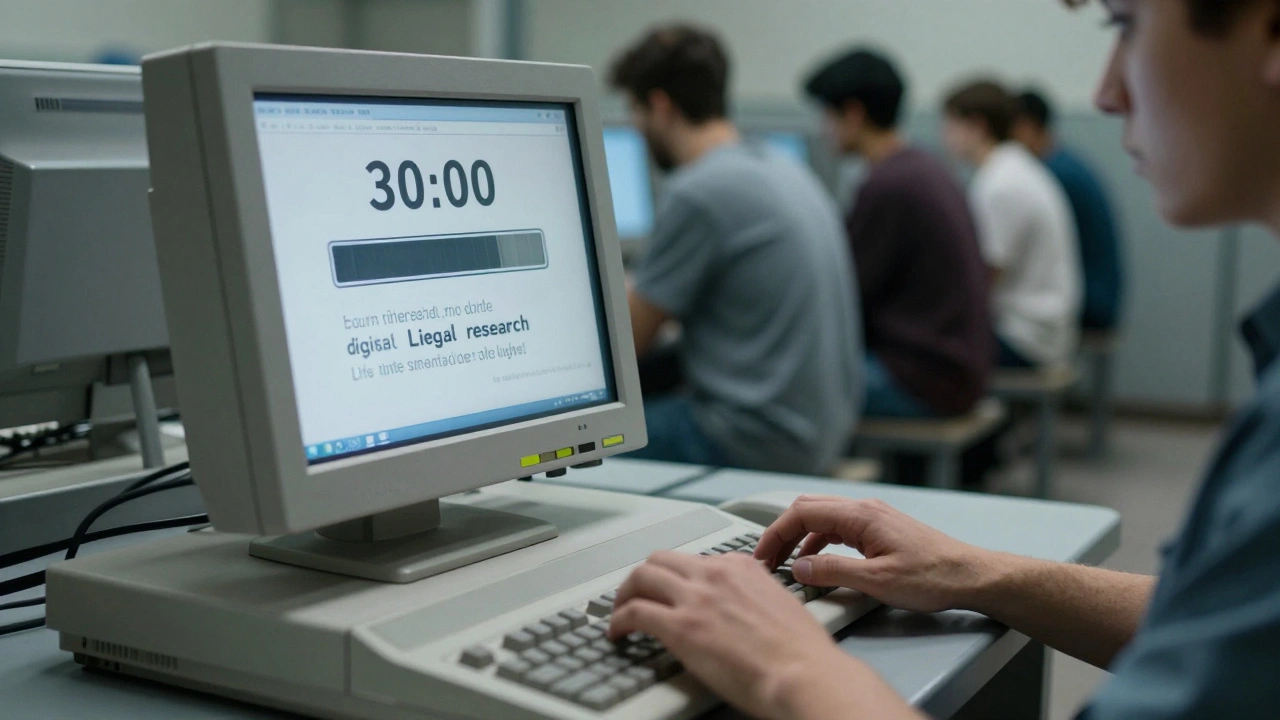
- Digital research sessions are capped at thirty minutes.
For those in lockdown units, Georgia uses book carts and photocopies to ensure compliance. Facilities housing over 150 lockdown inmates must establish satellite reference libraries. In segregation units, materials are loaned for seven days. While structured, critics argue that thirty-minute digital caps and rigid borrowing limits hinder complex legal research, especially for cases involving multiple statutes or lengthy case histories.
The Digital Divide and Resource Quality
Traditionally, prison law libraries relied on print materials: federal and state codes, case law reporters, and procedural manuals. These books are durable but slow to update. A statute changed last month won't reflect in a book printed last year.
Digital legal research systems are changing this landscape, but adoption is uneven. Systems like LexisNexis or Westlaw are standard in private practice, but prison versions are often stripped-down, slower, and heavily monitored. In Georgia, for instance, the shift to digital has introduced time limits that didn't exist with print books. With a physical book, you could take it back to your cell and read it overnight. With a terminal, you lose access the moment your thirty-minute session ends.
Advocacy groups like Georgia Prisoners' Speak argue that current digital implementations often degrade the quality of access rather than enhance it. They push for expanded screen time and better-quality resources, noting that meaningful access requires more than just having a computer-it requires enough time to use it effectively.
Disciplinary Restrictions and Gatekeepers
One of the most controversial aspects of prison legal access is its use as a disciplinary tool. Many states allow facilities to deny library access to inmates who damage property or violate rules. South Carolina, for example, permits a six-month ban from the law library for inmates found guilty of destroying law books.
Courts have pushed back against this. Federal district courts have ruled that using legal research access as a reward or punishment violates the constitutional right of fair access to courts. The logic is simple: legal access is too crucial a right to be subject to institutional discretion based on behavior unrelated to the legal matter itself. Yet, "gatekeepers" like case managers or correctional supervisors still wield significant power. They can delay requests, limit material availability, or interpret "security concerns" broadly to restrict access.
| Feature | Federal BOP Standard | Georgia Model | National Average (Estimated) |
|---|---|---|---|
| Weekly Access Hours | Reasonable (during leisure time) | Minimum 2 hours per inmate | Varies widely (4-30+ hours) |
| Library Operation Hours | Evenings/Weekends if practical | Minimum 20 hours/week | No statewide standard in 50% of states |
| Digital Access Limits | Not explicitly capped | 30-minute sessions | Increasingly restricted |
| Disciplinary Bans | Limited by case law | Permitted for misconduct | Common but legally contested |
Alternatives to Law Libraries
Law libraries are not the only way to satisfy the constitutional mandate. The American Library Association Standards note that jails and detention facilities may be exempt from providing law libraries if they offer other methods of essential legal assistance. This includes direct access to attorneys or paralegals.
In some jurisdictions, "jailhouse lawyers"-inmates who help others with legal paperwork-play a critical role. However, relying on peer-to-peer assistance introduces risks. Jailhouse lawyers are not licensed, and their advice can sometimes be incorrect or outdated. Furthermore, they can be targeted by staff or other inmates, making them an unstable resource.
Pro bono clinics and nonprofit organizations are stepping into this gap. Groups like the ACLU and local bar associations often run remote legal aid programs, allowing inmates to consult with real attorneys via phone or video. This model is growing but remains underfunded and inaccessible to many rural facilities.
What Counts as "Meaningful Access"?
Courts don't set a hard number for "meaningful access." Instead, they look at the functional outcome. Was the inmate able to file their motion before the deadline? Did they have enough time to research the relevant case law? If a jail rule limits inmates to one and a half hours per week, courts have struck that down as unlawful. Similarly, limiting the number of legal books an inmate can possess-even when non-legal books have higher limits-has been ruled unconstitutional.
The key test is functionality. If the system makes it practically impossible to prepare a coherent legal argument due to time constraints, material shortages, or bureaucratic hurdles, it fails the constitutional test. Security concerns are valid, but they cannot override the core right to petition the government for redress of grievances.
Do all prisoners have a right to a lawyer?
No. The Sixth Amendment right to counsel applies to criminal prosecutions. Once convicted, prisoners do not automatically get free lawyers for appeals or civil lawsuits. However, they do have a right to adequate access to the courts, which usually means access to law libraries or legal assistance.
Can a prison completely ban me from the law library?
A complete ban is likely unconstitutional. Courts have ruled that denying all access to legal materials as a disciplinary measure violates your right to meaningful access to the courts. However, temporary restrictions for security reasons or limited bans for damaging property may be permitted, depending on state laws.
How long do I have to use the law library?
There is no single national standard. Federal guidelines require "reasonable" time during leisure hours. States vary wildly: Georgia mandates at least two hours per week per inmate, while other states may offer as little as four hours or as much as thirty. Check your specific facility's policy manual.
What if the law library books are outdated?
Outdated materials can constitute a denial of meaningful access, especially if laws have changed significantly since the books were published. You can file a grievance citing inadequate resources. Increasingly, digital databases are required to ensure up-to-date information, though access to these may be time-limited.
Who can help me if I don't have a lawyer?
You can seek help from trained legal assistants provided by the prison, "jailhouse lawyers" (other inmates), or external pro bono organizations. Many nonprofits offer remote legal consultation services. Look for programs affiliated with local bar associations or civil liberties unions.