
Walking into a correctional facility a state or federal institution designed to hold individuals awaiting trial or serving sentences often feels like stepping into a different world. For those with a history of substance use disorder, the silence can be louder than the noise. You might wonder if you’ll ever find help for your cravings again. The good news is that recovery isn’t just possible; it’s structured. Many facilities now integrate Alcoholics Anonymous a global fellowship of men and women who share their experience, strength, and hope with each other to solve their common problem and to help others to recover from alcoholism (AA) and Narcotics Anonymous a worldwide fellowship of men and women whose primary purpose is to stay sober and help other addicts achieve the same goal (NA) as core components of rehabilitation.
The Reality of Recovery Behind Bars
Recovery in prison looks different from recovery on the street. There are no bars to avoid and no dealers to dodge. Instead, the environment is controlled, which removes external triggers but introduces new ones, like boredom or strict routines. This unique setting actually helps many people build a solid foundation. Without the chaos of daily life, you have time to focus entirely on your mindset. Staff members, known as correctional officers or case managers, oversee these programs. They ensure attendance and discipline, creating a safe space where honesty is expected.
Programs usually start shortly after intake. During the first few weeks, you’ll likely meet with a counselor who assesses your needs. If you express interest in AA or NA, you’ll be placed on a list. These groups are typically held several times a week. Unlike open community meetings, prison meetings are often closed to outsiders, which builds trust among participants. You’ll learn that consistency matters more than perfection here. Showing up, even when you don’t feel like it, is the first step toward lasting change.
Understanding the Twelve-Step Framework
Both AA and NA rely on the Twelve Steps a set of guidelines developed by Alcoholics Anonymous that serve as a roadmap for recovery from addiction. This framework isn’t just a list; it’s a process of self-examination. In a correctional setting, facilitators guide you through each step carefully. Step one involves admitting powerlessness over alcohol or drugs. Step two suggests turning your will over to a Higher Power. This doesn’t mean you have to become religious. It means trusting something bigger than yourself, whether that’s God, nature, or simply the group itself.
Working the steps in prison allows for deep reflection. You’ll write letters, do inventories, and make amends. Because everyone around you has been incarcerated, the shared experience creates a powerful bond. You realize you’re not alone in your struggle. Facilitators, often called sponsors, are experienced members who have walked this path before. They offer guidance without judgment. This mentorship is crucial because it bridges the gap between theory and practice. You learn how to apply these principles to your specific situation, making recovery feel personal rather than abstract.
| Feature | Alcoholics Anonymous (AA) | Narcotics Anonymous (NA) |
|---|---|---|
| Primary Focus | Alcohol dependence | All types of drug addiction |
| Meeting Frequency | Typically 3-5 times per week | Typically 3-5 times per week |
| Sponsorship Model | One-on-one guidance from a recovering alcoholic | One-on-one guidance from a recovering addict |
| Core Literature | The Big Book of AA | Basic Text of NA |
| Eligibility | Open to anyone with an alcohol problem | Open to anyone with a drug problem |
Daily Life and Meeting Structure
Your daily routine will revolve around these meetings. A typical day might include waking up early, attending morning chores, and then heading to a group session. Meetings usually last about an hour. They follow a standard format: reading a passage from the literature, sharing experiences, and ending with a prayer or meditation. Some meetings are discussion-based, while others are silent or meditative. You can choose which type suits you best. This flexibility helps you find what works for your personality.
Attendance is often mandatory if you’re enrolled in a substance abuse program. Missing a meeting could result in losing privileges or facing disciplinary action. However, most staff understand that recovery is hard. If you miss a meeting due to illness or work details, you can usually make it up later. The key is communication. Let your sponsor or counselor know if you’re struggling. This transparency is part of the culture. It teaches accountability, a skill that will serve you well after release.
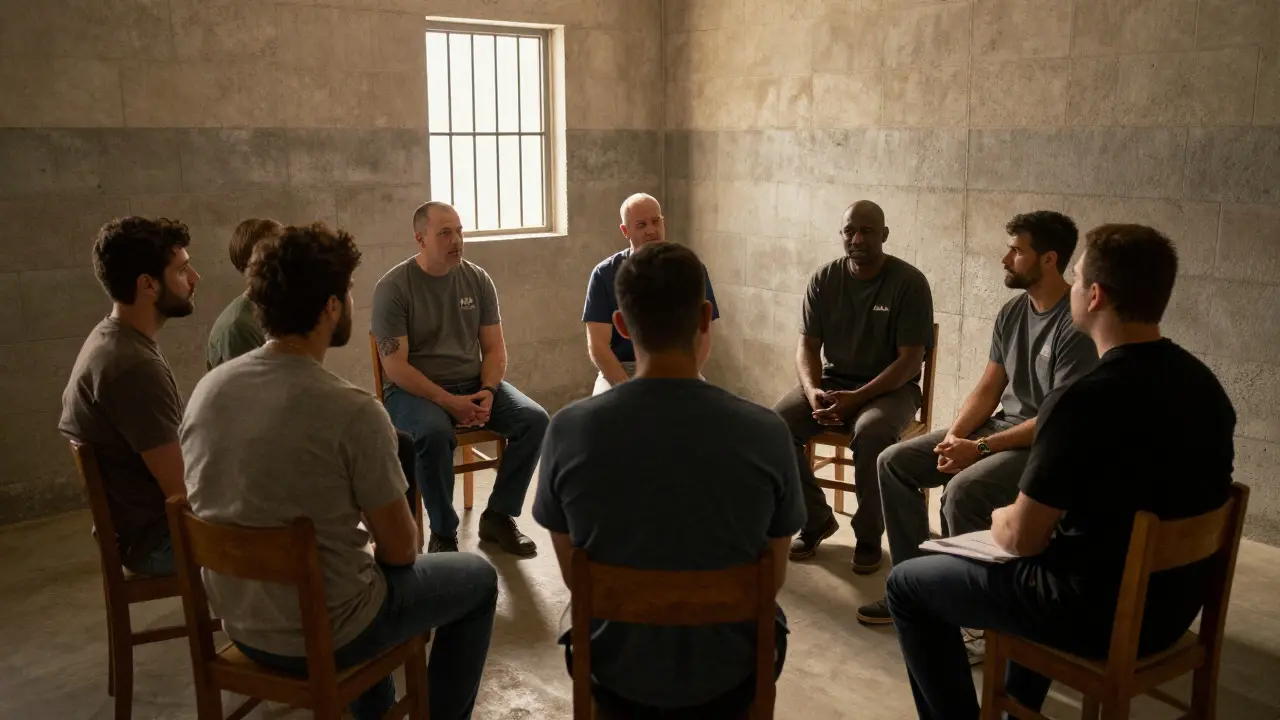
Building a Support Network Inside
One of the biggest benefits of prison recovery is the network you build. You’ll meet people from all walks of life, all dealing with similar issues. These connections become your lifeline. Sponsors provide ongoing support, checking in with you regularly. Peers in the group offer encouragement during tough times. This sense of belonging combats the isolation that often fuels addiction. You start to see yourself not as a prisoner, but as a person in recovery.
These relationships extend beyond meetings. You might form study groups or exercise buddies. Shared interests strengthen bonds. When you leave prison, these connections don’t disappear. Many facilities encourage staying in touch with sponsors and peers. This continuity is vital for maintaining sobriety. It reminds you that you have a place to turn to when things get difficult. Your support system becomes your safety net in the outside world.
Preparing for Reentry and Continued Sobriety
As your release date approaches, the focus shifts to planning. Counselors help you create a reentry plan that includes finding local AA or NA meetings in your community. You’ll identify resources like housing, job training, and outpatient treatment. This preparation reduces the risk of relapse. Knowing where to go and whom to call makes a huge difference. You’ll also practice coping skills learned in prison, applying them to real-world scenarios.
Transitioning back to society can be overwhelming. The freedom is both exciting and terrifying. But with a solid recovery foundation, you’re better equipped to handle it. Your sponsor will likely remain involved, offering guidance as you navigate new challenges. Local meetings provide a familiar structure in an unfamiliar environment. This bridge between inside and outside is critical. It ensures that your progress continues seamlessly. You’re not starting over; you’re continuing a journey that began behind bars.

Common Challenges and How to Overcome Them
Despite the supportive environment, challenges arise. Boredom can trigger urges to use. Strict rules might feel suffocating at times. Peer pressure within the facility can also be an issue. Some inmates may discourage recovery efforts. To overcome this, stay focused on your goals. Find positive influences and distance yourself from negative ones. Use your downtime productively. Read, write, or exercise. Keeping busy helps manage stress and prevents relapse.
Another challenge is emotional intensity. Working the steps can bring up painful memories. This is normal. Allow yourself to feel emotions without letting them control you. Talk to your sponsor or counselor when needed. They’ve seen it before and can help you navigate these moments. Remember, setbacks are part of the process. One bad day doesn’t erase months of progress. Stay committed to the next step, and keep moving forward.
Frequently Asked Questions
Are AA and NA meetings mandatory in prison?
It depends on the facility and your specific program enrollment. In many cases, if you are assigned to a substance abuse treatment track, attendance is required. Missing meetings can lead to loss of privileges. However, voluntary participation is always encouraged for those not formally enrolled.
Can I have a sponsor while incarcerated?
Yes, sponsorship is a core part of both AA and NA. You can find a sponsor within the prison or sometimes connect with someone from the outside through approved phone calls or mail. Your sponsor provides guidance and accountability throughout your recovery journey.
What happens if I relapse in prison?
Relapse is viewed as a setback, not a failure. You’ll likely need to restart certain parts of your program. Staff will assess the situation and adjust your treatment plan. The goal is to learn from the mistake and return to the path of recovery. Open communication with your counselor is essential during this time.
How long does it take to complete a substance abuse program?
Programs vary in length, ranging from a few weeks to several months. Most intensive programs last around 90 days. This timeframe aligns with the traditional "three-month" milestone in recovery. Completion often requires finishing all twelve steps and demonstrating consistent attendance and behavior.
Do I need to be religious to join AA or NA?
No, religion is not required. The concept of a "Higher Power" is interpreted individually. It can be God, nature, science, or the group itself. The focus is on surrendering control and trusting the process, not on adhering to any specific religious doctrine.