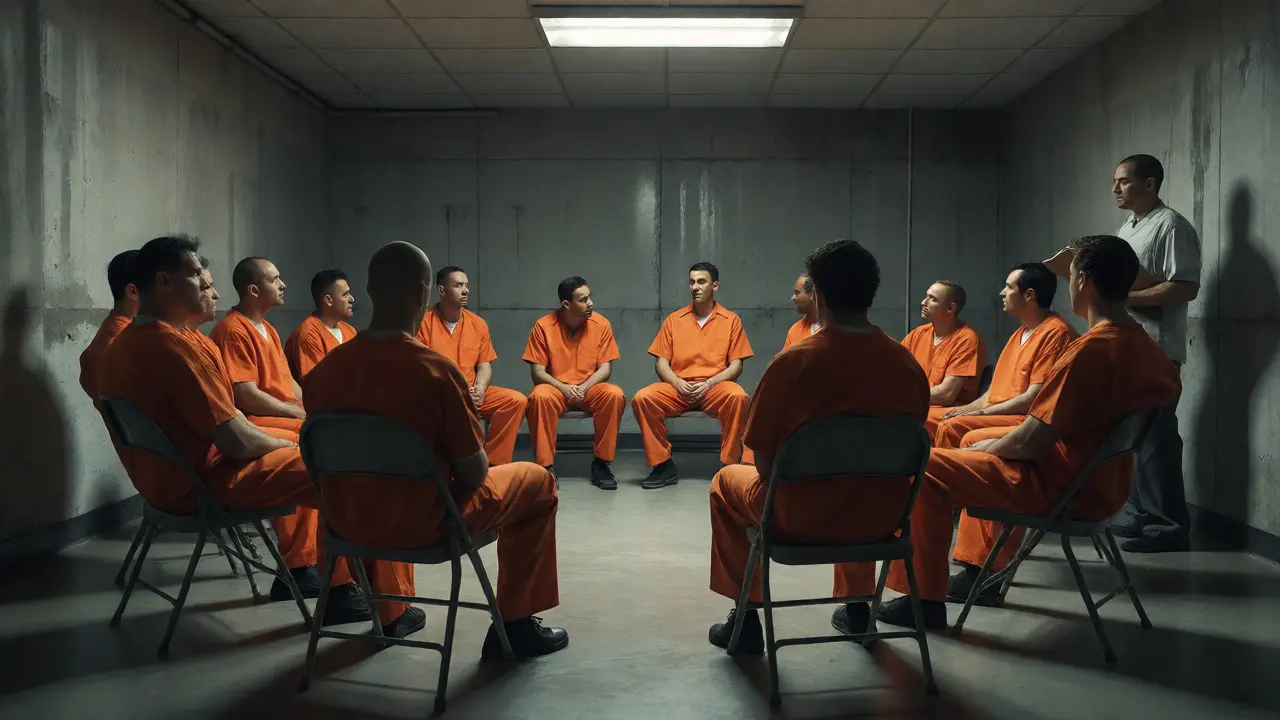
You walk into a room with twelve men who have spent years guarding their backs. They don’t trust the walls, they certainly don’t trust the guy with the clipboard, and they definitely don’t trust each other. Now you’re asking them to sit in a circle and talk about their feelings? In a Correctional Facility, this isn’t just awkward; it’s a high-stakes social minefield. Yet, when done right, Group Cognitive Behavioral Therapy (CBT) becomes the most powerful tool for breaking the cycle of incarceration.
The difference between a group that changes lives and one where guys just nod politely until the timer ends comes down to two things: psychological safety and active participation. You can’t force these. You have to build them, brick by brick, session by session. If you’re running classes or studying how rehab works on the inside, understanding these dynamics is everything. It’s not about textbook theory; it’s about reading the room before it reads you.
Why Standard Group Rules Fail Behind Bars
In a community clinic, you might start with a simple ground rule: "What happens here stays here." Try that in a maximum-security unit, and watch the eyes roll back in disbelief. Why? Because confidentiality in prison is a fragile concept. Everyone talks. Information travels through yard gossip faster than official memos. When participants know that sharing a vulnerability might get them labeled as "soft" or used against them later, they shut down.
Standard CBT protocols often assume a baseline of trust that simply doesn’t exist in correctional settings. The environment is adversarial by design. Guards are adversaries, systems are obstacles, and peers are potential threats. So, the first job of the facilitator isn’t teaching cognitive distortions; it’s negotiating a new social contract. This contract must acknowledge the reality of the environment. You can’t promise total secrecy, but you can promise respect. You can promise that no one will mock another man’s trauma. That distinction matters. It shifts the focus from impossible privacy to achievable dignity.
Building Psychological Safety Through Structure
Safety isn’t a feeling; it’s a structure. In Correctional CBT, structure reduces anxiety. Uncertainty breeds fear, and fear kills participation. If inmates know exactly what will happen in the next ten minutes, they relax. They stop scanning the exits and start listening.
Use rigid agendas. Start every session with the same check-in ritual. Maybe it’s a quick emotion scale rating, maybe it’s a specific breathing exercise. Keep it consistent. When the routine is predictable, the brain stops looking for threats and starts engaging with content. Also, normalize the discomfort. Say it out loud: "This feels weird because we aren’t used to talking like this." Acknowledging the elephant in the room removes its power. It tells the group, "I see your hesitation, and it’s valid." This validation builds the Therapeutic Alliance, which research consistently shows is the strongest predictor of positive outcomes in correctional treatment.
Navigating Power Hierarchies and Trust
Prison has its own caste system. It’s rarely about money; it’s about reputation, race, gang affiliation, and time served. A young guy charged with robbery might defer to an older lifer, even if the lifer is struggling with anger management issues. These hierarchies dictate who speaks and who listens.
If you ignore these dynamics, your "open floor" discussion will be hijacked by the loudest alpha in the room, while the quieter members-often those who need help the most-remain silent. To counter this, use structured turn-taking. Don’t ask, "Does anyone want to share?" Instead, go around the circle or use random selection methods that feel fair but remove social pressure. Empower the quiet ones by validating their contributions immediately. If a low-status member shares something vulnerable, reinforce it strongly. "That took guts," or "That connects directly to what we discussed last week." By elevating the value of honest contribution over social status, you slowly reshape the group culture.
| Dynamic Factor | Community Clinic | Correctional Facility |
|---|---|---|
| Confidentiality Expectation | High trust in legal protections | Low trust; relies on peer respect |
| Motivation Source | Intrinsic desire for change | Mixed: Court-ordered + intrinsic |
| Power Structure | Facilitator-led equality | Pre-existing inmate hierarchy influences speech |
| Exit Strategy | Voluntary withdrawal possible | Transfer or release disrupts continuity |
| Risk of Vulnerability | Social embarrassment | Potential physical/social threat |

Fostering Active Participation Beyond Compliance
There’s a big difference between attendance and participation. Many inmates attend CBT classes to earn good-time credits or satisfy parole board requirements. They show up, they sit, they might even take notes. But are they learning? Often, no. They’re performing compliance.
To move from compliance to engagement, make the material relevant to their immediate survival. Abstract concepts like "cognitive restructuring" mean nothing to a guy worried about getting shanked in the chow line. Translate CBT tools into street logic. Explain that identifying a "hot thought" is basically doing recon before a confrontation. If you think he’s disrespecting you, but you check the evidence and realize he was just distracted, you avoid a fight. That’s not therapy; that’s strategy. Frame Cognitive Distortions as tactical errors that lead to bad outcomes, whether that’s a write-up, a loss of privileges, or a return to custody.
Use role-playing carefully. It can be powerful, but it can also feel childish or humiliating if not framed correctly. Let them choose the scenarios. Ask, "What’s a situation that got you in trouble recently?" Then work through it. When the content is theirs, the buy-in increases dramatically. Participation grows when they see the utility of the skill in their daily prison life, not just in some hypothetical future outside the walls.
The Facilitator’s Role: Authenticity Over Authority
You can’t fake it in here. Inmates are experts at spotting phoniness. If you act superior, distant, or overly clinical, you lose them. The most effective facilitators in correctional settings strike a balance between professional authority and human authenticity. You don’t need to share your deepest secrets, but you do need to show that you’re real.
Admit mistakes. If you mess up a schedule, apologize. If you don’t know an answer, say so. This models the behavior you want to see: humility and accountability. Also, manage your own reactions. Some stories will be horrific. Some behaviors will be frustrating. If you react with judgment, the group closes ranks against you. Stay neutral but empathetic. Your calm presence acts as an anchor. When the group gets chaotic or emotional, your stability helps them regulate. This is called co-regulation, and it’s essential for individuals who may lack internal coping mechanisms due to past trauma or chronic stress.
Handling Resistance and Disruption
Resistance isn’t always defiance. Sometimes it’s protection. A guy who jokes constantly might be terrified of crying. A guy who refuses to speak might be testing the waters to see if you’ll punish him for silence. Labeling these behaviors as "resistance" creates an us-vs-them dynamic. Instead, view them as data points.
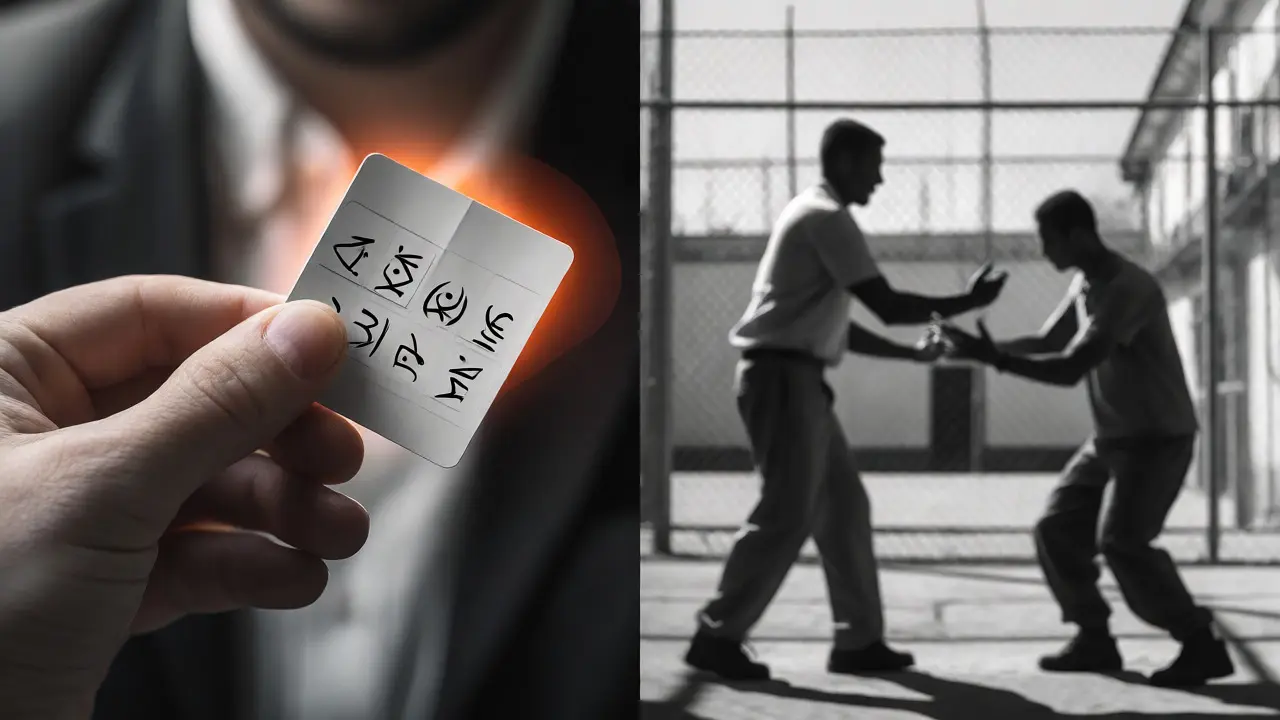
Address disruptions privately when possible. Public call-outs can trigger defensiveness, especially in front of peers. Use curiosity rather than accusation. "I noticed you’ve been quiet today. Is there something about the topic that feels off?" gives them an out. It invites dialogue instead of demanding submission. For persistent disruptors, leverage the group norm. If the group agrees that interrupting is disrespectful, let the peers hold the boundary. Peer feedback is often more potent than facilitator feedback because it carries social weight within the institution.
Sustaining Change After the Class Ends
The ultimate test of Group Therapy Dynamics isn’t what happens during the hour-long session; it’s what happens when the doors open and they disperse back into the general population. The skills learned in the circle must survive the chaos of the cell block.
Encourage "buddy systems" within the group. Pair participants up to check in on each other’s goals. This extends the support network beyond the classroom. Also, keep sessions short and frequent if possible. Long gaps allow old habits to creep back in. Provide tangible takeaways-cards with coping statements, worksheets that fit in a pocket. Make the tools portable. The goal is to create a micro-culture of change that persists despite the macro-environment’s resistance. When a participant uses a CBT technique to de-escalate a conflict in the yard, that’s the win. That’s the proof that the safety and participation built in the circle actually worked.
How do you handle confidentiality breaches in correctional groups?
You can't guarantee absolute secrecy, so set realistic expectations. Emphasize that while information might travel, the group culture punishes betrayal socially. Establish clear consequences for mocking or weaponizing shared stories, reinforcing that respect protects everyone's vulnerability.
What if participants are court-mandated and unmotivated?
Focus on utility rather than introspection. Show them how CBT skills solve immediate problems like avoiding disciplinary reports or managing stress. Connect the therapy to their tangible goals, such as earning privileges or preparing for parole hearings, to shift motivation from external obligation to internal benefit.
How does gang affiliation impact group therapy?
Affiliation dictates seating arrangements and speaking order. Be aware of rivalries and alliances. Avoid forcing direct eye contact or interaction between known rivals initially. Allow time for cross-group bonds to form naturally, using neutral topics to bridge divides before diving into personal disclosures.
Is it safe to use role-playing in prison CBT?
Yes, but frame it as "rehearsal" or "scenario planning" rather than acting. Let participants choose the scenarios based on recent conflicts. This reduces stigma and makes the exercise practical. Ensure the environment remains supportive so failure in the role-play doesn't feel like public humiliation.
How do I maintain engagement when turnover is high?
Design modular sessions where each meeting stands alone. Create strong entry rituals for new members and exit rituals for departing ones. Focus on core skills that are reinforced repeatedly. High turnover means you can't rely on long-term narrative building; instead, emphasize immediate skill acquisition and peer support networks.