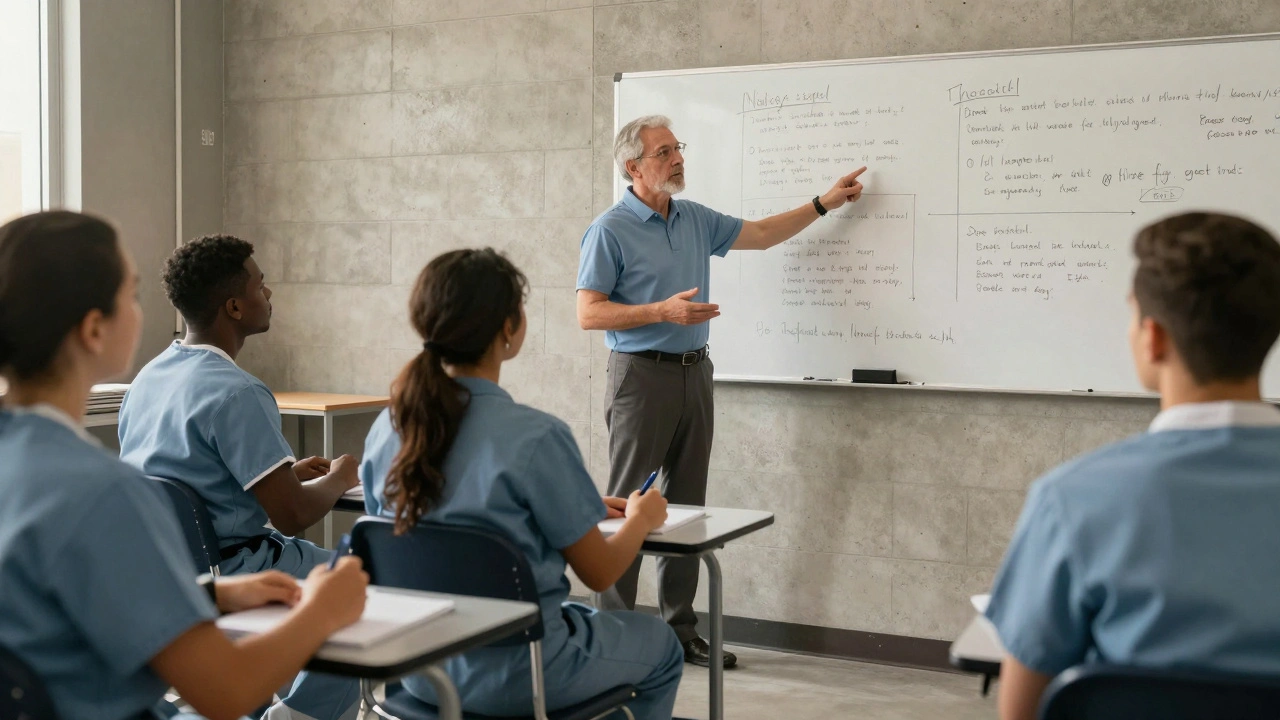
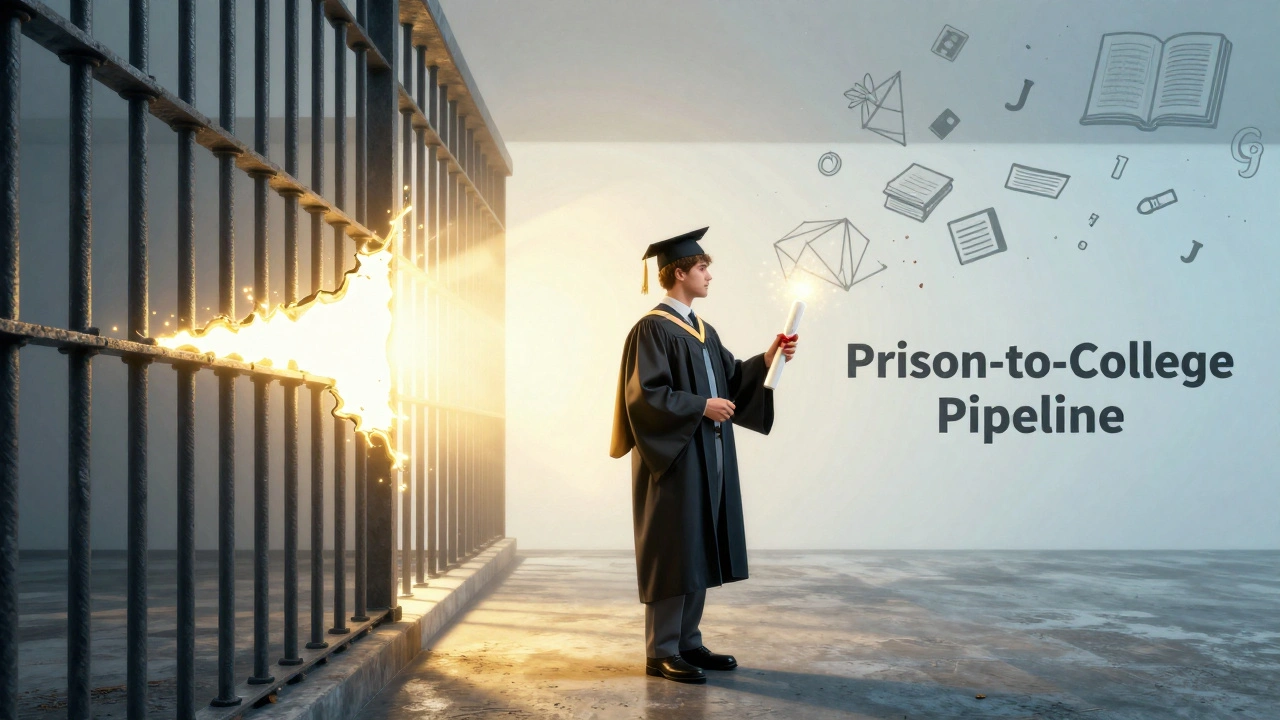
Imagine a system where the path from a correctional facility leads directly to a college classroom. It sounds like a radical idea, but it is already working in places like New York and California. This isn't just about handing out diplomas; it is about building a complete prison education pipeline that starts with basic literacy and ends with degree completion. For decades, we treated incarceration as an endpoint. Now, evidence shows it can be a starting point for transformation. When we get this right, we don’t just help individuals-we cut crime rates and save taxpayer money.
The core problem is simple: most people entering the justice system are trapped by educational gaps they never had the chance to close. Research shows that incarcerated populations have literacy levels 13 to 24 percent lower than the general public. Eighty-five percent of juveniles who hit the court system are functionally illiterate. These aren’t just statistics; they represent cumulative disadvantages rooted in the "school-to-prison pipeline," where students were pushed out of K-12 systems through criminalization rather than support. To break this cycle, we need a structured approach that addresses these foundational deficits before attempting higher education.
Starting with Foundational Literacy
You cannot build a house on sand, and you cannot build a college career on weak reading skills. The first stage of any effective pipeline is developmental education. This isn’t remedial work in the old sense-it’s intensive skill-building designed to meet rigorous academic standards. Programs must assess where learners actually are, not where we wish they were.
Consider the Prison-to-College Pipeline (P2CP) program, which partners with the City University of New York (CUNY). Before anyone steps foot in a college course, they undergo a thorough evaluation. Applicants must hold a high school diploma or GED, be eligible for release within five years, and pass CUNY’s reading and writing assessments. If they haven’t passed those tests yet, P2CP offers a full-scale developmental program to bridge the gap. In 2015 alone, this initiative provided access to the CUNY Assessment Test for over 150 incarcerated men across six facilities. By ensuring students can read complex texts and write coherent essays before advancing, the program eliminates the shock of unpreparedness that derails so many community college students outside prison walls.
Bringing College Into the Facility
Once literacy barriers are cleared, the next step is exposing students to actual college-level work. The traditional model assumes students will go to campus after release. But why wait? The P2CP model brings accredited professors directly into facilities like Otisville Correctional Facility. There, instructors teach liberal arts courses in English, Sociology, Anthropology, and more. This does two things: it builds academic readiness and it creates social capital.
When an incarcerated person sits in a class taught by a university professor, the message is clear: you belong here. This exposure demystifies higher education. Students learn how to navigate syllabi, participate in discussions, and manage deadlines. They also build relationships with faculty who become advocates upon their release. The guarantee model used by P2CP-where maintaining passing grades secures a seat at a CUNY institution upon release-removes the terrifying uncertainty of admission processes. You know your spot is waiting. That certainty changes everything.
The Game Changer: Second Chance Pell Grants
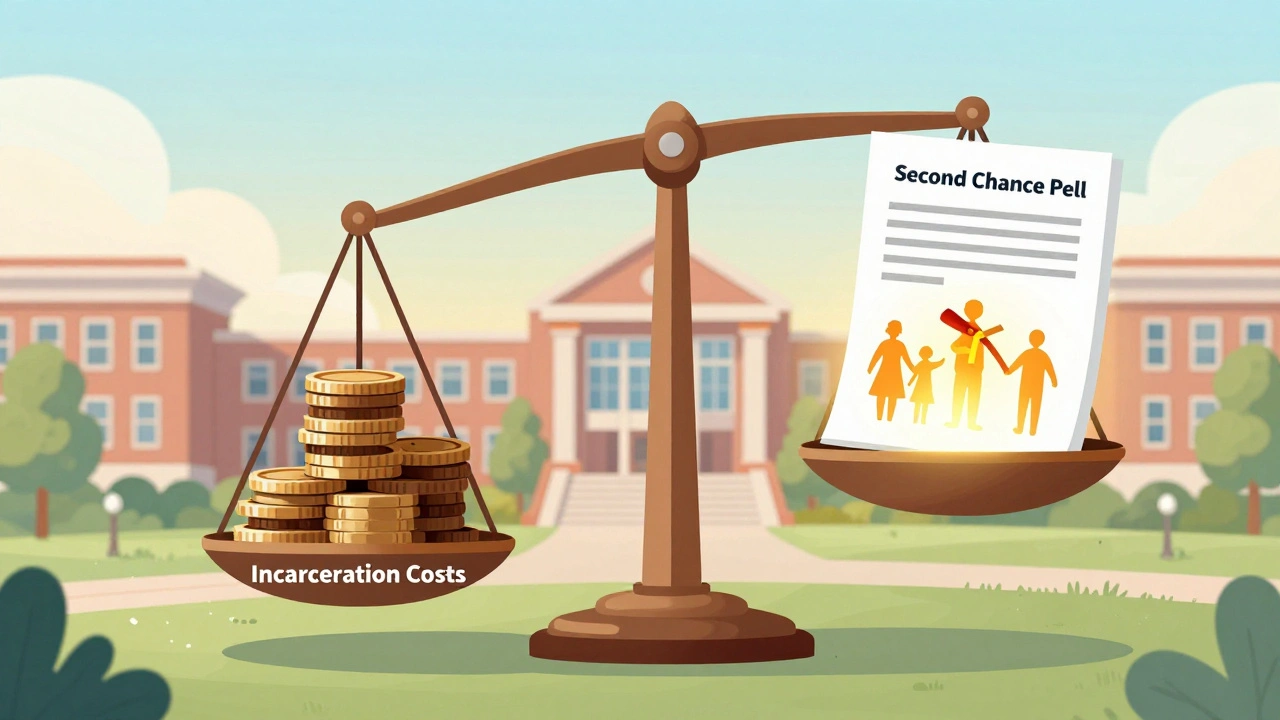
Funding has always been the biggest bottleneck. For over twenty years, federal law banned Pell Grants for incarcerated individuals. Then came the experiment, and now, the expansion. Starting in July 2026, the Second Chance Pell program expands eligibility to nearly 700,000 incarcerated adults. This is not a small tweak; it is a structural shift.
Pell Grants allow colleges to offer classes inside prisons without bearing the full cost. They enable formerly incarcerated students to pay tuition once they are released. Think about the economics: a year in prison costs more than a year at Harvard. Investing in education is cheaper than keeping someone locked up. With federal funds flowing, institutions can scale programs that were previously pilot projects. This funding removes the financial barrier that kept many quality programs from expanding beyond wealthy states or well-funded nonprofits.
| Model Type | Key Feature | Primary Benefit | Limitation |
|---|---|---|---|
| Developmental Only | Focuses on literacy/GED prep | Builds foundational skills | No direct path to degree |
| Vocational Training | Job-specific skills (e.g., welding) | Immediate employability | Limited upward mobility |
| Prison-to-College Pipeline | Accredited courses + post-release guarantee | Degree completion & low recidivism | Requires significant partnership resources |
| Second Chance Pell Enabled | Federally funded access | Scalable & sustainable | Implementation varies by state |
Success Stories from California
If you want proof that this works, look at California. The state became one of five to implement "ban the box" laws, delaying criminal background checks during college admissions. Led by initiatives like Rising Scholars, California created a "perfect storm" of state funding, gubernatorial leadership, and local interest. The results speak for themselves.
A study of four California community colleges found that formerly incarcerated students often earn higher GPAs than their peers and are more likely to attend full-time. In the Cal State system, Project Rebound undergraduates have maintained a B average over the past five years. More importantly, not a single Project Rebound graduate has returned to prison. Zero recidivism among graduates is not just impressive; it is transformative. It proves that when you remove barriers and provide support, these students thrive.
Navigating Structural Barriers
Even with funding and goodwill, pipelines face real obstacles. Prisons restrict access to materials. Internet connectivity is scarce. Digital literacy is low. Twenty-one million Americans outside prison lack broadband; imagine trying to take online courses behind bars. Yet, research shows that incarcerated students share many challenges with broader segments of college learners: minimal preparation, uncertainty about degree value, and unfamiliarity with campus resources.
This similarity is key. Solutions designed for incarcerated students often benefit all non-traditional learners. Workshops focused on self-advocacy, accessing wrap-around services, and building soft skills are essential. The Vera Institute of Justice emphasizes this in their guide, *Making the Grade*, noting that quality programming requires more than just classrooms-it needs reentry support. Without helping students navigate housing, childcare, and mental health issues upon release, even the best academic preparation can fail.
Why This Matters Beyond the Walls
Building a prison education pipeline is not charity; it is smart policy. One in six incarcerated individuals with an associate degree returns to prison. One in twenty bachelor’s degree holders do. Compare that to the general population, where only 4% of incarcerated people earn a degree. We are leaving massive potential on the table. Every degree earned breaks intergenerational cycles of poverty and crime. It strengthens families and communities. As Columbia Law School’s Center on Law and Criminal Justice notes, education is an effective strategy for reducing recidivism and increasing employment.
The momentum is shifting. Federal funding is expanding. States are innovating. Universities are partnering. But we must act quickly. The infrastructure needs development. Partnerships need strengthening. We cannot afford to let this progress stall. The data is clear: invest in education, and you invest in safety.
What is the Prison-to-College Pipeline?
The Prison-to-College Pipeline is a structured program that helps incarcerated individuals transition from foundational literacy training to completing college degrees. It typically involves bringing accredited courses into facilities and guaranteeing admission to partner universities upon release, contingent on maintaining good academic standing.
How does the Second Chance Pell Grant help?
The Second Chance Pell Grant provides federal funding for postsecondary education for incarcerated individuals. Expanded in July 2026, it allows colleges to offer classes inside prisons and helps formerly incarcerated students pay for tuition after release, removing major financial barriers.
Do prison education programs reduce recidivism?
Yes. Research shows that incarcerated individuals with associate degrees have a much lower rate of returning to prison (1 in 6), and those with bachelor’s degrees have an even lower rate (1 in 20). Some programs, like California’s Project Rebound, have reported zero recidivism among graduates.
What are the main barriers to expanding these programs?
Barriers include limited access to educational materials, lack of internet and technology infrastructure in prisons, low digital literacy among participants, and institutional restrictions. Additionally, coordinating between correctional facilities and educational providers requires significant administrative effort and sustained funding.
Is prison education more expensive than college?
No. A year in prison costs significantly more than a year of college tuition at prestigious institutions like Harvard. Funding education for incarcerated individuals is a cost-effective alternative that saves taxpayers money by reducing recidivism and associated incarceration costs.