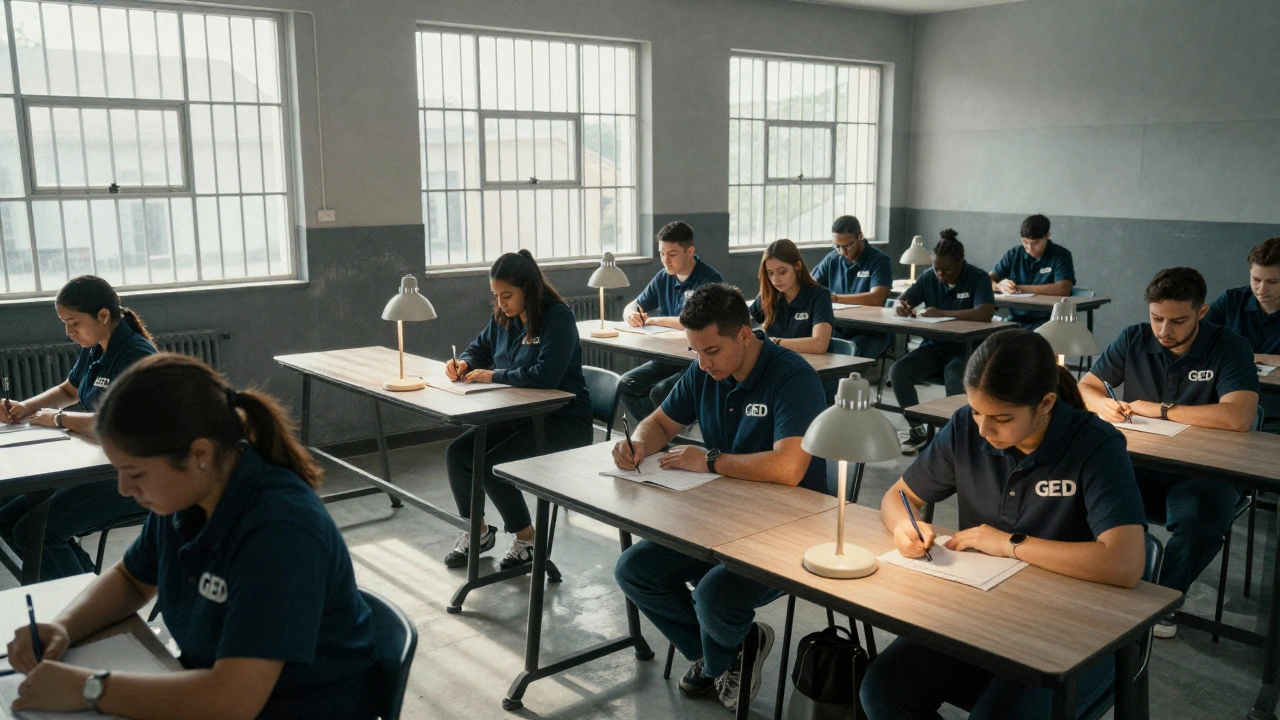
Most people think of prison as a place for punishment, but the real goal should be making sure people don't come back. That requires money. Whether it's a GED class, mental health counseling, or job training, rehabilitation programs cost money to run. The struggle is that these programs often rely on a complex web of federal grants, state budgets, and private partnerships that can vanish when political priorities shift. If we want to lower recidivism, we have to understand where the money comes from and why some programs thrive while others disappear.
The Federal Grant Engine
A huge chunk of rehabilitation funding doesn't come from a permanent budget line but from competitive grants. The U.S. Department of Justice (DOJ) is the primary driver here. In February 2026, the DOJ and the Department of Labor announced a massive $155.5 million push for reentry and behavioral health. This isn't just one big check; it's split into dozens of smaller pots targeting specific groups, like incarcerated parents or high-risk youth.
The backbone of this system is the Second Chance Act (SCA), which is a federal legislative framework that authorizes grants to improve the reentry process. The SCA is designed to bridge the gap between being locked up and getting a first paycheck in the real world. It funds everything from residential reentry centers to community supervision. However, because these are grants, agencies have to apply for them, compete against other states, and prove their results to keep the money flowing.
Specialized Funding Streams
Not all rehabilitation is the same. Funding is often siloed into specific "jobs-to-be-done." For example, the Bureau of Justice Assistance (BJA) runs the Smart Reentry Demonstration Program. With awards up to $1 million each, this program focuses on the actual mechanics of reintegration-getting a person from a cell to a stable home without a relapse or a new arrest.
Then there is the behavioral health piece. We've finally stopped treating mental health as a side project. Current funding models now integrate behavioral health into the core of reentry. In the 2026 cycle, $42 million was allocated across 14 awards to fund crisis stabilization centers and technology modernization. This recognizes that you can't expect someone to hold down a job if they are in a psychiatric crisis.
We also see targeted funding for the most vulnerable. The Office of Juvenile Justice and Delinquency Prevention (OJJDP) handles the youth side, providing millions for moderate-to-high risk youth. Similarly, there are specific funds for incarcerated parents to ensure that the cycle of incarceration doesn't just pass down to the next generation.
Employment and the Labor Pipeline
You can't rehabilitate someone if they can't earn a living. This is where the Department of Labor (DOL) steps in. Unlike the DOJ, which focuses on justice and safety, the DOL focuses on the economy. Through the First Step Act funding, the DOL has poured millions into partnerships between federal prisons and community organizations.
A key example is the Pathway Home initiative. Instead of waiting until someone is released to start job training, this model pushes training into the prison itself, then continues it through residential reentry centers and into the community. This "warm hand-off" prevents the terrifying gap between the prison gate and the first day of work. The DOL also uses Federal Bonding Demonstration Grants, which basically act as a government-backed insurance policy for employers who are nervous about hiring formerly incarcerated people.
| Agency/Act | Primary Focus | Funding Mechanism | Key Target |
|---|---|---|---|
| DOJ / Second Chance Act | Systemic Reentry & Supervision | Competitive Grants | State/Local Govs & Nonprofits |
| Department of Labor (DOL) | Workforce Development | Partnership Grants | Employment & Vocational Training |
| BJA (Smart Reentry) | Evidence-Based Integration | Demonstration Awards | High-Risk Adult Reentry |
| OJJDP | Youth & Family Bonds | Specialized Grants | Juveniles & Incarcerated Parents |

Internal Prison Funding and Incentives
Inside the Bureau of Prisons (BOP), funding looks different. It's less about grants and more about appropriations for staffing and programs. The BOP is currently trying to fill gaps by hiring more social workers and psychologists to run National Programs like BRAVE and STAGES.
One of the most interesting "funding" models isn't about dollars, but about time. The First Step Act introduced Facility Time Credits (FTCs). Inmates can effectively "earn" their way out faster by participating in approved rehabilitation programs. For those at a low recidivism risk, they can earn up to 15 days of credit for every 30 days they spend in an opt-in status. While this doesn't put money in a bank account, it provides a powerful incentive for inmates to engage with the programming the government is paying for.
The Privatization Puzzle
We can't talk about funding without talking about the Residential Reentry Centers (RRCs). These are the halfway houses where about 80% of federal inmates spend their final months. Since the 80s, these have been almost entirely privatized. The government pays for-profit companies and nonprofits to house and supervise people.
This creates a weird tension. Private operators are incentivized by efficiency and occupancy, while rehabilitation requires intensive, expensive, one-on-one support. The BOP is currently overhauling how these facilities are used, trying to move away from a "warehouse" model toward something that actually prepares a person for the street.
The Sustainability Gap
Here is the hard truth: federal grants are a band-aid. A state might win a $1 million grant to start a mental health program in a prison, but what happens when that grant ends in three years? Many states struggle to move these programs into their general fund. When the federal money dries up, the program often shuts down, regardless of how well it worked.
Furthermore, there is a glaring lack of research funding. While the DOJ and DOL fund *programs*, organizations like the National Institutes of Health (NIH) provide very little funding for the actual *health research* related to incarceration. We are essentially running a massive social experiment with the US prison system without enough scientific funding to track the long-term health outcomes of the people involved.
How does the Second Chance Act actually work?
The Second Chance Act (SCA) provides the legal authority for the federal government to give grants to state and local governments. Instead of the federal government running the programs, they provide the money to local entities who can implement things like job training, housing assistance, and mental health services for people returning home.
What are Facility Time Credits (FTCs)?
FTCs are an incentive system created by the First Step Act. Inmates can earn days off their sentence by participating in approved recidivism-reduction programs. Depending on their risk level, they can earn between 10 and 15 days of credit for every 30 days they stay active in the program.
Who funds the halfway houses (RRCs)?
Residential Reentry Centers are primarily operated by private for-profit companies and non-profit organizations. The Bureau of Prisons (BOP) pays these providers to house and supervise inmates during the final phase of their sentence.
Does the Department of Labor provide prison funding?
Yes, but specifically for workforce development. The DOL focuses on employment outcomes through initiatives like Pathway Home and PROWD, ensuring that incarcerated people have vocational training and a clear path to a job upon release.
Why is there a "sustainability gap" in prison programs?
Most rehabilitation programs are funded by short-term federal grants. Once the grant period ends, the federal government doesn't always provide more money, and state governments often can't or won't pay for the programs out of their own budgets, leading to the collapse of successful initiatives.
Next Steps for Program Success
If you're looking at how to improve these models, the focus needs to shift from "competitive grants" to "sustained funding." States that successfully integrate federal grants into their own long-term budgets see much better results. For policymakers, the goal should be creating a braiding model-where federal, state, and private funds overlap to support a person from the day they enter prison until they've been stably employed for a year after release.