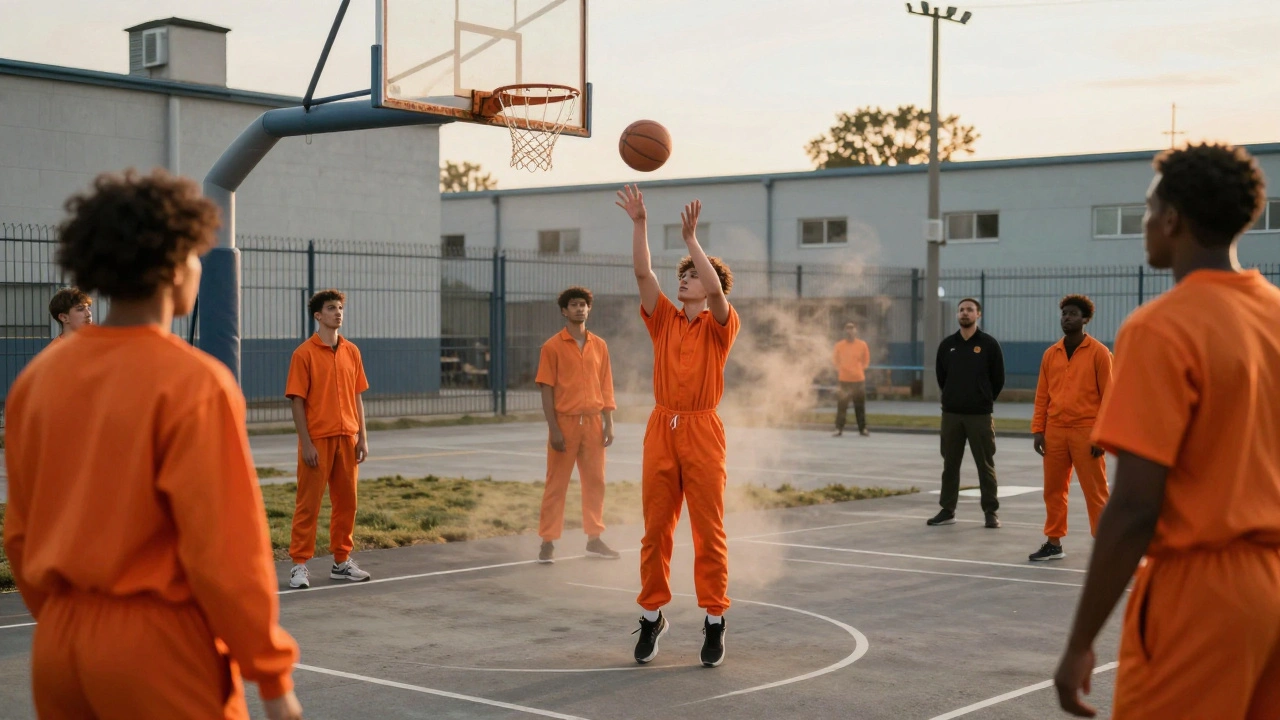
When you think of prison, you probably picture locked cells, strict routines, and silence. But in many correctional facilities across the U.S., there’s another rhythm happening-the sound of a basketball bouncing, the shout of a soccer goal, the crack of a softball being hit. These aren’t just games. They’re lifelines.
Why Team Sports Matter in Prison
Prison isn’t just about punishment. It’s also about survival. Inmates face high levels of stress, isolation, and anger. Without healthy outlets, tension builds. Fights break out. Mental health crashes. That’s where team sports step in. They don’t just burn energy-they rebuild people. Research shows that inmates who play team sports report lower stress, better moods, and higher self-esteem. It’s not magic. It’s biology. Playing sports activates areas of the brain that control impulse, emotion, and decision-making. The prefrontal cortex, which often shuts down under chronic stress, starts working again. The amygdala, which triggers rage, calms down. The hippocampus, tied to memory and learning, gets stronger. And unlike individual workouts, team sports force interaction. You can’t just sit on the bench and zone out. You have to talk. You have to trust. You have to rely on others. That’s rare in prison, where most relationships are built on fear or survival.Basketball: The Most Common Game in Prison
If you walk into any U.S. prison yard, odds are you’ll find a basketball court. It’s cheap, needs little space, and requires only one ball. Basketball is the backbone of prison recreation programs. Why does it work? Because it’s fast. You get a second to think before you pass, shoot, or defend. That teaches impulse control. You learn to read your teammate’s eyes. You learn to handle pressure-whether it’s a close game or a guard watching. Inmates who play regularly say they feel more in control of their actions, even outside the court. Teams form naturally. Rivalries develop. But so do alliances. A guy who used to be a loner starts passing the ball. A hot-headed inmate learns to stay calm when he gets fouled. These aren’t just basketball skills-they’re life skills.Soccer: Building Trust Through Movement
Soccer might not seem like a natural fit for prison. But it’s growing. In places like California, Texas, and Oregon, correctional facilities have started organizing soccer leagues. Why? Because soccer demands constant movement and communication. There’s no time to stand still. You’re always running, passing, covering. You can’t dominate the ball-you have to share it. That’s the whole point. Inmates who play soccer say it teaches them patience and cooperation in ways other sports don’t. A 2023 study from the University of Oregon tracked 87 inmates in a soccer program over six months. Those who played at least twice a week showed a 34% drop in disciplinary reports. They also reported better sleep and fewer episodes of depression. The rhythm of the game-pass, move, repeat-becomes a kind of meditation. Coaches, often volunteers from local community clubs, don’t just teach tactics. They talk. They listen. They show up week after week. That consistency matters. For many inmates, this is the first time an adult has believed in them without expecting anything in return.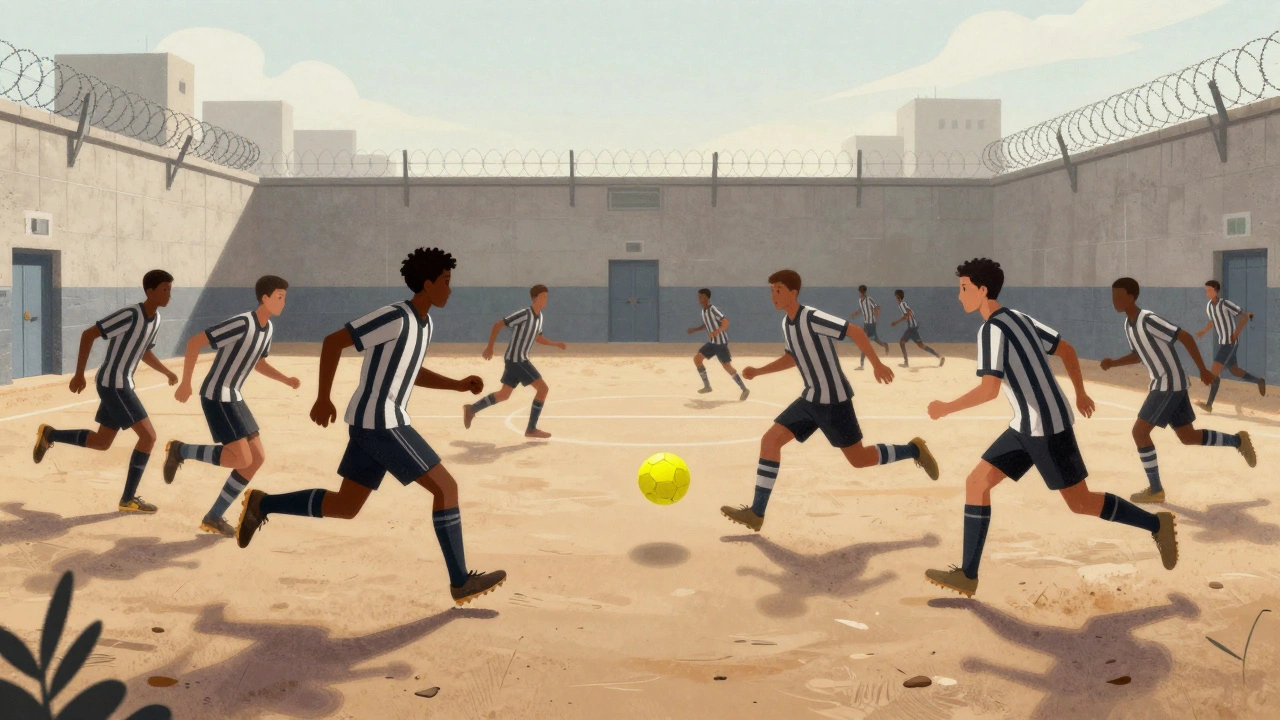
Softball: Slowing Down to Rebuild
Softball doesn’t get the spotlight like basketball or soccer. But it might be the most powerful tool for emotional healing. Why? Because it’s slow. There are pauses-between pitches, between innings, between plays. That’s not a flaw. It’s the point. Inmates who struggle with anger or impulsivity often find softball easier to manage. You learn to wait. To breathe. To focus on the next pitch, not the last mistake. Softball also brings in people you might never talk to. A guy from a rival gang becomes your first baseman. A quiet inmate who never spoke in group therapy becomes your team captain. You’re forced to cooperate for 90 minutes, and sometimes, that’s all it takes to break down walls. One facility in Washington State started a softball league for inmates with histories of violent offenses. After one season, 78% of participants said they felt more capable of resolving conflict without violence. Staff noticed fewer altercations in the housing units. The game didn’t change them. It gave them space to change themselves.What Happens When the Game Ends?
The real test isn’t what happens inside the prison. It’s what happens after release. Studies show inmates who participated in team sports are 15% less likely to return to prison within three years. Why? Because sports don’t just change behavior-they build networks. A former inmate who played basketball in prison might get a call from his old coach: “Hey, there’s an open spot on the community team. You still got it?” That’s not just a game. It’s a bridge back to society. It’s a reason to show up. A reason to stay clean. A reason to believe you’re more than your record. Some programs, like the one run by Charlton Athletic Community Trust in the UK, follow inmates after release. They help them join local clubs, find jobs, or even become coaches. That continuity is rare-but when it happens, it works.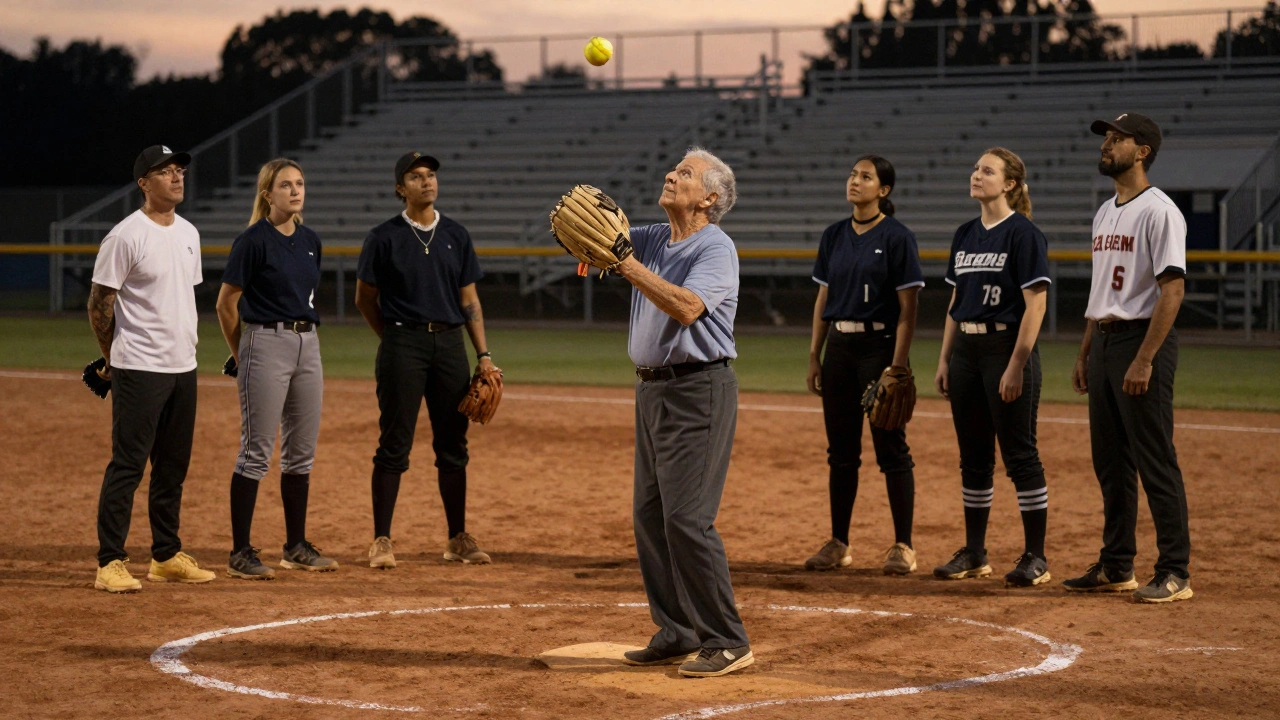
More Than Just Recreation
Team sports in prison aren’t about winning championships. They’re about winning back control. Control over your body. Control over your emotions. Control over your choices. Basketball teaches quick thinking under pressure. Soccer teaches trust and constant effort. Softball teaches patience and presence. Together, they give inmates tools they can’t get from a lecture, a class, or a counselor. And they’re not just for the young. Men and women of all ages benefit. A 52-year-old inmate playing slow-pitch softball might not be running the bases, but he’s learning to listen again. To care again. To be part of something bigger than himself.What’s Missing?
Here’s the truth: most prisons still don’t offer enough sports. Budgets are tight. Staff are stretched thin. Some administrators still see recreation as a luxury, not a necessity. But the data doesn’t lie. Programs that include team sports see fewer fights, less mental health crises, and lower recidivism. They save money. They save lives. The question isn’t whether we should offer basketball, soccer, and softball in prison. It’s why we don’t offer more of them.Do team sports really reduce violence in prison?
Yes. Multiple studies, including one from the Journal of Sports Rehabilitation, show that prisons with regular team sports programs report up to 40% fewer incidents of violence and disciplinary infractions. The structure of teamwork, rule-following, and emotional regulation taught during games translates directly into calmer daily interactions behind bars.
Are there any rules for sports in prison?
Yes. Each facility sets its own rules, but common ones include: no contact outside your team, mandatory participation in educational or work programs to join, no weapons or alcohol allowed, and zero tolerance for cheating or intimidation. Games are always supervised by staff or trained volunteers.
Can inmates play sports if they’re in solitary confinement?
Generally, no. Inmates in solitary are restricted from group activities. But some facilities allow limited physical activity, like walking or light calisthenics, as part of mental health support. Access to team sports usually requires being in general population and having a clean disciplinary record for at least 30-60 days.
Do women in prison get the same access to sports as men?
Not always. Many women’s facilities have fewer resources, smaller yards, and less funding for sports. But programs that do exist-like softball leagues and volleyball teams-report even higher participation rates among women. For many, it’s one of the few spaces where they feel supported, not judged.
Can playing sports in prison help with parole?
It doesn’t guarantee parole, but it helps. Parole boards often ask about behavior, rehabilitation efforts, and plans after release. Inmates who can show consistent participation in sports, leadership roles on teams, and positive feedback from coaches often present a stronger case for reintegration.
What kind of equipment do prisons provide?
Most prisons provide basic gear: basketballs, soccer balls, softballs, bats, gloves, and sometimes uniforms. Some facilities allow inmates to buy personal items like cleats or wristbands using commissary funds. Donations from outside organizations-like local youth leagues or sports nonprofits-often fill gaps.