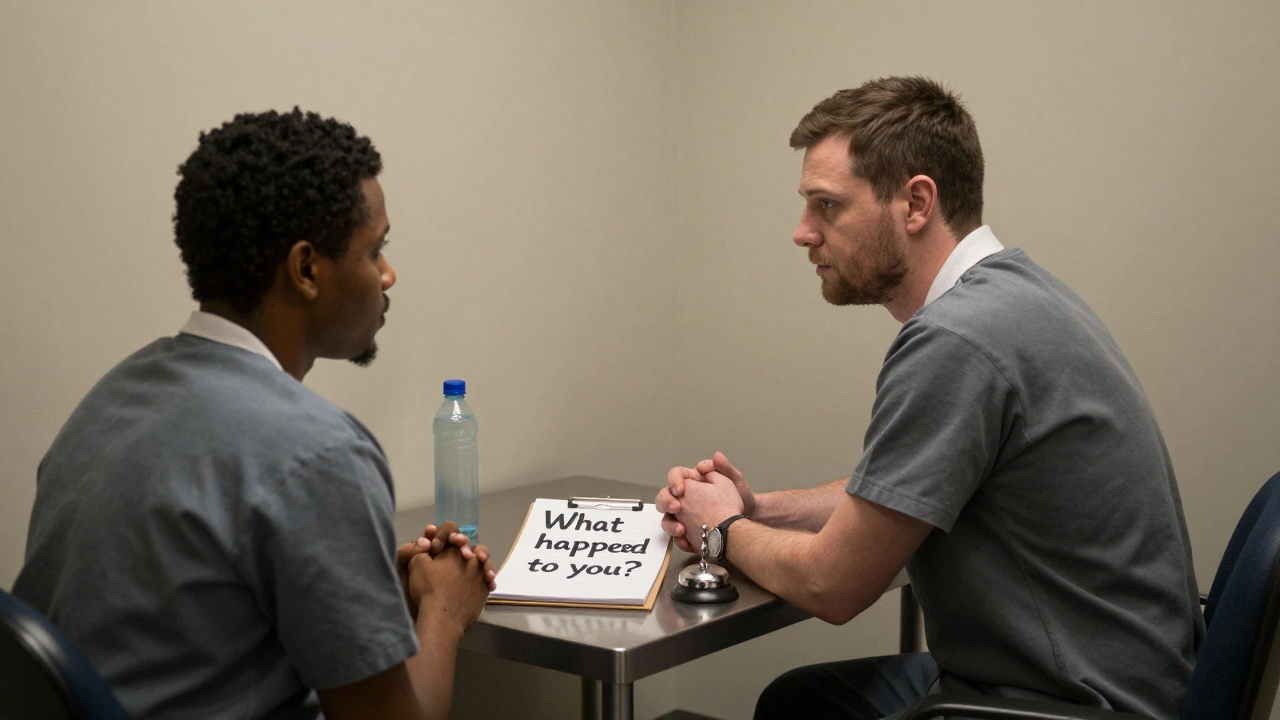
Inside prisons, mental health isn’t an afterthought-it’s a necessity. With over 60% of incarcerated individuals showing signs of a mental health disorder, and nearly 80% reporting past trauma, correctional counselors aren’t just managing behavior-they’re saving lives. These professionals don’t work in quiet offices or therapy rooms with soft lighting. They operate in cellblocks, visiting rooms, and secure group spaces, adapting proven mental health strategies to environments where safety, control, and dignity must coexist.
Therapy Starts With Understanding Trauma
Most people entering prison have lived through trauma-childhood abuse, domestic violence, loss, or repeated exposure to violence. Studies show that PTSD rates in prison are nearly three times higher than in the general population. That’s not a coincidence. Trauma shapes how someone reacts to stress, authority, or even silence. A raised voice might trigger a flashback. A lockdown might feel like abandonment. Correctional counselors don’t treat symptoms in isolation. They start by asking: What happened to you? not What’s wrong with you? Trauma-informed care means changing how the whole system works. Staff learn to recognize signs of distress without assuming defiance. Housing units are arranged to reduce sensory overload. Sudden alarms or strip searches are minimized where possible. Counselors work with guards to adjust routines so they don’t accidentally re-traumatize someone. A simple change-like giving a warning before entering a cell-can make the difference between a meltdown and a moment of calm.Individual Therapy: One Person, One Plan
Group settings are vital, but some needs are too personal, too raw, for a room full of people. That’s where individual therapy comes in. Correctional counselors meet one-on-one with inmates, often in small, secure rooms with minimal distractions. Sessions are brief-30 to 45 minutes-but consistent. Weekly. Sometimes more. Cognitive Behavioral Therapy (CBT) is the backbone here. It’s not about talking through feelings endlessly. It’s about changing thought patterns that lead to self-destructive choices. A counselor might work with an inmate who believes, “I’m worthless, so I might as well fight.” Together, they break that belief down. They look at evidence: Did he hold a job before? Did he help a friend? Did he finish a class? Slowly, the narrative shifts. Role-playing helps them practice new responses: How do you walk away from a provocation? How do you ask for help without sounding weak? For those with severe emotional dysregulation, Dialectical Behavior Therapy (DBT) is used. It teaches skills like mindfulness, distress tolerance, and interpersonal effectiveness. One inmate, after years of self-harm, learned to use a cold water bottle to ground himself during panic. Another learned to name his emotions before reacting-“I’m not angry, I’m scared.” These aren’t abstract ideas. They’re tools that stick.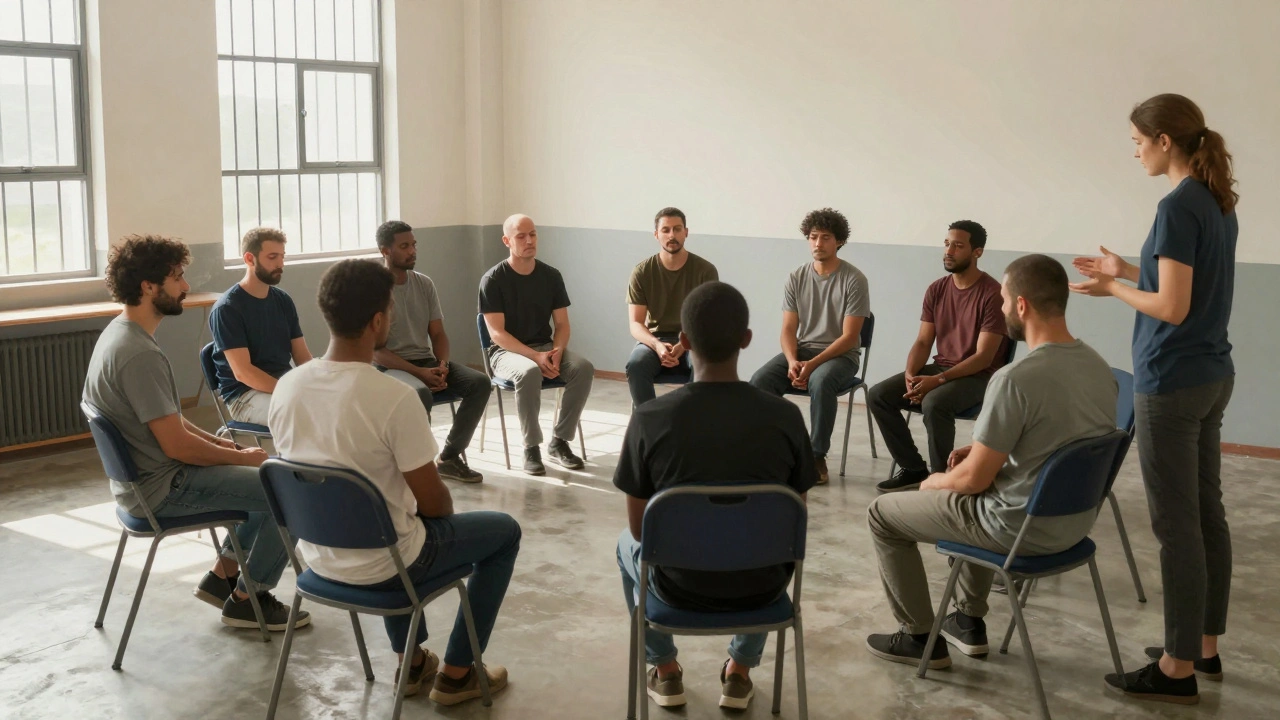
Group Therapy: Healing in Community
Prison is isolating. Group therapy breaks that. In a circle of 8 to 12 inmates, people who’ve been told they’re “bad” or “broken” start hearing, “I get that.” Group Cognitive Processing Therapy (CPT) is one of the most effective trauma-focused programs. It’s structured, time-limited, and built for correctional settings. Sessions include psychoeducation-learning how trauma affects the brain-and guided processing of traumatic memories. Unlike outside therapy, these groups don’t require weeks of uninterrupted time. They’re designed to work around transfers, lockdowns, and court dates. Another powerful model is TARGET: Trauma Adaptive Recovery Group Education and Therapy. Developed for juvenile detention centers and later adapted for adults, TARGET teaches inmates to recognize their triggers, manage physical reactions, and build self-worth. A two-year study found that each session attended reduced disciplinary incidents by 22%. That’s not just about behavior-it’s about reclaiming agency. Mindfulness and breathing exercises are woven into every group. Not because they’re trendy, but because they work. A 2023 study in a medium-security prison showed that inmates who practiced daily body scans and controlled breathing had 40% fewer anxiety episodes. No medication. No restraint. Just stillness.Peer Support: The Unseen Force
Sometimes, the most powerful therapy comes from someone who’s been there. Peer-led programs are growing fast. In California’s Insight Prison Project, trained inmates lead mindfulness and art therapy groups. In Ohio, Peer Recovery Support Services (PRSS) pairs inmates recovering from addiction with those still struggling. These peers aren’t counselors. They’re mentors. They’ve sat in the same cells, felt the same shame, and found a way forward. Their credibility is unmatched. When a peer says, “I used to think I deserved this. Then I learned I didn’t,” it lands differently than a counselor saying the same thing. Peer programs reduce stigma. They build trust. And they extend care beyond what paid staff can provide. A counselor might see 10 inmates a day. A peer might spend hours talking to one person during yard time. That connection saves lives.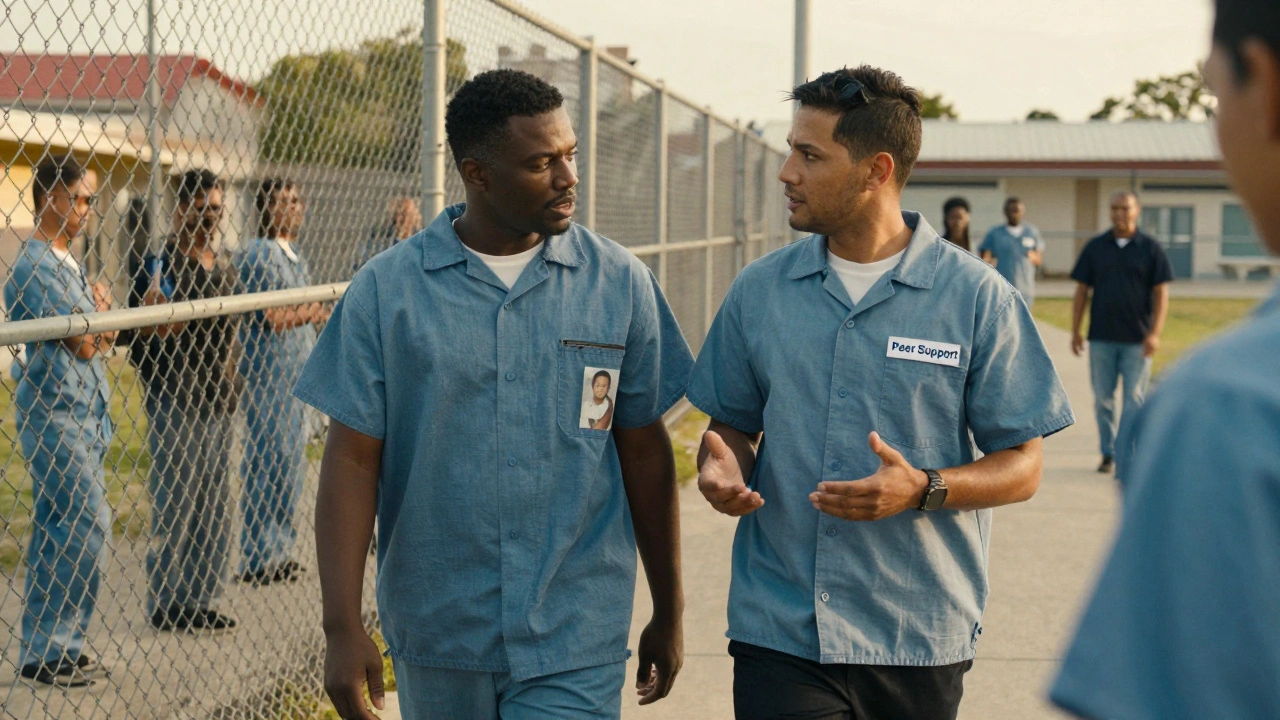
What Makes Therapy Work in Prison?
It’s not just the techniques. It’s the environment. Therapy fails when:- Staff don’t understand trauma and punish reactions as defiance
- Programs are canceled because of lockdowns or staffing shortages
- Inmates are moved between facilities without transferring records
- Therapy is seen as a perk, not a right
- Consistency-Same time, same space, same counselor whenever possible.
- Training-All staff, not just counselors, learn trauma-informed communication.
- Connection-Therapy links to reentry planning: job training, housing support, family reunification.
The Bigger Picture
Healing in prison isn’t just about reducing violence or managing behavior. It’s about breaking cycles. Trauma doesn’t disappear when someone walks out of prison. Without support, it fuels recidivism. But when inmates learn to regulate their emotions, manage triggers, and build healthy relationships? They don’t just survive prison. They leave it changed. Research shows that prisons with strong mental health programs see lower rates of reoffending. Inmates who complete CBT or DBT are 30% less likely to return to prison within three years. That’s not just a statistic-it’s a father who gets to see his kid graduate. A brother who finds steady work. A person who stops believing they’re broken. Correctional counselors aren’t miracle workers. They’re skilled professionals working in broken systems. But they’re proving that healing is possible-even here. Even now.Do correctional counselors prescribe medication?
No, correctional counselors typically don’t prescribe medication. That’s the role of licensed psychiatrists or psychiatric nurses. Counselors assess mental health needs, provide therapy, and coordinate referrals to medical staff who can prescribe. They monitor how medications affect behavior and emotional state, and they often help inmates understand why a medication is important.
What’s the difference between CBT and DBT in prison?
CBT (Cognitive Behavioral Therapy) focuses on changing negative thought patterns that lead to harmful behaviors-like blaming others or seeing the world as hostile. DBT (Dialectical Behavior Therapy) builds on CBT but adds skills for emotional regulation, distress tolerance, and interpersonal effectiveness. DBT is especially helpful for inmates with intense emotional reactions, self-harm, or chronic anger. While CBT helps you think differently, DBT helps you feel differently-and stay calm while doing it.
Can group therapy trigger trauma?
Yes, if it’s not done carefully. Group settings can trigger trauma if participants are forced to share too soon, if confidentiality isn’t protected, or if staff respond to emotional reactions with punishment. Trauma-informed groups use clear boundaries, grounding techniques, and optional sharing. No one is forced to talk. The focus is on safety, not confession.
Are these therapy programs available in all prisons?
No. Availability varies widely by state, funding, and staffing. Urban, higher-security prisons are more likely to have full programs. Rural or underfunded facilities may only offer basic counseling or none at all. Programs like CBT, DBT, and TARGET are evidence-based, but they require trained staff, time, and institutional support-resources that aren’t always prioritized.
How do counselors handle inmates who don’t want help?
Counselors don’t force therapy. Instead, they build trust over time. They show up. They listen without judgment. They validate feelings-even anger or distrust. Many inmates have been failed by systems before. Counselors earn credibility by being consistent, reliable, and respectful. Sometimes, it takes months before someone opens up. But when they do, it’s because they finally felt safe.