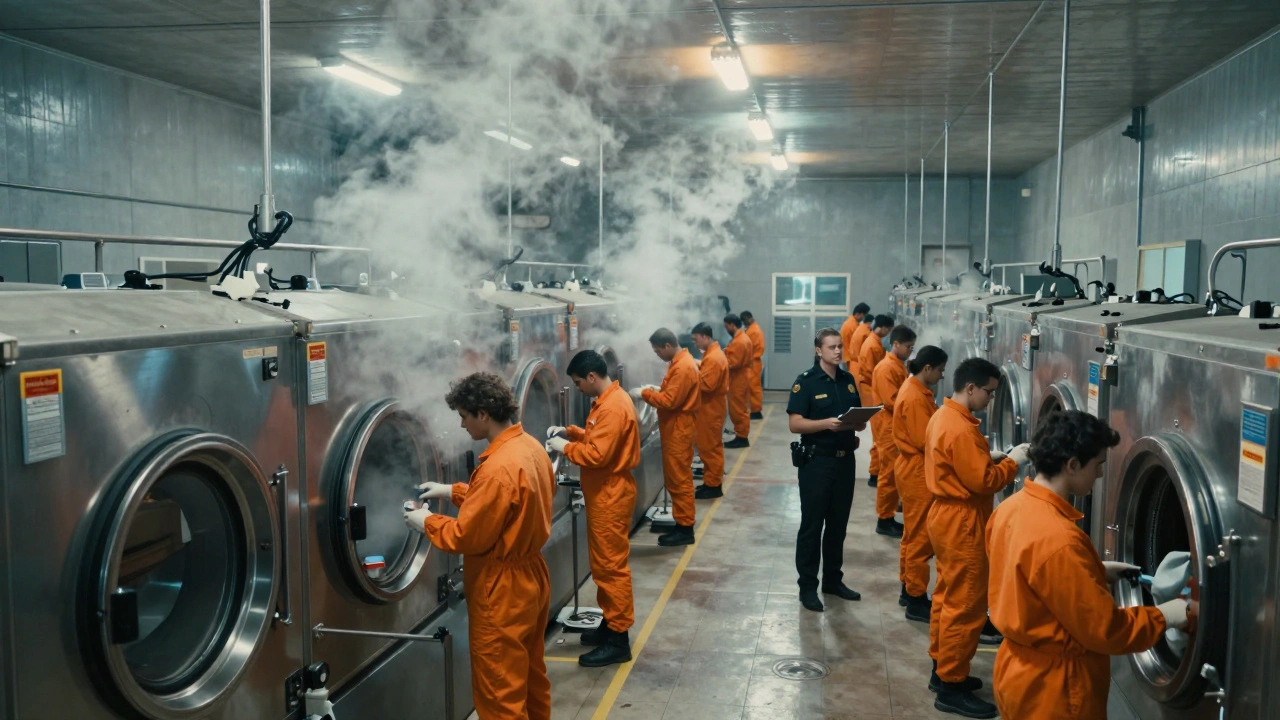
The inside of a maximum-security prison isn't just cells and bars; it is a self-contained city that requires thousands of tons of clean linens and meals every single day. If you think about the sheer volume of fabric being washed or plates being served, you realize that the workforce behind these scenes is essential to keeping the system operational. While the general public focuses on law enforcement roles within corrections, the Linien, Laundry, and Food Service Jobs are critical operational roles that combine security functions with essential maintenance services represent a massive chunk of daily activity. Understanding exactly what these positions involve provides a clearer picture of how corrections facilities function and where potential career opportunities might lie.
Understanding the Scope of Institutional Work
Correctional facilities operate like hotels on steroids, with constant turnover and high security requirements. In places like the Texas Department of Criminal Justice, there are nearly 1,800 unit-based positions dedicated solely to supply, laundry, and food operations. These departments exist across federal, state, and local systems, creating a standardized structure regardless of whether you are looking at a county jail or a state penitentiary. The work isn't seasonal; it is continuous, often running 24 hours a day to accommodate inmates returning from court appearances or medical appointments.
What makes these jobs unique compared to similar civilian roles is the environment. You aren't working in a mall cafeteria or a commercial laundromat. You are working inside secured perimeters where every tool could potentially be used as a weapon. This duality-performing standard manual labor while maintaining high-level security awareness-is the defining characteristic of the field. A laundry attendant doesn't just fold sheets; they monitor who is holding the scissors. A cook doesn't just stir a pot; they ensure no one slips extra ingredients through the line.
Daily Operations in Correctional Laundry
The laundry department is often the largest utility operation within a facility. It processes clothing for both staff and incarcerated individuals, meaning everything from uniform jackets to prison-issued jumpsuits goes through these machines. Industrial equipment drives this sector. We are talking about commercial washers and dryers capable of processing hundreds of pounds of wet fabric in a single cycle, along with flat ironers, sewing machines, and heavy-duty pressing machines.
A typical shift for a Laundry Supervisor a supervisory position overseeing employees and inmates in facility laundry operations involves strict adherence to operational manuals. For instance, supervisors must maintain Preventative Maintenance logs according to manufacturer specifications. They track chemical usage carefully because improper mixtures can damage property or cause health issues. Water temperature and washing times are not arbitrary; they follow formulas designed to sanitize fabrics thoroughly without degrading them too quickly, extending the life of government property.
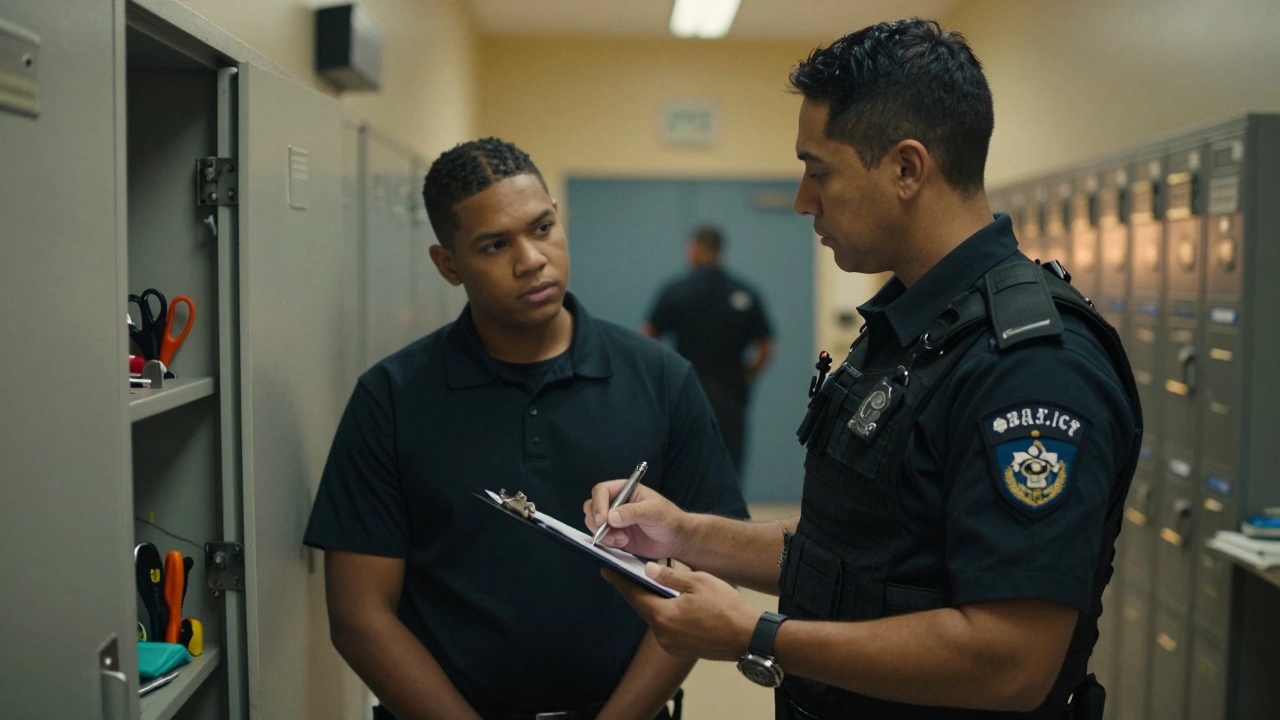
One of the primary responsibilities is managing the tools. Items like irons, scissors, screwdrivers, and even certain cleaning chemicals are tightly controlled. Supervisors utilize lock control and conduct frequent personal alarm checks to prevent escapes or physical assaults. If a washer breaks down, the repair process also falls under supervision. The supervisor instructs workers on safe loading and unloading, which involves using carts and lifts to transport heavy loads. There is zero tolerance for negligence here because a mishap in the laundry room can lead to fire hazards or structural damage.
Managing Food Service Departments
If laundry keeps everyone dressed, food service keeps the population fed. This area handles everything from basic meal prep to specialized diets for inmates with medical conditions. Roles in this sector range from Kitchen Helpers to full Food Service Worker responsible for performing daily operations in jail kitchens including food preparation positions. At centers like the Jackson County Detention Center, these workers perform direct operations in the kitchen, handling large-scale cooking that rivals any catering service.
Safety and sanitation are paramount. Unlike a home kitchen, the facility kitchen operates under rigorous inspection guidelines. Corrections Oversight Workers ensure that meal production matches planned schedules. They supervise the distribution lines to ensure proper portions are given out while preventing theft of food supplies. The workflow is precise: food comes in bulk, is prepared, portioned, and distributed within tight time windows. Missing a window can mean missed meals for the entire block, leading to severe complaints and security tensions.
Inmates assigned to food service programs are often recommended by the unit's Food Service Major. Interestingly, many facilities offer certification programs alongside this work. Inmates participating in these kitchens may receive training in food production and sanitation, sometimes earning certification in Culinary Arts upon completion. This adds a vocational layer to the job, where the staff aren't just feeding people but teaching marketable skills.

The Dual Workforce Structure
A major point of confusion for outsiders is the distinction between paid employees and incarcerated labor. In many prisons, the actual lifting, folding, and cooking is performed by inmate workers under direct supervision. This creates a "dual workforce" dynamic. The employee-whether a Jail Laundry Operator or Corrections Officer-is responsible for custody, discipline, and training the inmate crew.
For example, a Pennsylvania Corrections Laundry Plant Foreman oversees a team where the production workers might be inmates learning the trade. The Foreman provides instruction on methods of commercial laundry production and ensures quality standards are met. They inspect finished goods for workmanship. However, their ultimate responsibility remains security. They must maintain order, issue materials, and search work areas for contraband. This split means that a "job" in a prison laundry room is often shared by two different populations working side-by-side.
Security Protocols and Risk Management
Every task listed above carries an inherent security risk. The Department of Corrections Operational Manual outlines strict rules for why we handle things a certain way. Scissors, knives, and heavy metal appliances are all potential weapons. As such, counting tools and securing the perimeter is part of the daily checklist. Jailer positions require constant supervision of the facility, ensuring access control is maintained at all times.
Supervisors must report unusual behavior immediately. This is part of intelligence gathering. If an inmate acting as a laundry worker suddenly stops interacting or becomes overly secretive, it triggers a response. Searches for contraband happen routinely. The focus on security extends to transporting material. Moving linen bags outside of the facility requires checking vehicles and utilizing proper security escorts. You cannot simply load a truck; the cargo must be inspected to ensure no unauthorized items are being removed from the institution.
Career Progression and Requirements
Getting into these roles usually starts with applying for entry-level positions like a Corrections Officer or a General Custodian. As you gain experience and knowledge of the specific manuals and safety codes, you become eligible for specialized roles like Laundry Supervisor I or II. Advancement depends on understanding the technical phases of production and demonstrating reliable judgment.
Job requirements typically include background investigations and security clearances. Since these are safety-sensitive positions, pre-employment drug testing is mandatory, with random testing continuing throughout your employment. Candidates must undergo fingerprinting, motor vehicle history checks, and criminal history reviews. Because these are government jobs, you generally move through a civil service classification system. A candidate might start as a technician, advance to a foreman role, and eventually manage an entire plant.
Fresh graduates from police academies or criminal justice colleges often find themselves funneled into these specialized roles after passing the academy exams. However, non-traditional hires who apply directly for custodial positions can also move into specialized departments once they prove their trustworthiness.
Compensation and Economic Outlook
Financially, these positions vary widely based on geography and shift differentials. Data from early 2026 indicates that hourly rates for jail laundry and related facility jobs sit between $12 and $49 per hour. Factors influencing this range include overtime opportunities, night shifts, weekend premiums, and hazard pay for working in high-risk zones.
Texas and California systems often provide higher tiered pay due to union agreements and the intensity of the work. Additionally, benefits packages in state employment are generally robust, including healthcare and pension plans that exceed those found in private industry. With roughly 94 facility laundry jobs currently open across various states, the demand remains steady. Turnover exists because of the stress of the environment, meaning openings arise frequently for those willing to adapt to the unique demands of correctional labor.
Are there opportunities for advancement in prison laundry jobs?
Yes, career progression typically moves from entry-level Attendant roles to Supervisor I, Supervisor II, and ultimately Plant Foreman positions. Advancement requires gaining technical knowledge of equipment, mastering security protocols, and completing internal training modules. In some jurisdictions, supervisors can advance to management level within the Department of Corrections.
What kind of background check is required for correctional laundry work?
These positions are safety-sensitive and require a thorough public safety background investigation. This includes fingerprinting, criminal history review, motor vehicle records checks, and credit reports. Pre-employment drug testing is standard, and employees remain subject to random drug and alcohol screenings throughout their tenure.
Do inmates do the actual washing in prisons?
In many facilities, yes. Inmates are often employed by the correctional industry to perform the manual labor of operating washers and sorting clothes. However, they work under the constant supervision of paid employees (like Foremen or Supervisors) who are responsible for security, training, and ensuring work standards are met. This system provides vocational training to inmates while providing cheap labor for the state.
Is specialized training needed to become a Laundry Supervisor in a jail?
While formal college degrees are less common than on-the-job training, extensive training is required internally. Employees learn to read operational manuals, understand equipment specifications, and master security procedures. Some agencies partner with local colleges to offer certifications in industrial laundry or food service management that count toward promotion eligibility.
How does the schedule look for prison facility staff?
Most correctional facilities operate 24/7. Staff members often work rotating shifts, including weekends and holidays. Overtime is common due to the nature of processing large volumes of laundry or preparing multiple meals a day. Expectations for availability often include being on-call or working 10-to-12-hour shifts depending on the contract.