
Most people don’t think about what happens inside a jail or prison beyond the bars and guards. But behind those walls, hundreds of thousands of people are living with the lasting effects of trauma-abuse, neglect, violence, loss-that shaped their lives long before they were locked up. And if the system doesn’t change how it’s designed, it doesn’t just fail to help them-it makes things worse.
Why Trauma Isn’t Just a Background Story
Studies show that over 70% of people in U.S. jails and prisons have experienced at least one traumatic event before incarceration. For women, that number jumps to over 90%. Many have lived through childhood abuse, domestic violence, homelessness, or the death of a loved one. Some have brain injuries from untreated accidents. Others struggle with PTSD, depression, or addiction-all linked to trauma.
But here’s the problem: correctional environments are often built to control, not heal. Bright fluorescent lights, loud alarms, constant surveillance, strip searches, and isolation don’t just feel harsh-they can trigger flashbacks, panic attacks, and violent outbursts in people already struggling to stay grounded.
Imagine being locked in a small room with no windows, surrounded by strangers, and suddenly having to drop your pants while being watched by a guard you don’t trust. For someone with a history of sexual assault, that’s not a security procedure-it’s a re-enactment of trauma. And when that happens repeatedly, the person doesn’t get better. They shut down. Or they lash out.
The Five Core Principles of Trauma-Informed Design
Instead of treating trauma like a side issue, trauma-informed design makes it central. It’s not about therapy alone-it’s about how the whole facility is built, run, and felt. Five guiding principles shape this approach:
- Safety: Physical and emotional safety must come first. No one learns or heals if they’re scared.
- Trustworthiness: Rules must be clear, fair, and consistent. Staff must be reliable, not arbitrary.
- Choice: People need control-even small choices, like where to sit or what to wear, rebuild dignity.
- Collaboration: Healing happens with others, not just on top of them. Staff and inmates must work together.
- Empowerment: The goal isn’t obedience. It’s helping people find their voice, agency, and hope again.
These aren’t just buzzwords. They’re the foundation for changing how spaces function.
How the Physical Space Can Heal-or Harm
Design matters more than most people realize. A prison isn’t just a building-it’s a living environment that affects behavior, mood, and recovery.
Older jails often have long, narrow hallways, high ceilings, and cold metal surfaces. The sound echoes. The light is harsh. There’s no greenery. No natural light. It feels like a warehouse for humans.
Trauma-informed design flips that. Here’s what it looks like instead:
- Smaller living units: Instead of housing 100+ people in one block, facilities use smaller pods of 12-20. This creates a more home-like feel, builds community, and reduces conflict.
- Natural light and windows: Access to daylight helps regulate sleep, mood, and circadian rhythms. Studies show inmates with windows have fewer behavioral incidents.
- Quiet spaces: Not every person needs to be in a group setting. Quiet rooms with soft lighting, comfortable seating, and calming colors give people a place to de-escalate without punishment.
- Biophilic elements: Plants, wood finishes, water features, and nature-inspired patterns reduce stress. Even small indoor gardens or indoor trees make a measurable difference.
- Sound control: Acoustic panels, soft flooring, and insulated walls cut down on noise. Constant yelling, banging, and alarms are triggers. Reducing noise = fewer panic attacks.
- Welcoming entrances: No more dark, intimidating gateways. Bright, open entry areas with natural materials help reduce anxiety when someone first arrives.
One facility in Oregon redesigned its intake area with warm wood, soft lighting, and a small indoor garden. Staff reported a 40% drop in resistance during initial processing. That’s not magic-it’s design.
Staff Training: The Missing Link
You can have the most beautiful facility in the world, but if the staff don’t understand trauma, they’ll still trigger it.
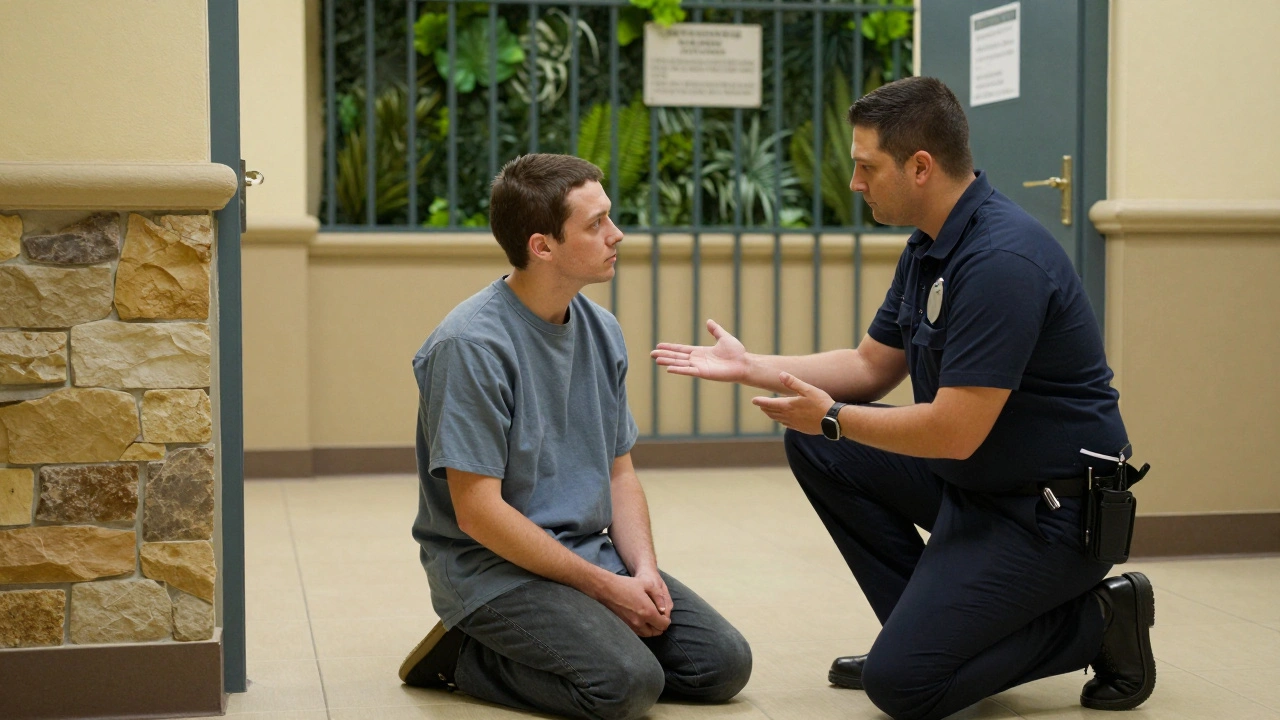
Traditional correctional training teaches control: how to restrain, how to enforce rules, how to maintain order. Trauma-informed training teaches connection: how to recognize distress, how to de-escalate without force, how to respond with empathy.
For example:
- Instead of shouting at someone who freezes during a search, staff are trained to say: "I see this is hard for you. We can pause. Take a breath. I’ll wait."
- Instead of isolating someone for acting out, staff ask: "What happened before this? What do you need right now?"
- Staff are taught to avoid phrases like "You need to behave" and replace them with "We’re here to help you stay safe."
The Sanctuary Model-one of the most widely used trauma-informed frameworks-focuses on changing staff culture. It’s not about adding more counselors. It’s about changing how every person in the building talks, moves, and responds. Training is free to learn, but certification costs money. Still, facilities that use it report lower staff turnover, fewer use-of-force incidents, and better inmate cooperation.
Programs That Actually Work
Rehabilitation isn’t about mandatory classes. It’s about programs that meet people where they are.
Effective trauma-informed programs include:
- Present-focused CBT: Instead of digging into past abuse (which can be dangerous in prison), this teaches coping skills for today-how to manage anger, breathe during panic, recognize triggers.
- Group therapy with role-play: Inmates practice how to respond during a pat-down, a lockdown, or a confrontation. It’s not therapy-it’s survival training with emotional safety.
- Art and writing therapy: Creative expression gives people a voice without words. Many who can’t talk about trauma can draw it or write poetry.
- Peer support networks: Trained inmates lead small groups. They’ve been through it. They know how to listen.
- Family connection programs: Video calls, letter-writing workshops, and visiting areas designed for comfort (not cages) help rebuild relationships that prevent recidivism.
One prison in California introduced a daily 10-minute mindfulness session before meals. After six months, assaults dropped by 27%. No one was forced to participate. Just being in a quiet space, breathing together, changed the energy of the whole unit.
Choice and Autonomy: Small Things That Matter
People in prison lose everything: freedom, identity, control. Trauma-informed design gives back small pieces of that.
Simple changes:
- Letting people choose where to sit during meals
- Allowing them to arrange their own desk or bunk area
- Offering multiple clothing options (not just one size, one color)
- Letting them pick when to shower or use the phone
These aren’t luxuries. They’re psychological lifelines. A study from the University of Pennsylvania found that even minor control over daily routines reduced anxiety, improved sleep, and increased participation in educational programs.
When someone can choose their chair, they start to feel like a person again-not just an inmate number.
Connecting to the Outside World
Isolation doesn’t prepare people for life after prison. Trauma-informed design includes bridges to the community.
- Libraries with books that reflect real life-not just textbooks
- Workshops with local artists, teachers, or employers
- Visiting areas with real chairs, not metal benches
- Outdoor spaces that feel like parks, not yards
One facility in Minnesota partnered with a local college to offer real college courses inside. Inmates earned credits. Some went on to graduate. Their families came to graduation. That’s not just education. That’s dignity.

It’s Not Just About Inmates-It’s About Everyone
Trauma-informed design doesn’t just help incarcerated people. It helps staff.
Correctional officers report less stress, fewer injuries, and higher job satisfaction when they work in environments that prioritize safety and respect over control and punishment.
It also saves money. Facilities using trauma-informed approaches report:
- Up to 50% fewer use-of-force incidents
- 30% reduction in seclusion and restraint
- Lower healthcare costs for mental health crises
- Decreased staff turnover
And here’s the biggest win: fewer people return to prison. Trauma-informed programs don’t just make jails safer-they help people rebuild their lives so they don’t come back.
What’s Holding Us Back?
Some say: "This sounds nice, but prisons are for punishment."
But punishment without rehabilitation doesn’t work. Over 60% of people released from prison are rearrested within three years. That’s not because they’re bad. It’s because they’re broken-and the system didn’t fix them.
Others say: "We don’t have the money."
But the cost of doing nothing is higher. A single day in a high-security mental health unit costs over $500. A trauma-informed pod costs less to build and runs cheaper long-term. It’s an investment, not a luxury.
Change starts small. One window. One quiet room. One staff member who learns to listen.
Where Do We Go From Here?
Prisons don’t need to be perfect. They need to be human.
The goal isn’t to make jail comfortable. It’s to make it a place where healing can begin. Where someone who’s been broken by life doesn’t get broken again by the system.
Every new facility built, every policy rewritten, every staff member trained-this is how we stop cycling people through the system. This is how we stop treating trauma as a problem to ignore, and start treating it as a wound that can heal.
It’s not about being soft. It’s about being smart.
What is trauma-informed design in prisons?
Trauma-informed design in prisons means changing how facilities are built, managed, and staffed to recognize that most incarcerated people have experienced severe trauma. It focuses on creating safe, predictable, and empowering environments that reduce triggers, support healing, and prevent re-traumatization. This includes everything from lighting and sound control to staff training and inmate autonomy.
Does trauma-informed design lower recidivism?
Yes. Facilities that use trauma-informed practices report lower rates of repeat offenses. By helping inmates manage trauma-related symptoms like anger, anxiety, and dissociation, they’re better able to learn new skills, hold jobs, and rebuild relationships after release. Programs that combine trauma therapy with education and job training have shown up to a 35% drop in recidivism over five years.
Can small jails implement trauma-informed design?
Absolutely. You don’t need a new building. Even small changes-like replacing harsh fluorescent lights with softer ones, adding a quiet room with cushions and books, or training staff to use calm language-can make a big difference. Many jails start with one unit or one policy change and expand from there.
Is trauma-informed design only for non-violent offenders?
No. While many trauma-informed programs focus on non-violent offenders, trauma affects everyone-even those convicted of violent crimes. Most violent offenders have histories of abuse, neglect, or untreated mental illness. Trauma-informed design helps all inmates develop coping skills, reduce aggression, and respond better to rehabilitation efforts.
Do staff need special training to implement this?
Yes. Traditional correctional training focuses on control and compliance. Trauma-informed training teaches staff to recognize trauma responses, de-escalate without force, and build trust. Programs like the Sanctuary Model offer certified training. It’s not optional-it’s essential for safety and effectiveness.