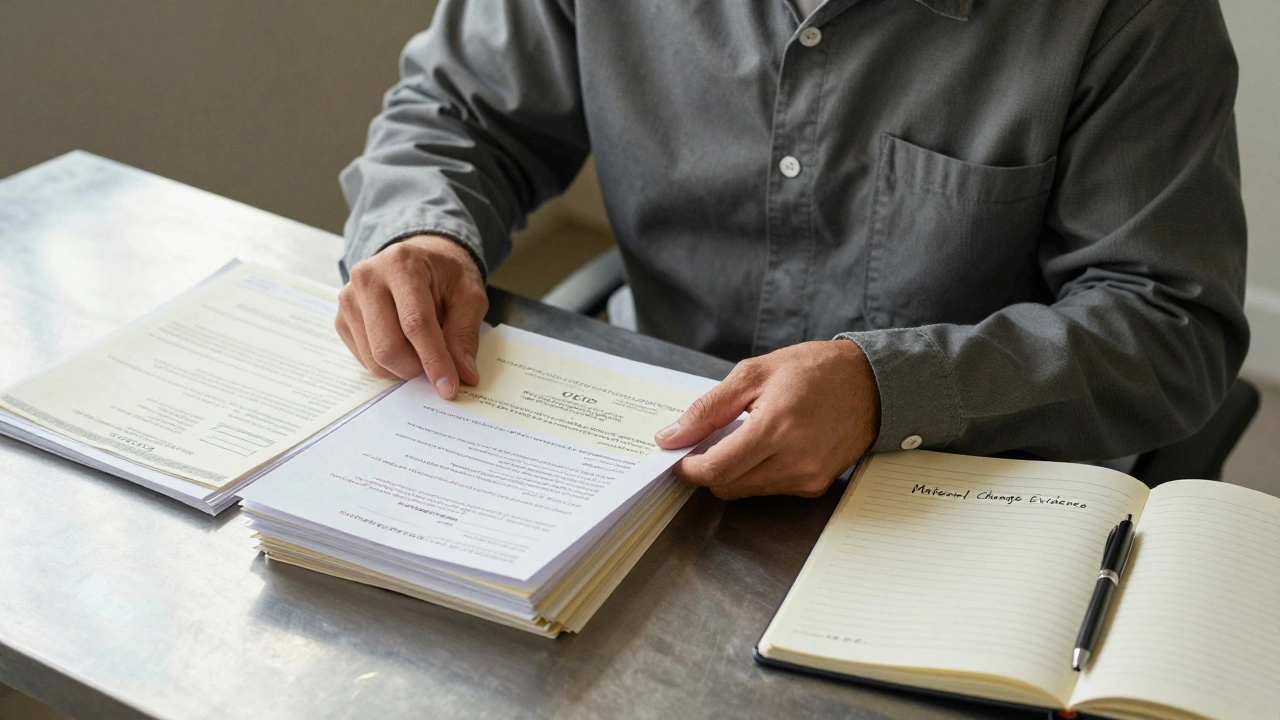
Getting out of prison early isn’t just about asking nicely. If you’re serving a federal sentence and want your parole hearing moved up, you need to show something real-something that proves you’ve changed, that you’re no longer a risk, and that keeping you locked up longer doesn’t serve justice or public safety. The system doesn’t move on hope. It moves on evidence.
What Exactly Is a Petition to Advance a Parole Hearing?
A petition to advance a parole hearing date is your formal request to the U.S. Parole Commission or state parole board to hold your hearing earlier than originally scheduled. This isn’t an appeal. It’s not a second chance at the same hearing. It’s a request to reconsider your case sooner because something has changed since your last review.
Under federal law (28 CFR § 2.15), the Bureau of Prisons or the individual themselves can file this petition. But here’s the catch: you can’t just say, “I’ve been good.” You have to prove it. The system requires material change in circumstances-something concrete that makes your case different now than it was before.
What Counts as a Material Change?
Not every good behavior report will do it. The parole board isn’t looking for perfect attendance at group therapy. They’re looking for proof that you’ve fundamentally changed. Here’s what they actually consider:
- Disciplinary record: No major infractions in the last 12-24 months. Even one violent incident or drug possession can sink your petition.
- Program participation: Completing GED, vocational training, substance abuse counseling, or cognitive behavioral therapy shows you’re preparing for life outside.
- Mental health progress: If you’ve been diagnosed with depression, PTSD, or another condition, documented improvement through treatment matters. A letter from a psychologist or counselor can carry weight.
- Remorse and accountability: Saying “I’m sorry” isn’t enough. You need to show you understand how your actions affected victims and the community. Writing a thoughtful statement or participating in victim-offender dialogue programs helps.
- Rehabilitation evidence: Certificates, transcripts, letters from instructors, or even peer testimonials about your leadership in prison programs all add credibility.
Think of it like a job interview-but your job is to prove you’re ready to rejoin society. The more specific and documented your progress, the better.
What Doesn’t Work
Too many petitions fail because they rely on empty statements. Here’s what the board ignores:
- “I’ve been quiet in prison.” (Everyone’s quiet. That’s not progress.)
- “I miss my family.” (That’s not a legal argument.)
- “I’ve been here for X years already.” (Time served alone doesn’t justify early release.)
- “I’m a different person now.” (Prove it. Don’t just say it.)
Without evidence, your petition gets tossed. No exceptions.
The Step-by-Step Process
If you’re serious about advancing your hearing, here’s what you actually need to do:
- Review your institutional file. You have the right to see it. Request a copy from your case manager. Look for gaps-missing certificates, incorrect disciplinary notes, unacknowledged program completions.
- Gather supporting documents. Collect every certificate, letter, evaluation, and progress report. Make sure they’re dated and signed.
- Write a clear petition letter. Don’t use emotional language. Stick to facts: “Completed 120 hours of cognitive behavioral therapy in 2024. Received no disciplinary write-ups since 2022. Completed vocational training in welding with a 92% score.”
- Submit through official channels. In federal cases, this usually goes through your case manager to the Bureau of Prisons, who then forwards it to the U.S. Parole Commission. State systems vary-some allow direct petitions to the parole board.
- Prepare for victim input. The board will review any victim statements or objections. If there’s a victim, consider writing a letter of apology or restitution plan. It doesn’t guarantee approval, but it shows you’re addressing the harm.
- Request legal help. Even if you can’t afford a lawyer, contact legal aid organizations like the MacArthur Justice Center or your state’s public defender office. They can help you structure your petition correctly.
The review process can take 30-90 days. Don’t assume silence means denial. Follow up politely if you haven’t heard back after 60 days.
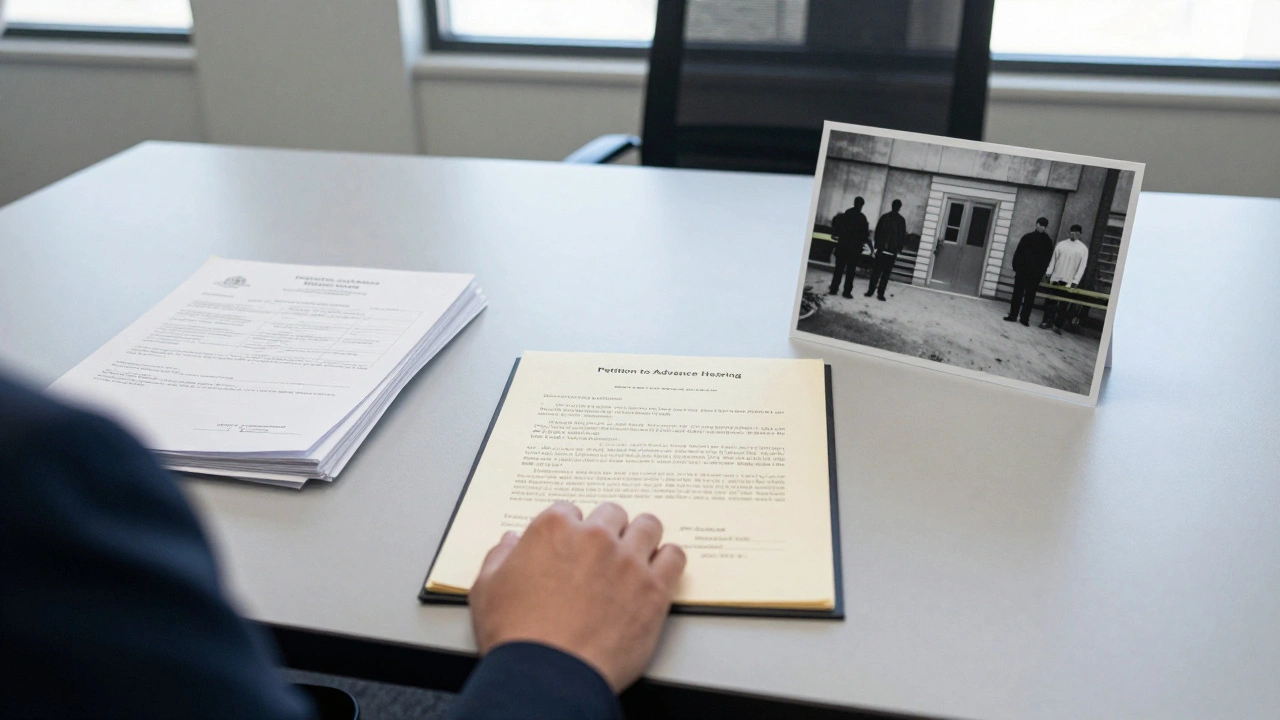
What Happens After You Submit?
Once your petition is received, a deputy commissioner or parole examiner reviews it. They look at:
- Your full disciplinary history
- Program completions
- Previous parole hearing outcomes
- Victim statements
- Recommendations from counselors and case managers
If they find enough evidence of change, they’ll approve the petition and advance your hearing date-sometimes by months, sometimes by over a year. If not, you’ll get a written denial explaining why. That’s your chance to fix what’s missing and try again later.
Important: The decision to advance your hearing doesn’t mean you’re getting parole. It just means you’ll get another shot at the table sooner.
Why Timing Matters
For federal inmates serving five years or more, the system automatically reviews your case on record before the two-thirds mark of your sentence. If you’re denied mandatory parole at that point, you’re scheduled for a full hearing when the Hearing Examiner visits your facility.
But if you petition successfully, you could skip that waiting period entirely. Someone serving a 10-year sentence might normally get their first hearing at year 7. With a strong petition, they could get it at year 5.
And if you’re planning to move to another state after release? You’ll need to file an interstate transfer application early. Processing can take up to 120 days. If your petition gets approved but your housing plan isn’t ready, the board may delay your release anyway.
Legal Representation Is Not Optional
People who have a lawyer during the petition process are twice as likely to succeed. You don’t need a fancy attorney-just someone who knows how to structure legal arguments and cite regulations.
Legal aid groups can help you:
- Identify missing documentation
- Correct errors in your file
- Write persuasive, legally sound petitions
- Prepare for hearings
Don’t wait until your hearing date to ask for help. Start six months before you plan to petition. That gives time to gather records, get letters, and fix mistakes.

Victim Input Is Part of the Equation
The parole board doesn’t ignore victims. If someone was hurt by your crime, their voice matters. They may submit a statement saying they oppose your release. Or they might say they’ve forgiven you.
Either way, it’s part of the decision. If you can show you’ve taken responsibility-through a letter, a restitution plan, or even a meeting with a victim advocate-it can shift the balance. Silence speaks louder than you think.
What If Your Petition Is Denied?
Don’t give up. Denials often come with reasons: “Insufficient program participation,” “Recent disciplinary issue,” “No documented remorse.”
Use that feedback. If you were denied for lack of education, get your GED. If you were denied for a fight, wait 12 months and submit a new petition with a counseling certificate and a letter from your therapist.
Most successful petitions are second or third attempts. The system isn’t designed to say yes quickly. It’s designed to say yes only when the evidence is undeniable.
Final Reality Check
Advancing a parole hearing isn’t a reward for being a good inmate. It’s a response to demonstrable change. The board doesn’t care how long you’ve been inside. They care about whether you’re safe to release now.
If you’re serious about this, treat it like a job. Document everything. Build your case like a lawyer would. Get help. And don’t rely on promises or good intentions. The system only moves on facts.
It’s hard. But it’s possible. And for some people, it’s the only way out.
Can I petition to advance my parole hearing if I’ve been denied before?
Yes. Previous denials don’t lock you out. What matters is whether new evidence shows a material change since your last hearing. If you’ve completed programs, improved your behavior, or addressed mental health issues since your denial, you can and should petition again.
How long does it take to get a decision on a petition to advance a parole hearing?
Typically, it takes between 30 and 90 days. Federal petitions go through the Bureau of Prisons first, then to the U.S. Parole Commission. State systems vary, but most take at least 45 days. If you haven’t heard back after 60 days, follow up in writing.
Do I need a lawyer to petition to advance my parole hearing?
No, but it greatly improves your chances. Lawyers know how to structure arguments, identify missing documentation, and cite the correct regulations. Many legal aid organizations offer free help to incarcerated individuals. Don’t wait until the last minute-reach out six months before you plan to file.
Can I petition if I’m serving a life sentence?
It depends on the state or federal jurisdiction. Some states allow life-sentenced inmates to petition for parole reconsideration after serving 20-25 years. Federal life sentences are rare, but if you have a minimum term (like “life with parole after 30 years”), you may petition if you’ve shown extraordinary rehabilitation. Check your sentencing order for eligibility.
What if a victim objects to my petition?
Victim objections are taken seriously, but they don’t automatically block your petition. If you’ve taken meaningful steps toward accountability-like writing a letter of apology, participating in restorative justice programs, or making restitution-the board may still approve your petition. The key is showing that your rehabilitation outweighs the risk.
Can I petition for an advance if I’m in a state prison, not federal?
Yes, but the rules vary by state. Some states, like California and New York, allow direct petitions to the parole board. Others require you to go through your case manager or prison administration. Check your state’s parole board website or contact a legal aid organization familiar with your jurisdiction.
Does having a job offer outside prison help my petition?
Yes. A verified job offer, housing plan, or support system from family or a nonprofit organization strengthens your case. It shows you’re not just being released-you’re being reintegrated. If you’re planning to move to another state, submit an interstate transfer application early-it can take up to 120 days to process.