
Leaving prison without a state ID or birth certificate isn’t just inconvenient-it’s a barrier to survival. Imagine walking out of prison with nothing but a cardboard box and a Department of Corrections card. No driver’s license. No Social Security card. No proof you even exist in the eyes of the government. That’s the reality for most people released from prison. And without these basic documents, getting a job, opening a bank account, renting an apartment, or even voting becomes nearly impossible.
Every year, about 600,000 people are released from state and federal prisons in the U.S. And according to the CSG Justice Center, nearly 80% of them leave without a state ID or birth certificate. That’s not a mistake. It’s a system failure. But it doesn’t have to be this way. Some states have figured out how to fix it-and their methods are working.
Why You Need These Documents Before You Walk Out
A state ID isn’t just a piece of plastic. It’s your key to everything. Without it, you can’t:
- Apply for most jobs-employers need to verify your identity
- Open a bank account-banks require government-issued photo ID
- Apply for housing-landlords check IDs for background checks
- Access public benefits like SNAP, Medicaid, or unemployment
- Register to vote
- Board a plane or rent a car
Your birth certificate? It’s the foundation. You can’t get a state ID without it. Most states require it to prove your legal presence, your date of birth, and your full legal name. If you don’t have it, you’re stuck in a loop: no ID because no birth certificate, no birth certificate because you can’t afford the fee or don’t know how to order it.
And here’s the cruel twist: while you were inside, your ID expired. Your birth certificate got lost. Your Social Security card vanished. The system didn’t care. Now that you’re out, it expects you to fix it all on your own-with no money, no address, and no support.
How It’s Done: Real Solutions from Real States
Some states stopped waiting for people to fail after release. They started helping before release.
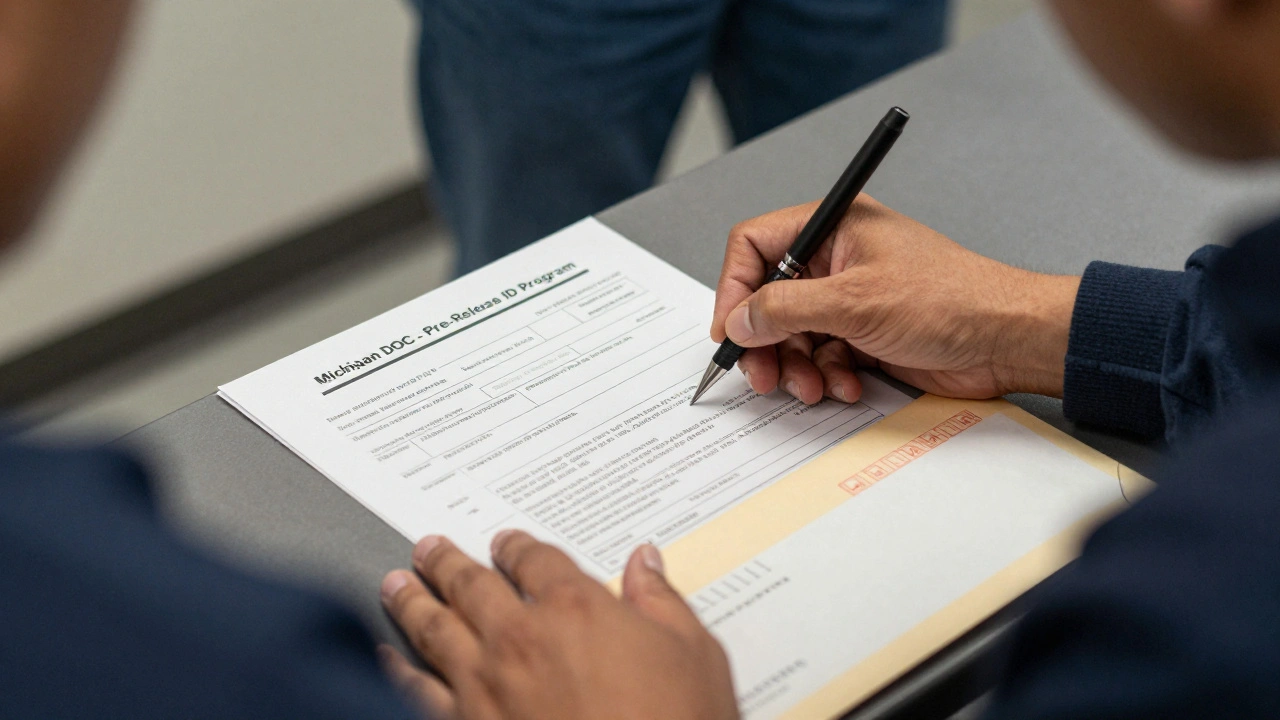
Michigan made it their mission. In 2018, the Department of Corrections and the Department of State teamed up. They started paying for birth certificates for everyone preparing for parole. The DOC sent the paperwork directly to the state’s vital records office. By the time someone walked out, they had their birth certificate in hand-and the DMV had already processed their ID application. By October 2021, 95% of people released under this program had their state ID on day one. One man, Andre Felton, spent nearly 40 years in prison. When he got out, he didn’t just have an ID-he had a job training slot lined up because he could prove who he was.
California passed a law: Assembly Bill 2308. It didn’t ask prisons to do more. It told the DMV to work with the Department of Corrections. The state paid for every ID. No fees. No delays. No excuses. If you were eligible for release, you got a valid state ID before you left prison. Period.
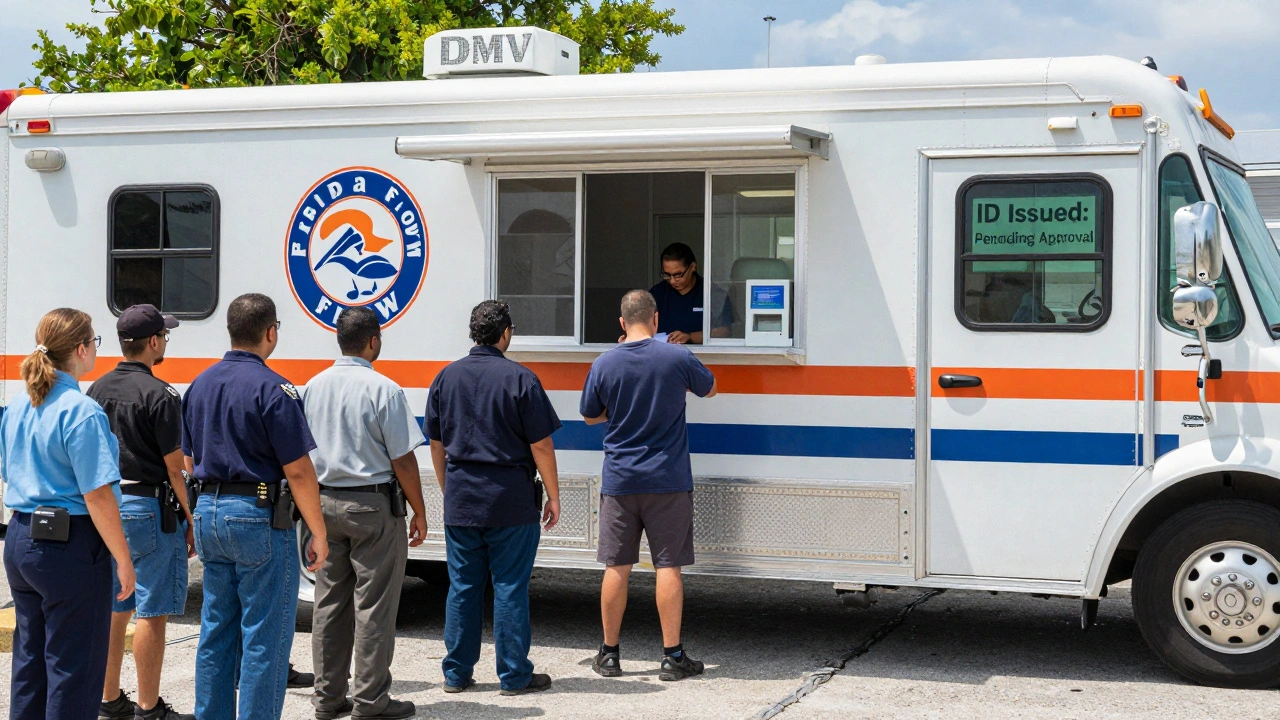
Florida took it on the road. They built mobile ID units-RVs with DMV kiosks-and drove them into prisons. Staff took fingerprints, collected documents, and processed applications right inside the facility. No bus rides. No waiting in line at the DMV. No missing your release date because you couldn’t get to the office. The program, called FLOW (Florida Licensing on Wheels), has been running since 2009. It’s not flashy. But it works.
Texas didn’t wait for legislation. They used their own budget. The Department of Criminal Justice partnered with the Department of Public Safety and the Department of State Health Services. They set up electronic systems to verify birth records. They trained correctional officers to help people fill out forms. They covered all costs through state funds. No one had to pay a dime.
What You Need to Get Started
Even if your state doesn’t have a program like Michigan’s, you can still prepare. Here’s what you need-and how to get it before release:
- Your birth certificate - This is step one. You need a certified copy from the state or territory where you were born. If you don’t know where you were born, check old prison records or ask family. Most states charge $10-$30 for a copy. Some offer fee waivers if you’re indigent.
- Your Social Security number - If you don’t have your card, you can request a replacement from the Social Security Administration. You’ll need your birth certificate and proof of identity. Some prisons help with this. Ask your case manager.
- Proof of residency - This varies by state. Some accept a letter from a halfway house. Others want a utility bill or lease agreement. If you’re going to a family member’s house, ask them to write a notarized letter saying you live there.
- Prison release paperwork - Many states accept your discharge papers as proof of identity. Keep a copy. Give it to your case manager.
Don’t wait until your last day. Start six months before release. Talk to your case manager. Ask if your prison has a reentry coordinator. Ask if they work with the DMV or vital records office. If they don’t, ask them to call.
What to Do If Your State Has No Program
Not every state has a pre-release ID program. But that doesn’t mean you’re out of options.
First, contact nonprofit groups. Organizations like The Fortune Society and I-CAN (Individualized Corrections Achievement Network) help people apply for documents before release. They’ll help you fill out forms, pay fees, and even mail documents to you after release.
Second, ask your prison’s library or education department. Many have partnerships with legal aid clinics. They can help you file for fee waivers. Some states allow fee waivers for people with no income. You don’t need to pay if you’re indigent.
Third, start building a paper trail. Write down your full legal name, date of birth, Social Security number, and birthplace. Keep it in your prison file. If you can get a notarized statement from a prison counselor confirming your identity, that can sometimes help when applying for documents.
Temporary ID Options
Some states issue temporary IDs that last 30 days. These aren’t REAL ID-compliant, but they let you open a bank account, apply for jobs, and get housing while you wait for your permanent ID. Ask your case manager if your state offers this. If they say no, ask them to check with the DMV. Some states do it quietly.
Even if you get a temporary card, don’t stop there. Use that 30 days to get your birth certificate and Social Security card. That’s your long-term ticket out.
What to Avoid
Don’t wait until you’re out to start. By then, you’re already behind. You’ll be sleeping in a shelter, struggling to find food, and scrambling to get a job-all while trying to figure out how to get a birth certificate from a state you haven’t lived in for 15 years.
Don’t believe that “they’ll help you at the DMV.” The DMV isn’t a reentry agency. They don’t have staff trained to help people with no documents, no address, and no money. You’ll be turned away. Again. And again.
Don’t pay someone to get your documents for you. There are scams out there. They’ll take your money and disappear. Use official channels: state vital records offices, Social Security Administration, or nonprofit reentry programs.
The Bigger Picture
This isn’t just about paperwork. It’s about dignity. It’s about giving people a real shot at rebuilding their lives. When someone leaves prison with nothing, they’re set up to fail. But when they leave with a state ID and birth certificate? They can work. They can vote. They can rent. They can stay out.
States like Michigan, California, Florida, and Texas didn’t do this because it was easy. They did it because it worked. And the results speak for themselves: 95% of people released with pre-ordered IDs had stable housing and employment within 90 days. That’s not luck. That’s policy.
If you’re preparing for release, start now. Talk to your case manager. Ask for help. Demand it. You have the right to prove who you are. And you deserve to walk out with more than a cardboard box.
Can I get a birth certificate while still in prison?
Yes. Many states allow incarcerated individuals to order certified birth certificates through their prison’s reentry office. Some states even pay for it. You’ll need to provide your full legal name, date of birth, place of birth, and parents’ names. Your case manager can help you fill out the form and send it to the state’s vital records office. Processing can take 4-8 weeks, so start early.
Do I need to pay for a state ID if I’m released from prison?
In states with pre-release programs like Michigan and California, the state covers the cost. In other states, fees still apply-but you can request a fee waiver if you have no income. Ask your case manager or legal aid group. Many states have forms for indigent applicants. You don’t have to pay if you qualify.
What if I don’t know where I was born?
Start with your prison records. Your intake paperwork should list your birthplace. If not, ask family members or look through old documents. If you were born in the U.S., you can contact the vital records office in the state where you think you were born. They can help you search. If you were born outside the U.S., you’ll need a U.S. passport or naturalization papers instead.
Can I use my prison ID to get a state ID after release?
Some states accept prison IDs as temporary proof of identity, but only if you have other documents like a birth certificate. Most DMVs require a birth certificate or passport as the primary proof. Your prison ID alone won’t be enough. Use it as a backup, not a replacement.
How long does it take to get a birth certificate after requesting it?
It usually takes 4 to 8 weeks, depending on the state. Some states offer expedited service for $20-$50 extra. If you’re preparing for release, request it at least 6 months before your release date. If you’re in a state with a pre-release program, they often handle it faster-sometimes within 2-3 weeks.
What if I lost my Social Security card?
You can get a replacement from the Social Security Administration. You’ll need your birth certificate and proof of identity. Many prisons have partnerships with Social Security offices. Ask your case manager if they can help you apply before release. If not, you can apply online or in person after release-but having the documents ready makes it faster.
Can I get a REAL ID before I’m released?
Yes, but it’s harder. REAL ID requires in-person application and more documents-like two proofs of residency. Most pre-release programs issue standard IDs first, then help you upgrade to REAL ID after release. If you plan to fly or enter federal buildings, start gathering your documents early. A standard ID will still get you a job and housing.