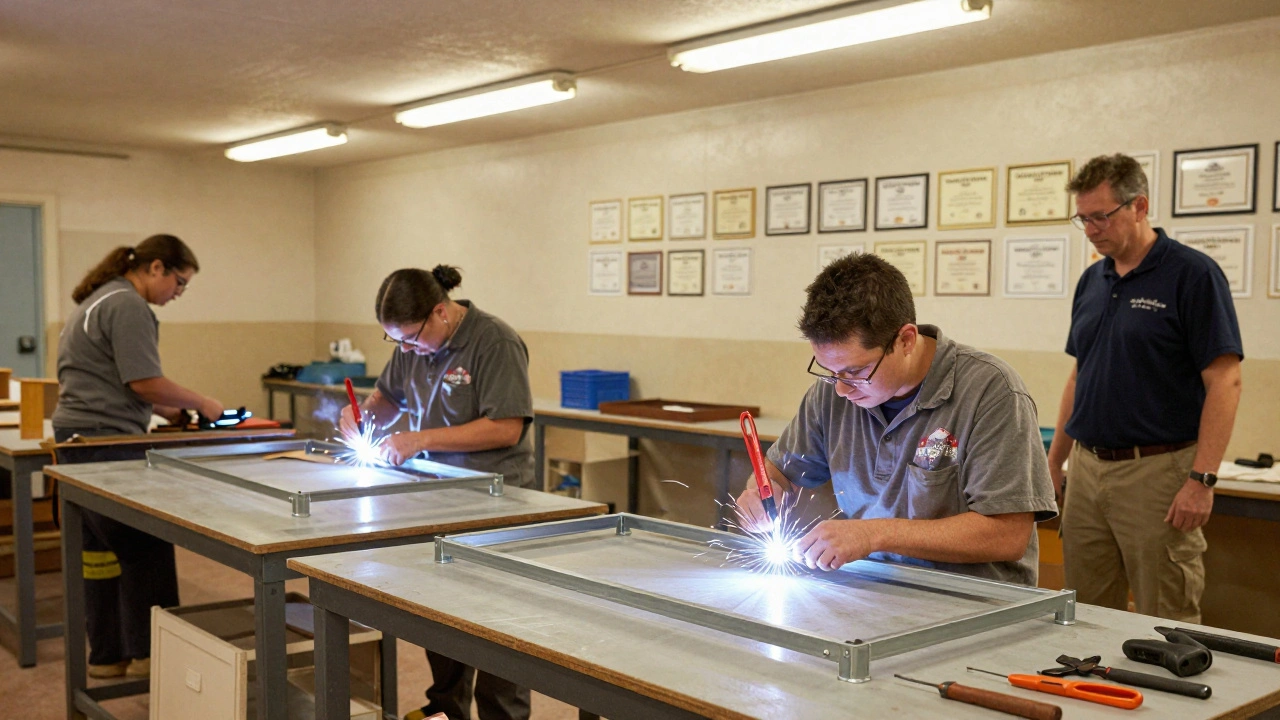
When you think of prison labor, you might picture old movies with inmates chaining roads or picking cotton under guard. But today’s inmate work programs are nothing like that. They’re structured, purpose-driven, and quietly keeping government offices running and nonprofits afloat. From fixing public buildings to assembling furniture for homeless shelters, incarcerated people are doing real work that serves communities - and it’s changing lives on both sides of the fence.
What Inmate Work Actually Looks Like Today
Inmate work isn’t optional for most people serving time in federal prisons. If you’re medically able, you’re required to work. That means someone is sweeping floors in a federal courthouse, stocking shelves in a prison warehouse, or repairing plumbing in a state facility. The pay? Between 12 cents and 40 cents an hour. It’s not much, but it’s not meant to be a wage - it’s a stepping stone. These jobs aren’t just busywork. They teach skills. A man who learns to weld in prison can walk out with a certificate. A woman who manages a kitchen crew gains leadership experience. These aren’t hypotheticals - they’re documented outcomes. The Federal Bureau of Prisons runs over 100 different work assignments, from data entry to auto repair. And they don’t stop at the prison walls.How Government Agencies Rely on Inmate Labor
State and federal agencies use inmate labor to cut costs and fill gaps. In New York, the Department of Corrections runs a Temporary Release Program that lets people leave prison for up to 14 hours a day to work in the community. They might be cleaning parks, painting public schools, or maintaining public transit equipment. These aren’t charity gigs - they’re contracted services. Local governments save hundreds of thousands of dollars each year by using this workforce instead of hiring outside contractors. In Pennsylvania, Bradford County’s Community Workforce Inmate Program supplies labor to fire departments, libraries, and nonprofit food banks. Inmates work under supervision, earn a small hourly rate, and send part of their pay home to support families. It’s not about cheap labor - it’s about keeping people connected to the community while they’re still incarcerated. Even federal agencies use inmate labor. UNICOR, the government-run prison industry, manufactures everything from license plates to military uniforms. It’s a $500 million-a-year operation. And it’s not just about saving money. It’s about giving people skills they can use after release. A worker who learns to operate CNC machines in prison doesn’t just get a job - they get a career path.Nonprofits Depend on Inmate Work Too
Nonprofits don’t have big budgets. So when they need help building homes, sorting donations, or running food drives, they turn to inmate labor. In New York, the Center for Employment Opportunities (CEO) partners with prisons to train people in warehouse logistics, customer service, and retail. After release, many go straight into jobs with nonprofit partners like Habitat for Humanity or Goodwill. The Life Connections Program, run by the Federal Bureau of Prisons, requires inmates to complete 500 hours of community service. That means repairing benches at public parks, helping at animal shelters, or tutoring kids in after-school programs. These aren’t just chores - they’re rebuilding trust between the incarcerated and the public. When a former inmate mows the lawn at a local elementary school, kids see someone doing good work. That changes perceptions - on both sides.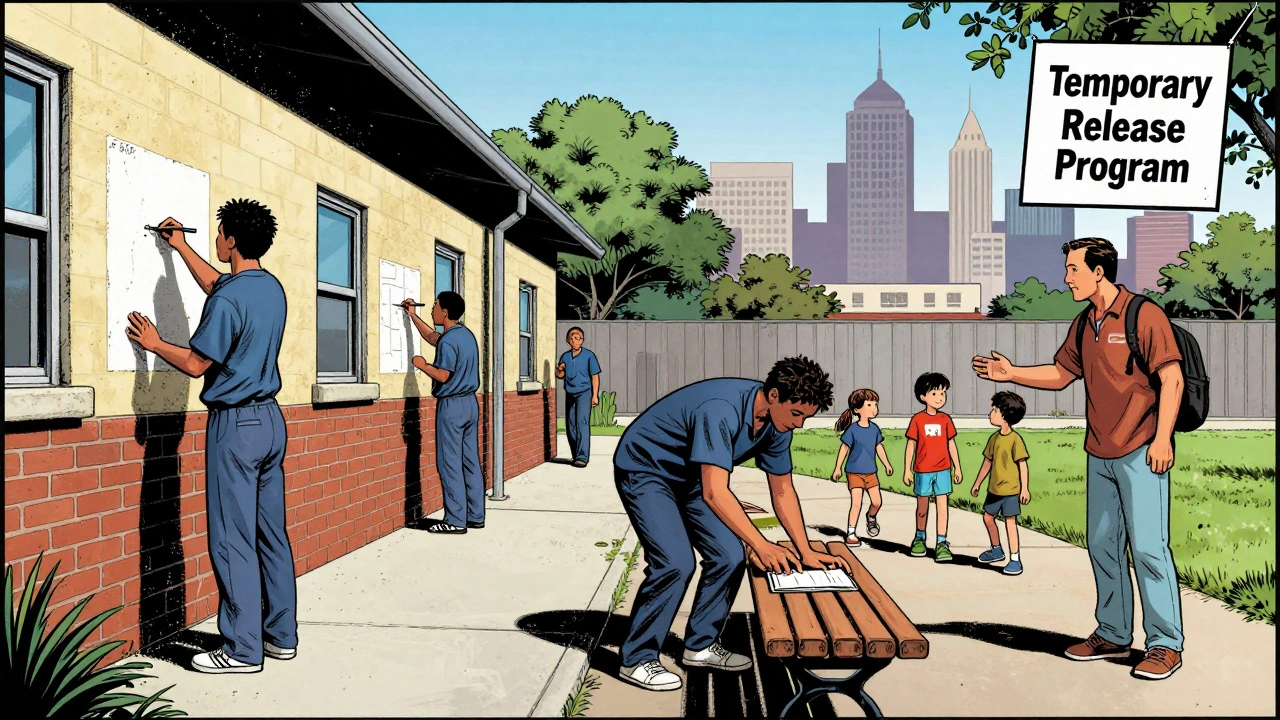
Jobs That Save Money - and Lives
Here’s the hard number: for every nonviolent ex-offender who gets real job training, society saves about $231,000. That’s not a guess. It’s from a 2010 randomized study of 259 men in New York. Those who went through America Works’ job-readiness program - which teaches resumes, interviews, and time management - were far less likely to reoffend. The cost? $5,000 per person. The return? 46 times that amount in reduced crime, court costs, and reincarceration. That’s not just smart economics. It’s public safety. When someone has a job, they’re less likely to rob a store. When they have a steady income, they’re less likely to turn to drugs. When they have a mentor and a routine, they’re more likely to stay out of prison. The Reentry Employment Opportunities (REO) program, funded by the U.S. Department of Labor, is expanding this model. It targets youth and adults with criminal records and connects them to jobs in construction, healthcare, IT, and logistics. These aren’t entry-level gigs - they’re in-demand fields with real growth. A 22-year-old who learns to install solar panels in prison can walk into a job that pays $20 an hour after release.The Mentor Factor: Why Relationships Matter
Work alone doesn’t fix everything. That’s why programs like Life Connections pair inmates with volunteer mentors. These aren’t social workers. They’re everyday people - teachers, church members, small business owners - who show up every week. They talk about budgets, family conflicts, job interviews. They help inmates write cover letters. They drive them to appointments. They show up on release day. Mentors connect inmates to churches, job networks, and housing resources. One man in Oregon, released after 12 years, got his first job because his mentor called a friend who owned a landscaping company. That job led to a promotion. That promotion led to a home. That home led to stability. That stability led to no arrests in five years. These relationships don’t happen by accident. They’re built through programs that require consistency - weekly visits, journaling, goal-setting. They’re not therapy. They’re accountability with compassion.
It’s Not Just About Work - It’s About Identity
Most people in prison don’t see themselves as criminals. They see themselves as parents, sons, brothers, neighbors. But the system treats them like their worst mistake. Inmate work programs change that. When you’re paid to fix a bridge, you’re not just a convict - you’re a skilled laborer. When you’re trusted to run a food pantry, you’re not just an inmate - you’re a community asset. The Nathaniel Project in New York targets people with serious mental illness. Instead of locking them up, it gives them case managers, therapy, and real jobs. One participant, who had been jailed 17 times for petty theft, now works as a peer counselor. He tells other inmates: "I used to steal to survive. Now I help others survive. That’s the difference a job makes."What’s Holding These Programs Back?
Not everyone supports these efforts. Some say it’s exploitation. Others say it’s too soft. But the data doesn’t lie. Programs with job training and mentorship cut recidivism by up to 40%. Without them, over 60% of people return to prison within three years. The biggest barrier? Funding. These programs are under-resourced. The Federal Bureau of Prisons has 122,000 inmates who need work, but only enough jobs for about 80,000. Nonprofits struggle to find consistent funding. And employers still hesitate to hire people with records - even when they’re trained and certified. The Work Opportunity Tax Credit helps. Employers get up to $9,600 in federal tax credits for hiring someone with a criminal record. But few know about it. That’s why outreach matters. A single call from a reentry counselor can change an employer’s mind.Why This Matters for Everyone
This isn’t about prisoners. It’s about safety, economy, and humanity. When you pay someone 15 cents an hour to clean a courthouse, you’re not just saving money - you’re giving them dignity. When a nonprofit gets help sorting donations, they can serve more people. When a former inmate gets a job, his kids have a better chance. When he doesn’t go back to prison, the state saves tens of thousands in incarceration costs. These programs work because they treat people like people - not problems. They don’t ask for forgiveness. They ask for opportunity.Do inmates get paid for their work?
Yes, but very little. In federal prisons, inmates earn between 12 cents and 40 cents per hour for institutional jobs. For work done for government or nonprofit clients through work release programs, pay can be higher - sometimes up to $1.50 per hour, depending on the state and job type. Most of their earnings go toward court fees, restitution, or family support.
Are inmate work programs mandatory?
In federal prisons, yes - if you’re medically able, you’re required to work. State rules vary. Some states make work voluntary, while others tie privileges like phone calls or commissary access to participation. The goal isn’t punishment - it’s preparation. Work helps inmates build routines, discipline, and skills they need after release.
Can inmates work for private companies?
Yes, but under strict rules. The Federal Bureau of Prisons contracts with both for-profit and nonprofit organizations. UNICOR, the federal prison industry, employs inmates to produce goods sold to government agencies. Some states allow private companies to hire inmates through work release, but wages must meet state minimums, and conditions are monitored. Private companies can’t exploit this labor - oversight is built into every contract.
Do these programs really reduce crime?
Yes, and the numbers prove it. Studies show that inmates who participate in job training programs are 43% less likely to return to prison. The America Works program in New York saved $231,000 per participant in avoided crime costs. That’s not theory - it’s data from randomized trials. Employment is the single strongest predictor of successful reentry.
How can someone volunteer to mentor an inmate?
Contact the chaplain’s office at any federal prison that runs the Life Connections Program. Volunteers go through a background check and training. Mentors meet inmates weekly during incarceration and often continue supporting them after release. Nonprofits like Volunteers of America also recruit mentors for post-release support. No special credentials are needed - just consistency, honesty, and a willingness to show up.