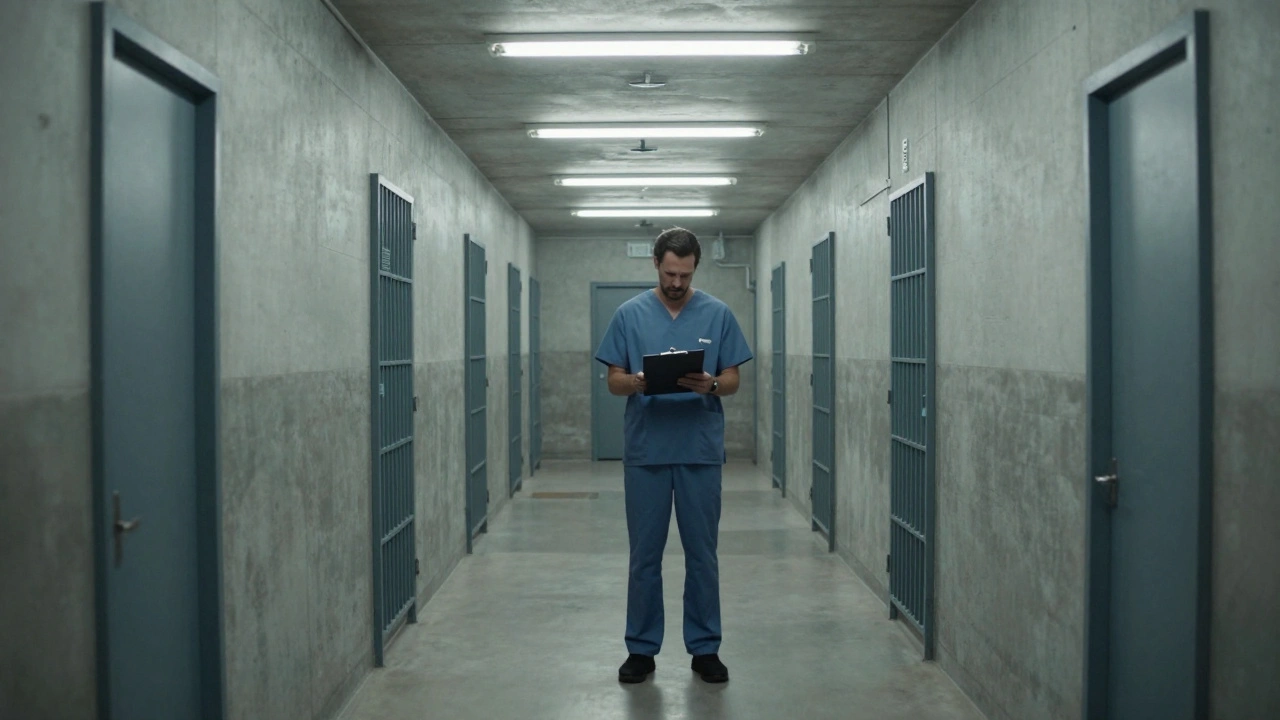
Walk into almost any county jail or state prison, and you'll find a sobering reality: the people inside are often in the middle of a mental health crisis, but the staff tasked with helping them are stretched thin. It is a systemic failure where the demand for behavioral health services far outpaces the number of qualified professionals willing or able to work behind bars. When we talk about correctional mental health staffing, we aren't just discussing HR quotas; we are talking about the difference between a stabilized patient and a tragedy in a holding cell.
Key Takeaways
- Most correctional facilities struggle with severe behavioral health workforce shortages and high turnover.
- NCCHC standards require "sufficient" staffing, but actual implementation varies wildly by jurisdiction.
- Telemedicine has become a critical stopgap for psychiatric care, though it cannot replace on-site crisis intervention.
- Integration of behavioral health staff into multidisciplinary care teams is the current gold standard for delivery.
- Severe gaps persist in transition and re-entry planning, leaving formerly incarcerated individuals vulnerable.
The Gap Between Standards and Reality
On paper, the guidelines are clear. The National Commission on Correctional Health Care is a professional organization that sets accreditation standards for health services in correctional settings. Their Standard C-07 specifically mandates that facilities maintain a sufficient number of health staff to provide timely evaluation and treatment. But "sufficient" is a slippery word.
In the real world, the numbers tell a different story. Data shows that roughly 85% of correctional facilities struggle to fill open behavioral health positions. It is a revolving door: staff burn out due to the high-stress environment, and new recruits are hard to find. When 70% of facilities admit they cannot retain competent staff, the "standard" becomes a theoretical goal rather than a daily practice. This leaves a massive void where 80% of facilities report they simply do not have enough people to meet the needs of the population.
Who Actually Works in These Facilities?
A correctional mental health team isn't just one person; it's a mix of different specialties. Depending on the budget and location, you'll see a variety of roles. Psychiatrists are medical doctors specializing in mental health who can prescribe medication, while Psychologists provide therapeutic interventions and diagnostic testing.
You'll also find Master's-level clinical social workers and mental health counselors who handle the bulk of the daily caseload. In many county jails, the primary on-site presence is actually nursing staff. While Registered Nurses (RNs) and Licensed Practical Nurses (LPNs) provide essential medical care, they often end up being the first responders to psychiatric crises because they are the only ones physically present in the building.
| Staff Role | On-Site Presence (%) | Median Hours (IPW) |
|---|---|---|
| Nursing Staff | 90% | 57.0 |
| Mental Health Counselors | 26% | 8.3 |
| Providers (General) | 71% | 3.3 |
| Psychiatrists | 9% | 1.6 |
The Rise of Telemedicine as a Life Raft
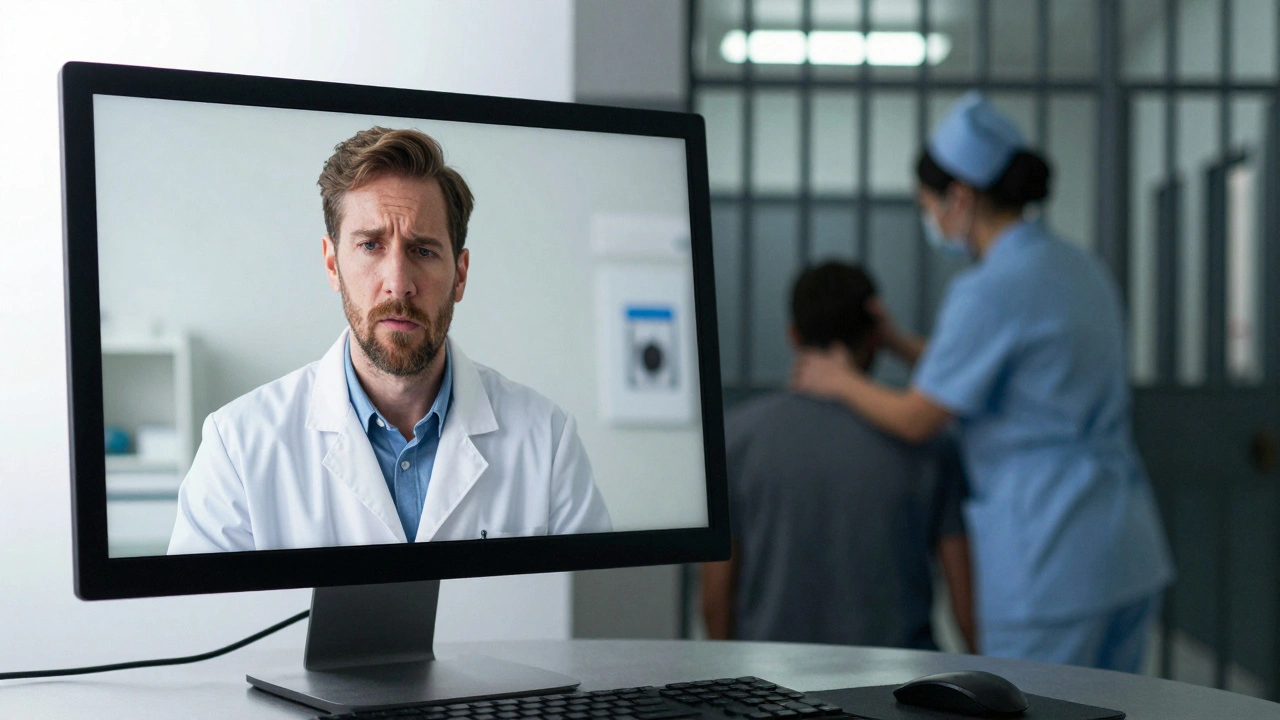
If you look at the table above, the numbers for psychiatrists are abysmal. Only 9% of some surveyed jails have a psychiatrist on-site. This is where Telemedicine comes in. By using remote video conferencing, facilities can connect inmates with specialists who would otherwise never visit a rural or underfunded jail.
Currently, about 55% of jails use telemedicine for mental healthcare. It is a practical fix for prescribing medications and routine check-ins. However, a screen cannot perform a physical safety check or handle an acute psychotic break. Telemedicine is a tool for stability, but it doesn't solve the need for on-site crisis intervention personnel.
The Integrated Care Model
Modern standards are moving toward an "integrated care team." Instead of the mental health provider working in a silo, they collaborate with the rest of the medical and security staff. This means a Correctional Nurse, a primary care physician, and a case manager all share information about a patient's status.
When this works, the patient gets holistic care. If an inmate is struggling with both diabetes and severe depression, the integrated team ensures that the medication for one doesn't interfere with the other. In practice, the average facility employs around 19 full-time behavioral health staff members, though this varies wildly-some have as few as three, meaning those few employees are essentially performing triage and crisis management 24/7.

State-Level Experiments: The Colorado Example
Different states are trying different things to fix this. Colorado, for example, took a legislative approach with Senate Bill 14-064. They decided that putting people with serious mental illnesses (SMI) in administrative segregation-essentially solitary confinement-was counterproductive and cruel.
To solve this, they created the Centennial Correctional Facility Residential Treatment Program, which is a specialized unit designed to provide intensive treatment for inmates with severe functional impairments. By prioritizing those with the highest needs, they've moved away from the "punish first" mentality.
However, even with these programs, the bottleneck remains. There are often hundreds of people in Colorado jails waiting months for a bed at a state psychiatric hospital. This proves that you can have the best standards in the world, but if the surrounding infrastructure (like state hospitals) is full, the jail becomes a default, makeshift psychiatric ward.
The Crisis of Re-Entry and Access
The most dangerous time for a person with mental health issues is the window immediately after release. While 95% of facilities claim to offer re-entry services, the quality of these services depends entirely on the staffing levels mentioned earlier. If a counselor is managing 100 cases, they can't possibly coordinate the complex web of community housing, medication access, and therapy needed for a successful transition.
The disparity in access is also geographically stark. States like Alabama, Mississippi, and Texas often show a correlation between high incarceration rates and low access to mental health care. Only a small fraction of inmates-around 17% in local jails-actually receive mental health treatment after admission. This means the vast majority of people in the system are essentially untreated, which only increases the volatility and danger within the facility.
What are the minimum requirements for mental health staffing in jails?
While specific numbers vary by state, the NCCHC standard (C-07) requires "sufficient" staffing to ensure timely evaluation and treatment. In practice, this usually means a mix of nurses, counselors, and periodic visits from a psychiatrist. Some states require a qualified professional to be available for emergencies, but many facilities rely on on-call or remote services.
Why is there such a high turnover of mental health staff in prisons?
The combination of high caseloads, an environment of constant tension, and lower pay compared to private practice creates rapid burnout. Many professionals find the restrictive nature of correctional facilities-where security always takes priority over clinical needs-to be professionally frustrating.
Can telemedicine replace on-site psychiatrists?
No. While telemedicine is excellent for medication management and routine therapy, it cannot handle acute crises, perform physical examinations, or provide the immediate presence needed to de-escalate a violent psychiatric episode. It is a supplement, not a replacement.
What is a Residential Treatment Program (RTP)?
An RTP is a specialized housing unit, like the one at Colorado's Centennial Correctional Facility, specifically for inmates diagnosed with serious mental illness (SMI). These units focus on treatment rather than punishment and aim to keep mentally ill inmates out of solitary confinement.
How does the "integrated care team" model work?
The integrated model breaks down walls between medical and mental health staff. It involves constant communication between correctional nurses, primary care providers, and behavioral health specialists to ensure that a patient's physical and mental health needs are treated together rather than as separate issues.
Next Steps for Facility Administrators
If you are managing a facility or working in policy, the first step is a realistic audit of "time on-site." Don't look at headcounts; look at hours per 100 inmates. If your psychiatric coverage is under 2 hours per week, you are in a high-risk zone for negligence and patient harm.
Prioritize the recruitment of mid-level providers like Advanced Practice Registered Nurses (APRNs) who can bridge the gap between general nursing and psychiatry. Additionally, investing in a robust telemedicine infrastructure can alleviate the pressure on on-site staff, allowing them to focus on the most acute, face-to-face crisis interventions.