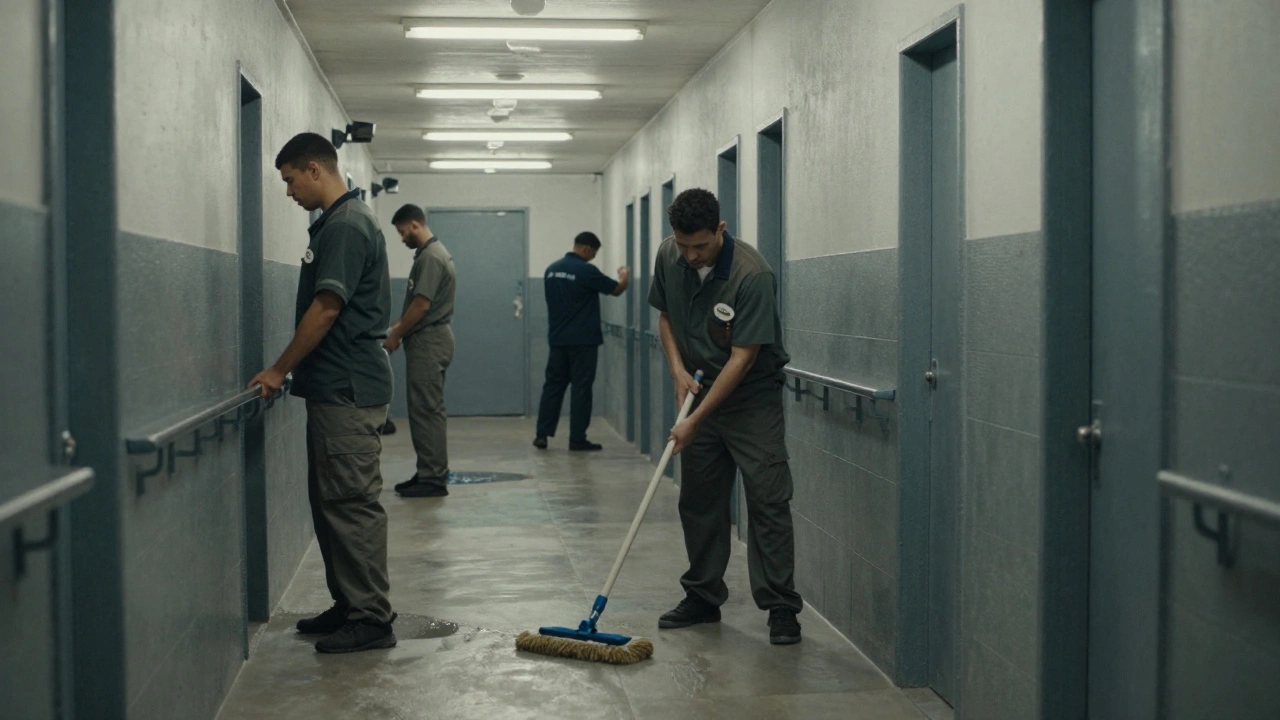
Walking into a correctional facility, you'll see people doing everything from scrubbing floors to manufacturing furniture. To an outsider, it looks like a standard workplace, but the economics are completely different. For most people behind bars, prison work assignments aren't about building a career or saving for retirement; they're about survival and spending time. The gap between what these workers produce and what they actually earn is staggering, often falling far below any legal minimum wage.
If you're trying to understand how this system works, you have to realize that not all prison jobs are created equal. There is a massive divide between the people keeping the lights on in the dorms and those working in specialized factories. Whether you're looking at this from a legal perspective, a family member's point of view, or as someone researching labor rights, the reality is that the pay is often symbolic rather than sustainable.
Quick Summary of Inmate Labor
- Wage Gap: Most inmates earn cents per hour, with some states paying nothing at all.
- Job Tiers: Work is split between "regular" institutional jobs and specialized "industry" roles.
- Limited Access: Only about 6% of the prison population gets access to higher-paying industry jobs.
- Economic Hardship: Pay is often too low to cover basic hygiene products or phone calls.
The Two Main Types of Prison Jobs
In the U.S. correctional system, you generally fall into one of two buckets. The first is what's known as "regular" or custodial work. Custodial Work is the essential daily labor required to keep a prison running, including food service, laundry, and cleaning. Most inmates spend their days here. If you're tasked with scrubbing the dining hall or mowing the lawn, you're in this category. These jobs are plentiful but pay the least.
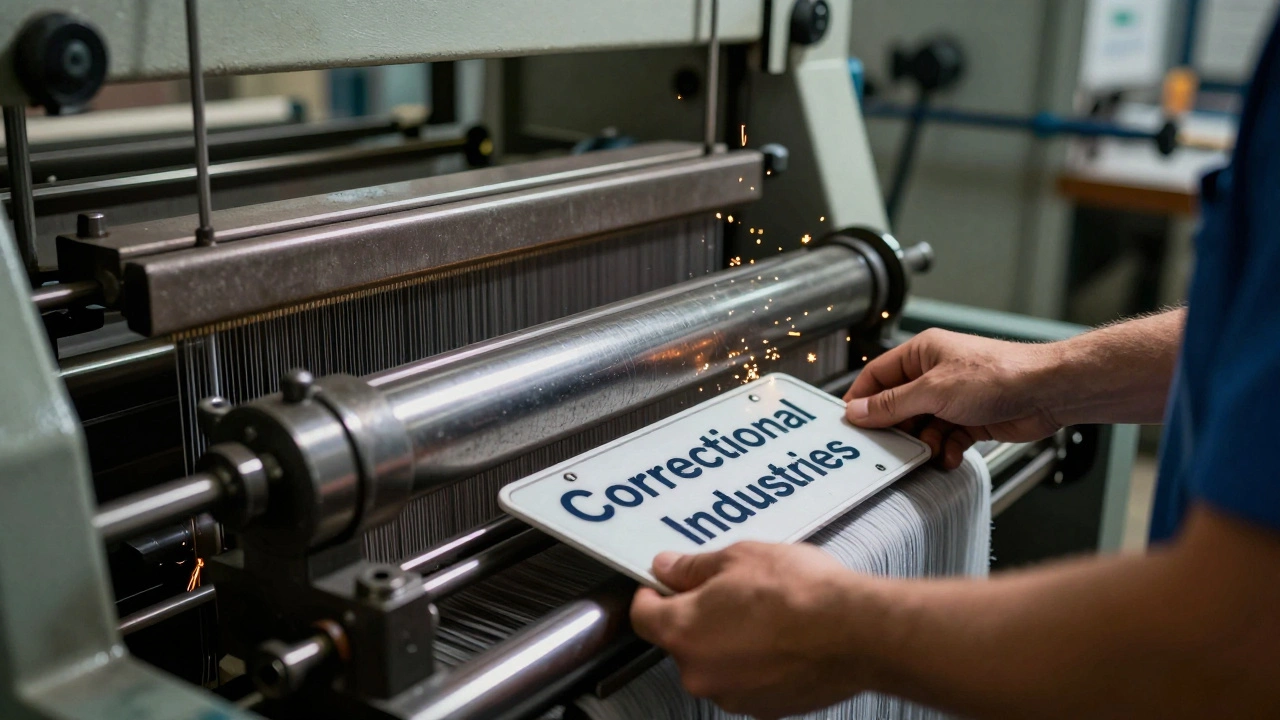
The second category is much more exclusive: Correctional Industries is state-owned businesses where incarcerated people manufacture goods like license plates, furniture, or clothing for government agencies. These roles are the "gold mine" of the prison system. They require more skill, offer better pay, and are highly competitive. Because they are so rare, getting one is often tied to your behavior record and tenure in the facility.
| Feature | Regular Prison Jobs | Industry Assignments |
|---|---|---|
| Common Roles | Kitchen staff, janitors, groundskeepers | Machinists, upholstery, farm management |
| Availability | High (most inmates are assigned) | Low (approx. 6% of population) |
| Average Pay | Very Low (often < $1.00/hr) | Moderate (up to $1.41/hr average) |
| Primary Goal | Facility maintenance | Production of goods/services |
The Harsh Reality of Pay Rates
Talking about "pay rates" in prison is almost a contradiction because the numbers are so low. Depending on where you are, you might be making a decent amount of pocket change, or you might be working for free. For example, in states like Minnesota or New Jersey, some maintenance jobs pay around $2 per hour. That sounds better than nothing, but compare that to Oklahoma, where some regular jobs pay between $7.23 and $14.45 per month. When you break that down hourly, it's a fraction of a cent.
Even worse, there are six states-Alabama, Arkansas, Georgia, South Carolina, Mississippi, and Texas-where incarcerated workers aren't paid at all. In these places, work is a requirement of incarceration, but the only "payment" is the avoidance of disciplinary action or a slight bump in privileges. Even the Bureau of Prisons (the federal system) keeps wages remarkably low, typically ranging from $0.12 to $0.40 per hour.
To put this in perspective, imagine working an eight-hour shift at the national average for non-industry work (roughly $0.86 per hour). You'd make about $6.88 a day. After the state takes its cut for mandatory savings or court costs, you might not even have enough left to buy a basic bar of soap or a 15-minute phone call to your kids from the commissary.
Expectations and Disciplinary Ties
Work isn't just about money in prison; it's a tool for control. Prison administrations use job assignments to manage the population. If an inmate is consistently compliant and follows the rules, they might be rewarded with a spot in a state-owned industry shop. If they cause trouble, they can be demoted to a "Level 1" status, which in some states means their pay is slashed or eliminated entirely.
There's also a huge expectation of versatility. An inmate might start in the kitchen, get moved to laundry, and then be put on a highway detail. These shifts are often abrupt and based on the needs of the Department of Corrections rather than the skills of the worker. For those in industry roles, the expectations are higher-they must meet production quotas, just like in a private factory, but without the legal protections of a standard employment contract.
The Downward Trend of Inmate Wages
You'd think that over time, wages would rise to keep up with inflation. Surprisingly, the opposite has happened. Data from the Prison Policy Initiative shows that real wages for prison labor have actually declined. Between 2001 and 2017, the average maximum daily wage for industry work dropped by about 27%.
This means that the purchasing power of an incarcerated person is lower today than it was two decades ago. While the cost of commissary items and phone calls has gone up, the pay for the work required to afford those items has gone down. This creates a cycle of financial dependency, where inmates must rely on family members to send money just to maintain basic hygiene and communication.
Pathways to Better Pay: PIE and Specialized Trade
Is there any way to make actual money? For a tiny fraction of the population, yes. The Private Industry Enhancement (PIE) program allows some inmates to work for private companies. In these specific cases, workers might earn prevailing local wages, which are vastly higher than state-run pay scales. However, these opportunities are rare and usually reserved for those nearing the end of their sentence with exemplary records.
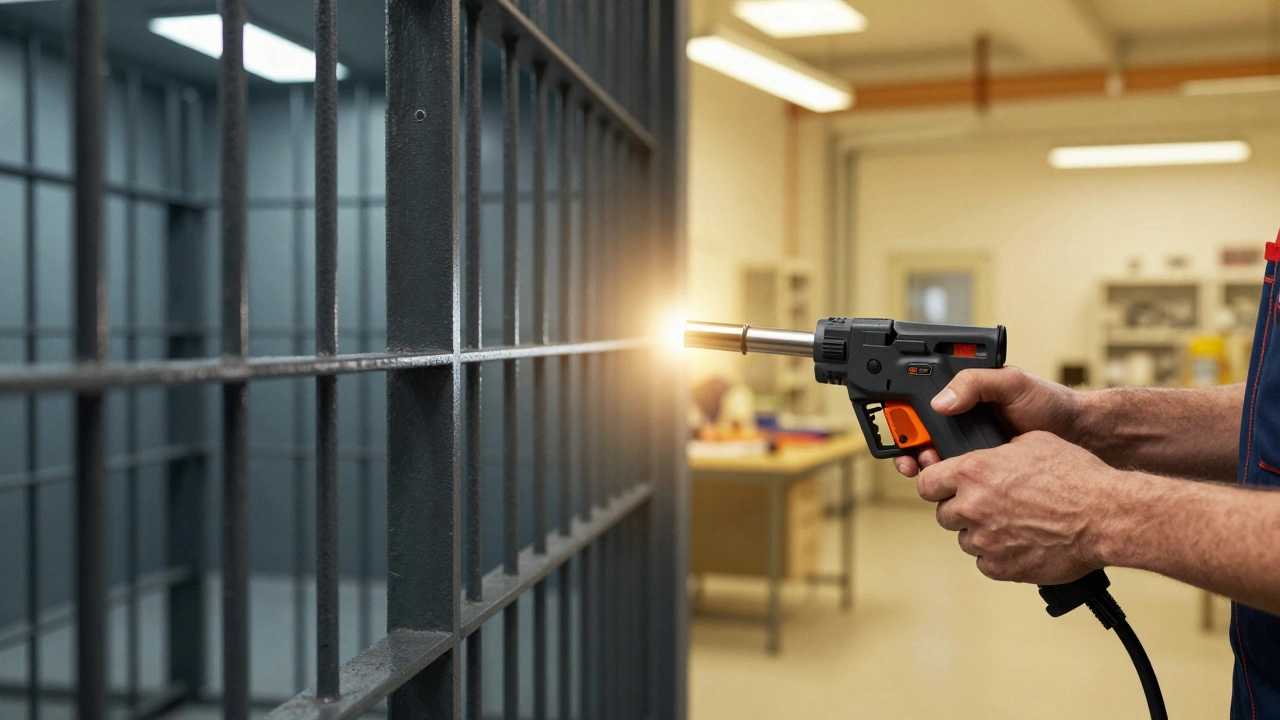
Another option is pursuing certified trade training. Some facilities offer programs in HVAC, electrical work, or welding. While the pay *inside* the prison might still be low, these certifications are the only real "paycheck" that matters because they provide a way to earn a living wage immediately upon release. Without these, an inmate is essentially returning to society with a work history that doesn't translate to any real-world market value.
Do all inmates have to work in prison?
In most U.S. facilities, work is mandatory for those who are physically able. Refusing a work assignment can lead to disciplinary reports, loss of privileges, or placement in restrictive housing. While some are exempt due to medical reasons, the general expectation is that every able-bodied person will be assigned a job.
Can inmates save their earnings for after release?
Some states have mandatory savings accounts. For instance, in Oklahoma, a portion of an inmate's income is automatically placed into a savings account. However, since the wages are so low, these accounts rarely accumulate a significant amount of money. In many other states, the money is spent immediately on commissary items.
Why is there such a big difference in pay between states?
Prison labor is governed by state law, not a national standard. Each state's Department of Corrections sets its own budget and wage scales. Some states view prison work as purely rehabilitative or custodial, while others operate it as a business venture, leading to the extreme variations in pay seen across the country.
What happens if an inmate is "demoted" at work?
Demotion usually happens as a disciplinary sanction. An inmate might be moved from a high-paying industry job (like furniture making) back to a low-paying custodial job (like cleaning floors). In some jurisdictions, they can even be moved to an unpaid status, stripping them of their ability to buy items from the commissary.
Are there any laws protecting prison workers?
Generally, no. Most courts have ruled that incarcerated people are not "employees" under the Fair Labor Standards Act (FLSA), meaning they are not entitled to the federal minimum wage or overtime pay. This is why wages can legally be as low as a few cents per hour.
Next Steps for Families and Advocates
If you have a loved one currently incarcerated, it's helpful to know which state they are in and if they've been assigned to a "regular" or "industry" job. This determines whether they'll be able to afford basic necessities or if they'll be entirely dependent on outside deposits. For those looking to support reform, focusing on the Cornell ILR School and similar research institutions provides the data needed to push for fair wage legislation.
Depending on the scenario, you might want to:
- For Families: Check if the facility allows for "trust accounts" and determine the current cost of basic hygiene kits to see if inmate wages cover them.
- For Legal Advocates: Research state-specific DOC policies (like New Jersey's Standard 620) to identify discrepancies in how wages are applied.
- For Inmates: Prioritize certifications and trade-based assignments over general labor to ensure post-release employability.