
When someone walks into jail with a substance use disorder, the system has always asked one question: Will they break the law again? But what if we started asking a different one: Are they building a life worth staying sober for? That shift isn’t just philosophical-it’s measurable. Across the U.S., jails are moving beyond punishment and tracking real recovery through three simple, powerful metrics: attendance, engagement, and peer mentorship.
Why Traditional Metrics Fail
For decades, jails measured success by one number: recidivism. Did the person get arrested again? If yes, the program failed. If no, it worked. But that’s like judging a diabetic’s health only by whether they had a sugar crash last week. It ignores everything else: did they start eating better? Did they learn to manage stress? Did they reconnect with their family? Research from the UK Drug Policy Commission and Illinois’ TASC program shows that recovery isn’t about avoiding drugs-it’s about rebuilding identity, purpose, and connection. People don’t recover in isolation. They recover through relationships, routines, and real support. That’s why attendance, engagement, and peer mentorship aren’t just nice-to-haves. They’re the new baseline for measuring progress.Attendance: Showing Up Is the First Step
In jail, attendance sounds simple: did the person show up to treatment? But in recovery-oriented systems, it’s more than a punch card. It’s a signal. Someone who shows up to group therapy three times a week isn’t just checking a box-they’re choosing to listen, to reflect, to change. The Illinois TASC program tracked this for years. Between 2007 and 2008, 67% of probationers and 49% of incarcerated clients completed all required recovery sessions. That’s not luck. It’s design. Programs that offered consistent, predictable schedules-same time, same room, same facilitator-saw higher attendance. Why? Because predictability builds trust. And trust is the foundation of recovery. In Portland jails, staff noticed something surprising: people who attended detox sessions were 3x more likely to enroll in job training later. Attendance wasn’t just about substance use-it was a gateway to rebuilding their whole life.Engagement: More Than Participation
Showing up doesn’t mean you’re engaged. You can sit in a room and stare at your shoes. True engagement means you’re listening, speaking, asking questions, trying new coping skills. The CHIME model-Connectedness, Hope, Identity, Meaning, Empowerment-gives us a map. When someone in jail starts talking about their past with honesty, they’re rebuilding identity. When they say, “I want to be a father again,” they’re reclaiming meaning. When they join a peer-led group and feel heard, they’re building connectedness. Jails that track engagement don’t just count sessions. They ask: Did the person share something personal? Did they try a new skill? Did they express hope for the future? Staff use short check-ins-two or three questions after each session-to measure emotional progress, not just attendance. A study in northern England found that people in recovery housing didn’t just use less drugs-they reported higher self-esteem, more confidence, and a stronger sense of control over their lives. That’s engagement. And it’s measurable.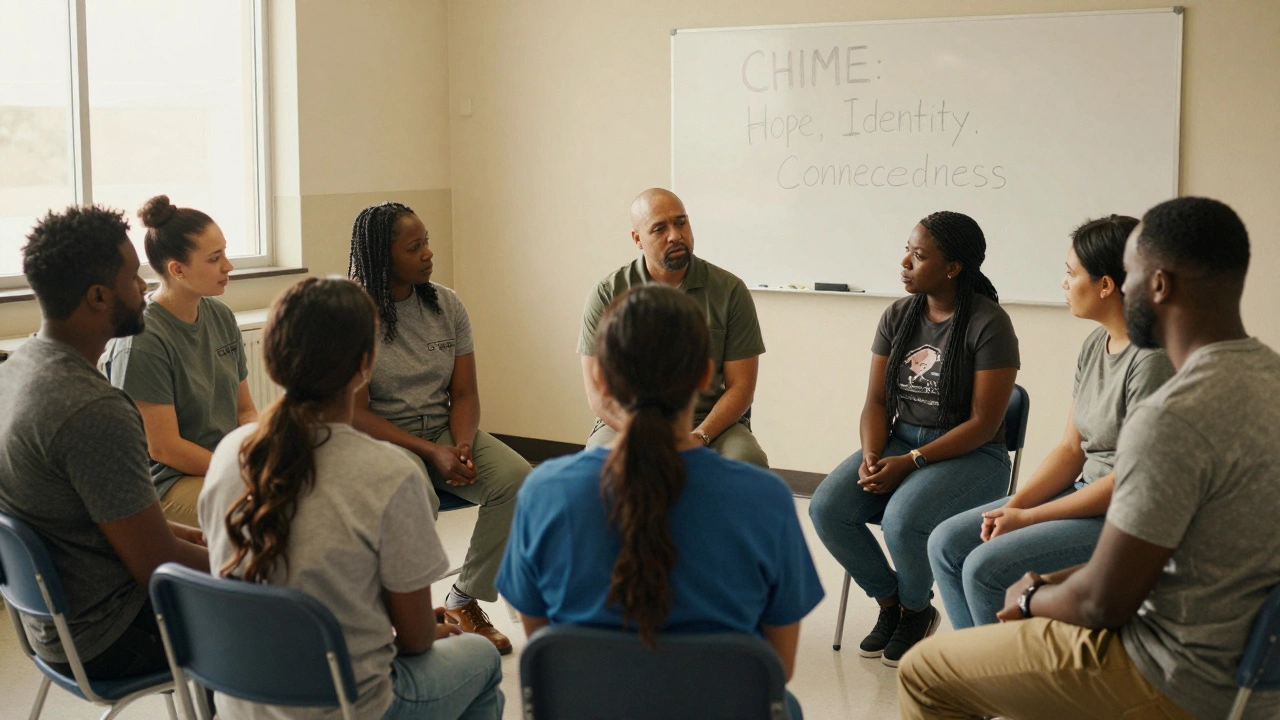
Peer Mentorship: The Secret Weapon
No one understands the weight of addiction and incarceration like someone who’s been there. That’s why peer mentorship isn’t optional-it’s essential. SAMHSA defines a peer supporter as someone who uses their own recovery experience to help others. In jail, that’s not a volunteer. It’s a lifeline. A peer mentor doesn’t give advice. They say, “I was where you are. I didn’t know how to stop. But I learned. And I can help you find your way.” The Sheridan Model, used in several state prison systems, pairs inmates with trained peer mentors from day one. These mentors walk alongside them through detox, counseling, job training, and even parole hearings. Sheridan serves over 1,000 inmates at a time-and they track one key metric: How many mentees stayed sober 12 months after release? The answer? 58%. That’s not magic. It’s connection. Peer mentors create social contagion. When someone sees another person-someone who once sat in their cell-clean, employed, and rebuilding their life, it changes everything. It’s not theory. It’s real.Recovery Capital: The Hidden Metric
There’s another layer beneath attendance and peer support: recovery capital. This term, developed by researchers like Best and Laudet, breaks recovery into three parts:- Personal capital: Your skills, confidence, mental health.
- Social capital: Your relationships-family, friends, mentors.
- Community capital: Access to housing, jobs, Medicaid, transportation.

What Real Success Looks Like
Real success in a recovery-oriented jail isn’t measured by how many people didn’t get arrested. It’s measured by how many started:- Attending therapy consistently
- Speaking up in group sessions
- Building trust with a peer mentor
- Applying for benefits
- Reconnecting with a child or parent
Why This Matters Now
Over 60% of people in jail have a substance use disorder. Most have been arrested multiple times. Most have no job, no housing, no support. The old system told them they were broken. The new system asks: What do you need to heal? Attendance, engagement, peer mentorship-they’re not just metrics. They’re signs of humanity. When someone shows up, speaks up, and leans on another person who’s been through it, they’re not just avoiding drugs. They’re choosing to live. And that’s worth measuring.How do jails track attendance in recovery programs?
Jails use electronic check-in systems, signed attendance logs, and automated reminders to track participation. Programs often require consistent attendance-like showing up to three sessions per week-to qualify for privileges like phone calls or job training. Attendance is recorded daily and reviewed weekly by case managers.
Can peer mentors really make a difference in jail?
Yes. Peer mentors use their lived experience to build trust quickly. Unlike staff, they’ve been in the cell, felt the cravings, faced the shame. That credibility changes behavior. Studies show inmates with peer mentors are more likely to complete treatment, stay sober after release, and avoid re-arrest. The Sheridan Model found 58% of mentees stayed sober for a year post-release-far above average.
What’s the difference between engagement and attendance?
Attendance means you showed up. Engagement means you participated. A person can sit silently in a group and never speak-that’s attendance. Engagement happens when they share a story, ask a question, try a new coping skill, or express hope for the future. Jails now use short, structured check-ins to measure emotional and behavioral engagement, not just physical presence.
Do recovery metrics work for people with mental illness too?
Absolutely. The CHIME model-Connectedness, Hope, Identity, Meaning, Empowerment-was developed for both addiction and mental health recovery. People with co-occurring disorders benefit even more from peer mentorship and consistent engagement. Programs that combine substance use treatment with mental health counseling see higher retention and better long-term outcomes.
How do jails measure long-term recovery after release?
Jails track outcomes like housing stability, employment, Medicaid enrollment, and continued peer support. Programs like TASC follow up with clients for up to two years after release, asking: Did you get a job? Did you keep your housing? Did you attend a recovery meeting? These metrics show whether the jail’s support system actually translated into real-life recovery.