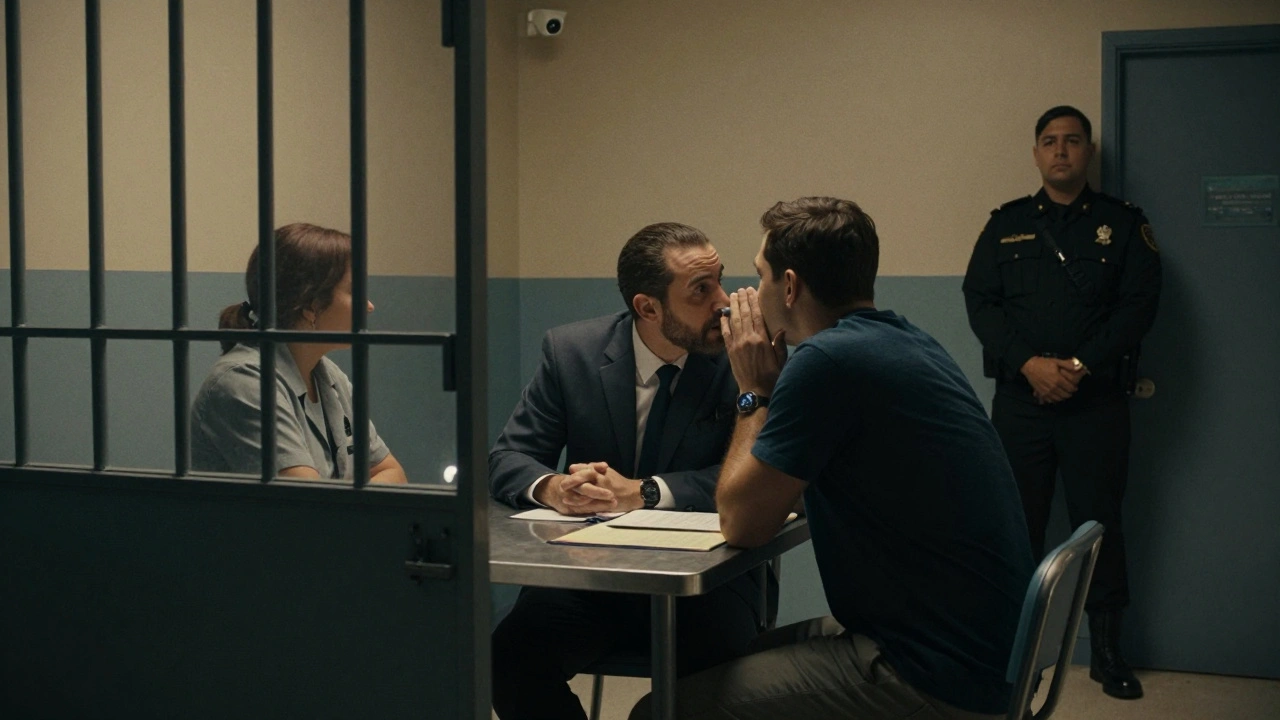
When someone is locked up, their right to talk privately with their lawyer isn’t just a formality-it’s a constitutional guarantee. The Sixth Amendment ensures that everyone accused of a crime has the right to legal counsel. But behind bars, that right is constantly under pressure. Phone calls are recorded. Emails are read. Visits are watched. And in many places, the system doesn’t just monitor communications-it actively undermines the legal protection meant to keep them secret.
Why Privilege Matters Behind Bars
Attorney-client privilege isn’t about secrecy for its own sake. It’s about trust. If a person in jail can’t speak honestly with their lawyer, they can’t get proper legal help. They might hide key facts out of fear that something they say will be used against them later. They might avoid talking about police misconduct, corruption, or abuse by guards because those details could be recorded and twisted in court. When privilege breaks down, so does justice.Phone Calls: The Most Common Trap
Most jails and prisons record every call an inmate makes. That includes calls to family, friends, and yes-lawyers. The Federal Bureau of Prisons says it won’t monitor calls to attorneys, but only if the inmate follows strict rules: they must request unmonitored status in advance, and the attorney’s number must be pre-approved. Even then, staff can still listen if they suspect criminal activity. Many inmates don’t know how to request this, and attorneys often don’t get confirmation in writing. In practice, lawyers report that calls are routinely monitored at the start of representation. One attorney in Tennessee said she had to tell five clients in her first month to stop discussing case details over the phone until they got a secure line. That’s not just inconvenient-it’s dangerous. If a client says, "The officer threatened me," and that gets recorded, the prosecution can later claim the client is lying or inconsistent. The Tennessee Board of Law Examiners has confirmed that jail recordings are now a go-to source for prosecutors looking to undermine defense testimony.Email and Digital Messaging: A Broken System
Email is how lawyers communicate with clients everywhere else. But in prison, it’s a minefield. Most facilities use systems like JPay, which explicitly state in their terms: "The Service should not be used by attorneys to communicate with incarcerated individuals as the content of your email will not be treated as privileged and confidential." This isn’t a glitch-it’s policy. The Bureau of Prisons admits it monitors all inmate emails, including those from lawyers. That means a client describing how evidence was planted, or who witnessed a crime, could have their words handed to the prosecution. The National Association of Criminal Defense Lawyers has documented cases where emails between attorneys and clients were used to build charges, even when the inmate never waived their privilege. A few places have tried to fix this. The Metropolitan Correctional Center in New York and the Metropolitan Detention Center in Brooklyn filter out emails from attorneys who’ve officially entered their appearance. But even there, filters aren’t perfect. Some messages slip through. Others are saved in backups. And outside those two jails? No filters at all.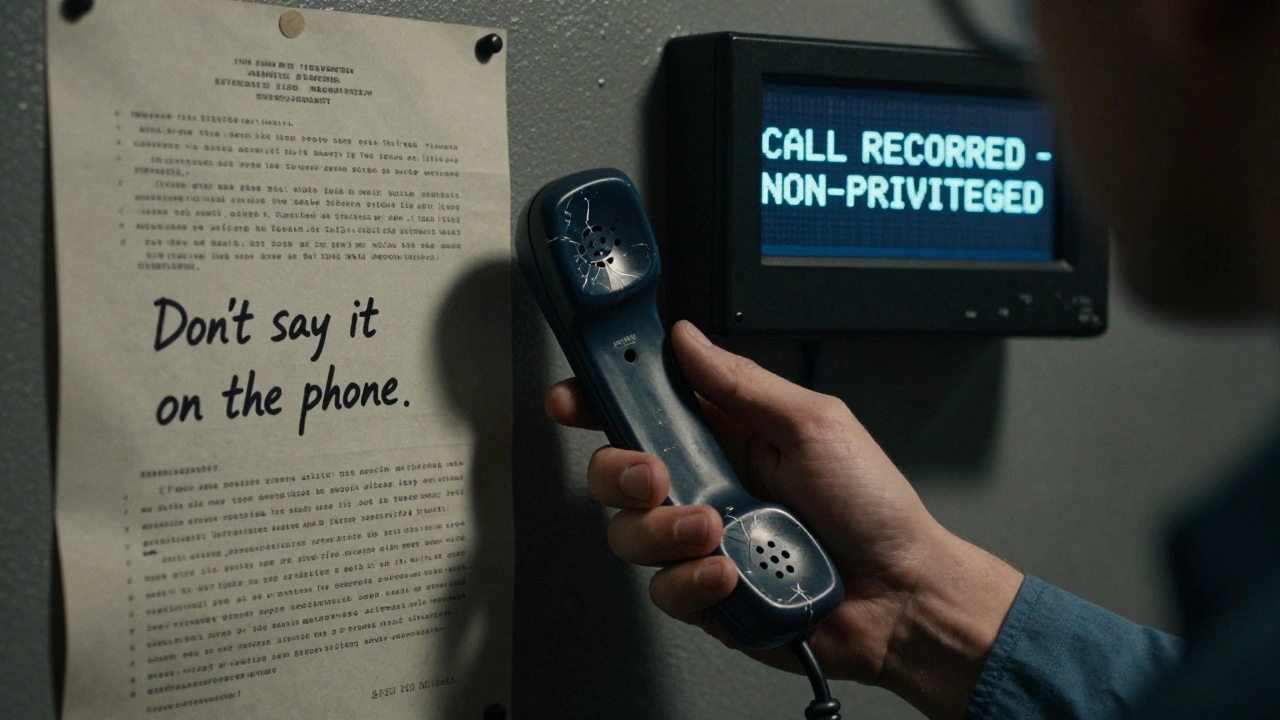
In-Person Visits: Still the Gold Standard
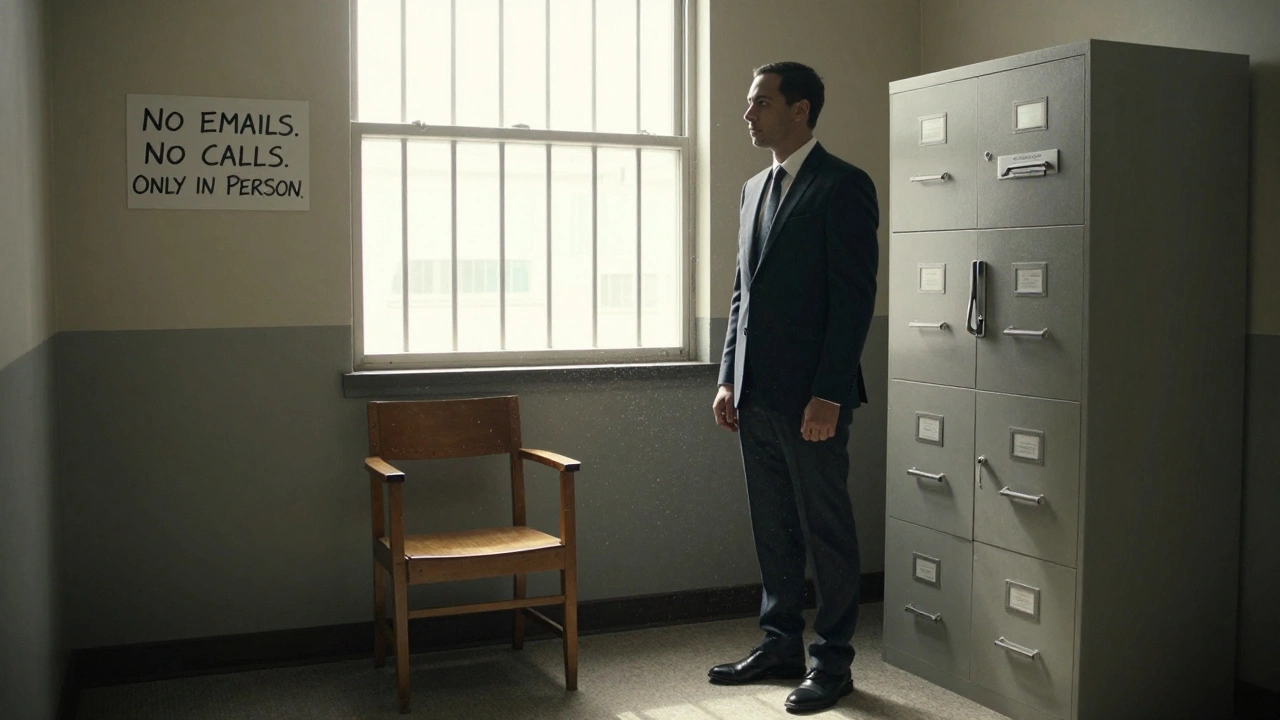
The only truly safe way to talk? In person. The Federal Bureau of Prisons and most state systems guarantee private meeting rooms for attorney visits. No cameras. No recording. No guards listening. In Tennessee, the law even says jailers must leave the room during legal interviews-except in rare cases where safety is at risk. But in-person visits aren’t always possible. Inmates are often moved without notice. Visitation hours are short. Lawyers juggle dozens of clients. And in rural areas, there might not be a lawyer within 100 miles. That’s why relying solely on visits leaves too many people without real access to counsel.The Ethical Tightrope for Lawyers
Defense attorneys are caught between two ethical duties: communicate with their client, and protect their client’s privilege. The American Bar Association says failing to communicate is a major complaint against lawyers. But if you send an email or make a phone call that’s monitored, you might be violating the very privilege you’re sworn to uphold. That’s why smart lawyers now do three things:- They confirm in writing with the jail or prison that their number is on the privileged list.
- They start every call by saying, "This is attorney-client privileged communication," and ask to be disconnected if monitoring continues.
- They avoid discussing case details over any unsecured channel-even if the client brings it up.
What Needs to Change
There’s a clear path forward, laid out by the Berkeley Law School project on attorney-client privilege. Five key reforms would fix the worst problems:- Stop monitoring all attorney-client emails and calls by default. No exceptions.
- Limit retention. If a privileged communication is accidentally recorded, it must be deleted within 30 days.
- Require a warrant for any government access to attorney-client messages. No more "routine" reviews.
- Create clean teams. Only attorneys with no ties to prosecution can review privileged material-even if a warrant is granted.
- Enforce consequences. If privilege is violated, any evidence obtained must be thrown out.
The Real Cost of Broken Privilege
When legal communication is monitored, the damage isn’t just legal-it’s human. Clients stop talking. They lose trust. They feel abandoned. Some plead guilty just to avoid the stress of constant surveillance. Others miss deadlines because they can’t get advice in time. And in the end, the system punishes the poor, the marginalized, and those who can’t afford to wait for a private visit. This isn’t about privacy. It’s about fairness. The law doesn’t work if one person can speak freely and another can’t-just because they’re behind bars.Can jail staff legally listen to my lawyer’s phone calls?
Technically, no-if the call is properly flagged as attorney-client privileged. But in practice, many jails still record and sometimes listen to these calls, especially if the inmate hasn’t followed the facility’s exact procedures. The federal Bureau of Prisons says staff must not monitor privileged calls, but they don’t always follow their own rules. Attorneys should always confirm in writing that their number is on the privileged list and state at the start of each call: "This is a privileged attorney-client communication."
Are emails between lawyers and inmates protected?
No, not in most places. Systems like JPay and the Bureau of Prisons’ email service explicitly state that communications are not privileged and can be monitored. Even if the inmate and lawyer believe the conversation is confidential, the system is designed to allow staff to read, save, and share those messages with prosecutors. Only a few federal facilities filter out attorney emails, and even then, the protection is incomplete.
What should a lawyer do if they suspect their client’s calls are being monitored?
First, stop discussing case details over that line. Second, send a written request to the facility’s warden or legal department asking for confirmation that their number is on the privileged list. Third, if they don’t get a clear answer within 10 days, switch to in-person visits or use certified mail. Document every attempt. If privilege is violated, the lawyer may later file a motion to suppress evidence obtained from those communications.
Can a client waive their attorney-client privilege by talking on a monitored line?
No. Privilege doesn’t disappear just because the system records the call. But prosecutors can argue that the client didn’t take reasonable steps to protect confidentiality, which might weaken the claim in court. Courts have ruled that if a client uses a system they know is monitored, they might be seen as having assumed the risk. That’s why it’s critical for lawyers to warn clients and insist on secure channels.
Is there any federal law that protects attorney-client emails in prison?
No. There is no federal statute that explicitly prohibits monitoring attorney-client emails. The First and Sixth Amendments provide constitutional protections, but courts have consistently deferred to prison security policies. Until Congress passes specific legislation-like the model proposed by Berkeley Law-there is no legal barrier to monitoring. Advocacy groups are pushing for it, but as of 2026, no such law exists.