
If you or someone you know is incarcerated, knowing where to find legal help can make all the difference. Legal aid directories for incarcerated individuals aren’t just lists-they’re lifelines. These state-specific systems connect people behind bars with free or low-cost lawyers who handle everything from appeals and parole hearings to challenging abusive conditions in prison. But here’s the truth: legal aid for prisoners doesn’t work the same way in every state. Some states have well-organized, easy-to-navigate systems. Others leave people guessing, mailing letters into the void with no guarantee of a response.
How Legal Aid Works for People in Prison
Most incarcerated individuals can’t afford private attorneys. That’s where legal aid comes in. These services are usually run by nonprofit law firms, public defender offices, or bar associations funded by state grants or federal programs. They help with criminal appeals, post-conviction motions, civil rights violations, family law issues (like child custody), and even challenges to prison conditions-like unsafe housing, lack of medical care, or excessive use of force. Access is often limited to written legal mail. Phone calls are rare. In-person visits are even rarer. That means the quality of the directory matters. A poorly organized list with outdated phone numbers or wrong addresses can delay a legal filing by months-or cause it to be thrown out for missing a deadline.New York: One of the Most Detailed Systems
New York State has one of the most structured legal aid networks for incarcerated people. The Prison Legal Services (PLS) office handles legal representation for people in state prisons who can’t pay. Each prison is assigned to a specific PLS office based on location. For example, if someone is housed in Attica, they contact the PLS office serving that region. Legal forms are available in prison law libraries, and the process starts with a written request. Beyond PLS, New York has county-based legal aid societies that also serve incarcerated residents. Albany County? Contact the Legal Aid Society of Northeastern New York at 95 Central Ave, Albany, NY 12206. You can call (518) 462-6765 or use their toll-free line at (800) 462-2922. Their website, www.lasnny.org, has forms and instructions. In Onondaga County (Syracuse), it’s the Frank H. Hiscock Legal Aid Society at 351 South Warren Street. In Oneida County (Utica), it’s Legal Aid Society of Mid-New York at 120 Bleecker Street. Each office has its own rules about who they can help and what cases they take. Some only handle post-conviction appeals. Others help with parole violations or civil rights complaints. You have to know which office serves your county-and whether they accept prison mail.California: Broad Coverage, Specialized Support
California covers all 58 counties with a mix of statewide and local services. The Prison Law Office in Berkeley is a major player. They don’t just answer letters-they’ve won major court cases that changed how prisons handle medical care and solitary confinement. Their legal mail address is General Delivery, San Quentin, CA 94964. If you’re in any California prison, you can write to them. Root & Rebound is another key resource. They help people with criminal records, including those still incarcerated. You can mail them at 1610 Harrison St, Suite E, Oakland, CA 94612, or email [email protected]. Their website, www.rootandrebound.org, has downloadable guides on legal rights, expungement, and how to file a grievance. For women in prison, the California Coalition for Women Prisoners offers direct advocacy and legal support. They visit facilities, file complaints, and help with family reunification. Their site, ncip.org, has contact info and resources. There are also specialized groups like Legal Services for Prisoners with Children (LSPC), which helps people maintain custody of their kids while incarcerated. They publish manuals on prisoner rights and how to fight excessive fines and fees. You can reach them at (510) 932-0422 or [email protected]. The California Department of Corrections and Rehabilitation (CDCR) also lists all state prisons with links to each facility’s legal mail coordinator. This helps people know exactly who to contact inside the prison to get their legal documents processed.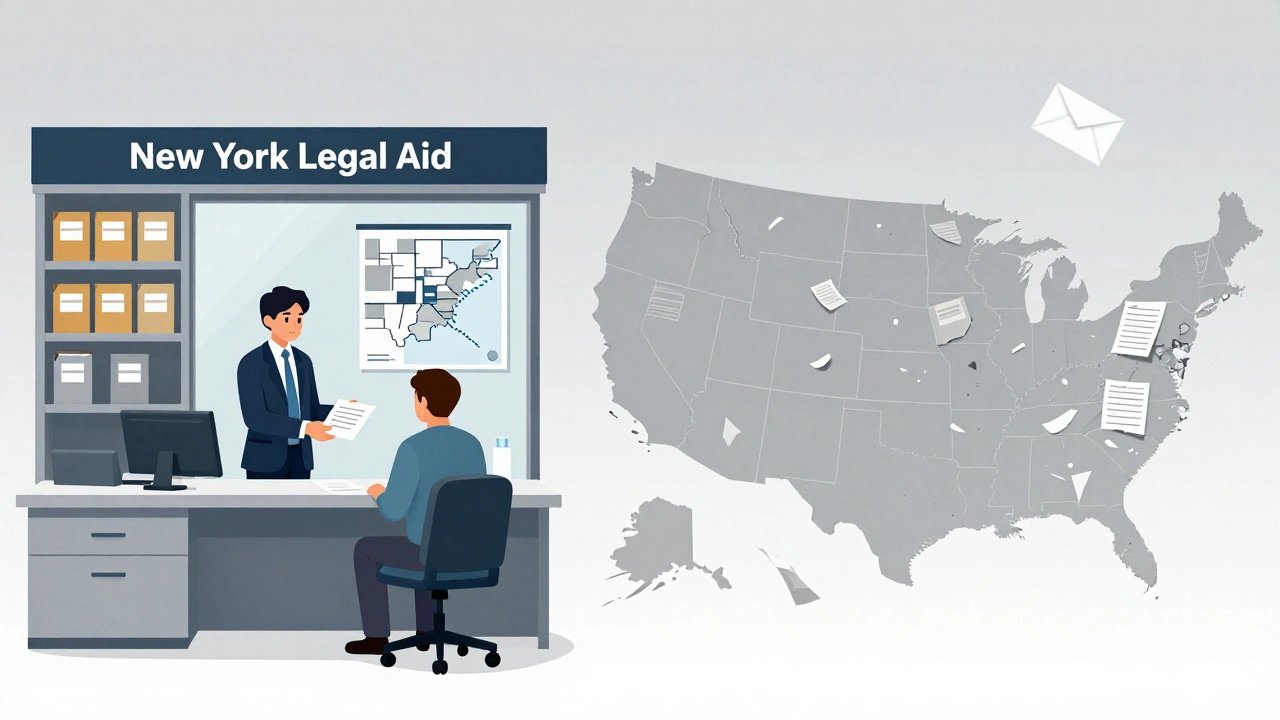
Other States: Patchwork Systems
Not every state has a detailed public directory. Some rely on scattered nonprofits or single-point contacts. For example:- Florida directs people to the Commission on Capital Cases in Tallahassee for death penalty appeals. Their number is (850) 921-4704.
- Indiana has the Public Defender of Indiana, which handles post-conviction relief. You can call (317) 232-2475.
- Kansas offers help through the Paul E. Wilson Kansas Defender Project at the University of Kansas School of Law.
- Louisiana has the Louisiana Capital Assistance Center in New Orleans, reachable at (504) 558-9867.
- Ohio uses a single portal: www.opd.ohio.gov for all indigent defense services.
- Oklahoma has separate phone lines for capital trials, direct appeals, and post-conviction help-all under the Indigent Defense System.
What You Need to Know Before You Write
Don’t just send a letter and hope for the best. Here’s what actually works:- Know your jurisdiction. Are you in a state prison or a county jail? That determines which legal aid office you contact.
- Check if they serve incarcerated people. Some legal aid offices only help people outside prison. Look for phrases like “serves incarcerated clients” or “prison law project.”
- Use legal mail. Never send personal letters. Use the official legal mail address. Include your inmate ID, full name, and prison number on every page.
- Be specific. Don’t say “I need help.” Say “I need help filing a post-conviction motion for ineffective counsel.” Give dates, case numbers, and names of officers involved.
- Follow up. If you don’t get a reply in 4-6 weeks, send another letter. Keep copies of everything.

Federal Help and Reentry Resources
Even if your state doesn’t have a strong system, federal resources exist. The Department of Justice’s Justice.gov lists pro bono providers for immigration cases. The National Reentry Resource Center runs a helpline for people preparing to leave prison. They can connect you to housing, job training, and legal aid for record sealing. Also, the Second Chance Act grants fund hundreds of local organizations across the country. You can find your local grantee through the National Reentry Resource Center’s website or by calling their helpline.What’s Missing? And What You Can Do
Many states still don’t publish their legal aid directories online. Some only give out info over the phone. Others require you to request a packet by mail-something that’s hard to do without access to a printer or postage. If you’re reading this from inside, ask your law library staff for the most current directory. If you’re an advocate or family member, help update the info. Send corrections to legal aid offices. Share what you learn with others. Legal aid for incarcerated people isn’t perfect. But in states like New York and California, it’s a real system-with real people on the other end of the letter. It’s not magic. It’s methodical. And it works if you know how to use it.Can I get legal help if I’m in a county jail, not a state prison?
Yes. Many legal aid organizations serve both jail and prison populations, but they often operate differently. County jails usually fall under the jurisdiction of the county’s public defender’s office or legal aid society. Check your county’s legal aid website or call the local bar association. Some counties have dedicated jail legal clinics that visit weekly.
What if my legal aid office says they don’t help people in prison?
That’s common. Many legal aid offices only serve people outside incarceration. Look for organizations that specifically mention “prisoners,” “incarcerated individuals,” or “correctional facilities” in their mission. In California, try the Prison Law Office or Root & Rebound. In New York, contact Prison Legal Services directly. If you’re unsure, call the state bar association-they often have a referral line for incarcerated clients.
Do I need to be indigent to qualify for free legal aid?
Almost always, yes. Legal aid for incarcerated individuals is funded for people who can’t afford lawyers. You won’t be asked for income paperwork, but you must show you don’t have funds to hire private counsel. If you’re serving time, you’re presumed indigent unless you have significant assets outside prison-like property or savings.
Can I get help with my civil case, like child custody or divorce?
Yes, but it depends on the state and organization. Legal Services for Prisoners with Children in California helps with custody and visitation rights. In New York, some county legal aid societies handle family law for incarcerated parents. Federal law also protects your right to maintain contact with your children. Ask specifically for family law services when you reach out.
How do I know if a legal aid directory is up to date?
Many directories are outdated. The California system was last updated in 2022. New York’s is more current but still changes yearly. The best way to verify? Call the office directly using the number on their official website (not a third-party directory). If you can’t reach them, mail a letter asking for confirmation. Always keep a copy of your inquiry.