
When someone leaves prison, the system often expects them to start over-with no job, no housing, and no support. But what if the key to breaking the cycle wasn’t more surveillance, but more education? Data shows that higher education in prison doesn’t just help people learn. It saves lives, money, and communities.
What Happens When Inmates Go to College?
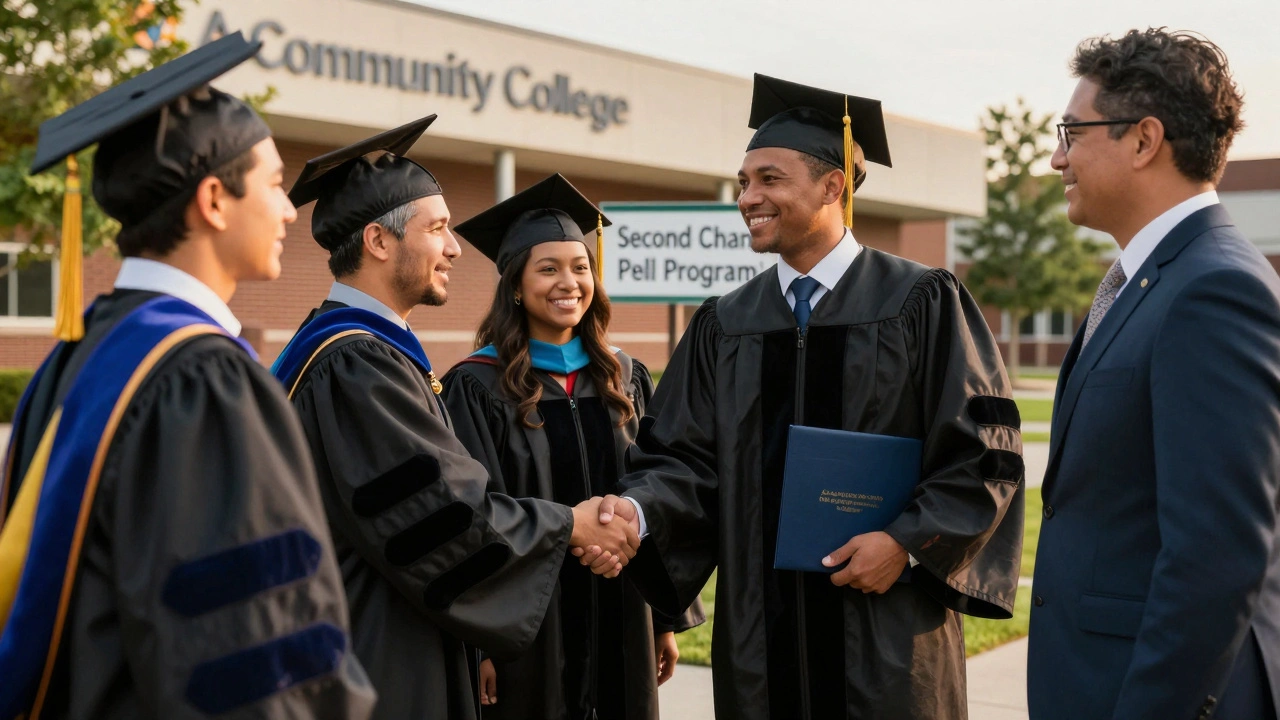
In 2016, the federal government quietly restarted a program that had been banned since 1994: Pell Grants for incarcerated students. Called Second Chance Pell, it lets people in prison take real college courses-just like students on campus. By 2025, over 40,000 people had enrolled. And the results? They’re hard to ignore.A landmark study by the RAND Corporation found that inmates who took college courses were 43% less likely to return to prison. That’s not a small drop. It means that out of every 100 people who would’ve gone back, 43 didn’t-because they took a class. The study tracked thousands of people across 15 states over three years. The pattern held no matter the age, race, or crime. If someone took college courses, they were far less likely to reoffend.
But here’s what’s even more striking: college education doesn’t just reduce crime. It changes the whole trajectory of a person’s life. Participants were 20% more likely to get a job after release. And those who did find work earned, on average, $131 more per quarter than those who didn’t go to school. That’s not just a paycheck. It’s rent paid, groceries bought, kids supported.
Not All Education Is the Same
It’s easy to think “education” means one thing. But in prison, it’s layered. A GED program is different from a welding certificate, which is different from a bachelor’s degree. And each has a different impact.- Adult Basic Education (reading, writing, math): Reduces recidivism by 11-12%
- High School or GED: Reduces recidivism by 12%, boosts employment by 5%
- Vocational Training (welding, plumbing, IT): Reduces recidivism by 16%, increases employment by 28%
- College (associate’s or bachelor’s): Reduces recidivism by 43%, increases employment by 20%
The data doesn’t lie: the more advanced the education, the bigger the drop in reoffending. Why? It’s not just about job skills. College changes how people see themselves. It gives them a new identity-not as an inmate, but as a student, a learner, someone with a future.
The Science Behind the Numbers
You might wonder: Is this just correlation? Or does education actually cause the drop in crime?The Bureau of Prisons ran a detailed study tracking over 2,200 federal inmates. They controlled for everything-age, prior record, post-release employment, even family support. The result? The link stayed strong. Inmates who took at least half a college course per month were significantly less likely to return to prison. Even if they didn’t land a job right away, their odds of reoffending dropped.
Researchers call this the “normalization hypothesis.” It means that being in a classroom, following a schedule, interacting with instructors and peers-all of it helps people break free from prison culture. Instead of learning how to survive inside, they learn how to build a life outside.
And it’s not just about logic. It’s about dignity. One former student in Oregon told researchers: “I didn’t just learn algebra. I learned I was worth more than what I did.”
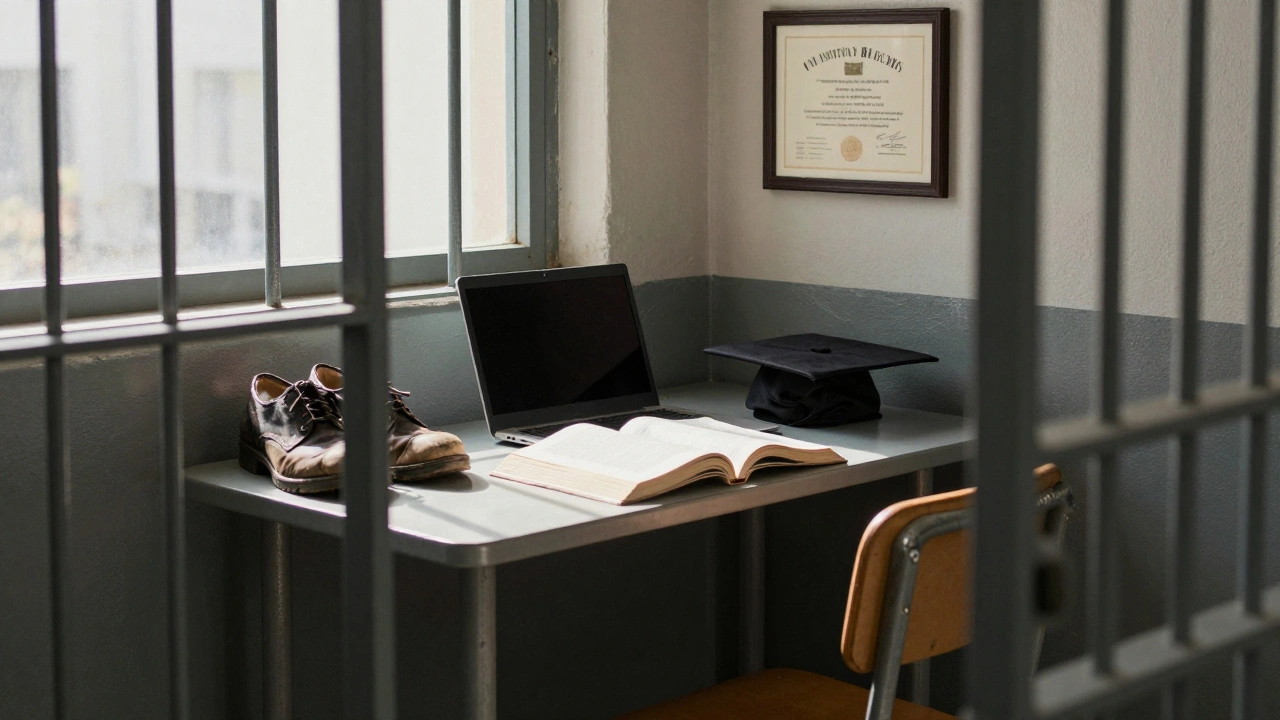
The Cost of Ignoring Education
Prison costs taxpayers about $40,000 per person per year. And nearly half of those released end up back behind bars within three years. That’s not just tragic-it’s expensive.But here’s the math: every dollar spent on prison education saves four to five dollars in future incarceration costs. That’s a 400-500% return on investment. Think about that. If you invested $1 in a stock and it grew to $5, you’d be thrilled. But we’re doing this with human lives.
The First Step Act of 2018 made this official. It gave inmates up to 15 days off their sentence per month for participating in education programs. Federal prisons expanded their offerings by 35% between 2022 and 2023. Why? Because the data was undeniable. Programs that didn’t show evidence of reducing recidivism got cut. Only those with proven results stayed.
What About Other Programs?
You hear a lot about therapy, counseling, and behavioral programs in prison. Do they work?A major review of 29 studies across seven countries looked at cognitive behavioral therapy (CBT) and similar interventions. The results? Mixed. When researchers filtered out small or flawed studies, CBT showed almost no effect on reducing reoffending. Psychoeducational programs? Same thing.
But therapeutic communities-structured, long-term environments that focus on peer support and personal growth-did show a 36% reduction in recidivism. That’s powerful. But here’s the catch: those programs are rare. Most prisons don’t have them. Meanwhile, college programs? They’re growing. And they’re cheaper. And they work.
It’s Not Just About Crime
The goal isn’t just to keep people out of prison. It’s to help them become part of society again. And education does more than reduce crime-it rebuilds lives.- Former inmates with college credits are more likely to vote
- They’re more likely to volunteer in their communities
- They’re more likely to stay connected with their families
A study from the Center for American Progress found that people who earned degrees in prison were more engaged citizens after release. Not because they were “reformed.” But because education gave them a voice. A sense of belonging. A reason to care.
What’s Holding Us Back?
The evidence is clear. The cost savings are real. The outcomes are measurable. So why isn’t every prison offering college?Some say it’s unfair-that people who committed crimes shouldn’t get free education. But here’s the thing: we already pay for their housing, food, security, and medical care. We’re spending money either way. The question isn’t whether we should fund education. It’s whether we want to spend $40,000 a year locking someone up… or $5,000 to help them change their life.
Others worry about safety. But research shows that prisons with education programs have fewer fights, fewer rule violations, and less staff turnover. When people are learning, they’re less likely to cause trouble.
What’s Next?
The movement is growing. States like Oregon, California, and New York have expanded access to college programs. Community colleges are partnering with prisons. Employers are starting to hire formerly incarcerated graduates.But the biggest shift hasn’t happened yet. We still treat prison like a punishment center, not a place for transformation. What if, instead of building more prisons, we built more classrooms? What if every inmate had the chance to earn a degree?
The data says it works. The numbers say it saves money. And the human stories? They say it’s the right thing to do.
Does prison education really reduce recidivism?
Yes. Multiple large-scale studies confirm this. The RAND Corporation found that inmates who participate in college programs are 43% less likely to return to prison. Other research from the Mackinac Center and the Bureau of Prisons supports this, showing reductions ranging from 11% to 43%, depending on the type of education. The effect is strongest for college degrees, but even GED and vocational programs show measurable improvement.
How much does prison education cost compared to incarceration?
On average, it costs about $40,000 per year to house one inmate. A college course in prison costs roughly $1,500-$5,000 per student per year, depending on the program. Studies show that every $1 spent on prison education saves $4-$5 in future incarceration costs. That means for every $10,000 invested in education, the system saves $40,000-$50,000 over time.
Can inmates earn real college degrees while incarcerated?
Yes. Through the Second Chance Pell program and state partnerships, incarcerated students can enroll in accredited community colleges and universities. They take the same courses, complete the same assignments, and earn the same degrees as students on campus. Degrees range from certificates and associate’s degrees to bachelor’s degrees in fields like business, psychology, and computer science.
Do employers hire people with criminal records who have college degrees?
More than ever. Companies like Amazon, Home Depot, and Microsoft have publicly supported hiring formerly incarcerated individuals with education credentials. Many employers now focus on skills and certifications rather than past convictions. In states with “ban the box” laws, employers can’t ask about criminal history on initial applications-making education even more valuable as a way to stand out.
Why don’t all prisons offer college programs?
Barriers include funding gaps, lack of institutional support, and outdated policies. Some states still restrict Pell Grant access. Others don’t have partnerships with colleges. There’s also lingering stigma-many people believe incarcerated people don’t “deserve” education. But research shows the opposite: education reduces violence in prisons, cuts costs, and helps communities stay safe.