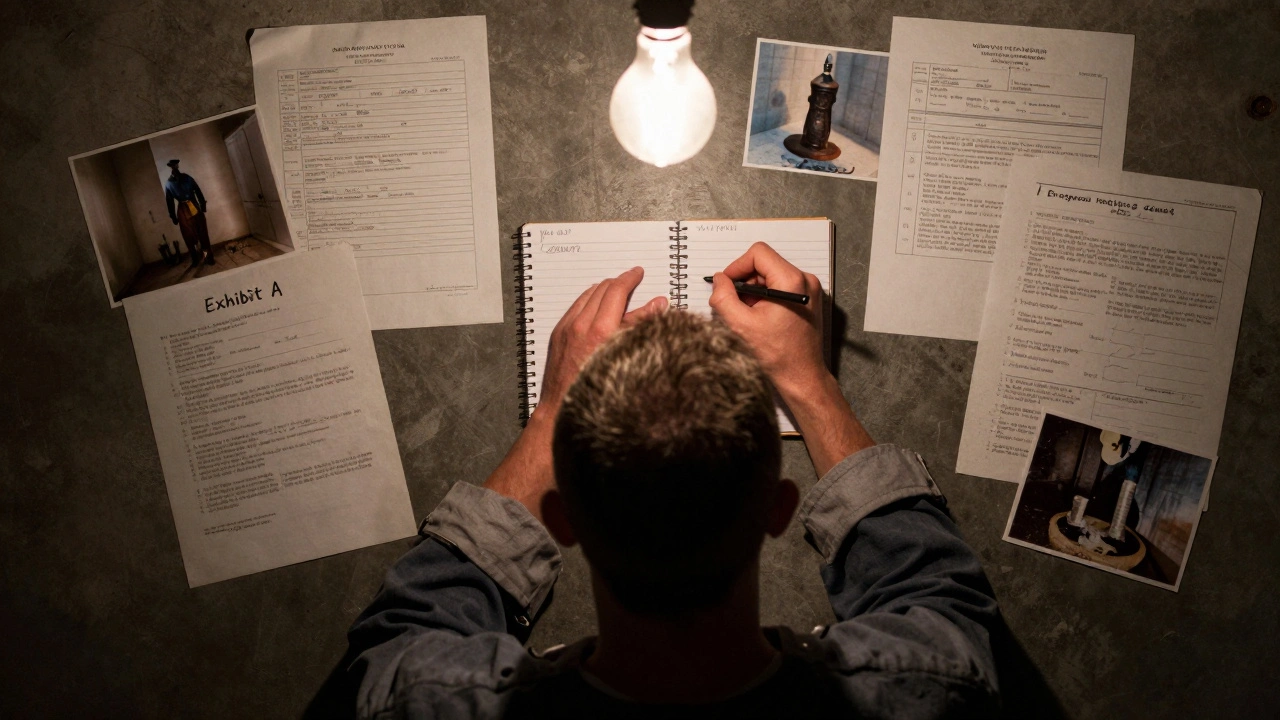
When you’re locked up and your rights are being ignored-whether it’s lack of medical care, unsafe conditions, or abuse by staff-your only real path to justice is through the courts. But here’s the hard truth: documentation is everything. Without it, even the most serious claims get thrown out before they’re heard. The system doesn’t care what you say. It only cares what you’ve written down, when, and how. This isn’t about emotion. It’s about building a legal case that survives the strict rules of the Prison Litigation Reform Act (PLRA) and federal court procedures.
Step One: Exhaust Your Grievances First
Before you even think about filing a lawsuit, you must go through your prison’s internal complaint system. The PLRA doesn’t leave room for exceptions. If you skip this step, the court will dismiss your case, no matter how bad your conditions were. This isn’t a formality-it’s the foundation.You need to file a grievance for every single issue you plan to sue over. Don’t assume one complaint covers everything. If you were denied medication for diabetes and assaulted by a guard and kept in a cell with raw sewage, those are three separate grievances. Each one needs its own form, filed on its own date, with its own details.
And here’s the part most people mess up: you have to name the person you’re accusing. If you write, "Staff at Unit 3 were negligent," that’s not enough. You need to write, "Correctional Officer Maria Lopez refused to bring my insulin on February 5, 2025, at 3:15 p.m. in Cell 12B." The court won’t let you sue someone you didn’t name in the grievance. No exceptions.
Even if the prison denies your grievance or ignores it, keep the paperwork. If they say "no such person works here" or "this policy doesn’t exist," that’s evidence. Save every response, every denial slip, every date stamped on the form. These become Exhibit A, Exhibit B, and so on.
Step Two: Build Your Complaint Like a Legal Argument
Your complaint is your lawsuit. It’s the only document the judge will read before deciding if your case has any chance of moving forward. There’s no lawyer to fix it. You have to do it yourself. And it has to follow a strict structure.Start with who you are (the plaintiff), who you’re suing (the defendant), and where the events happened. Then comes the facts section-the most important part. This isn’t a diary. It’s a timeline. Write it like you’re telling a story a judge has never heard before.
Use short paragraphs. One event per paragraph. Include:
- Exact date and time
- Location (cell number, clinic name, yard area)
- Names of staff involved (if you know them)
- What happened, in plain language
- How it affected you (pain, injury, illness, psychological harm)
Example: "On January 12, 2025, at approximately 8:45 a.m., I was found unconscious in Cell 7C. I had not received my blood pressure medication for four days. Correctional Officer James Rivera passed my cell twice that morning and saw me lying on the floor. He did not call for medical help. I regained consciousness at 11:30 a.m. after another inmate alerted staff. My blood pressure was 210/120. I was taken to the infirmary but not seen by a nurse until 4:00 p.m. I suffered a mild stroke as a result."
Don’t say "I was mistreated." Say what happened. Don’t say "the conditions were bad." Say: "The toilet overflowed every day for 17 days. I was forced to sleep in three inches of sewage. I developed a skin infection. I requested medical care on January 3, 5, and 8. I was denied each time."
Why? Because judges don’t live in prisons. They don’t know what "unlivable" means. You have to make it real.
Step Three: State Your Legal Claims Clearly
Facts alone won’t win your case. You need to connect them to the law. Each claim must stand on its own. If you’re suing for medical neglect, you must prove four things:- You had a serious medical need
- The staff knew about it
- They intentionally ignored it
- You suffered harm because of it
Don’t just say "they denied me care." Show it. If you have a heart condition and were denied your medication for 10 days, and you had chest pain and were hospitalized, that’s a claim. If you have chronic back pain and were denied a mattress for six months, and now you can’t walk without help, that’s a claim.
Each claim gets its own paragraph. One claim per paragraph. Label them clearly: "Claim One: Deliberate Indifference to Serious Medical Need," "Claim Two: Cruel and Unusual Punishment Due to Unsafe Living Conditions." If you’re suing multiple people for different reasons, name them individually in each claim. Don’t lump them together.
If you’re including state law claims (like negligence or battery), add this line: "The court has supplemental jurisdiction over plaintiff’s state law claims under 28 U.S.C. Section 1367." If you’re suing under the Federal Tort Claims Act, say: "Plaintiff’s Federal Tort Claims Act claims are authorized by 28 U.S.C. Section 1346."
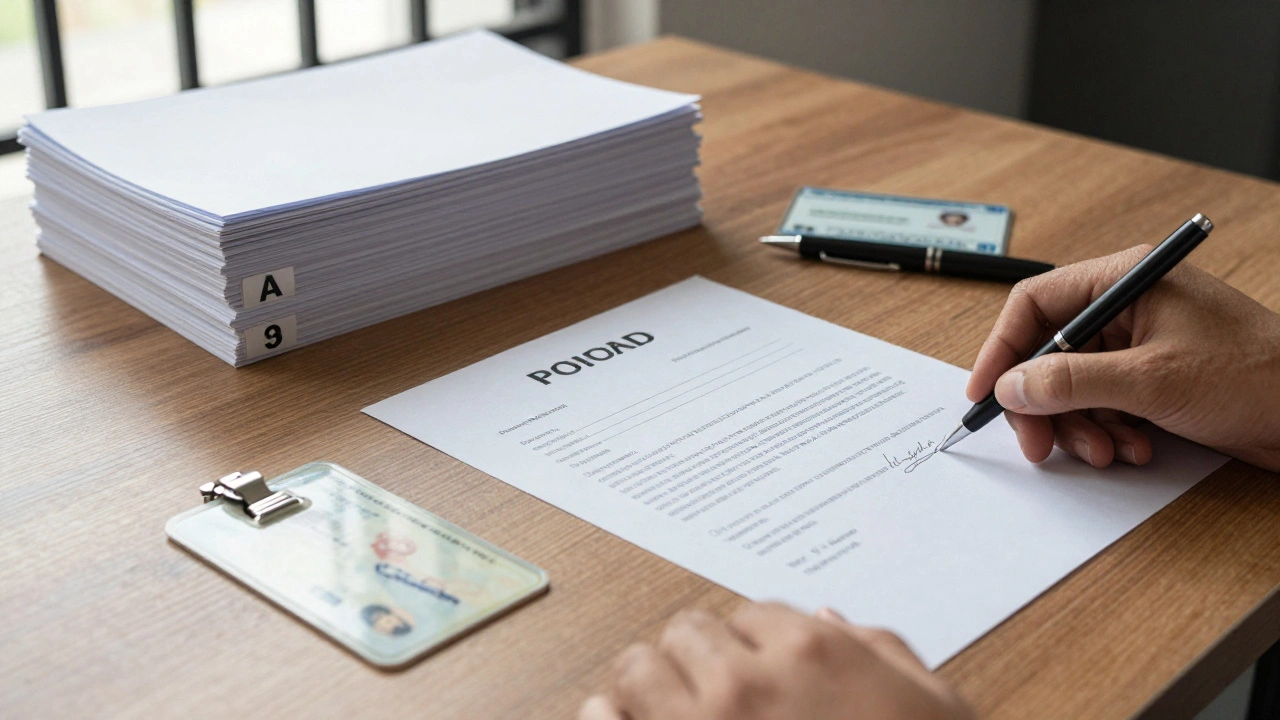
Step Four: Attach Evidence as Exhibits
Your grievance forms, medical requests, photos of conditions, letters to staff, and even hospital records-all of these become exhibits. Label them clearly: Exhibit A, Exhibit B.Exhibit A: Copy of grievance filed on January 5, 2025, denying my insulin request. Exhibit B: Medical log showing no insulin administered from December 28, 2024, to January 15, 2025. Exhibit C: Photo of overflowing toilet in Cell 7C taken on January 10, 2025. Exhibit D: Signed statement from inmate John Williams witnessing my collapse on January 12.
Don’t just slap papers on the back. Number them. Write the exhibit label on each page. Reference them in your complaint: "As shown in Exhibit C, the cell was flooded daily."
Step Five: File With a Declaration Under Penalty of Perjury
Your complaint must include a signed declaration that says, "I declare under penalty of perjury under the laws of the United States that the foregoing is true and correct."This is not optional. It turns your complaint into evidence. If you lie, you can be charged with perjury. But if you tell the truth, it gives your words legal weight. Courts take these declarations seriously. You don’t need a notary. The law (28 U.S.C. Section 1746) says this is enough.
Step Six: Submit Your Prison Account Statement
If you’re filing as a poor person (in forma pauperis or IFP), you must include a certified copy of your prison trust fund account statement for the last six months. This shows the court you can’t afford the filing fee.Some prisons drag their feet. If they refuse to give you the statement, write this in your declaration: "I requested my account statement from the prison finance office on January 20, 2025. I was told it would be mailed within 10 days. As of February 1, 2025, I have not received it."
The court can order the prison to provide it. But you have to show you tried. Keep a copy of your request.

Step Seven: Choose the Right Court
You can’t file anywhere. The lawsuit must go to the federal district where the events happened. If you were held at the Oregon State Penitentiary and the abuse occurred there, you file in the District of Oregon. If you were transferred from Washington to Oregon, you still file in Oregon-the place where the harm occurred.Don’t guess. Check 28 U.S.C. Section 1391(b)(2). The venue is correct if the events giving rise to your claim happened there.
Why This Matters
Most prison lawsuits fail not because they’re weak, but because they’re poorly documented. Judges don’t have time to dig through vague complaints. They don’t have staff to investigate. They rely on what you write. If your grievance is sloppy, your complaint is disorganized, or you leave out dates and names-your case dies.This system is stacked against you. But it’s not impossible. People win these cases every day. Not because they’re lucky. Because they documented everything.
Write like your freedom depends on it. Because it does.
What happens if I don’t file a grievance before suing?
The court will dismiss your entire lawsuit under the Prison Litigation Reform Act (PLRA). Exhausting internal grievances is mandatory for anyone still incarcerated. Even if your conditions were horrific, skipping this step means your case won’t be heard. There are no exceptions unless you’re no longer in prison.
Can I sue staff I didn’t name in my grievance?
No. The PLRA requires you to name each defendant in your grievance to preserve the right to sue them. If you only wrote "unknown staff," you can’t later sue Officer Smith. You must identify them by name, job title, or unique identifier in the grievance. If you don’t know their name, describe them in detail: "Male correctional officer, 5’10", dark uniform, badge #451, working night shift on January 10."
Do I need a lawyer to file this?
No. You can file as a pro se litigant-meaning you represent yourself. Most prison litigation is handled this way. Courts provide pro se packets with forms and instructions. You don’t need a lawyer to file, but you must follow every rule exactly. Mistakes in formatting or missing exhibits can get your case thrown out.
What if the prison refuses to give me my account statement?
Include a detailed explanation in your Declaration under penalty of perjury. State when you requested it, who you asked, and what they said. The court can then order the prison to provide it. Many courts have issued orders forcing prisons to release these statements when they’re unreasonably delayed.
Can I file more than one claim in the same lawsuit?
Yes. You can include multiple claims-like medical neglect, unsafe conditions, and retaliation-within one complaint. Each claim must be in its own paragraph with clear facts and legal basis. The court will allow the exhausted claims to proceed even if others are dismissed. You don’t have to drop everything just because one claim is incomplete.
How detailed should my facts section be?
As detailed as humanly possible. Judges have no idea what prison life is like. Don’t assume they know terms like "lockdown," "shakedown," or "medical hold." Explain everything: what it looked like, smelled like, how long it lasted, who was involved, how it affected your body or mind. Use dates, times, locations. If you can’t remember exact dates, say "approximately January 2025" and list events in order. Precision builds credibility.
Is verification of the complaint required?
No, but it’s strongly recommended. A verification (a signed statement affirming the truth of your complaint) makes your document usable as evidence in summary judgment motions or temporary restraining orders. It adds weight. If you’re asking the court to stop something immediately-like keeping you in a cell with no running water-verification strengthens your request.
What if I’m transferred before my case is resolved?
You still must exhaust grievances from the facility where the harm occurred. If you were moved from Prison A to Prison B, you still need to have completed Prison A’s grievance process before suing over events that happened there. Your current prison’s rules don’t apply to past events. The law treats each facility’s grievance system as separate.