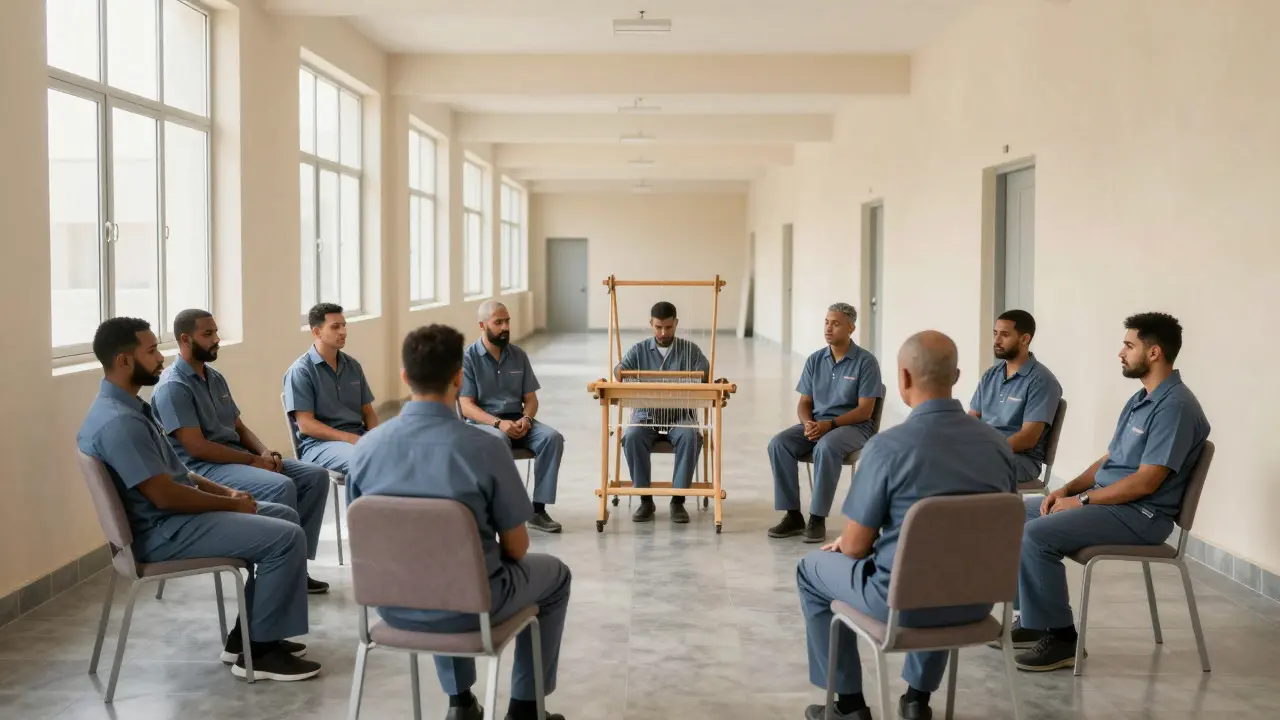
Walk the floor of a maximum-security facility on a quiet Tuesday morning. You might expect silence, but instead, you hear the rhythmic clacking of a loom in one cell block and the muffled debate of a peer mediation group in another. These aren't just pastimes; they are active tools for keeping order. When inmates have something to do that feels meaningful, the environment changes. Tension drops. Staff interactions become less adversarial. This is the core argument for rehabilitative programming: it doesn't just help people re-enter society; it makes the inside of the prison safer for everyone.
For decades, the dominant narrative in corrections focused on punishment and containment. The assumption was that if you lock someone up tightly enough, they won't cause trouble. But experience shows that isolation breeds instability. Boredom leads to conflict. Conflict leads to violence. By integrating structured activities that target behavior, skills, and mental health, facilities create a predictable routine that reduces the chaos often associated with high-density living.
The Link Between Activity and Order
It sounds simple, but the psychology behind it is profound. Human beings need purpose. In a correctional setting, where autonomy is stripped away, the lack of constructive outlets can lead to frustration. This frustration often manifests as minor infractions or major disturbances. Rehabilitative programs provide a structure that occupies time but also builds self-regulation.
Consider the concept of "flow." When an inmate is engaged in a complex task-like learning coding syntax in a computer lab or mastering a musical instrument-they enter a state of deep focus. During this time, they are not thinking about who owes them a favor or who crossed a line yesterday. They are solving problems. This cognitive shift reduces the likelihood of impulsive behavior. For staff, this means fewer incidents to manage during those hours, allowing them to focus on observation and relationship-building rather than constant crisis intervention.
Specific Programs That Reduce Friction
Not all programs are created equal in terms of safety impact. Some directly address the root causes of conflict, while others simply provide distraction. The most effective facilities use a mix of both.
- Cognitive Behavioral Therapy (CBT) Groups: These sessions teach inmates how to identify triggers and change thought patterns. An inmate who learns to pause before reacting to a perceived slight is less likely to start a fight. This skill transfers immediately to the general population area.
- Workforce Development Workshops: Learning a trade, such as welding or culinary arts, gives inmates a sense of progress. It shifts their identity from "inmate" to "apprentice." People who feel like professionals tend to respect rules more because they see themselves as part of a legitimate system.
- Restorative Justice Circles: Instead of purely punitive discipline, these circles allow offenders and victims (or representatives) to discuss the harm done. This process validates feelings and reduces resentment. Resentment is a primary fuel for retaliation and ongoing tension among peers.
- Mental Health Support Services: Untreated mental illness is a significant driver of disciplinary issues. Access to consistent counseling and medication management stabilizes mood, leading to fewer outbursts and easier daily interactions with guards and peers.

Impact on Staff Morale and Safety
We often talk about inmate safety, but we forget about staff safety. Correctional officers face high rates of burnout, stress, and physical injury. When a facility is chaotic, officers operate in survival mode. Their decision-making becomes reactive. A calm, programmed environment allows for proactive management.
When officers see inmates actively working toward goals, their perception of the population changes. They start to view individuals as people with potential rather than just risks to be contained. This shift in perspective improves communication. Officers are more likely to de-escalate situations verbally when they know the inmate has invested effort into their own improvement. Furthermore, stable routines reduce the unpredictability that contributes to officer anxiety. Knowing that 9 AM to 11 AM is dedicated to vocational training means officers can plan their patrols and checks with greater confidence, knowing that large groups are occupied and supervised by specialized program staff.
Data Points: What We Know About Recidivism and Stability
The connection between rehabilitation and safety isn't just theoretical; it's backed by operational data. Facilities with robust educational and therapeutic programs consistently report lower rates of violent incidents. While exact numbers vary by state and facility size, the trend is clear. Inmates who complete educational courses are significantly less likely to commit new offenses upon release. But the benefit starts inside the walls. Lower recidivism rates suggest that the behavioral changes made during incarceration are sticking. If a person is changing internally, they are behaving differently externally. That external behavior includes how they treat other inmates and how they respond to authority figures.
Think of it this way: a facility with high recidivism is essentially a revolving door. New faces constantly arrive, bringing unknown temperaments and histories. This churn disrupts social dynamics and creates friction. Conversely, a facility that successfully rehabilitates its population retains a more stable community. Long-term residents understand the norms. They mentor newer arrivals. This organic social control is far more effective than any single guard could achieve alone.
| Operational Metric | High Programming Environment | Low Programming Environment |
|---|---|---|
| Daily Violent Incidents | Lower frequency due to structured schedules | Higher frequency due to boredom and idle time |
| Staff Injuries | Reduced risk from de-escalation success | Elevated risk from reactive confrontations |
| Inmate Peer Conflicts | Moderated by restorative practices | Escalated by unresolved grievances |
| Staff Burnout Rates | Manageable due to predictable routines | High due to constant crisis management |
| Recidivism Rate | Decreased long-term return to custody | Increased long-term return to custody |

Challenges in Implementation
It’s not all smooth sailing. Implementing these programs requires resources. Funding is always a tight constraint. Hiring qualified teachers, therapists, and vocational trainers costs money. Space is another issue. Many older facilities were built for storage, not education. Converting a cell block into a classroom requires careful planning to ensure security isn't compromised.
There is also the challenge of buy-in. Some staff members may resist the idea that "soft" programs matter. They may believe that strict discipline is the only way to maintain order. Overcoming this cultural barrier takes time. Leadership needs to demonstrate through data and anecdotal evidence that programming saves money in the long run by reducing legal liabilities, medical costs from injuries, and turnover rates among staff.
Building a Culture of Safety Through Purpose
Safety in a correctional facility isn't just about barbed wire and cameras. It's about the human element. When people feel seen, heard, and given a path forward, they are less likely to rebel. Rehabilitative programming provides that path. It transforms the institution from a place of mere containment into a place of transformation. And in doing so, it creates a calmer, more predictable, and ultimately safer environment for everyone within its walls.
For administrators, the message is clear: investing in rehabilitation is an investment in operations. It’s not a charity project; it’s a strategic tool for maintaining order. When you give people something better to do than cause trouble, they usually take you up on the offer. The result is a facility that runs smoother, with fewer emergencies and a workforce that feels supported rather than overwhelmed.
Does rehabilitative programming actually reduce violence in prisons?
Yes. Structured activities occupy time that would otherwise be spent on idleness or conflict. Programs like CBT and restorative justice specifically target the behavioral roots of aggression. Data shows that facilities with higher participation in educational and therapeutic programs report lower rates of violent incidents compared to those with minimal programming.
What is the most cost-effective type of rehabilitation program for safety?
Group-based Cognitive Behavioral Therapy (CBT) is often cited as highly cost-effective. It requires relatively low infrastructure compared to vocational labs but yields significant behavioral improvements. Additionally, peer-led mediation circles utilize existing inmate leadership structures, reducing the need for additional staff supervision during those specific times.
How does programming affect correctional officer morale?
Positive programming improves morale by reducing the unpredictability of the workday. Officers spend less time managing crises and more time observing and building rapport. Seeing inmates make tangible progress fosters a sense of professional fulfillment, which combats burnout and reduces staff turnover.
Can small facilities implement these programs effectively?
Yes, though the scale differs. Small facilities can partner with local community colleges for remote instruction or hire part-time contractors for therapy sessions. The key is consistency. Even a few hours a week of structured, positive activity can significantly alter the dynamic of a small population.
What is the relationship between recidivism and internal facility safety?
They are closely linked. High recidivism indicates that behavioral changes are not sticking, suggesting a volatile internal culture. Successful rehabilitation leads to stable long-term residents who act as informal mentors and enforcers of pro-social norms, thereby reducing the need for heavy-handed disciplinary interventions and creating a self-regulating community.