
Writing a prison grievance can feel like shouting into a void, but it is actually one of the most critical pieces of paperwork you will handle during your confinement. Whether you are fighting for medical care, challenging a disciplinary action, or reporting a safety issue, your grievance is more than just a complaint-it is a legal record. If you ever plan to take your case to court, you must first "exhaust your administrative remedies," which is a fancy way of saying you have to follow the prison's internal grievance process to the letter. If you skip a step or miss a deadline, a judge could dismiss your lawsuit before it even starts.
The Golden Rule: Facts Over Feelings
The biggest mistake people make when filing a grievance is writing based on how they feel rather than what happened. When you use emotional language or make personal attacks, you give the administration an easy excuse to ignore you or even reject the complaint for being "disrespectful." To get a result, you need to write like a reporter, not a victim.
Stick to a strict diet of verifiable facts. Instead of saying, "The guard was being mean and hateful," write, "On April 12 at 2:00 PM, Officer Smith used a loud tone and told me I could not access the law library, despite my approved pass." See the difference? The first is an opinion; the second is a fact that can be verified by checking the library logs or security footage.
Avoid guessing why something happened. You might be 100% sure a staff member is retaliating against you, but unless you have a recorded statement or a witness, you cannot prove their intent. Focus on the action-what was done, when it was done, and who did it. Your credibility increases the moment you stop using adjectives and start using dates and times.
Step-by-Step: Drafting Your Submission
Before you pick up the pen, remember that most systems, including those used by the Bureau of Prisons (BOP), require you to attempt an informal resolution first. If you jump straight to a formal grievance without documenting your verbal or written requests to staff, your claim might be dismissed on a technicality.
- Document the Informal Attempt: Write down who you spoke to, the date, the time, and exactly what you asked for. If you sent a written request, keep a copy.
- One Issue per Form: Do not mix your complaints. If you have a problem with your medication and a problem with your cell temperature, file two separate grievances. Mixing them allows the administration to answer one part and ignore the other, or claim the form is "confusing."
- Build a Chronological Timeline: Start from the beginning and move forward. Use a clear sequence: "On Monday, X happened. On Tuesday, I requested Y. On Wednesday, Z occurred."
- Connect the Action to a Policy: You aren't just complaining; you are pointing out a violation. Reference the specific handbook rule or institutional policy that was broken. This shows the staff that you know your rights and the rules they are supposed to follow.
- State a Specific Remedy: Do not just say "fix this." Be explicit. Do you want a specific medication? A transfer to a different housing unit? A copy of a disciplinary report? Write: "I request that the administration provide me with the missing medical records from my April 5th visit."
| Do This (Fact-Based) | Avoid This (Opinion-Based) |
|---|---|
| "Officer X refused to provide my meds at 8:00 AM." | "Officer X is lazy and hates me." |
| "The ceiling has a 2-foot leak dripping water." | "The conditions in here are disgusting." |
| "I was denied a visit on three occasions." | "The system is rigged against my family." |
| "I am requesting a copy of the incident report." | "I want justice for what happened." |

Navigating the Paperwork and Deadlines
The administration loves a "procedural error." If you write on the back of a page when the rules say only one side, or if you miss a deadline by one day, your grievance can be tossed. You have to be a perfectionist with the formatting.
In many jurisdictions, like those following West Virginia's DCR standards, you only have 15 business days to file after an incident. This clock starts ticking the moment the event happens, not when you decide to write the form. If you are using a Correctional Officer to deliver your form rather than a kiosk or a mailbox, write down their name and the exact time you handed it to them.
Always request a copy. Write "Please give me a copy of my grievance" at the top of the page. If you don't have a stamped or signed copy, you have no proof that you ever filed it. If the prison loses your paperwork, you are the one who suffers the consequences when the deadline passes.
The Appeal Process: Moving Up the Chain
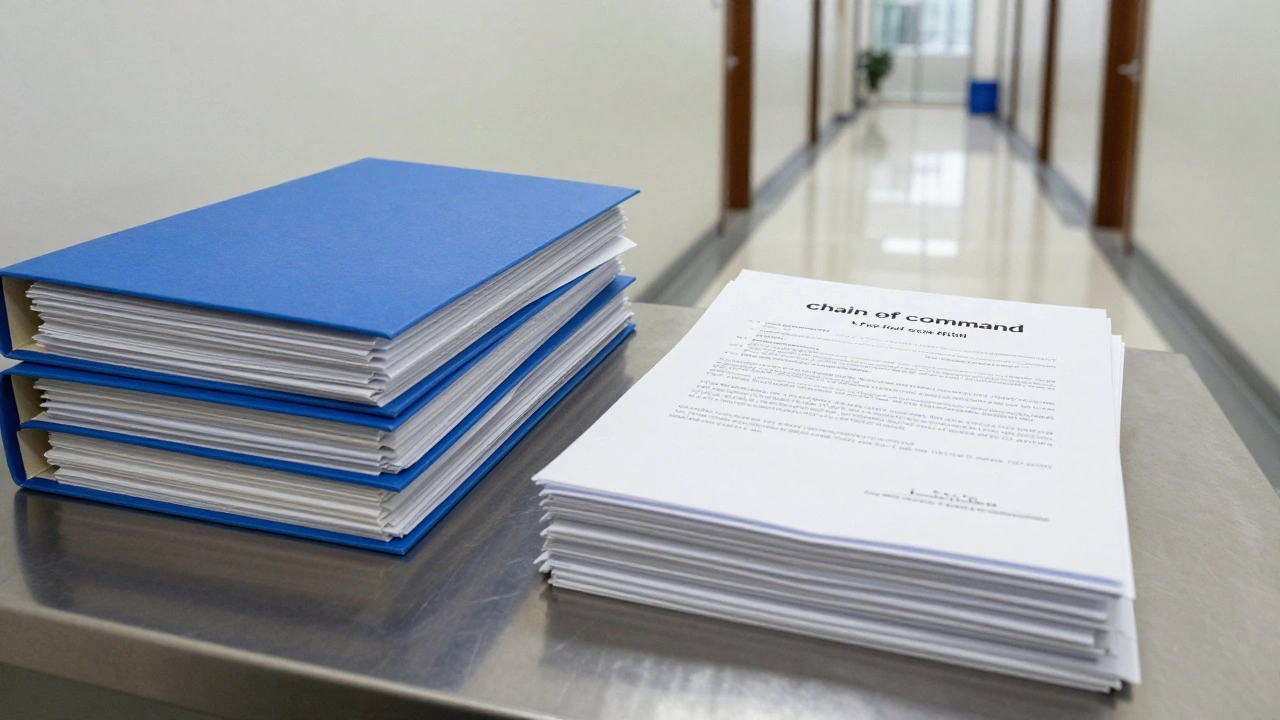
Rarely does a problem get solved at Stage 1. You should view the first response as the beginning of a process, not the end. If the Unit Manager denies your request, you move to Stage 2 (usually the Superintendent) and then Stage 3 (the Commissioner or Central Office).
When you appeal, do not just resubmit the same form. You must explain why the previous answer was wrong. Use the evidence you've gathered. If the Unit Manager claimed you never asked for the medication, but you have a copy of your written request, attach it to the appeal. Treat each stage as a chance to add more proof to the record.
Remember that you are writing for a future audience. The person reading your Stage 3 appeal might be someone who has never seen your face and knows nothing about your case. Reiterate the facts clearly. Don't say, "As I said before"; instead, say, "As documented in my initial grievance on April 1st..."
Strategic Thinking: Winning vs. Exhausting
It is important to be honest with yourself about your goal. There are two ways to look at a grievance: winning the issue or "exhausting the remedy."
Winning the issue means you actually get the remedy you want-the leak is fixed or the medication arrives. Exhausting the remedy means you know the prison will never fix the problem, but you are filing the grievance anyway so that you can legally sue the state or the federal government later. Both require the same level of detail, but the "exhaustion" strategy requires even more discipline because your paperwork will be scrutinized by government lawyers looking for any reason to throw out your case.
If you are filing for a "failure-to-protect" issue and a medical issue at the same time, file them as separate entities. If you lump them together, the prison can answer the easy one (the medical request) and ignore the hard one (the safety threat), claiming they have "addressed the grievance." Keep the lanes clean.
What happens if I miss the filing deadline?
Missing a deadline is often fatal to a legal claim. Most courts will not allow you to sue if you missed the institutional deadline unless you can prove "extraordinary circumstances," such as the prison actively blocking your access to grievance forms. Always file as early as possible; waiting until the last day is a huge risk.
Can I file a grievance on behalf of another prisoner?
Generally, no. Grievances must be about something personally affecting the person filing them. However, if an issue affects a whole group (like a broken water heater in a wing), you can file a group grievance. In this case, every affected person must sign the form, and you must designate one person to receive the official response for the entire group.
Should I include all my evidence in the first grievance?
Yes, you should include whatever supporting evidence you have at the time. While you don't need to "prove" your case like you would in a trial, providing evidence (like a dated note from a doctor or a witness statement) makes your claim more credible and harder for the administration to dismiss immediately. Just be mindful of page limits-most systems only allow one additional page of attachments.
What is the difference between an informal request and a formal grievance?
An informal request is a verbal or written ask to a staff member to fix a problem. A formal grievance is a standardized legal form that triggers a mandatory response timeline and a formal appeals process. Most prisons require the informal step first; if you skip it, your formal grievance may be rejected for "failure to follow procedure."
Can I use the grievance process to complain about a rule I don't like?
No. Grievance systems are designed to address policy violations, institutional failures, or conditions of confinement. They are not a tool to bypass institutional rules or regulations. Using the system to complain about a legitimate rule you simply dislike will likely result in a summary denial.
Final Steps for Success
Once you have written your draft, read it one last time and delete every word that describes a feeling. Replace "unfairly" with a description of the policy that was ignored. Replace "cruelly" with a description of the action taken.
Keep your records in a safe, dry place. A crumpled or stained piece of paper looks unprofessional and can be harder for a clerk to scan into a digital system. If you are handing the form to a staff member, remember that they are the first filter; stay respectful and objective. The goal is to get your words onto the record, not to win an argument in the hallway.