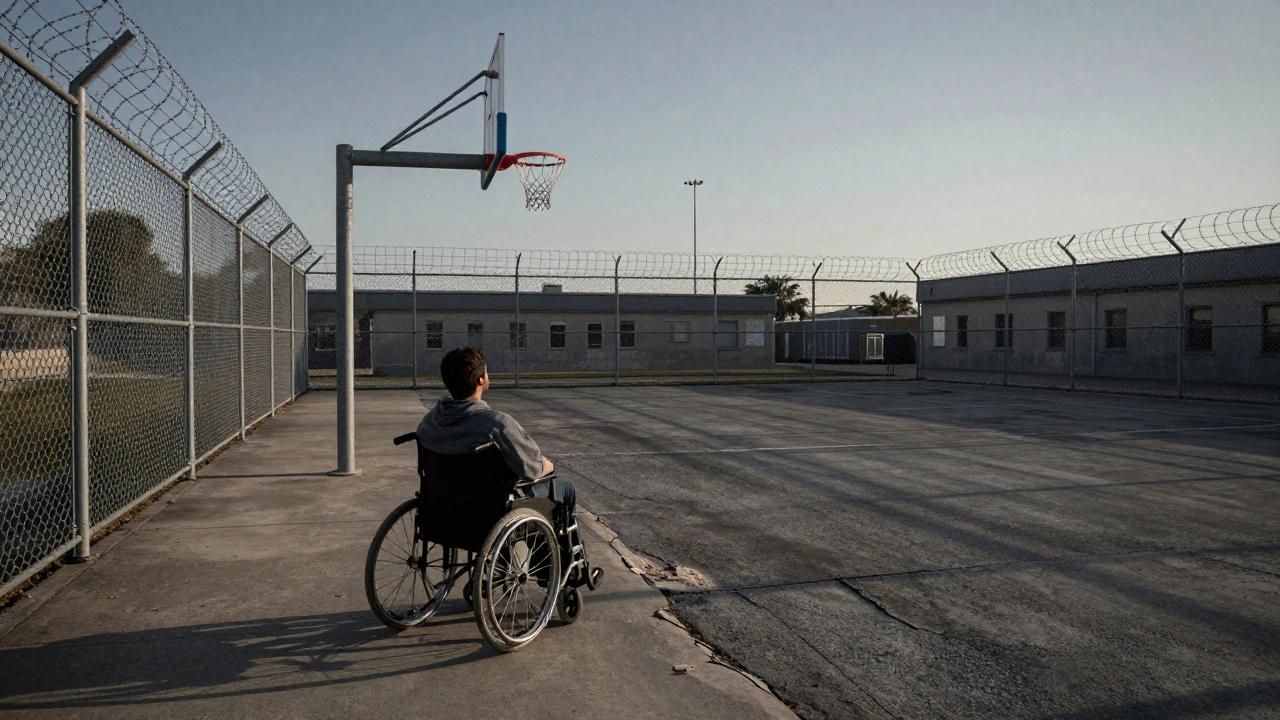
Imagine spending your day in a concrete cell, then stepping out into the yard only to find you can’t join the game because the hoop is too high, the path is uneven, or no one knows how to help you play. For millions of incarcerated people with disabilities, this isn’t just an inconvenience-it’s a daily reality that violates their basic human rights.
The justice system holds a population that is disproportionately disabled. According to the Bureau of Justice Statistics, people in state and federal prisons are nearly three times more likely to report having a disability than the general public. Those in jails are even higher, at 4.3 times the likelihood. Yet, when it comes to inclusive recreation, most facilities fall short. This gap between legal mandates and actual practice leaves many behind bars isolated, frustrated, and denied a key component of rehabilitation.
The Legal Mandate: Why Recreation Is a Right, Not a Privilege
Many assume that once someone is incarcerated, their civil rights disappear. That is not true. Title II of the Americans with Disabilities Act (ADA) explicitly covers correctional facilities. It requires state and local governments to ensure equal access to all programs, services, and activities-including recreational spaces.
The Department of Justice (DOJ) enforces these rules. They don’t just care about whether you have a bed; they care about whether you can use the gym, the library, and the outdoor yard. The DOJ has made it clear that "public entities remain responsible for ensuring that these programs and services comply with the requirements of Title II." This means if a wheelchair user cannot reach the basketball court because there is no ramp, the facility is violating federal law.
Does the ADA apply to prisons?
Yes. Title II of the Americans with Disabilities Act applies to all state and local government services, including criminal justice systems, detention centers, and correctional facilities. This mandates equal access to programs like recreation.
What Inclusive Recreation Actually Looks Like
Inclusive recreation isn’t just about letting everyone out of their cells. It’s about designing activities and spaces that accommodate physical, sensory, cognitive, and mental health needs. The ADA Standards for Accessible Design provide specific technical specs that facilities must follow.
For example, doorways leading to recreation areas must be at least 36 inches wide. There needs to be a 5-foot turning radius for wheelchairs. Outdoor paths must have a maximum slope ratio of 1:12. But it goes beyond architecture. Equipment matters too. Wheelchair-accessible basketball hoops should be adjustable to 9 feet instead of the standard 10. Visually impaired inmates need tactile playing surfaces. Sensory-friendly spaces require noise-dampening materials for those with autism or PTSD.
Dr. Susan Loeb from the University of Pennsylvania points out a troubling trend: correctional facilities have become de facto institutions for people with mental health concerns, yet they lack the programming to support them. Without inclusive recreation, these individuals are often left in isolation, which worsens their conditions rather than helping them rehabilitate.
The Security vs. Accessibility Conflict
Prison recreation faces a unique challenge: security. In community gyms, you might see resistance bands or flexible equipment. In prisons, those same items can be banned due to ligature risks-the danger that they could be used for self-harm. This creates a tension where safety protocols block accessibility solutions.
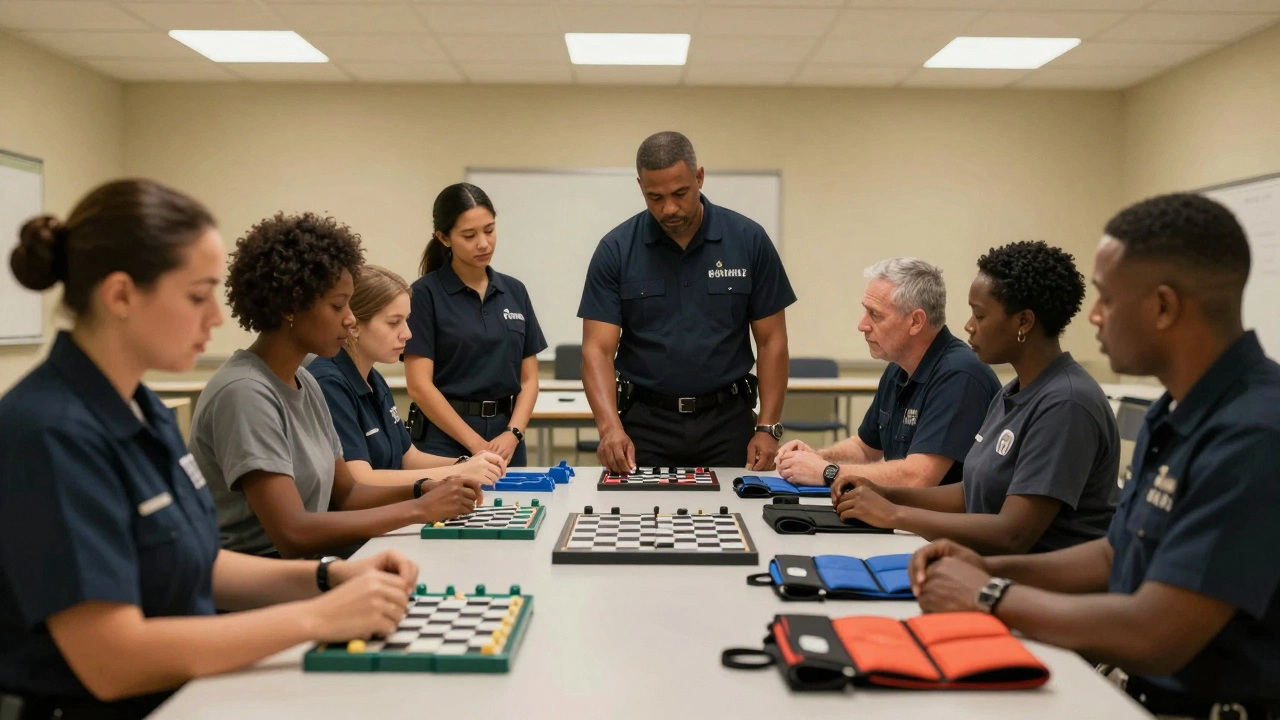
Recreation specialists have to get creative. Instead of standard wooden chess pieces, which could be weaponized, some facilities use plastic-coated metal sets. Instead of resistance bands, they might use weighted vests that meet both ADA fitness goals and security standards. However, finding these alternatives is hard. Only 12.7% of correctional recreation staff had formal training in disability accommodations as of 2024. Most guards and officers simply aren’t taught how to adapt activities safely.
| Feature | Community Programs | Prison Programs |
|---|---|---|
| ADA Compliance Rate | 87.6% | 22.4% |
| Staff Training Hours | 40+ hours recommended | 6.2 hours average |
| Equipment Flexibility | High (bands, weights) | Low (security restrictions) |
| Participation Structure | Voluntary | Mandatory/Structured |
Why Recreation Matters for Rehabilitation
You might wonder why this matters so much. Isn’t prison just about punishment? Research suggests otherwise. A study by Murray State University found that increased involvement in recreational activities led to inmates reaping more benefits, with participants showing a 34% higher completion rate in rehabilitation programs.
Reconnection through sport and activity reduces violence, lowers stress, and builds social skills. When an inmate with a disability is excluded from these activities, they miss out on these critical benefits. The Minnesota Correctional Facility - Faribault saw a 62% increase in participation among inmates with disabilities after forming a "Recreation Access Committee" that included inmate representatives. This simple change-listening to the people who actually use the space-made a huge difference.
Barriers to Implementation
If the law is clear and the benefits are proven, why is implementation so poor? Money is a big factor. The Vera Institute of Justice estimates that full ADA compliance for recreation facilities across all U.S. prisons would require $1.2 billion in capital improvements. Annual operational costs would add another $347 million. Many states simply don’t want to spend that money.
Then there’s ignorance. A 2024 report by the Disability Rights Education & Defense Fund found that 76.3% of complaints about prison conditions cited staff ignorance of ADA requirements. Inmates often have to modify standard equipment themselves just to participate. One wheelchair user reported, "I've been in a wheelchair for 8 years and have never been able to use the basketball court-they say it's 'too much work' to lower the hoop."
Documentation is also lacking. Only 28.7% of state correctional systems had comprehensive recreation accessibility policies in 2023. Nearly half had no written policies at all. Without clear guidelines, staff default to exclusion.
Recent Developments and Future Outlook
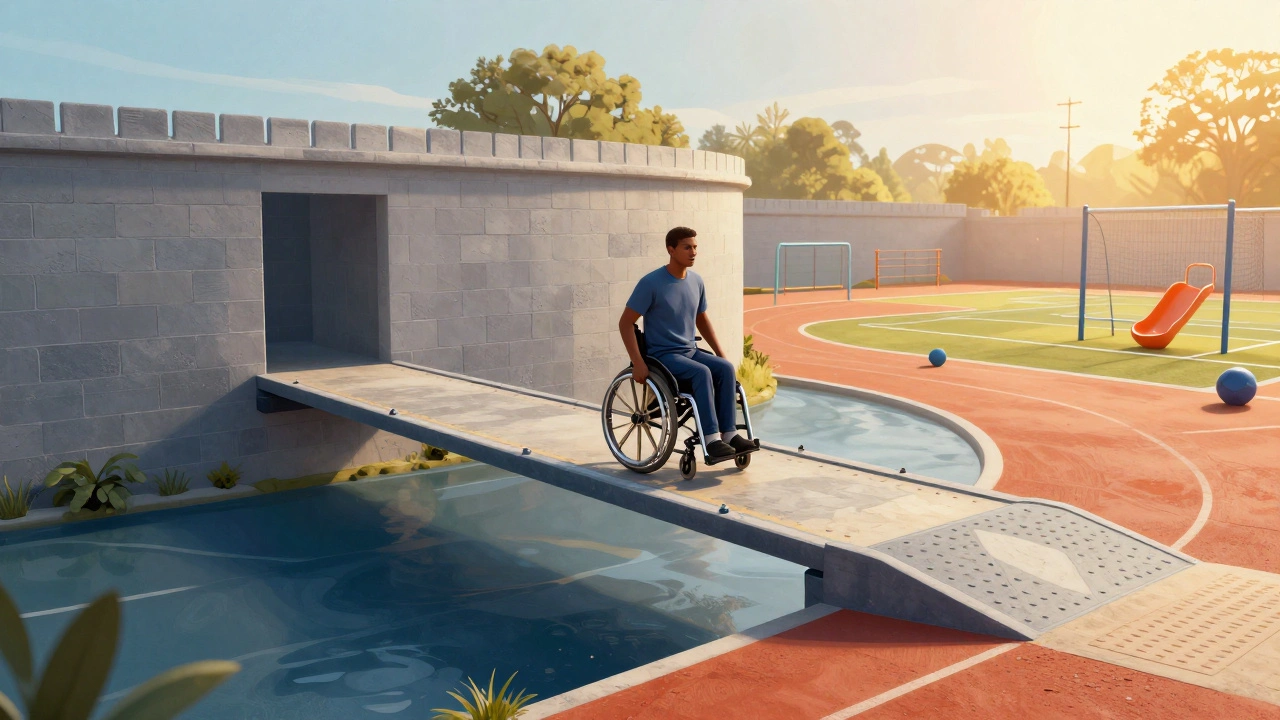
Things are starting to shift. The DOJ announced a new enforcement priority in January 2025 targeting recreation access disparities. As of early 2026, there are 14 active compliance investigations. In April 2025, the New York State Department of Corrections signed a settlement requiring all 43 state facilities to implement ADA-compliant recreation modifications by December 2026. This includes at least one fully accessible outdoor yard per facility.
Funding is also growing. The Safety and Justice Challenge reports that funding for inclusive prison recreation programs jumped from $3.2 million in 2020 to $12.7 million in 2025. Specialized vendors like Prison Recreation Solutions are seeing 38% year-over-year growth, though the market remains small compared to mainstream adaptive recreation.
The prison population is also aging. Inmates aged 55 and older now make up 18.3% of the prison population, up from just 3.3% in 2000. Older inmates have higher rates of disability. This demographic shift makes inclusive recreation not just a moral issue, but a practical necessity for managing the prison system.
How to Advocate for Change
If you’re an advocate, family member, or legal professional, here’s what you can do:
- File Grievances: Encourage inmates to document every instance of exclusion. Use the DOJ’s ADA Information Line (800-514-0301 voice, 800-514-0383 TTY) to report violations.
- Demand Policies: Push correctional departments to adopt written recreation accessibility policies. The National Commission on Correctional Health Care offers a "Disability Inclusion Toolkit" updated in March 2025 that provides specific guidance.
- Support Training: Advocate for the 40 hours of specialized training recommended by the ADA National Network for recreation staff. Current averages are dangerously low.
- Monitor Compliance: Watch for DOJ findings letters. Facilities cited for violations, like California’s Folsom State Prison in 2022, are under pressure to change.
Inclusive recreation in prisons is a complex intersection of law, security, and human dignity. While progress is slow, the legal framework is solid. The question is no longer *if* facilities must provide access, but *how quickly* they will comply.
What are the ADA standards for prison recreation yards?
ADA standards require smooth traversable surfaces, ramps with a maximum 1:12 slope, 36-inch wide pathways, and accessible routes to all recreational equipment. Outdoor yards must be usable by individuals with mobility impairments, including wheelchair users.
Why is inclusive recreation important for rehabilitation?
Studies show that inmates participating in recreational activities have 34% higher rehabilitation program completion rates. Recreation reduces violence, improves mental health, and builds social skills essential for reentry.
How does prison recreation differ from community recreation?
Prison recreation must balance accessibility with strict security protocols. Equipment like resistance bands may be banned due to ligature risks, requiring alternative adaptive tools. Staff training is also significantly lower in prisons compared to community centers.
Who enforces ADA compliance in prisons?
The Department of Justice (DOJ) Civil Rights Division enforces Title II of the ADA in correctional facilities. They conduct investigations and issue findings letters for non-compliance, such as inaccessible recreation yards.
What is the current state of ADA compliance in US prisons?
Compliance is low. Only 22.4% of state correctional systems meet all ADA accessibility standards for recreation. Most facilities lack trained staff and documented policies, though recent DOJ actions are increasing pressure for change.