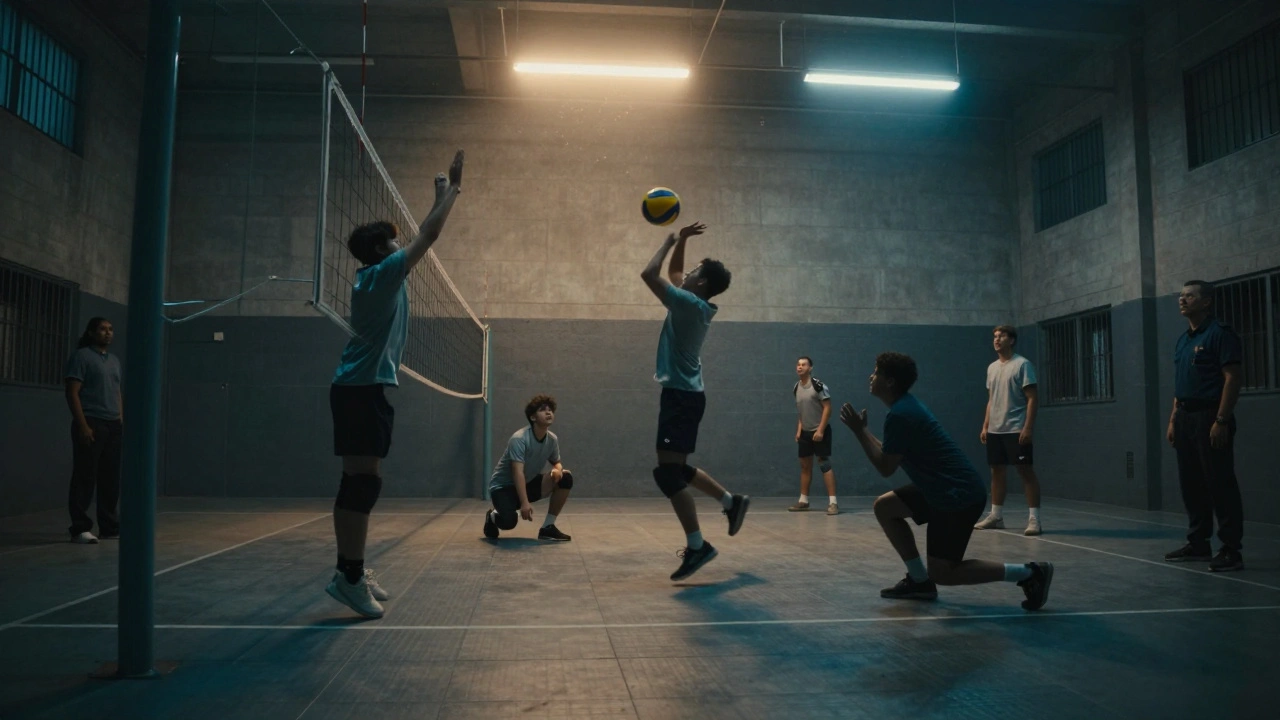
When you think of prison life, you probably picture locked cells, long hours of silence, and the weight of isolation. But behind those steel doors, something unexpected is happening: prisoners are playing volleyball, floor hockey, and other structured sports-not just to pass the time, but to survive.
It’s not just about burning calories. In places where mental health care is scarce and tension runs high, organized indoor gym activities have become one of the most effective tools for reducing violence, easing depression, and preparing inmates for life after release. These aren’t luxury programs. They’re survival tools.
Why Indoor Sports Matter in Prison
Prisons are designed to keep people contained, not to help them heal. Many inmates spend 23 hours a day locked in small cells. Without structure, boredom turns to anger. Anger turns to fights. And fights mean more lockdowns, more punishment, and more trauma.
But when inmates get access to regular physical activity-especially team-based sports-the numbers change. A 2023 study of over 500 inmates in Galicia, Spain, found that those who played sports at least three times a week reported 42% lower levels of anxiety and 37% fewer symptoms of depression than those who didn’t. Even more telling: those who didn’t exercise saw their physical health decline sharply within just six months.
It’s not magic. It’s biology. Exercise releases endorphins. It gives people a routine. It creates social bonds. And in a place where human connection is rare, that matters more than you think.
Volleyball: The Quiet Game That Builds Trust
Not every prison has a full-sized basketball court. But most have a gym with a volleyball net. Why? Because volleyball doesn’t need much space, it’s low-impact, and it forces cooperation.
In a game of volleyball, you can’t just dominate. You have to communicate. You have to cover for your teammate. You have to trust that the person next to you won’t drop the ball-or worse, throw it at your head. That’s a skill most inmates never learned on the outside.
Prison volleyball leagues often run weekly, with teams formed by housing units. Some facilities even award points toward good behavior credits. The game itself is simple: six players per side, best two out of three sets, no spikes allowed (for safety). But the impact? Deeper than the score.
One correctional officer in Ohio told me that after a volleyball tournament, two inmates who had been in a months-long feud sat together eating lunch. No words were exchanged. Just a nod. That’s the kind of change these games make.
Floor Hockey: Fast, Fierce, and Focused
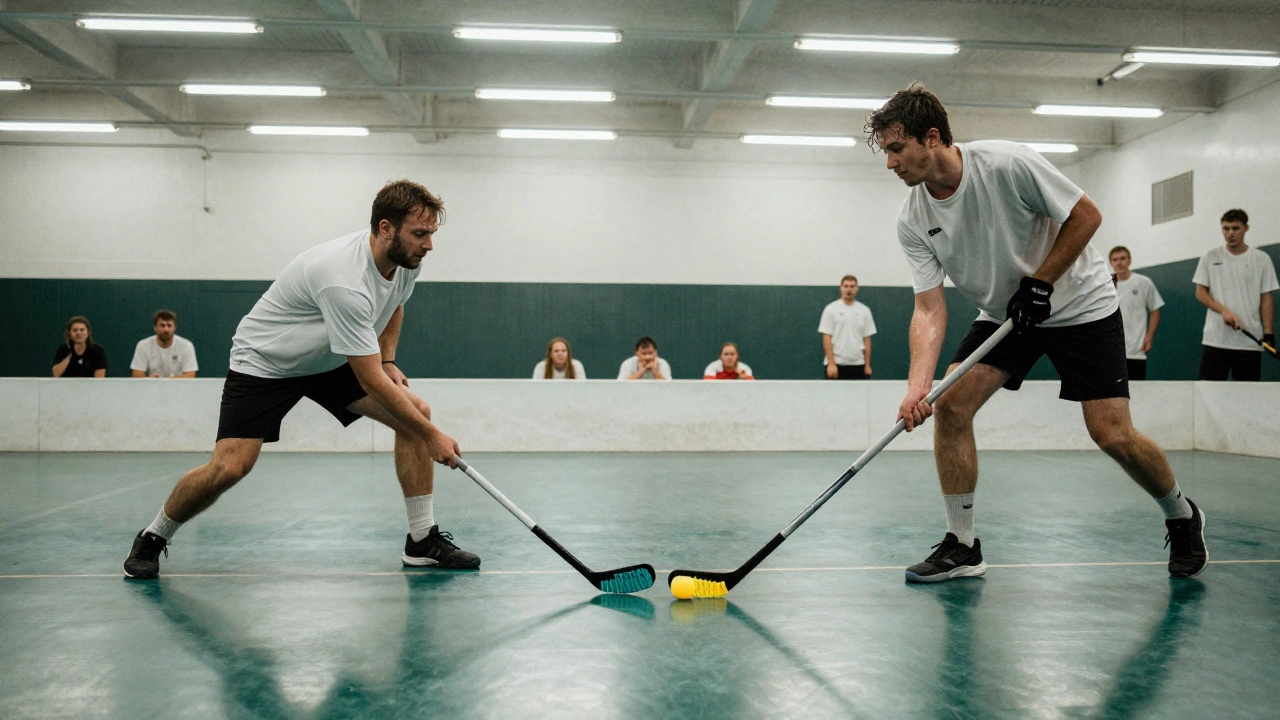
Floor hockey isn’t hockey on ice. It’s played on a gym floor with plastic sticks, a foam puck, and no pads. It’s fast. It’s loud. And it’s one of the most popular indoor sports in medium-security prisons across the U.S. and Canada.
Why? Because it channels aggression into strategy. You can’t just push or shove like in basketball. You need to pass, set up plays, and read the defense. It’s chess with sticks.
Prisons that run floor hockey leagues often train peer coaches-incarcerated men and women who complete a certification course on leadership and conflict resolution. These peer coaches earn small stipends, sometimes as little as $5 a week, but the real payoff is respect. They’re no longer just an inmate. They’re a coach.
A 2022 report from the Minnesota Department of Corrections showed that inmates who coached floor hockey were 60% less likely to be involved in disciplinary incidents than those who didn’t participate in any sports program.
More Than Just Balls and Nets
Volleyball and floor hockey are just two pieces of a bigger puzzle. Many prisons now offer:
- Weightlifting circuits using prison-grade equipment-designed to resist vandalism and require zero maintenance.
- Circuit Resistance Training (CRT), which boosts cardiovascular health and muscle endurance in under 45 minutes.
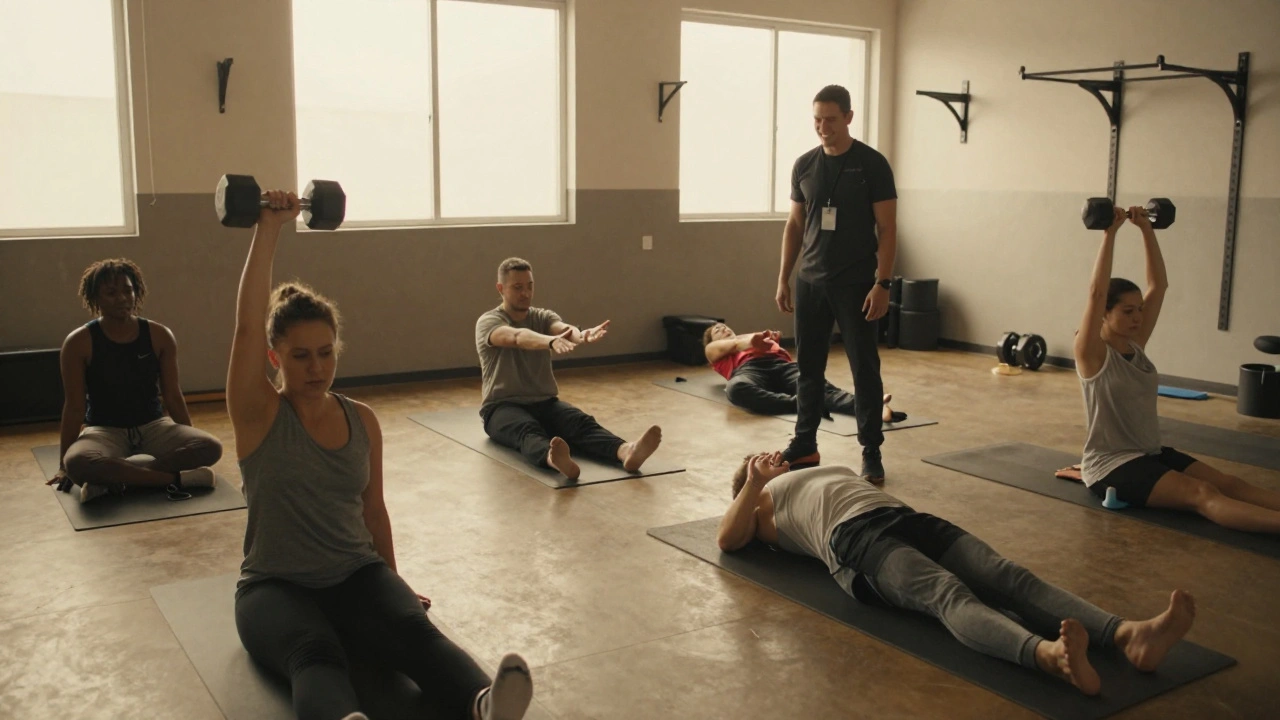
- Yoga and mindfulness sessions, proven to cut recidivism by up to 18% in some jails.
- Peer fitness trainer programs, where inmates earn certification to lead workouts, gaining skills that translate to jobs after release.
These aren’t just hobbies. They’re rehabilitation tools. A 2008 study from North Carolina found that inmates who took four or more yoga classes reduced their chances of returning to prison from 25.2% down to 8.5%. That’s not luck. That’s science.
The Hidden Cost of Doing Nothing
Some prisons still don’t offer structured recreation. They say it’s too expensive. Too risky. Too hard to supervise.
But here’s the truth: doing nothing costs far more.
Inmates with no physical activity are more likely to develop obesity, high blood pressure, and diabetes-all conditions that lead to expensive medical emergencies. One prison in Texas reported that inmates who didn’t exercise were 3.5 times more likely to require emergency medical transport than those who did.
And then there’s the human cost. Violence. Self-harm. Suicides. Studies show that prisons with consistent recreation programs see up to 50% fewer incidents of assault among inmates and between staff and inmates alike.
It’s not about making prison comfortable. It’s about making it human.
What Works Best? The Data Doesn’t Lie
Not all programs are equal. Here’s what the research says about effectiveness:
| Program Type | Reduction in Anxiety/Depression | Reduction in Disciplinary Incidents | Recidivism Impact |
|---|---|---|---|
| Volleyball | 38% | 29% | 12% (estimated) |
| Floor Hockey | 41% | 60% | 15% (estimated) |
| Weightlifting (CRT) | 35% | 25% | 10% (estimated) |
| Yoga | 52% | 40% | 18% (observed) |
| Combined Program (Sports + Yoga + Fitness Training) | 67% | 72% | 24% (observed) |
The data is clear: the more variety and structure, the better the outcome. A single sport isn’t enough. But a program that combines physical activity, mental health support, and skill-building? That’s transformation.
It’s Not Just About the Inmates
When inmates play volleyball or lift weights, it’s not just their lives that change. Correctional officers see fewer fights. Nurses see fewer ER visits. Administrators see lower staffing costs.
One prison in Oregon reduced its medical budget by $1.2 million in two years after launching a full recreation program-including floor hockey, weightlifting, and yoga. That money didn’t vanish. It was redirected into education and job training.
And here’s the quietest win: staff morale. Officers who work in facilities with active recreation programs say they feel safer. They feel like they’re part of something that actually helps people grow. That’s rare in corrections.
What’s Missing? And What Needs to Change
Despite the evidence, most prisons still don’t meet minimum standards. The Bureau of Justice Statistics says only 37% of state prisons offer daily recreation time. And even then, many offer just 30 minutes in a concrete yard with no equipment.
What’s needed?
- Minimum 60 minutes of daily physical activity-indoors, if weather or security requires it.
- Proper equipment-durable, safe, and designed for prison use.
- Staff training-officers who understand how to supervise without being authoritarian.
- Peer leadership-inmates trained to lead, not just participate.
- Integration with mental health services-sports aren’t a replacement for therapy. They’re a bridge to it.
This isn’t about being soft on crime. It’s about being smart about justice. People come out of prison. They go back to communities. They get jobs. They raise kids. If we want them to succeed, we have to prepare them. And that starts with letting them play.
Do prisons really allow volleyball and floor hockey?
Yes. Many medium- and high-security prisons across the U.S., Canada, and Europe have formal indoor sports programs. Volleyball is common because it requires minimal space and equipment. Floor hockey is popular in facilities with gym floors and enough staff to supervise safely. Rules vary by state, but most allow these activities as long as they’re supervised and equipment is non-weaponized.
Are these programs free for inmates?
In most cases, yes. The equipment and space are provided by the facility. Some prisons charge a small fee-usually under $5-for certification in peer coaching or fitness training, but participation in the games themselves is always free. Funding often comes from state corrections budgets or nonprofit grants.
Can inmates get hurt playing these sports?
Injuries do happen, but they’re rare. Equipment is designed to be safe-plastic sticks, foam pucks, non-slip floors. Staff are trained to intervene before fights escalate. Most prisons have medical staff on-site during games. The bigger risk is not playing: inactivity leads to far more health problems than sports do.
Do these programs reduce recidivism?
Yes, and the data backs it up. Inmates who participate in structured physical activity are 20-30% less likely to return to prison within three years. Programs that combine sports with mental health support and job training see even higher drops-up to 24%. It’s not a magic fix, but it’s one of the most reliable tools we have.
Why not just let them work out on their own?
Unsupervised exercise often leads to inequality, bullying, or injury. Structured programs ensure everyone gets access, regardless of size, strength, or background. They also teach teamwork, discipline, and communication-skills you can’t learn lifting weights alone. Plus, staff can monitor behavior and step in before problems grow.
What Comes Next?
The goal isn’t to turn prisons into gyms. It’s to turn them into places where people can rebuild.
When an inmate steps onto a volleyball court, he’s not just hitting a ball. He’s learning to trust. When she passes the puck in floor hockey, she’s not just scoring a goal-she’s learning how to lead. These aren’t games. They’re lessons.
And every time someone walks out of prison with better health, better habits, and better connections, we all benefit.