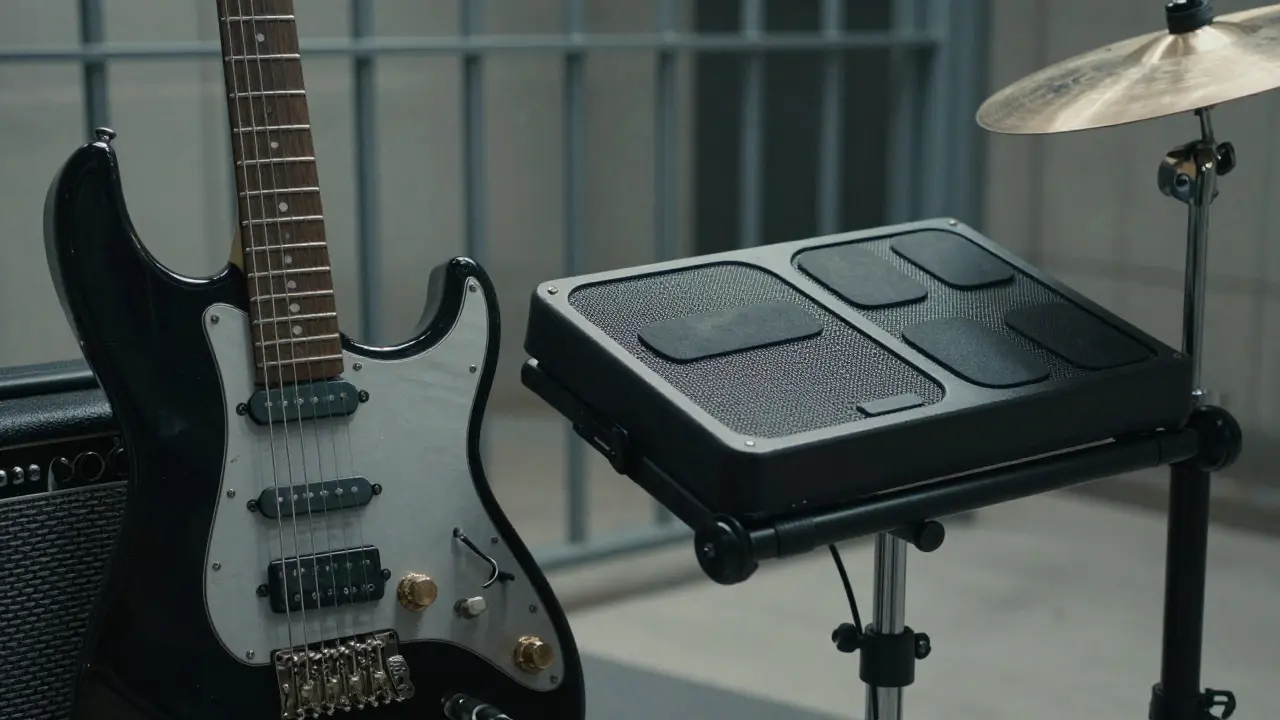
Imagine a steel door swinging open not for a guard, but for a drummer. Inside, the air vibrates with the thud of a snare and the hum of an electric guitar. It’s a scene that feels out of place in a maximum-security facility, yet it happens every week in hundreds of U.S. prisons. Prison music programs are structured recreational activities that allow incarcerated individuals to learn, practice, and perform music using standardized equipment under strict supervision. These initiatives do more than just fill time; they reduce recidivism rates by up to 40% in some studies, according to data from the RAND Corporation.
You might wonder how a chaotic environment like a prison can host a disciplined band rehearsal. The answer lies in rigid protocols, specific gear choices, and a culture of mutual respect between inmates and staff. Whether you’re a researcher, a donor, or just curious about life behind bars, understanding the mechanics of these programs reveals a side of correctional facilities that is often overlooked.
The Gear: What Actually Goes Into a Cell Block Band
Not all instruments are created equal when it comes to security. A full symphony orchestra is impossible, so most programs focus on genres that require durable, manageable equipment. The standard setup usually includes drums, bass guitars, electric guitars, and keyboards. Acoustic instruments are rare because their strings can snap into sharp projectiles, and their hollow bodies can hide contraband.
Drums are the backbone of most prison bands. However, they aren’t your typical concert kits. Staff prefer mesh-headed electronic drum pads or heavily modified acoustic kits where the cymbals are replaced with plastic or metal-free alternatives. Why? Because a flying cymbal is a weapon. In facilities like San Quentin State Prison, the famous Redwood String Band uses custom-made stringed instruments built specifically to be tamper-proof. These instruments have solid wood bodies without sound holes, making them nearly impossible to break down for parts.
- Electric Guitars: Usually stripped of high-value pickups. Amps are low-wattage (15-30 watts) to prevent overheating and limit volume control issues.
- Keyboards: Digital stage pianos are preferred over grand pianos due to space constraints and tuning stability. They are often bolted to the floor or secured with heavy-duty straps.
- Drums: Electronic modules connected to small monitors. Cymbals are either eliminated or replaced with rubberized versions.
- Microphones: Wired only. Wireless mics are banned because batteries can be removed and hidden, and transmitters can interfere with facility communications.
This specific list of band equipment reflects a balance between musical viability and institutional safety. Every item must pass a security check before entering the room. If a strap breaks, it’s gone. If a cable frays, it’s discarded. Durability isn’t just a feature; it’s a requirement.
The Rules: How Rehearsals Stay Under Control
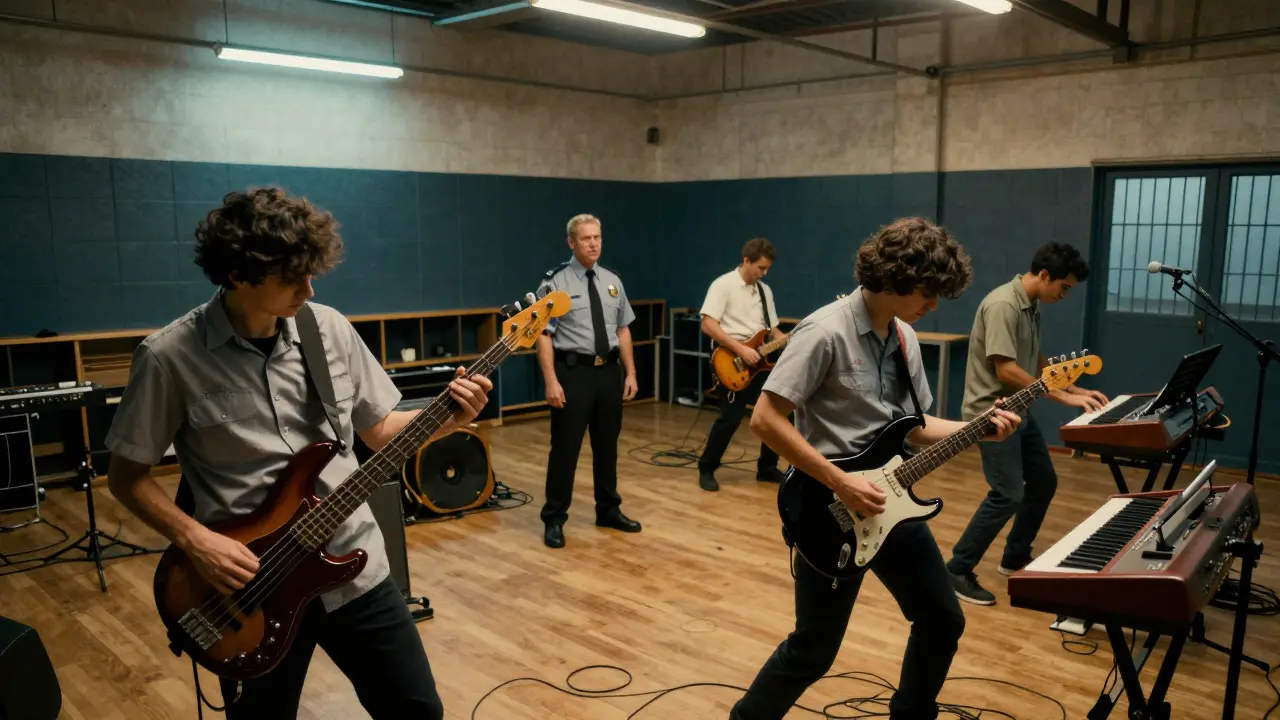
Rehearsing in a prison isn’t like jamming in a garage. The rules are explicit, enforced by correctional officers, and designed to minimize risk. The primary rule is simple: no soloing without permission. This sounds odd, but improvisation can lead to noise level spikes or competitive tensions that escalate quickly. Most programs use sheet music or pre-arranged charts provided by volunteer instructors.
Time management is another critical factor. Sessions typically last 60 to 90 minutes, split into two blocks to allow for bathroom breaks and security checks. During these breaks, instruments are counted. Yes, counted. Each string, pick, and pedal is logged. If a count doesn’t match, the session stops immediately until the discrepancy is resolved. This process ensures that no piece of equipment becomes a tool for escape or violence.
Who gets to play? Selection is rarely based solely on talent. While musical ability helps, behavior history is the deciding factor. Inmates with recent disciplinary infractions are usually ineligible. Many programs partner with non-profits like the Institute for Arts in Corrections, which provides curriculum and volunteer teachers. These volunteers undergo background checks and training on prison etiquette. They know that a smile means nothing if the officer hasn’t given the nod.
Performances: More Than Just Noise
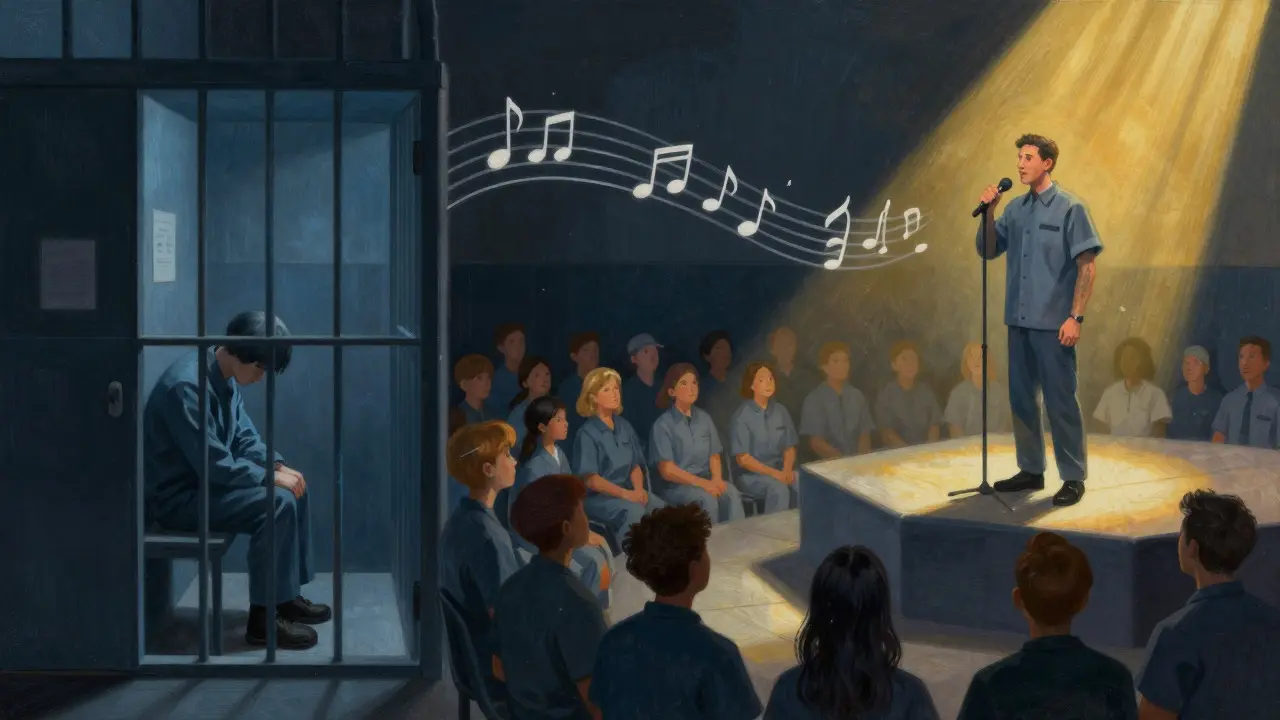
The goal of any prison band is to perform. But who is the audience? It’s rarely the general public. Performances happen in three main contexts: internal facility events, community outreach, and professional recording sessions. Internal shows take place in the cafeteria or chapel. These events serve as morale boosters for both inmates and staff. A well-executed song can lower tension in a unit that has been on edge for days.
Community performances are rarer but highly impactful. When a prison band plays at a local school or community center, it humanizes the incarcerated population. Families of inmates often attend these events, creating a bridge between the inside and the outside world. For many families, hearing their loved one play a clean, structured piece of music is proof of rehabilitation in action.
Recording sessions offer another avenue. Some facilities have small studio setups where bands can lay down tracks. These recordings are sometimes released on independent labels or used for fundraising. The proceeds often go back into the program to buy new gear or pay for instructor travel. This creates a sustainable cycle where art funds further art.
| Instrument Type | Security Risk Level | Common Modifications | Prevalence in Programs |
|---|---|---|---|
| Acoustic Guitar | High | Rarely used; solid body variants only | Low |
| Electric Guitar | Medium | Wired amps, no removable batteries, secured stands | High |
| Drum Kit | Medium-High | Electronic pads, no cymbals or plastic cymbals | Very High |
| Keyboard/Piano | Low | Bolted down, wired pedals | Medium |
| Wind Instruments | Low-Medium | Mouthpieces checked for hidden items | Low |
The Human Element: Why It Works
Behind the rules and the gear, there’s a psychological shift happening. Music requires listening. In a prison environment, where individuality is often suppressed, learning to listen to another person’s instrument teaches empathy. It forces inmates to synchronize their timing with others, a skill that translates directly to group living dynamics. Conflicts decrease in units where music programs are active, according to facility reports from Oregon Department of Corrections.
For the instructors, the experience is transformative too. Teaching a former gang member to hold a bow correctly changes their perception of what incarceration means. It shifts the narrative from punishment to potential. This cultural exchange benefits the entire facility ecosystem. Staff report feeling less hostile toward inmates after interacting with them in a non-custodial setting like a music room.
The financial aspect is also worth noting. These programs are expensive. A single set of electronic drums can cost $2,000 to $5,000. Amplifiers, cables, and chairs add up quickly. Funding usually comes from a mix of state budgets, federal grants, and private donations. Without consistent funding, programs collapse. When a budget is cut, the first thing to go is usually the maintenance fund, leading to broken gear and halted sessions.
Challenges and Pitfalls
It’s not all harmonious chords. One major challenge is turnover. Inmates move between facilities, get released, or are transferred to solitary confinement. This disrupts band cohesion constantly. A band might lose its lead singer mid-album, requiring a complete restructure. Instructors must be flexible and ready to teach beginners at any moment.
Another pitfall is stigma. Not all inmates want to be seen playing music. Some view it as “soft” or unmanly. Overcoming this cultural barrier takes time. Programs often start with smaller, less visible groups before expanding. Peer pressure within the cell block can work against participation, so leadership from respected inmates is crucial for growth.
Finally, there’s the issue of access. Not every prison has a music room. Smaller county jails often lack the space or budget for dedicated recreation areas. This creates an inequality where inmates in larger state prisons have more opportunities for self-expression than those in local facilities. Advocacy groups are pushing for standardized minimum requirements for recreation spaces, including music rooms, to ensure equitable treatment.
Getting Involved: Ways to Support
If you want to support these efforts, you don’t need to be a musician. Donations are always welcome. Look for non-profits that specialize in arts-based rehabilitation. You can donate specific items like instrument cases, sheet music, or even cash for new amplifiers. Volunteering as a teacher is another option, but it requires patience and a willingness to work within strict boundaries.
Advocacy is powerful too. Contact your local representatives and ask about funding for inmate recreation programs. Highlight the cost-benefit analysis: spending $500 on a music program saves thousands in recidivism costs later. Use data to make your case. The more people who understand the value of these programs, the more likely they are to survive budget cuts.
Frequently Asked Questions
What kind of music do prison bands play?
Most prison bands play rock, blues, gospel, and folk. These genres are chosen because they are familiar to a wide audience and require relatively simple instrumentation. Classical music is rare due to the complexity of orchestral arrangements and the difficulty of securing large ensembles.
Can prisoners keep their instruments after release?
Generally, no. All equipment belongs to the facility or the sponsoring organization. However, some programs allow long-term members to purchase basic accessories like picks or capes at discounted rates. Full instruments are rarely sold due to their high value and limited availability.
How many hours per week do bands rehearse?
Typical schedules range from 3 to 5 hours per week. This varies by facility size and staffing levels. Larger programs may offer daily short sessions, while smaller ones might meet once a week for longer periods.
Are there famous prison bands?
Yes. The Redwood String Band at San Quentin is perhaps the most well-known, having performed for presidents and recorded multiple albums. Other notable groups include the Hymns for Homeboys choir and various rock bands in Texas and California facilities.
Do prison music programs reduce violence?
Studies suggest a correlation between arts programs and reduced disciplinary incidents. By providing a constructive outlet for energy and emotion, music programs help lower stress levels. While not a cure-all, they contribute to a calmer facility atmosphere.