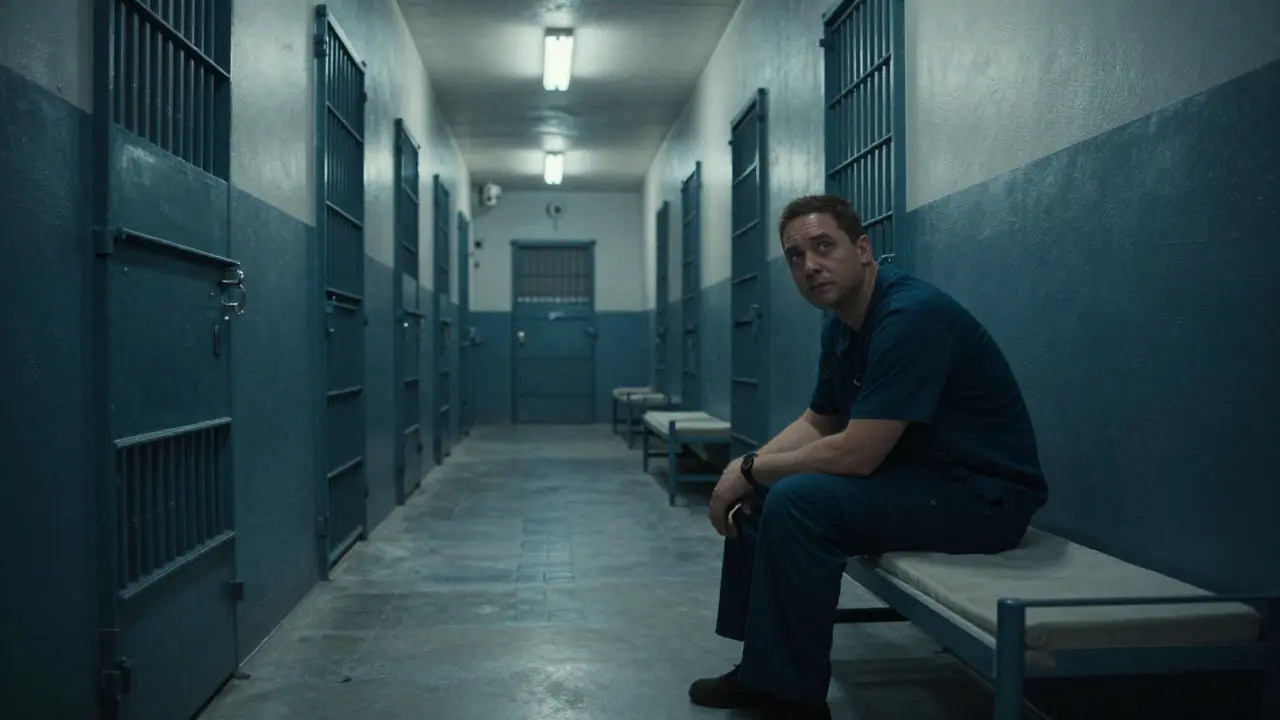
Walk into any maximum-security facility in the United States, and you’ll hear it. The clanging of cells, the shouting from distant yards, the sudden alarms that shatter silence at 3 AM. For many people behind bars, these aren’t just background noise-they’re triggers. Trauma is a psychological response to a distressing event such as war, abuse, or violence, often leading to long-term conditions like PTSD. In prisons, where up to 80% of inmates have experienced some form of trauma before incarceration, this isn’t an edge case. It’s the norm.
Yet for decades, Prison Mental Health Services were clinical programs within correctional facilities designed to diagnose and treat psychiatric disorders among incarcerated individuals. These services often focused on medication management and behavioral compliance rather than root causes. If you’ve worked in corrections or advocacy, you know the frustration: we treat the symptom (aggression, withdrawal) but ignore the wound (abandonment, assault, neglect). That changes now. The shift toward Trauma-Informed Care, which is a service delivery approach that recognizes the widespread impact of trauma and integrates knowledge about trauma into all aspects of care, is reshaping how we think about justice and healing.
The Hidden Epidemic Behind the Bars
You might assume that prison populations are defined by their crimes. But look closer, and the story is different. According to data from the Bureau of Justice Statistics, roughly 75% of women in state prisons and 67% of men in federal prisons report a history of physical or sexual abuse. This isn’t just “bad luck.” It’s a pipeline. Children who experience adverse childhood experiences (ACEs) are significantly more likely to enter the juvenile justice system, and those who enter the adult system often carry untreated Post-Traumatic Stress Disorder, a mental health condition triggered by traumatic events characterized by flashbacks, nightmares, and severe anxiety.
Consider the case of Marcus, a 42-year-old man serving time for armed robbery. His crime was driven not by greed, but by a desperate need to protect his younger sister after a home invasion left them both terrified. In prison, he doesn’t sleep. He flinches at loud noises. He avoids eye contact. Traditional therapy would label him “non-compliant” or “antisocial.” A trauma-informed lens sees a survivor trying to stay safe in an environment that feels just as dangerous as the one that broke him.
Why Traditional Models Fail
For years, the standard model in corrections relied on what experts call “top-down” behavior modification. You follow the rules, you get privileges. You break them, you lose them. Sounds logical, right? Not when your brain is stuck in survival mode. When someone with PTSD hears a door slam, their amygdala fires off a threat signal before their prefrontal cortex can process reality. Punishing that reaction only deepens the fear.
This mismatch creates a cycle:
- Inmate experiences a trigger (e.g., a guard yelling).
- Inmate reacts defensively (freezing, fighting, fleeing).
- Staff interprets reaction as defiance.
- Inmate receives solitary confinement or loss of privileges.
- Solitary confinement acts as another trauma, worsening symptoms.
The result? Higher rates of suicide, self-harm, and recidivism. We spend millions keeping people locked up, but very little helping them heal. That’s not just inefficient-it’s unjust.
What Trauma-Informed Care Actually Looks Like
Trauma-Informed Care isn’t just a new buzzword. It’s a fundamental shift in mindset. Instead of asking, “What’s wrong with you?” we ask, “What happened to you?” This simple question changes everything. It validates the person’s experience and opens the door to healing.
In practice, this means several key changes in how Correctional Facilities operate:
- Staff Training: Guards, nurses, and counselors learn to recognize signs of dissociation, hypervigilance, and emotional dysregulation without labeling them as “bad behavior.”
- Environment Design: Reducing harsh lighting, creating quiet spaces, and allowing predictable routines help lower baseline stress levels.
- Peer Support: Trained inmate mentors who have walked similar paths provide credibility and hope that clinical staff sometimes lack.
- Cultural Humility: Recognizing that trauma affects different communities differently-indigenous peoples, Black Americans, and LGBTQ+ individuals may face unique barriers to trust and access.
Facilities like the Oregon Department of Corrections’ pilot program in Salem have shown promising results. By integrating trauma-informed practices into daily operations, they reduced use-of-force incidents by 30% over two years. More importantly, inmates reported feeling “seen” for the first time.
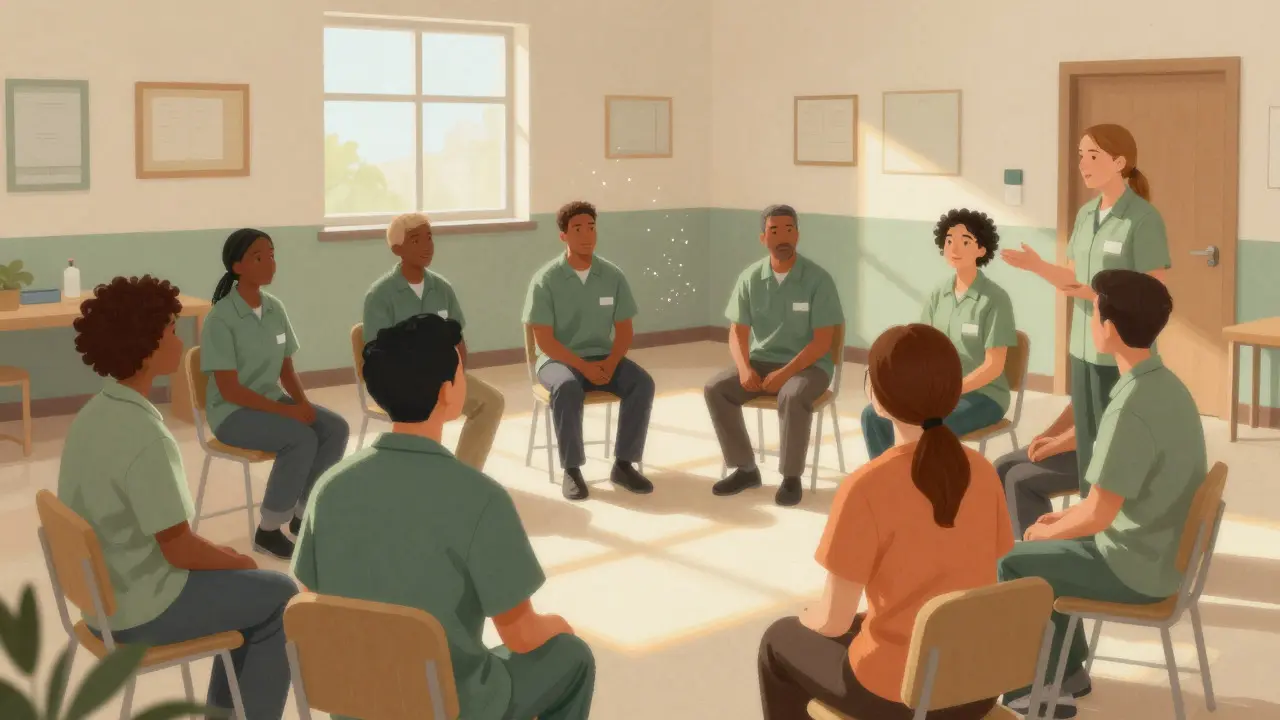
Effective Therapies Behind Bars
Not all therapy works in a high-stress environment. Some approaches require safety and stability that prisons struggle to provide. But certain evidence-based treatments have proven effective even in constrained settings.
| Therapy Type | How It Works | Effectiveness in Prisons | Key Challenge |
|---|---|---|---|
| Cognitive Behavioral Therapy (CBT) | Helps identify and change negative thought patterns | Moderate; easy to structure in groups | Requires cognitive engagement that may be hard during acute stress |
| Eye Movement Desensitization and Reprocessing (EMDR) | Uses bilateral stimulation to process traumatic memories | High; less reliance on verbal processing | Needs trained therapists; equipment limitations |
| Dialectical Behavior Therapy (DBT) | Teaches emotion regulation and distress tolerance | Very High; practical skills for daily life | Time-intensive; requires consistent group attendance |
| Psychodynamic Therapy | Explores unconscious conflicts and past relationships | Low-Moderate; difficult in short-stay contexts | Long duration; hard to maintain continuity in prison |
DBT has emerged as a standout. Why? Because it gives people concrete tools. “When you feel angry, count to ten. Notice your breath. Ask yourself: Is this emergency real?” These micro-skills are easier to implement in a cell than deep introspection. Plus, DBT groups build community, which counters the isolation that fuels depression.
The Role of Reentry and Community Integration
Healing doesn’t stop at the prison gate. In fact, the transition period is often the most vulnerable. Without support, former inmates face homelessness, unemployment, and relapse into old patterns. Reentry Programs are structured initiatives that assist formerly incarcerated individuals in reintegrating into society through housing, employment, and social support.
Successful reentry models don’t just hand out job applications. They continue trauma work. Imagine a woman released after five years for drug possession. Her addiction was rooted in childhood sexual abuse. If her reentry plan includes only vocational training, she’s setting herself up to fail. But if it includes ongoing counseling, peer support groups, and stable housing, she has a chance to break the cycle.
Community organizations play a critical role here. Non-profits in Portland, Oregon, like the Multnomah County Reentry Coalition, partner with local clinics to offer sliding-scale therapy. This bridge between institutional care and community resources is where real change happens.

Barriers to Implementation and How to Overcome Them
Let’s be honest: implementing trauma-informed care in prisons is hard. Budgets are tight. Staff turnover is high. Resistance from traditionalists is common. So how do we move forward?
First, start small. Don’t try to overhaul the entire system overnight. Pilot programs in one unit or one facility can prove value. Use data. Track metrics like use-of-force incidents, suicide attempts, and inmate satisfaction. Show administrators that healing saves money in the long run by reducing recidivism.
Second, invest in staff. Burnout is real. If guards are stressed, they can’t be empathetic. Provide them with mental health days, supervision, and training. Treat them as part of the healing ecosystem, not just enforcers.
Third, involve the community. Prisons shouldn’t be islands. Invite outside therapists, educators, and advocates to collaborate. Break down the walls-not just physically, but culturally.
What You Can Do Next
If you’re a policymaker, advocate for funding for trauma-informed training. If you’re a clinician, seek certification in trauma-focused therapies. If you’re a family member of someone incarcerated, learn about the signs of PTSD and how to communicate with compassion. And if you’re just curious, read personal stories. Books like *The Body Keeps the Score* by Bessel van der Kolk or *Just Mercy* by Bryan Stevenson humanize the statistics.
The goal isn’t perfect prisons. It’s humane ones. It’s recognizing that every person behind bars has a story, and that story deserves to be heard, understood, and addressed. When we heal the trauma, we don’t just help the individual-we make our communities safer, healthier, and more just.
Is PTSD common in prisons?
Yes. Studies suggest that 30-50% of incarcerated individuals meet the criteria for PTSD, with higher rates among women and those with histories of childhood abuse. This is significantly higher than the general population rate of about 7%.
What is the difference between trauma-informed care and traditional prison mental health?
Traditional care often focuses on managing symptoms and enforcing rules. Trauma-informed care prioritizes safety, choice, collaboration, and empowerment, recognizing that behavior is often a response to past trauma rather than a character flaw.
Which therapy is most effective for prisoners with PTSD?
Dialectical Behavior Therapy (DBT) and Eye Movement Desensitization and Reprocessing (EMDR) show strong results. DBT is particularly useful for teaching coping skills, while EMDR helps process traumatic memories without requiring extensive verbal disclosure.
How does trauma affect recidivism?
Untreated trauma increases the likelihood of reoffending. Individuals may return to familiar environments (including criminal networks) because they feel safer there than in the outside world. Addressing trauma reduces this pull and improves reentry success.
Can prisons really be trauma-informed given their restrictive nature?
Yes, but it requires intentionality. Even in restrictive settings, small changes like predictable schedules, respectful communication, and access to quiet spaces can reduce triggers. The key is shifting the culture from control to care.