
Imagine walking out of a prison gate after five years. The world has changed. Your phone is an alien device, your ID card is expired, and the only job you know how to do no longer exists. For many inmates, this is the harsh reality. But for those who have access to a Transition Coordinator is a specialized case worker who bridges the gap between institutional life and community employment by aligning inmate skills with local labor market demands. These professionals are not just social workers; they are strategic planners who understand that a diploma without a job lead is just paper.
The role has evolved significantly over the last decade. It is no longer about handing someone a pamphlet for a food bank. It is about data-driven matching. A coordinator looks at the specific vocational training program an inmate completed and cross-references it with real-time hiring trends in their release county. If the inmate learned welding, the coordinator checks if local manufacturing plants are hiring. If they studied coding, they look for remote-friendly tech roles or entry-level IT support positions. This precision reduces the "chasm" of unemployment that often leads back to crime.
What Exactly Does a Transition Coordinator Do?
Many people assume these coordinators only handle paperwork. In reality, their job is a mix of logistics, psychology, and market analysis. Their primary goal is to ensure that the skills acquired inside the walls translate into income outside them. Here is what their daily workflow typically looks like:
- Skills Assessment: Before an inmate even starts a class, the coordinator evaluates their baseline skills. Did they work in construction before? Do they have a high school diploma? This prevents wasting time on courses that don't fit their background.
- Employer Liaison: They build relationships with local businesses. Instead of waiting for applications, they bring employers into the prison for interviews or create virtual hiring events. They negotiate start dates and wage expectations before the release date.
- Logistical Support: They help secure essential documents like birth certificates, state IDs, and Social Security cards. Without these, no one can be hired legally.
- Post-Release Follow-Up: The job doesn't end at the gate. Most coordinators check in at 30, 60, and 90 days post-release to troubleshoot issues like transportation barriers or workplace conflicts.
This proactive approach changes the dynamic from "good luck" to "here is your plan." It turns abstract potential into concrete offers.
Why Traditional Reentry Programs Often Fail
To understand the value of a transition coordinator, you have to look at why older methods struggled. Historically, reentry services were fragmented. One agency handled housing, another handled mental health, and a third handled jobs. There was no central hub. An inmate might get a GED but have no idea where to apply for jobs. Or they might get a job offer but no place to live, forcing them to choose between shelter rules and employment schedules.
A transition coordinator acts as the glue. They see the whole picture. For example, consider the case of Marcus, a fictional composite based on common scenarios. Marcus served eight years for non-violent offenses. Inside, he took a certificate course in HVAC (Heating, Ventilation, and Air Conditioning). Without a coordinator, he would have walked out with a certificate and no contacts. With a coordinator, his case manager knew that three major commercial contractors in his home city had open apprentice slots. The coordinator arranged a pre-release interview, secured him a ride to the meeting, and negotiated a start date two weeks after his release to allow time for settling in. Today, Marcus is a journeyman technician earning $28 per hour. He hasn't been arrested since.
This isn't magic; it's connection. The coordinator removed the friction points that usually cause new hires to quit within the first month.

Aligning Vocational Training with Local Labor Markets
The most critical skill of a modern transition coordinator is market literacy. They cannot simply teach whatever is easiest to run inside a prison. They must teach what the economy needs. This requires constant communication with local chambers of commerce and workforce development boards.
Consider the shift in demand over the last few years. Ten years ago, warehouse management was the top hireable skill. Today, while still important, there is a massive surge in demand for healthcare assistants, renewable energy technicians, and digital literacy specialists. If a prison system continues to only offer basic clerical training, they are setting inmates up for low-wage, unstable work. A good coordinator audits the curriculum annually. If the local hospital network is expanding its geriatric wing, the coordinator advocates for more Certified Nursing Assistant (CNA) programs inside the facility.
| Feature | Traditional Model | Coordinated Model |
|---|---|---|
| Job Matching | Inmate searches independently | Coordinator matches skills to specific openings |
| Timing | Planning starts at release | Planning starts 6-12 months pre-release |
| Employer Engagement | Passive (postings online) | Active (direct partnerships and interviews) |
| Support Duration | Ends at release | Continues for 6-12 months post-release |
| Recidivism Impact | High risk due to instability | Lower risk due to stable income |
This alignment ensures that the time spent in vocational classes yields a higher return on investment for both the inmate and the public sector. When the job market dictates the curriculum, the success rate climbs naturally.
The Economic Case for Sustainable Employment
Critics sometimes argue that investing in prison education is a waste of taxpayer money. However, the math tells a different story when you factor in the cost of incarceration versus the cost of coordination. Incarceration costs taxpayers roughly $60,000 to $100,000 per year per inmate depending on the state. If a transition coordinator helps an inmate land a job paying $15 per hour, that person becomes a net contributor to the economy within two years. They pay taxes, buy goods, and reduce the burden on the justice system.
Furthermore, sustainable jobs prevent the cycle of recidivism. Studies consistently show that individuals who secure stable employment within six months of release are significantly less likely to reoffend. The coordinator’s role in securing *stable* jobs-not just any job-is key. A temporary gig doesn't provide enough financial buffer to handle emergencies like a medical bill or a car repair. A full-time position with benefits does. By focusing on sustainability, coordinators address the root causes of re-entry failure: poverty and instability.
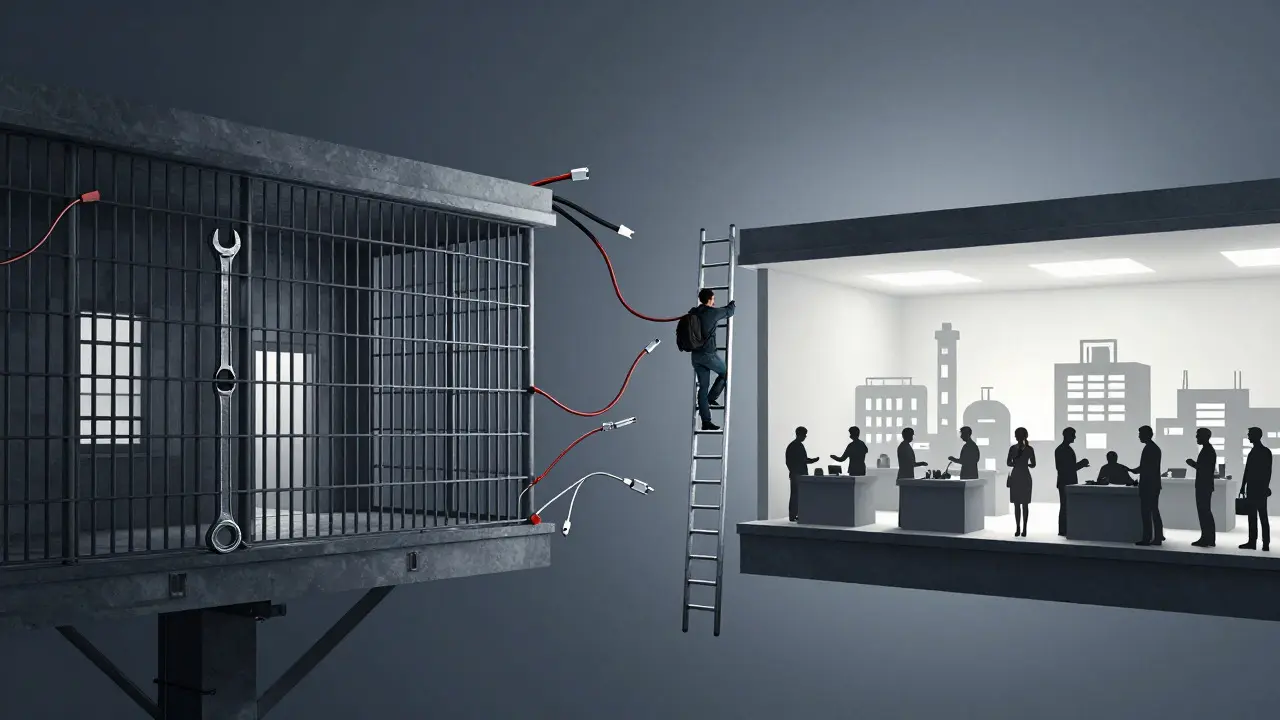
Challenges and How Coordinators Overcome Them
It isn't all smooth sailing. Employers are often skeptical of hiring formerly incarcerated individuals due to stigma or fear of liability. Coordinators combat this by providing references, conducting background checks, and sometimes offering wage subsidies for the first three months. They also educate employers on the legal protections in place, such as the Fair Chance Act in many jurisdictions, which limits questions about criminal history during initial interviews.
Another challenge is the digital divide. Many long-term inmates lack digital literacy. Coordinators now include basic computer skills and online application navigation in their pre-release prep. Knowing how to update a LinkedIn profile or apply for a job via a mobile app is as important as knowing how to weld or code. By addressing these soft skills and technical gaps, coordinators ensure that inmates are competitive in the modern job market.
Building a Roadmap for Success
If you are involved in policy, advocacy, or correctional administration, here is how to strengthen the transition coordinator model in your region:
- Fund Dedicated Positions: Don't rely on volunteers. Hire full-time staff with specific KPIs tied to placement rates and retention.
- Create Data Dashboards: Track which vocational programs lead to actual hires. Kill off programs that don't produce jobs.
- Expand Post-Release Support: Allocate budget for transportation vouchers and emergency housing funds for the first 90 days.
- Partner with Industry Leaders: Bring in large employers who have diverse hiring goals. They have the resources to offer apprenticeships.
- Standardize Communication: Ensure that records move seamlessly from the prison system to the local workforce board. No more starting from scratch.
When these pieces come together, the transition coordinator becomes the linchpin of a successful reentry strategy. They transform the narrative from "ex-con" to "skilled professional." And in a tight labor market, that distinction makes all the difference.
Who qualifies for assistance from a transition coordinator?
Typically, any inmate scheduled for release within 6 to 12 months is eligible. Priority is often given to those with prior work experience, long sentences, or limited family support networks. Some programs require participation in a vocational course to qualify for intensive coordination.
How long does a transition coordinator stay involved after release?
Best practices suggest a minimum of 6 months of active follow-up. This period covers the critical window where new employees often face challenges like schedule adjustments, commute issues, or workplace culture shock. After 6 months, support may taper to monthly check-ins for another 6 months.
Do transition coordinators guarantee a job?
No, they do not guarantee a job. However, they significantly increase the probability of securing employment by removing barriers and creating direct pipelines to employers. Their success is measured by placement rates and job retention, not by promises of specific positions.
What is the difference between a transition coordinator and a parole officer?
A parole officer focuses on legal compliance and supervision, ensuring the individual follows court orders. A transition coordinator focuses on economic stability and skill utilization. While their goals align (keeping the individual out of jail), their methods differ: one uses authority and monitoring, the other uses resource allocation and career planning.
Which vocational fields are currently most effective for reentry?
Fields with high demand and lower educational barriers tend to be most effective. These include Healthcare (CNA, Home Health Aide), Skilled Trades (HVAC, Plumbing, Electrical), Logistics (Forklift Operation, Warehouse Management), and Basic IT Support. The effectiveness depends heavily on the local labor market conditions.