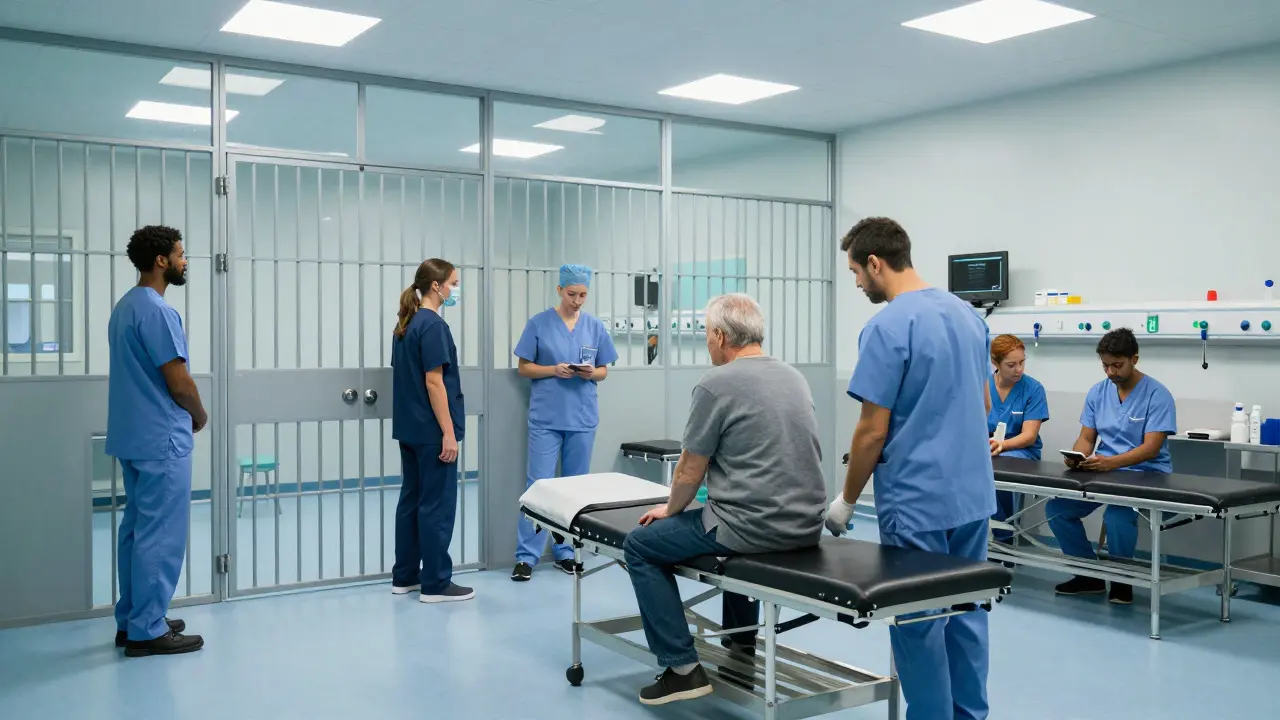
Imagine walking into a hospital where the doctor doesn't work for you, but for a corporation that bills the state. That is the reality for millions of people in U.S. prisons today. The system is complex, expensive, and often confusing. When an inmate gets sick, who pays? How does the money move from the state treasury to the doctor's desk? And who makes sure the care isn't just a box-checking exercise?
The answer lies in a hybrid model that mixes public responsibility with private efficiency. States are legally required to provide adequate medical care to incarcerated individuals, based on the Eighth Amendment to the Constitution. However, most states no longer run their own hospitals or hire all their doctors directly. Instead, they contract with private companies. This creates a unique financial ecosystem where public funds flow through private channels, overseen by a patchwork of state agencies and federal courts.
The Legal Mandate Behind the Money
To understand the funding, you have to start with the law. In 1976, the Supreme Court case Estelle v. Gamble established that deliberate indifference to serious medical needs constitutes cruel and unusual punishment. This means if a prisoner has a heart condition and the prison ignores it, the state can be sued. This legal pressure forces states to budget for healthcare, even if they don't want to.
But "adequate" is a flexible term. It doesn't mean free market-rate care. It means care that prevents suffering and death. Because of this, the funding structure is designed to keep costs low while maintaining a baseline of safety. The state acts as the payer, the private provider acts as the service delivery arm, and the courts act as the ultimate auditors when things go wrong.
Who Actually Pays the Bill?
The primary source of funds is the general state budget. Unlike federal prisons, which are funded by the Department of Justice, state correctional facilities rely on state taxes. This money covers three main buckets:
- Facility Costs: Rent for clinics, utilities, and maintenance of medical wings.
- Labor Costs: Salaries for nurses, technicians, and administrative staff employed by the state or the contractor.
- Professional Fees: Payments to physicians, specialists, and dentists, whether they are employees or independent contractors.
In many states, there is also a small per-inmate fee charged to the individual. For example, some states charge $5 to $20 for a routine clinic visit. However, these fees rarely cover the full cost of care. They are more of a symbolic gesture to encourage responsible use of services rather than a true cost-recovery mechanism. The bulk of the expense-often over $80 per inmate per day in high-acuity systems-is borne by the taxpayer.
The Role of Private Management Companies
This is where it gets interesting. Since the 1990s, a wave of privatization swept through the corrections system. Companies like Corizon Health (formerly Wellpath) and CoreCivic stepped in to manage healthcare operations. Why? Because running a hospital inside a prison is logistically nightmarish. You need security integration, specialized staffing, and supply chains that can handle locked doors.
These private providers usually operate under a fixed-price contract. The state says, "Here is $X million per year. Take care of everyone." The company then manages the risk. If they save money by reducing unnecessary tests, they keep the profit margin. If they overspend due to a flu outbreak, they eat the loss. This creates a strong incentive for efficiency, but it also raises questions about quality control.
| Model Type | Funding Source | Risk Bearer | Primary Advantage | Common Criticism |
|---|---|---|---|---|
| Direct State Operation | State General Fund | State Government | Full Control & Accountability | Bureaucratic Slowdown |
| Private Contract (Fixed Fee) | State General Fund | Private Company | Cost Predictability | Profit Motive vs. Care Quality |
| Fee-for-Service | State + Inmate Fees | Shared | Simplicity | Incentivizes Over-treatment |
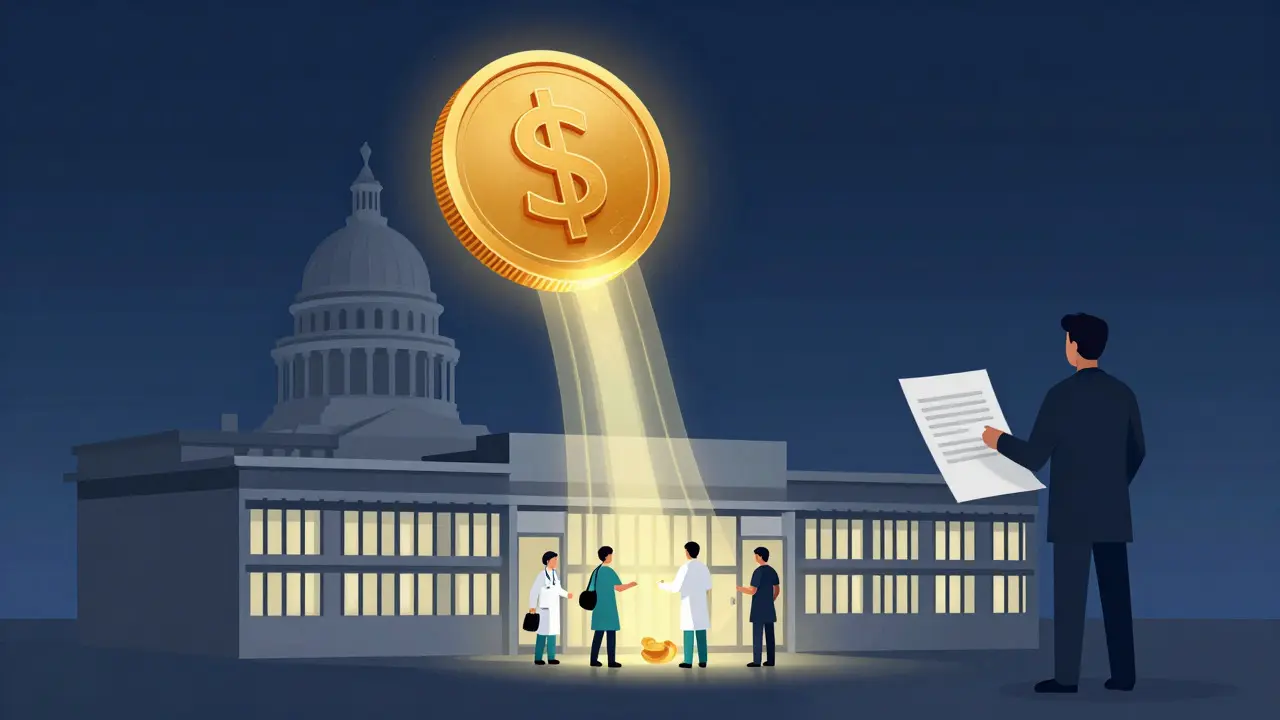
How Oversight Keeps the System Honest
If a private company runs the clinic, who watches the watchers? This is the job of public oversight. It happens at three levels:
- Contractual Audits: The state Department of Corrections regularly reviews the provider's financial records and patient outcomes. If the provider misses key performance indicators (KPIs), penalties are triggered.
- Court-Ordered Monitoring: In many states, federal judges appoint special masters to monitor prison conditions, including healthcare. These monitors have subpoena power and can force changes if standards drop.
- Internal Grievance Processes: Inmates can file complaints about their care. While not always effective, these records create a paper trail that can lead to investigations.
The challenge is that oversight is often reactive. Problems tend to surface after a bad outcome, like a preventable death. To fix this, some states have started using data analytics to track wait times, medication errors, and specialist access in real-time. This shifts the focus from punishment to prevention.
The Financial Reality: Per Diem Rates
You might wonder how much this actually costs. The metric used is the "per diem" rate-the average daily cost of care per inmate. Nationally, the average ranges from $40 to $100+ per day, depending on the age and health profile of the population. Older inmates with chronic conditions drive these numbers up significantly.
For context, a single day in a private hospital room can cost $1,000 or more. But in prison, the infrastructure is already paid for. The state only pays for the incremental costs of staff, meds, and equipment. This is why correctional healthcare is cheaper than community healthcare, but also why it's harder to compare directly. The value proposition is different: you're buying continuity and containment, not just treatment.

Challenges in the Current Landscape
The system isn't perfect. One major issue is workforce retention. Nurses and doctors often leave prison jobs because of the stress, lower pay compared to community hospitals, and the difficulty of practicing medicine in a controlled environment. This leads to high turnover, which disrupts care and increases training costs.
Another challenge is mental health. A significant portion of the incarcerated population suffers from untreated mental illness. Providing psychiatric care requires specialized providers who are willing to work in secure settings. Often, these services are outsourced again, creating another layer of complexity in the funding chain.
Finally, there is the issue of aging populations. As life sentences become more common, prisons are becoming de facto nursing homes. This requires long-term care planning, which is expensive and logistically difficult. The current funding models, designed for short-term acute care, are struggling to adapt to this demographic shift.
What Does This Mean for the Future?
The trend is moving toward greater transparency. States are beginning to publish annual reports on healthcare spending and outcomes. There is also growing interest in telehealth, which can reduce costs by allowing remote consultations for minor issues. This technology could help bridge the gap between limited on-site resources and the need for specialist input.
Ultimately, the goal is a system where funding follows evidence. If a specific treatment protocol saves lives and reduces readmissions, the money should flow there. Right now, we are still balancing the scales between fiscal responsibility and human rights. It’s a tough balance, but one that defines the modern American correctional system.
Do prisoners pay for their own medical care?
Mostly no. While some states charge small copays for routine visits, the vast majority of medical costs are covered by the state general fund. The legal obligation to provide care falls on the government, not the individual.
Why do states use private companies for prison healthcare?
States use private providers to manage operational complexity and control costs. Private companies bring specialized expertise in logistics, staffing, and supply chain management, which can be more efficient than direct state administration in large-scale facilities.
Who oversees the quality of care in private prisons?
Oversight comes from the state Department of Corrections through contractual audits, federal court-appointed monitors in litigation cases, and internal grievance processes. Each layer serves as a check on the private provider's performance.
Is prison healthcare cheaper than community healthcare?
Yes, typically. Because the facility infrastructure is already funded by the state, the marginal cost of providing care is lower. However, this doesn't always mean better quality, as resource constraints can limit access to advanced treatments.
What is the biggest challenge facing correctional medical funding?
The aging inmate population is the primary challenge. As more prisoners serve long sentences, the need for chronic disease management and long-term care increases, straining budgets designed for acute, short-term treatment.