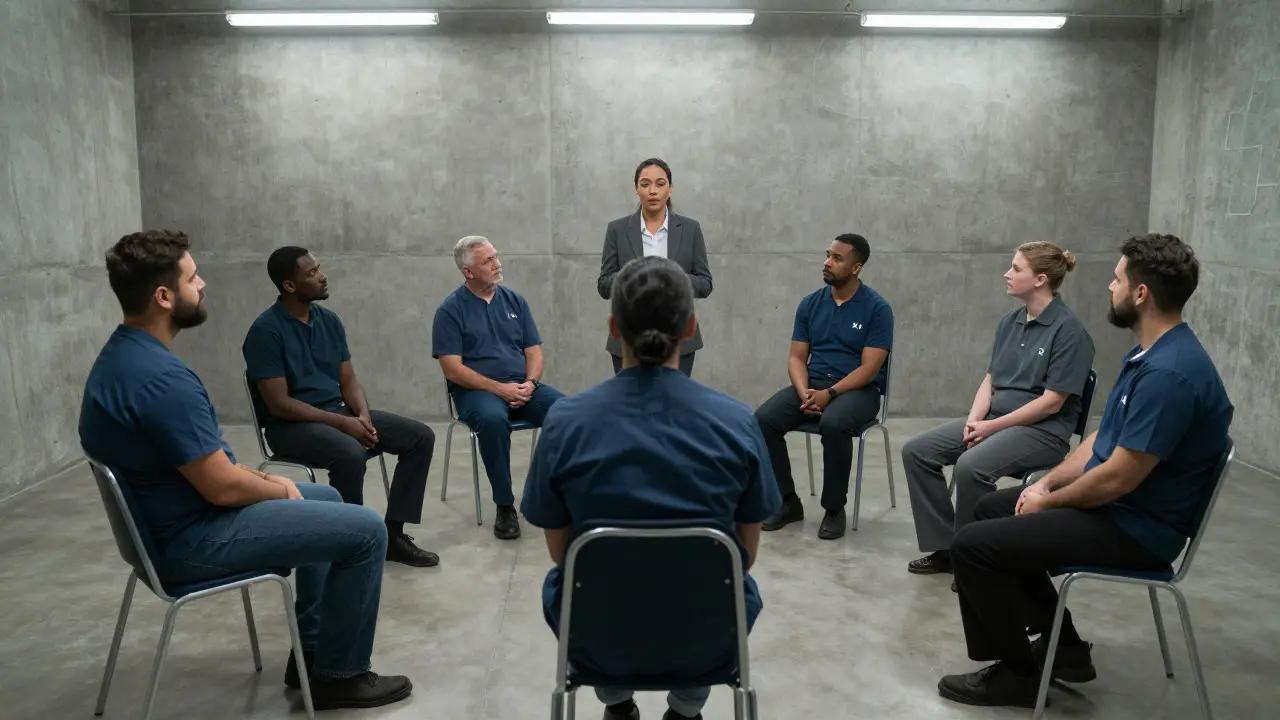
Walking into a correctional facility or a halfway house often feels like stepping into a different world. The walls are high, the schedules are rigid, and the people you’re talking to have been through some of life’s hardest moments. If you’ve ever tried to run a group session in these settings, you know it’s not just about following a script. It’s about keeping the room calm while helping someone understand why they made a specific choice. That’s where CBT facilitator training comes in. It’s not just academic theory; it’s the toolkit that helps professionals turn chaotic moments into learning opportunities.
Many new facilitators assume that if they know CBT from a clinical setting, they can just walk in and teach. But the reality is starkly different. In prison, a “cognitive distortion” might be a survival strategy that kept someone alive on the street. In a community provider setting, the client might be juggling three jobs and no transportation. Understanding these nuances is what separates a good facilitator from one who actually changes lives.
Why Standard Clinical Training Falls Short
Traditional psychology degrees focus heavily on diagnosis and individual therapy. While valuable, this approach often misses the mark when applied to groups in correctional environments. Cognitive Behavioral Therapy (CBT) is a structured, goal-oriented form of psychotherapy that helps individuals identify and change negative patterns of thinking and behavior. When adapted for corrections, it becomes less about curing a disorder and more about building skills.
The core challenge here is the audience. You aren’t dealing with patients in a quiet office. You’re dealing with adults who may have low literacy levels, high anxiety, or deep distrust of authority. A standard CBT worksheet might look like gibberish to someone who dropped out of school in eighth grade. Effective facilitator training teaches you how to simplify concepts without dumbing them down. It focuses on practical application over theoretical debate.
- Adaptability: Learning to modify exercises for varying literacy levels.
- Group Dynamics: Managing dominant voices and silent participants in closed settings.
- Safety First: Recognizing when a session is triggering trauma rather than healing it.
The Core Skills Every Facilitator Needs
You don’t need to be a licensed psychologist to facilitate CBT groups, but you do need specific interpersonal skills. These are the non-negotiables that come up repeatedly in professional development workshops across the country.
- Active Listening: This isn’t just hearing words. It’s noticing the tone, the body language, and the pause before an answer. In a cell block, silence can mean resistance or fear. Knowing the difference saves a session.
- Behavioral Reinforcement: People repeat what works. If a participant uses a coping skill and stays calm during a conflict, acknowledging that immediately reinforces the behavior. It’s simple, but many new facilitators forget to praise small wins.
- Boundary Setting: In corrections, boundaries are everything. If a facilitator gets too personal, it can be seen as favoritism. If they’re too cold, trust evaporates. Training helps you find that middle ground where you’re professional yet human.
These skills are harder to learn from a textbook. They require practice, feedback, and often, a mentor who has walked the floor before you.
Correctional Settings vs. Community Providers
While the underlying CBT principles remain the same, the environment changes the delivery significantly. Let’s break down the key differences so you know what to expect in each space.
| Factor | Correctional Facilities | Community Providers |
|---|---|---|
| Attendance | Mandatory, but engagement varies | Volatile, dependent on external factors |
| Authority Dynamic | High power differential (Staff vs. Inmate) | Lower power differential (Peer-like relationship) |
| Resource Access | Limited (No internet, restricted materials) | Variable (Clients may have phones/computers) |
| Primary Goal | Behavioral compliance and risk reduction | Life stability and social integration |
In a prison, your main job is often risk management. If a CBT exercise causes a fight, the program stops. So, facilitators there are trained to keep things predictable and safe. In community settings, the risk is dropout. If the session doesn’t feel relevant to their daily struggle-like finding a job or housing-they won’t come back. This means community facilitators spend more time connecting CBT concepts to real-world logistics.

Building Your Training Pathway
There is no single national license for “CBT Facilitator.” Instead, certification usually comes from specific organizations or state departments of corrections. Here is how most professionals build their credentials.
First, you typically need a baseline education. Many roles require at least a bachelor’s degree in criminal justice, psychology, or social work. However, experience often outweighs paper qualifications in this field. If you’ve worked as a case manager for five years, you already have half the knowledge base.
Next, look for specialized certifications. Organizations like the National Association of Social Workers (NASW) or specific correctional training institutes offer courses designed for this niche. These courses usually include:
- A week-long intensive workshop on CBT fundamentals.
- Supervised practicum hours where you co-facilitate sessions.
- Assessment modules on measuring participant progress.
Don’t skip the supervised hours. Watching a veteran facilitator handle a disruptive participant teaches you more than any lecture. It shows you how to de-escalate without breaking eye contact, or how to redirect a tangent back to the lesson plan smoothly.
Common Pitfalls and How to Avoid Them
Even well-trained facilitators make mistakes. The most common ones are fixable if you stay self-aware.
Pitfall 1: Talking Too Much. New facilitators often fill silences because they feel uncomfortable with quiet. But in CBT, silence is where the processing happens. Give people time to think. If the room goes quiet, count to ten before speaking again.
Pitfall 2: Ignoring Cultural Context. CBT was developed in Western contexts. Not everyone views emotions or family dynamics the same way. A concept like “individual responsibility” might clash with a participant’s cultural value of collective decision-making. Being culturally humble prevents these clashes from becoming conflicts.
Pitfall 3: Overpromising Results. CBT is a tool, not a magic wand. Tell participants honestly that it takes practice. If you promise they’ll never get angry again, they’ll fail and blame the program. Set realistic expectations: “This will help you notice your anger before it explodes,” is a better promise than “This will stop your anger.”

Measuring Success Beyond Attendance
How do you know if your training is working? Attendance numbers are a vanity metric. Someone can sit in the chair for six weeks and learn nothing. Real success looks like behavioral changes outside the classroom.
Look for these indicators:
- Reduced Disciplinary Incidents: Are participants getting fewer write-ups in prison?
- Improved Job Retention: In community settings, are they staying employed longer?
- Self-Reported Confidence: Do they say they feel more in control of their reactions?
Collecting this data requires consistent communication between facilitators, case managers, and sometimes employers. It’s tedious, but it proves the program’s worth to administrators and funders. Without proof, budgets get cut, and programs die.
Frequently Asked Questions
Do I need a master's degree to become a CBT facilitator?
Not always. Many correctional facilities accept candidates with a bachelor's degree and relevant experience, provided they complete specific CBT training. However, community mental health agencies often prefer or require a master's degree in social work or counseling for higher-level positions. Check local job postings for specific requirements.
How long does CBT facilitator training take?
Core training usually takes between 40 to 80 hours of instruction. This includes workshops, online modules, and supervised practice. Full certification, including all required practicum hours, can take anywhere from 6 months to a year depending on your schedule and the organization's standards.
What is the difference between a CBT therapist and a CBT facilitator?
A CBT therapist provides individualized treatment based on a clinical diagnosis. A CBT facilitator delivers standardized group interventions focused on skill-building and behavior modification. Facilitators generally do not diagnose mental health disorders but refer clients to therapists when needed.
Is CBT effective for inmates with low literacy?
Yes, but it requires adaptation. Facilitators must use verbal explanations, visual aids, and role-playing instead of written worksheets. The core concepts remain the same, but the delivery method changes to ensure comprehension. This is a key part of advanced facilitator training.
Where can I find CBT facilitator training near me?
Look for training offered by your state Department of Corrections, local university extension programs, or national organizations like the Society for the Advancement of Psychotherapy. Many also offer virtual training options which are increasingly common and accessible for remote staff.