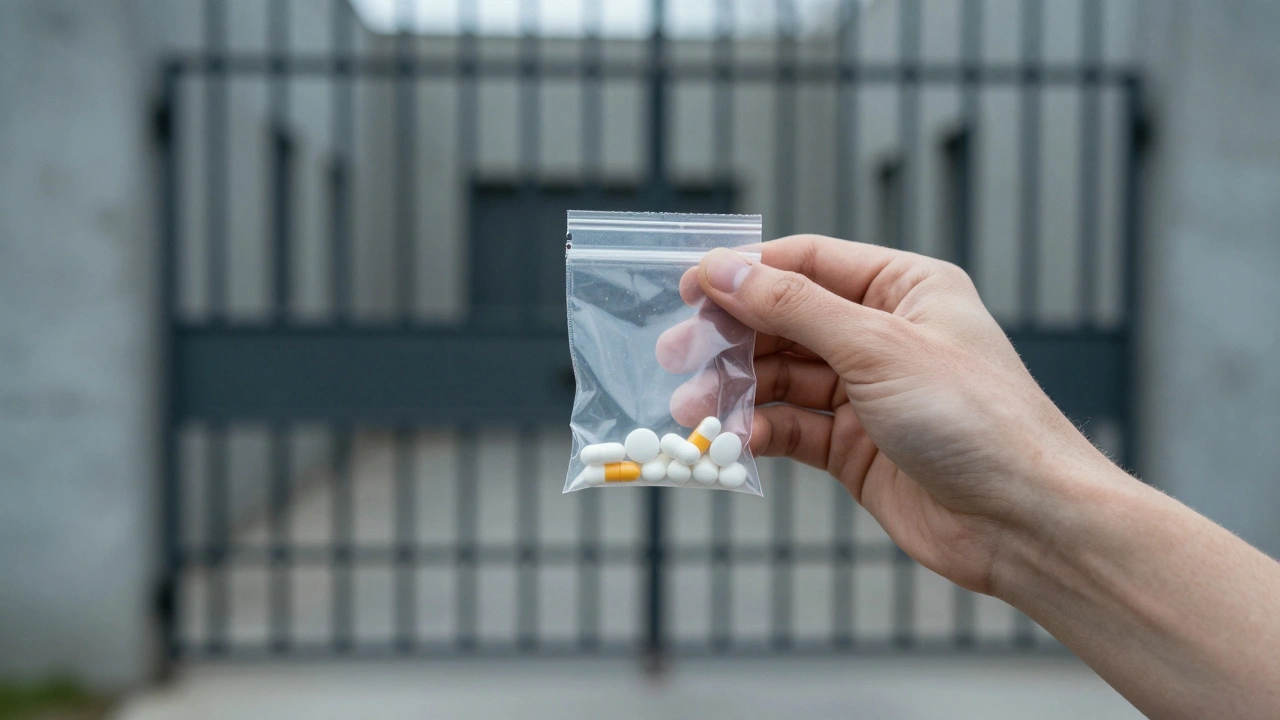
Imagine being released from prison after years of managing a chronic illness or battling an addiction. You walk out the gates with a small bag of belongings and a handful of pills that will last maybe two weeks. You have no insurance, no appointment with a doctor, and no way to prove what dosage you've been taking for the last three years. For thousands of people, this isn't a hypothetical scenario-it's the terrifying reality of reentry. When medical care stops at the prison gate, the result isn't just a missed dose; it's a spike in overdoses, emergency room visits, and a much higher chance of returning to a cell.
The Danger Zone: Why the First Few Weeks Matter
The period immediately following release is a high-risk window. For those dealing with substance use disorders, the risk of overdose is at its peak because their tolerance has dropped while incarcerated, but their cravings and stressors are at an all-time high. When medication continuity is the uninterrupted transition of prescribed drug therapies from a correctional setting to a community provider fails, the system essentially sets people up for failure.
It's not just about addiction. Think about someone with a thyroid condition or hypertension. If they miss their meds for a month because they can't find a clinic that takes their insurance, they aren't just "unhealthy"-they are in a medical crisis. In fact, a massive study out of Wisconsin involving nearly 13,000 releases showed a shocking trend: only about 52% of adults who got Medicaid immediately maintained their chronic illness medications. For some drug classes, the continuity rate was lower than 20%. That means four out of five people stopped getting the medicine they needed simply because the hand-off between the prison and the clinic was broken.
Breaking the Silos: How the PORT Model Works
The biggest hurdle is that prison health systems and city clinics usually don't talk to each other. They are separate silos. To fix this, New York City implemented the Point of Reentry and Transition (PORT) program. Instead of telling a patient, "Here is a list of clinics, good luck," PORT uses a direct connection strategy.
In the PORT model, Community Health Services physicians actually work both inside Rikers Island and at community clinics. This means the doctor treating you inside is the same doctor you see once you're out. There is no "getting to know you" phase where you have to repeat your entire medical history for the tenth time. More importantly, these doctors have access to jail-based medical records. If a recently released person hits an ER needing a refill for medication-assisted treatment, a care coordinator can instantly verify the dose and get the prescription filled without the patient having to jump through hoops.

The Medicaid Bridge: Insurance as a Lifeline
You can have the best doctor in the world, but if you can't afford the pills, the treatment stops. This is where Medicaid becomes the most powerful tool in reentry. When a state coordinates Medicaid enrollment *before* the release date, it removes the biggest barrier to care: the cost.
The Department of Health and Human Services has noted that early enrollment doesn't just help the individual; it lowers overall costs for the taxpayer by reducing expensive ER visits. But insurance is only half the battle. Most states now try to provide a "pharmaceutical bridge"-usually 14 to 30 days of medication handed over at the gate. While a 30-day supply is better than nothing, it's still just a stopgap. The real victory happens when that bridge is paired with a confirmed appointment and an active insurance card.
| Strategy | How it Works | Main Strength | Potential Weakness |
|---|---|---|---|
| Pharmaceutical Bridge | 14-30 day supply of meds at release | Prevents immediate withdrawal/crisis | Doesn't solve long-term access |
| Pre-release Medicaid Enrollment | Insurance active on day of release | Removes financial barriers to prescriptions | Requires inter-agency coordination |
| Physician Continuity (PORT) | Same doctor inside and outside | Eliminates record gaps and patient burden | Difficult to scale to all facilities |
| MOUD Integration | FDA-approved meds (Buprenorphine/Methadone) | Drastically lowers overdose risk | High regulatory hurdles for prescribing |
Tackling Substance Use and MOUD
When we talk about Medication for Opioid Use Disorder (MOUD), the stakes are literally life or death. Using FDA-approved medications like buprenorphine, methadone, or naltrexone inside a facility increases the odds that a person will stay in treatment after they leave. However, MOUD requires tight coordination because of the strict regulations around these drugs.
Programs like the Transitions Clinic Network, which operates in ten cities, focus on the fact that a clinical connection is the strongest predictor of success. If a person has a healthcare visit within six months of release, they are nearly twice as likely to maintain their medication continuity. This is why the focus has shifted from just giving a "bag of meds" to establishing a relationship with a provider before the prison doors even open.

Overcoming the Rural Divide
In rural areas, the challenge is magnified. There aren't ten clinics to choose from; often, there's only one, and it's twenty miles away. In places like Jefferson County, the strategy has been to start behavioral and pharmaceutical treatment at the moment of intake. By treating the person from day one of incarceration and linking them to specific reentry services, the "hand-off" becomes a continuation of a long-term plan rather than a sudden jump into the unknown.
The Blueprint for Better Reentry
To move from a broken system to one that actually works, we need a few specific changes. First, we need formal information-sharing agreements. It is absurd that a community doctor cannot see a medical record from a facility just a few miles away. Second, we need to move beyond the 30-day bridge and focus on "warm hand-offs," where a caseworker personally introduces the patient to their new clinic.
Ultimately, the data tells us that healthcare engagement is the key. When we treat reentry as a medical transition-similar to how a hospital discharges a patient to home care-we save lives. Without these mechanisms, the default outcome is a treatment gap that leaves the most vulnerable people without their most basic needs.
What is a medication bridge in the context of prison reentry?
A medication bridge is a temporary supply of prescription drugs (typically 14 to 30 days) provided to an individual upon their release from a correctional facility. The goal is to ensure the person does not experience a gap in treatment for chronic conditions or withdrawal from essential medications while they work to establish a relationship with a community healthcare provider.
Why is Medicaid enrollment so critical before release?
Medicaid provides the financial means for formerly incarcerated individuals to afford prescriptions and clinic visits. Without insurance, many people cannot access the medications they were taking inside, regardless of whether a doctor has prescribed them. Pre-release enrollment ensures there is no "insurance gap" that could lead to a medical crisis in the first few weeks post-release.
What are MOUD and why do they matter for reentry?
MOUD stands for Medication for Opioid Use Disorder, utilizing FDA-approved drugs like buprenorphine and methadone. These medications stabilize brain chemistry and reduce cravings. Providing MOUD during incarceration and ensuring a seamless transition to community-based MOUD is one of the most effective ways to prevent overdose deaths and reduce recidivism.
How does the PORT model differ from standard discharge planning?
Standard planning often involves giving the patient a list of providers and a small supply of meds. The PORT model uses "physician continuity," where the same doctors provide care both inside the facility and at community clinics. They also have direct access to correctional medical records, removing the need for patients to re-prove their medical history to a new doctor.
What is the most significant predictor of medication continuity?
Research indicates that the strongest predictor is healthcare engagement. Specifically, individuals who have a healthcare visit within the first six months post-release are significantly more likely to maintain their medication regimen compared to those who do not establish a connection with a provider.