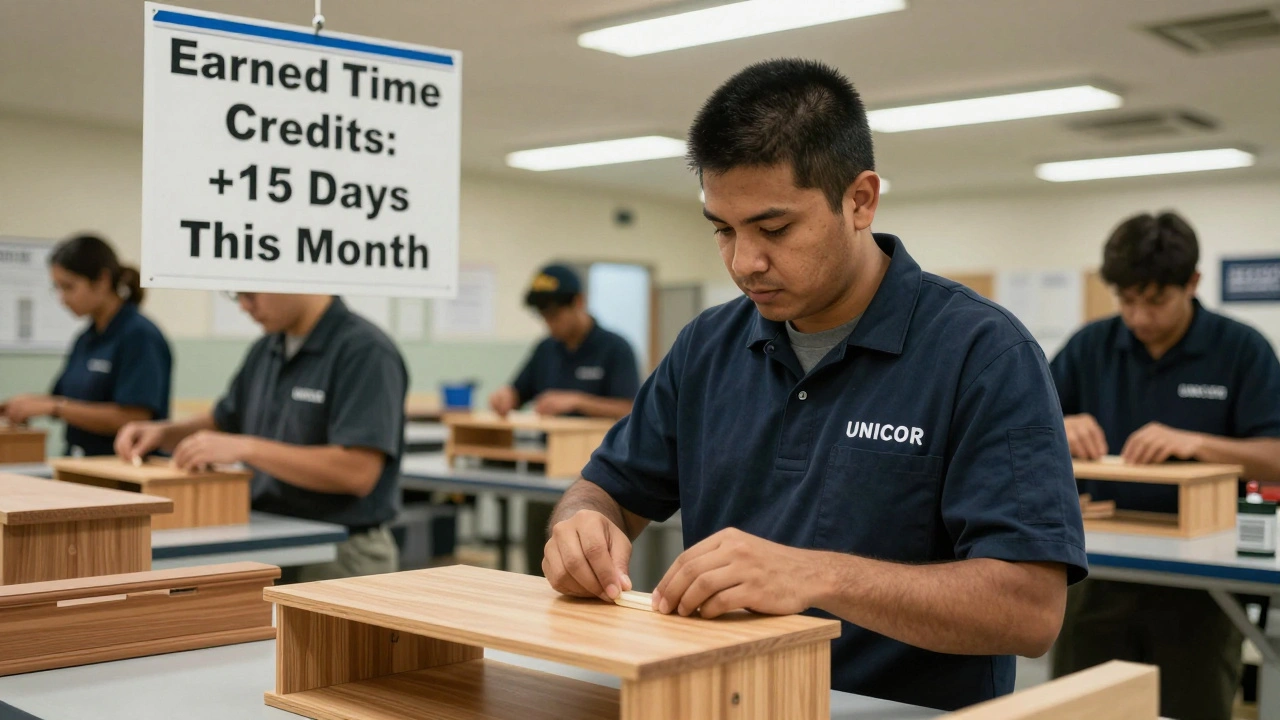
When someone is sentenced to federal prison, they’re not just serving time-they’re also working. Not for pay, not for perks, but for something far more valuable: earned time credits. These aren’t the same as the old-school good time credits. They’re part of a new system created by the First Step Act of 2018, and they’re changing how people serve their sentences. If you’re in a federal prison and you work, you might be able to cut months-or even years-off your time behind bars. But not all jobs count. And not everyone qualifies. Here’s how it really works.
What Are Earned Time Credits?
Earned Time Credits (ETCs) are days taken off your sentence for doing approved work or programs inside prison. Before 2018, inmates could earn up to 54 days off per year just by staying out of trouble. That’s it. No extra work needed. The First Step Act changed that. Now, you can earn up to 15 days off for every 30 days you participate in something the Bureau of Prisons (BOP) says counts. That’s 180 days a year. More than half a year off, just for staying busy and doing the right thing.There are two main paths to earn these credits:
- Productive Activities (PAs): These include jobs, vocational training, education, and substance abuse treatment.
- Evidence-Based Recidivism Reduction (EBRR) Programs: These are structured programs designed to lower your chance of reoffending-like job training, mental health counseling, or GED classes.
You earn 10 days per 30 days of participation in either. If you’re classified as low or minimum risk for reoffending and you stay that way for two straight assessments, you get an extra 5 days. That’s 15 days per month. That’s the max. And yes, that means you could reduce your sentence by 180 days a year-if you qualify and stay consistent.
How Work Credits Actually Work
Not every job in prison counts. The biggest confusion? UNICOR. That’s the federal prison industry program. It’s like a factory inside prison. Inmates make furniture, electronics, uniforms, and more. UNICOR jobs are explicitly approved for time credits. In fact, the BOP says you can earn up to 30 days of credit per month just for working in UNICOR-no limits.But what about other jobs? The ones where you clean the kitchen, work in the laundry, or help maintain the prison? The law says any productive activity should count. The statute says: “An eligible prisoner shall earn time credits for successful participation in a productive activity.” No exceptions. No exclusions.
But here’s the problem: the BOP’s rules say only UNICOR and approved programs count. All other work? Zero credits. That’s not what the law says. That’s what the Bureau decided. And it’s sparked lawsuits. Legal groups like the National Association of Criminal Defense Lawyers (NACDL) and Families Against Mandatory Minimums (FAMM) argue this is a betrayal of the law. If you’re working 40 hours a week in the prison kitchen, why shouldn’t that count? You’re still contributing. You’re still learning discipline. You’re still preparing for life after prison.
Some federal courts have already ruled against the BOP. In Oregon and New Jersey, judges ordered the BOP to give retroactive credits to inmates who worked between December 21, 2018 (when the law passed) and January 2020. The BOP eventually agreed. That means thousands of people got credit for work they did before the rules were clear. But it’s still messy. If you’re working outside UNICOR right now, you’re taking a gamble. Your job might count tomorrow-or it might not.
Who Gets to Earn Credits?
Not everyone qualifies. You have to be classified as eligible. That means:- You’re not serving a life sentence.
- You’re not convicted of certain violent crimes (like kidnapping, arson, or sexual abuse).
- You’re not in solitary confinement for disciplinary reasons.
- You’re not on a hold for another jurisdiction.
Even if you’re eligible, you have to stay consistent. If you refuse a work assignment, get in a fight, or skip a class, you lose your credits for that month. You don’t lose what you’ve already earned-but you stop earning more. The BOP allows short breaks. If your job is full, or if the program you’re in is canceled, you don’t get penalized. But if you stop showing up on purpose? That’s on you.
Here’s another thing: risk level matters. If you’re labeled high risk, you still get 10 days per month for participating. But you won’t get the extra 5 days. Only low- and minimum-risk inmates do. Risk levels are reassessed every six months. That means your credit rate can change. If you behave well, stay out of trouble, and complete programs, you can move down a level. And that means more credits.

How Much Is This Really Worth?
Let’s say you’re sentenced to 10 years. That’s 120 months. If you earn 15 days per month for three full years (36 months), that’s 540 days. That’s over 17 months off your sentence. You’re not just reducing your time-you’re moving toward supervised release earlier. That’s huge. Supervised release means you’re still monitored, but you’re out of prison. You can live with family. You can get a job. You can start rebuilding.Compare that to the old system. Before 2018, you’d get 54 days a year maximum. Ten years? That’s 540 days. Same number. But here’s the difference: under the old system, you didn’t have to do anything extra. You just had to not get in trouble. Under the new system, you have to work. You have to show up. You have to complete programs. You have to prove you’re changing. And that’s the point. The law isn’t just about reducing time. It’s about reducing recidivism.
What About Pay? Do You Get Paid?
Yes-but not much. Federal prison workers earn between $0.12 and $1.15 an hour. UNICOR workers might earn up to $1.25. That’s not enough to live on. But the BOP has a separate system called the Performance Recognition and Award System (PRAS). If you do good work, you earn points. Those points turn into cash rewards-between $8 and $82 per month. So you’re not just earning time off your sentence. You’re also earning a little money. That’s rare. Most states don’t pay prisoners at all. Federal prisons do. And that matters.There’s a catch: if you’re placed in disciplinary segregation, you lose your PRAS eligibility for 30 days. If you’re fired from your job, you might get a 120-day unpaid evaluation period before you can work again. It’s strict. But it’s also fair. You earn it.
Why This System Matters
This isn’t just about math. It’s about behavior. Research shows that people who work in prison are far less likely to go back to crime after release. Why? Because work teaches structure. It builds discipline. It gives you skills. It gives you pride. And when you know you can earn time off by working, you show up. You try harder. You don’t want to lose what you’ve earned.States have been using earned time credits since the 1980s. Thirty-seven states had them by 1989. But the federal system was stuck in the past. The First Step Act changed that. It’s not perfect. The BOP’s rules are too narrow. The way they define “productive activity” leaves too many workers out. But it’s a step forward. And for people who are serious about changing their lives, it’s a lifeline.
What You Need to Do
If you’re in federal prison and you want to earn time credits:- Ask your case manager which programs and activities are approved for ETCs at your facility.
- Enroll in any EBRR program you’re eligible for-education, job training, substance abuse treatment.
- Take any work assignment seriously-even if it’s not UNICOR. Document your hours.
- Stay out of trouble. One disciplinary write-up can stop your credits for months.
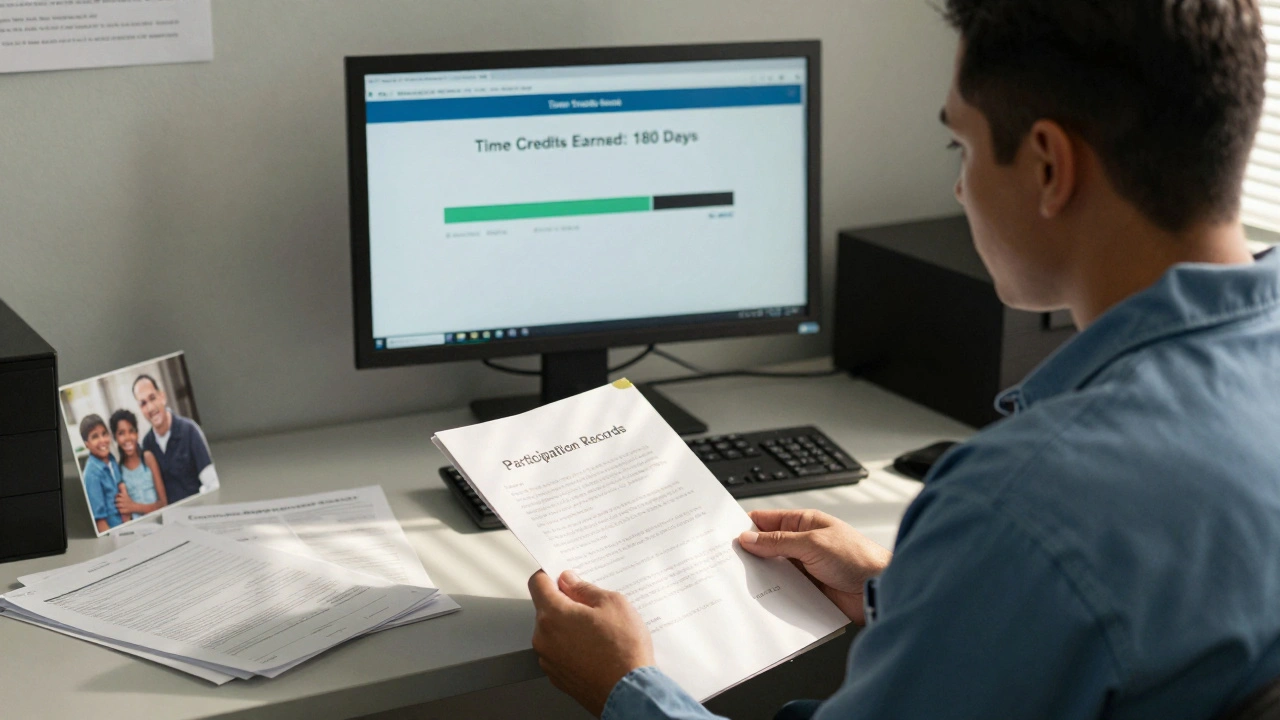
- Track your progress. Keep copies of your participation records.
- If you’re denied credits unfairly, talk to a legal advocate. The courts have sided with inmates before.
You can’t control your sentence. But you can control how you serve it. And right now, the system is giving you a real chance to get out sooner-if you’re willing to work for it.
Do all prison jobs count toward earned time credits?
No. Only jobs classified as Productive Activities (PAs) by the Bureau of Prisons qualify. UNICOR jobs are explicitly approved. Other jobs, like kitchen or laundry work, are not officially recognized for credits under current BOP rules-though this is legally disputed. Courts have ruled that the First Step Act requires credits for all eligible work, but the BOP has not fully complied.
Can I earn credits retroactively for work I did before 2020?
Yes. After court rulings in Oregon and New Jersey, the Bureau of Prisons agreed to award retroactive earned time credits for qualifying participation between December 21, 2018 (when the First Step Act passed) and January 15, 2020. If you worked or completed programs during that time, you may be eligible for back credits.
How do I know if I’m eligible for the extra 5 days per month?
You must be classified as low or minimum risk for recidivism and maintain that level for two consecutive risk assessments. Risk levels are updated every six months based on behavior, program participation, and institutional history. If you stay out of trouble and complete programs, you can improve your risk level and unlock the extra 5 days.
What happens if I get in trouble or get placed in segregation?
If you’re placed in disciplinary segregation for more than 14 days, you lose credit accrual for that month. You don’t lose credits you’ve already earned, but you stop earning more until you’re back in general population. A single disciplinary violation can delay your progress for months.
Can I earn credits for education or GED classes?
Yes. Education programs, including GED, vocational training, and college courses, are classified as Evidence-Based Recidivism Reduction (EBRR) programs and qualify for earned time credits. Completing these programs is one of the most reliable ways to earn credits.
Do I get paid for work that earns me time credits?
Yes. Federal prison workers earn between $0.12 and $1.25 per hour. In addition, the Performance Recognition and Award System (PRAS) gives cash rewards of $8 to $82 per month for high-performing workers. Time credits and pay are separate-you can earn both at the same time.
Can I be denied credits even if I’m doing everything right?
Yes. The Bureau of Prisons has discretion in how it applies the rules. If your facility doesn’t offer the program you’re eligible for, or if they claim it’s not approved, you may be denied. But courts have ruled that the BOP cannot refuse credits simply because a program isn’t available. If you’re denied unfairly, you have legal recourse.
How long does it take to see credits applied to my sentence?
Credits are calculated monthly and applied to your sentence record. However, it can take 60 to 90 days for the system to update after you complete a program or work assignment. Keep records of your participation and follow up with your case manager if you don’t see credits after two months.
Next Steps
If you’re incarcerated and want to maximize your time credits:- Know your risk level. Ask your case manager for your latest assessment.
- Sign up for any approved EBRR program-even if it’s not your first choice.
- Take every work assignment seriously. Document your hours.
- Stay out of conflict. One rule violation can erase months of progress.
- Keep copies of everything: assignment sheets, program completions, pay stubs.
- If you’re denied credits you believe you earned, contact a legal advocate or prison law clinic.
Time is the one thing you can’t get back. But if you’re smart, consistent, and willing to work, you can get more of it back than you ever thought possible.