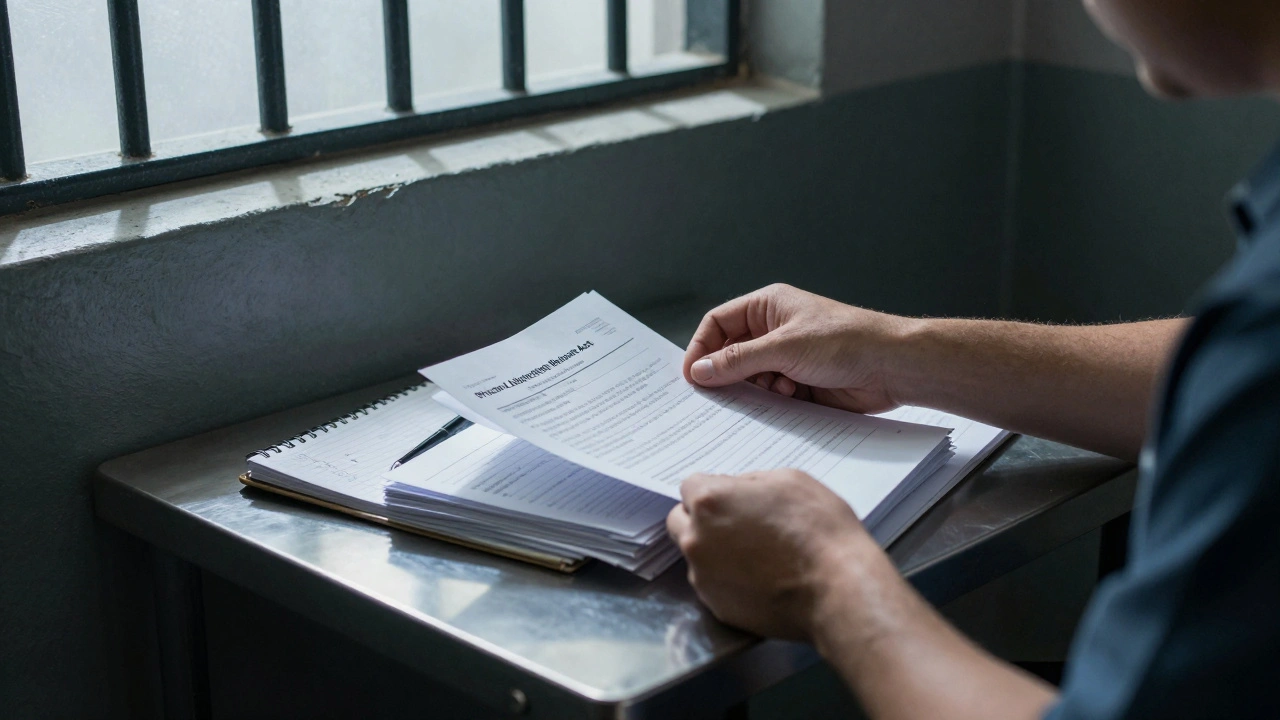
Getting a denial on your first prison grievance is not the end of the road. In fact, for most incarcerated people in the United States, it is just the beginning. If you want to preserve your right to sue in federal court later, you must push your complaint all the way up the chain of command until it reaches the central office of your correctional system. This final step is legally mandatory under the Prison Litigation Reform Act (PLRA), a federal law that bars lawsuits unless you have fully exhausted every internal remedy available to you.
Missing this step doesn't just mean your complaint gets ignored inside the walls; it means a judge will dismiss your case before you even present your evidence. The process is strict, unforgiving, and filled with short deadlines. But if you follow the rules precisely, you can force the highest levels of the Department of Corrections or Bureau of Prisons to review your claim. Here is how to navigate the escalation process without getting tripped up by technicalities.
Why Exhaustion Is Non-Negotiable
You might feel like fighting through multiple layers of bureaucracy is pointless, especially if lower-level officials have already denied your request. However, the courts do not care about how unfair the system feels-they care about whether you followed the procedure. The Supreme Court has ruled in cases like Booth v. Churner and Woodford v. Ngo that you must comply with every deadline and form requirement, even if the relief you seek (like money damages) isn't available through the grievance system.
The only exception comes from Ross v. Blake, which states you don't need to exhaust remedies that are "unavailable." This applies if staff actively thwart your attempts to file, if the process is so opaque no one could understand it, or if it operates as a dead end. But proving this is difficult. The safest route is always to complete the full process, including the appeal to the central office, and document any interference along the way.
Federal Bureau of Prisons: The Four-Step Path
If you are in a federal facility, the Bureau of Prisons (BOP) Administrative Remedy Program has four distinct stages. You cannot skip steps unless you have a specific exemption for sensitive issues, such as allegations of sexual abuse or immediate threats to safety.
- Informal Resolution (BP-8): You start here, but be careful. Staff have no deadline to respond to informal complaints. Do not wait for a response before filing your formal grievance. The clock for the next step starts ticking regardless.
- Formal Complaint to Warden (BP-9): You must file this within 20 calendar days of the incident. The warden has 20 days to respond, plus a possible 20-day extension. If they don't respond, treat it as a denial and move on.
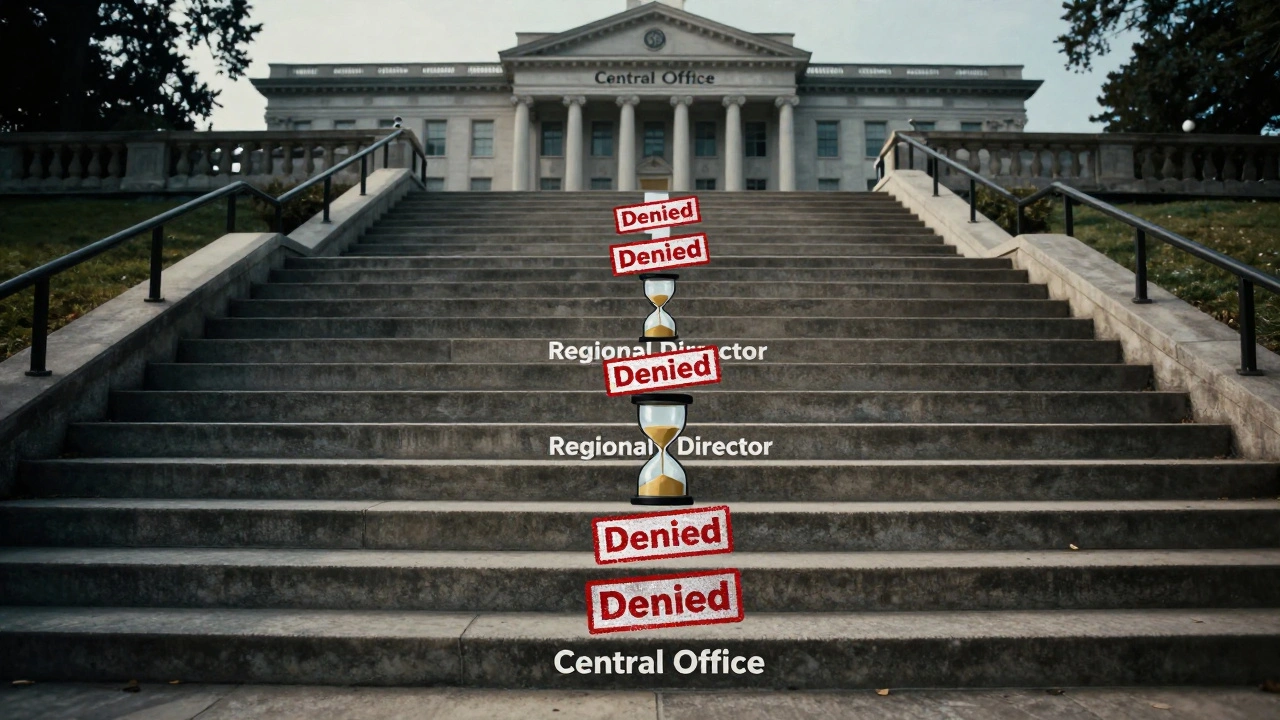
- Appeal to Regional Director (BP-10): File this within 20 calendar days of the warden's decision (or the date the decision was due). Attach copies of your BP-9 and the warden's response. The regional office has 30 days to reply, plus a 30-day extension.
- Appeal to Central Office (BP-11): This is the final step. You must file the BP-11 within 30 calendar days of the regional director's decision. Send it to the National Inmate Appeals Administrator in Washington, D.C. They have 40 days to respond, extendable by 20 days.
Once the Central Office denies your appeal or fails to respond within the extended timeframe, you have officially exhausted your administrative remedies. You can then proceed to file a lawsuit under 42 U.S.C. § 1983.
| Level | Form | Filing Deadline | Agency Response Time |
|---|---|---|---|
| Level I (Warden) | BP-9 | 20 days from incident | 20 days (+20 day extension) |
| Level II (Regional) | BP-10 | 20 days from Level I decision | 30 days (+30 day extension) |
| Level III (Central) | BP-11 | 30 days from Level II decision | 40 days (+20 day extension) |
State Systems: Know Your Specific Rules
State prisons operate under their own sets of rules, but the structure is similar: facility level, intermediate/superintendent level, and finally a central headquarters office. Missing a state-specific deadline can be just as fatal as missing a federal one.
- New York DOCCS: After the superintendent’s decision, you have 7 calendar days to appeal to the Central Office Review Committee (CORC) in Albany. Failure to reach CORC means non-exhaustion.
- Pennsylvania DOC: The final appeal goes to the Secretary’s Office of Inmate Grievances and Appeals (SOIGA) in Harrisburg. You typically have 15 working days to file this after the previous decision.
- Texas TDCJ: The Step 2 grievance goes to the Central Grievance Office in Huntsville. You must file within 15 days of the Step 1 response.
- California CDCR: Appeals culminate at the Office of Appeals in Sacramento. Deadlines vary by category (often 30 or 60 days), so check the current Title 15 regulations carefully.
Always verify the exact policy number for your state (e.g., DC-ADM 804 for Pennsylvania) because these directives change. Ask the law library for the most recent version, or request it via mail from an outside advocate.
Critical Strategies for Success
The grievance system is designed to be complex. To survive it, you need to be meticulous. Here are practical tips that legal aid organizations and experienced advocates recommend.
Track Every Deadline
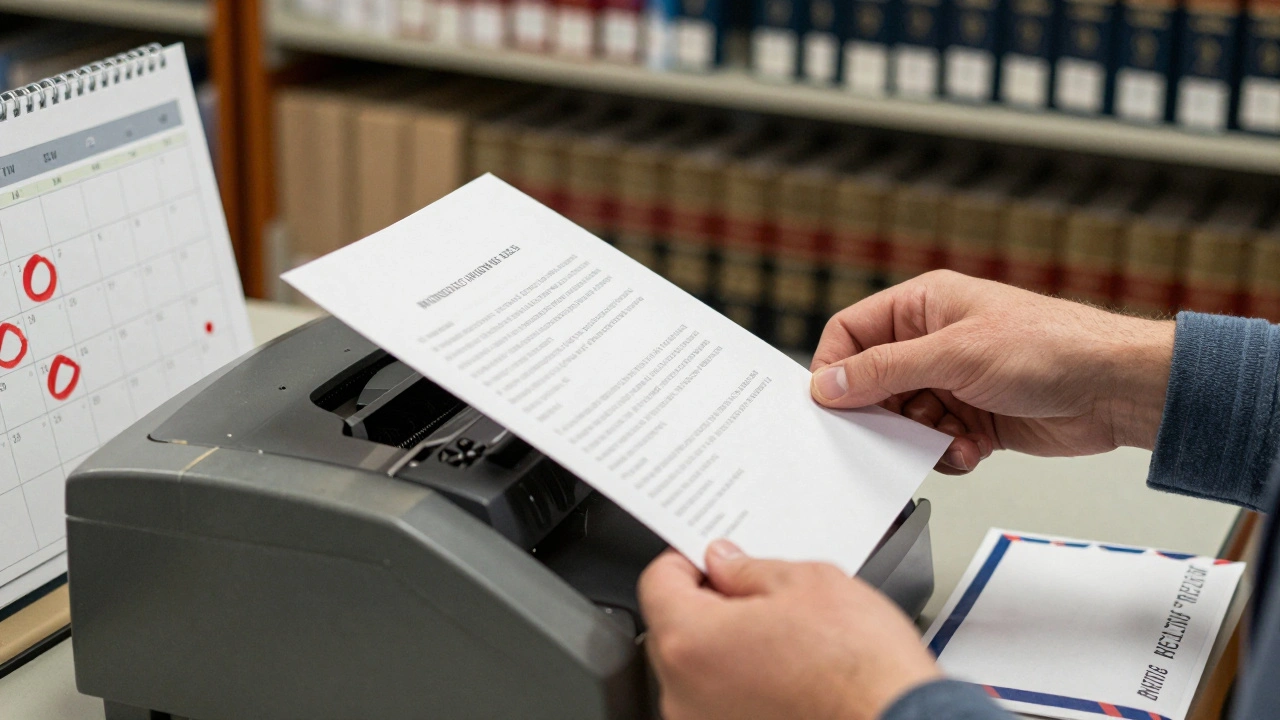
Keep a dedicated notebook where you write down the date of the incident, the date you filed each form, and the date you received each response. Calculate your next filing deadline immediately. Remember that "calendar days" include weekends and holidays. If a deadline falls on a weekend, some systems require you to file by Friday, while others allow Monday. Check your local policy.
Create a Paper Trail
Never hand over your only copy of a grievance. Make at least two or three copies. If you don't have access to a photocopier, write out the key details in your notebook: what you submitted, to whom, and when. When you send forms to higher offices, use certified mail if possible, or get a witness signature from a staff member who accepts the document. If staff refuse to accept your form, document this refusal in writing. This evidence can help prove that the remedy was "unavailable" under Ross v. Blake.
Be Factual and Concise
Don't write emotional essays. Stick to the facts: dates, times, names of staff involved, witnesses, and exactly what policy was violated. Use clear language. For example, instead of saying "The guard was mean," say "Officer Smith refused to provide medical supplies on [Date] despite my request, violating Policy X." This makes it harder for reviewers to dismiss your claim as vague.
Anticipate Boilerplate Denials
Central offices often issue generic responses like "Your allegations were investigated and not substantiated." If you receive this, don't assume the process is over. If you still have steps left, continue appealing. If this is the final step, keep this denial. It is proof that you tried to resolve the issue internally, which satisfies the PLRA requirement.
External Options and Oversight
While exhausting internal grievances is required for court access, you can also escalate serious issues to external bodies simultaneously. These do not replace the grievance process but can add pressure or provide independent investigation.
- Department of Justice OIG: For federal prisons, you can file complaints about staff misconduct with the DOJ Office of the Inspector General.
- State Inspectors General: Many states have IGs who oversee corrections agencies. They may investigate systemic issues or corruption.
- Ombudsmen: In England and Wales, the Prisons and Probation Ombudsman (PPO) handles escalated complaints. In the U.S., some states like Washington have Corrections Ombuds offices. Note that PPO data shows many complaints are rejected because internal processes weren't completed first-so don't skip the internal steps.
Common Pitfalls to Avoid
Mistakes in the grievance process are common and costly. Avoid these errors:
- Waiting for Informal Responses: As mentioned, informal complaints (BP-8) have no deadline. Don't wait for them to file your formal BP-9. File both at the same time.
- Using Wrong Forms: Using an outdated form or the wrong type of form can lead to rejection. Always ask for the current form number.
- Missing Word Limits: Some forms have strict character or word limits. If you exceed them, your grievance may be returned or rejected. Be concise.
- Ignoring Extensions: Agencies can extend their response times. If they do, your filing deadline for the next step usually pauses until the extension ends. Track this carefully.
Escalating a grievance to the central office is a marathon, not a sprint. It requires patience, precision, and persistence. By following the steps outlined above, you protect your legal rights and ensure that your voice is heard at the highest levels of the correctional system.
What happens if I miss a grievance deadline?
If you miss a deadline, your grievance may be considered procedurally defective. Under Supreme Court precedent like Woodford v. Ngo, failing to meet strict time limits means you have not properly exhausted your administrative remedies. This can lead to dismissal of any subsequent federal lawsuit. However, if you can prove that staff prevented you from meeting the deadline (e.g., by withholding forms), you might argue the remedy was "unavailable" under Ross v. Blake, but this is a high bar to clear.
Can I skip the informal resolution step?
In the Federal Bureau of Prisons, you can bypass informal resolution (BP-8) only in sensitive cases, such as allegations of sexual abuse or where informal resolution would pose a risk of retaliation. For most other issues, you must attempt informal resolution first. However, since there is no deadline for informal responses, you should file your formal grievance (BP-9) simultaneously to avoid missing the 20-day deadline.
Who is the central office for federal prisons?
For the Federal Bureau of Prisons (BOP), the central office is the Office of General Counsel’s National Inmate Appeals section located in Washington, D.C. Specifically, you send your final appeal (BP-11) to the National Inmate Appeals Administrator at 320 First Street NW, Washington, D.C. 20534.
Does filing a grievance protect me from retaliation?
Legally, retaliation for filing a grievance is prohibited and can be part of a civil rights lawsuit. However, in practice, many prisoners report facing subtle or overt retaliation, such as disciplinary charges or loss of privileges. Document any retaliatory actions meticulously, including dates, witnesses, and specific incidents, as this evidence can support claims of unavailability or constitutional violations.
What if the central office doesn't respond?
If the central office fails to respond within the statutory timeframe (including any allowed extensions), this silence is typically treated as a denial. For PLRA purposes, this counts as exhaustion of administrative remedies. You should note the date the response was due and proceed with your legal options, keeping records of your submission and the lack of response.