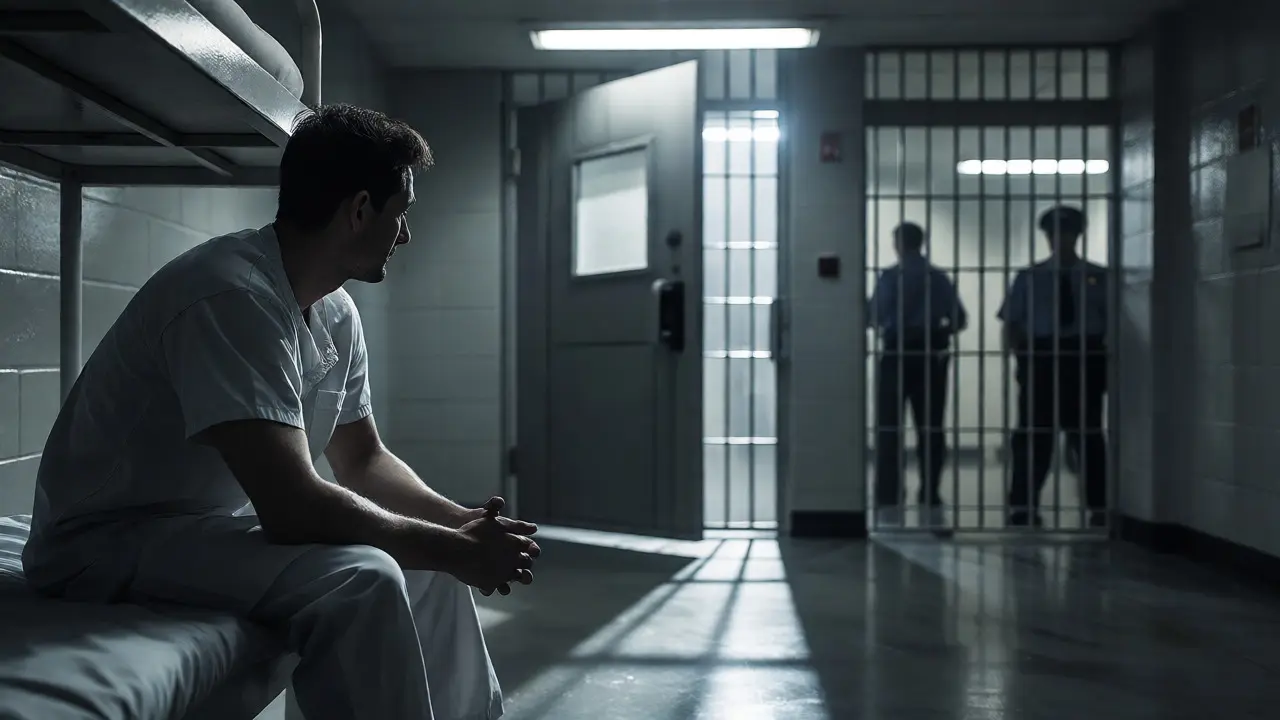
You’re sitting in a cell block, and suddenly you’re told you’re going before the disciplinary committee. Maybe it’s for a fight, maybe for contraband, or maybe just because an officer had a bad day. In that moment, your freedom inside those walls hangs in the balance. But do you know what legal protections actually exist when a prison decides to punish you? Most people assume prisons are lawless zones where guards can do whatever they want. That’s not entirely true. While prisoners don’t have all the rights of free citizens, they do have specific legal standards for due process that protect them from arbitrary punishment.
The Constitutional Baseline: What You Actually Have
Let’s cut through the noise. The U.S. Constitution doesn’t give inmates the full suite of criminal trial rights. You won’t get a jury of your peers, and you likely won’t have a public defender assigned to your case. However, the Fourteenth Amendment’s Due Process Clause still applies. This means the state cannot deprive you of liberty without fair procedures. But what does "fair" look like behind bars?
The landmark case that defined this landscape is Wolff v. McDonnell, a 1974 Supreme Court decision establishing minimum procedural requirements for prison disciplinary hearings. Before this ruling, prison discipline was often a black box. Officers wrote reports, committees rubber-stamped them, and inmates lost good-time credits with little recourse. The Supreme Court stepped in and said, "Not so fast." They balanced two competing interests: the need for institutional safety and order against the inmate’s right to be treated fairly.
| Right/Protection | Criminal Trial | Prison Disciplinary Hearing |
|---|---|---|
| Jury Trial | Yes (6th Amendment) | No |
| Right to Counsel | Yes (Assigned if indigent) | Generally No (unless complex/state law allows) |
| Standard of Proof | Beyond a Reasonable Doubt | Some Evidence / Preponderance |
| Written Statement | Verdict only | Required summary of evidence relied on |
| Cross-Examination | Full right | Limited; discretionary by hearing officer |
The Five Pillars of Procedural Fairness
The Supreme Court didn’t just wave its hand. It laid out specific steps that must happen before you lose privileges or good-time credits. If any of these are missing, the disciplinary action might be legally vulnerable. Here is what the Due Process Clause requires in the context of correctional facility proceedings:
- Advance Written Notice: You must be told what you are accused of and when the hearing will take place. A vague note saying "misconduct" isn’t enough. You need specifics so you can prepare a defense.
- Impartial Decision-Maker: The person judging your case shouldn’t be the same officer who wrote the incident report. Bias disqualifies a hearing officer. If the guard who hates you is also the judge, that’s a problem.
- Hearing Opportunity: You generally have the right to appear before the committee. There are exceptions for safety reasons, but you can’t just be judged in absentia without cause.
- Right to Present Evidence: You can call witnesses and present documents. However, this right isn’t absolute. If calling a witness threatens security, the officer can deny it-but they must explain why.
- Written Record: After the decision, you are entitled to a written statement detailing the evidence relied upon and the reasons for the disciplinary action.

When Do These Rights Kick In?
Here is the tricky part: not every punishment triggers due process protections. The courts distinguish between minor inconveniences and serious deprivations of liberty. Losing TV privileges for a week? Probably not a constitutional issue. Losing 30 days of good-time credit? Absolutely a constitutional issue.
The key metric is usually the impact on your release date. If the disciplinary sanction affects your eligibility for parole or reduces your sentence length via good-time credits, the stakes are high enough to demand strict procedural adherence. Solitary confinement cases are more complex. Recent litigation has pushed courts to recognize that long-term solitary confinement may implicate due process rights even if it doesn’t technically extend your sentence, because it inflicts severe psychological harm.
The Role of State Laws and Internal Policies
Federal constitutional standards are the floor, not the ceiling. Many states have passed laws that grant inmates more rights than the federal minimum. For example, some jurisdictions require a lawyer for certain serious infractions, or they mandate stricter timelines for hearings. Always check your specific department of corrections’ administrative code.
In Oregon, for instance, the Department of Corrections has detailed grievance procedures that interact with disciplinary outcomes. If you miss a deadline in their internal policy, you might waive your right to challenge the outcome later in court, even if the constitutional basics were met. This is where many inmates stumble-they focus on the constitutional argument but ignore the procedural traps set by state regulations.
Common Pitfalls and How to Avoid Them
Most challenges to prison discipline fail not because the inmate is guilty, but because they didn’t preserve the error. You can’t wait until you’re transferred to another prison to complain about a hearing three years ago. You must file a grievance immediately.
One major pitfall is failing to request witnesses at the time of the hearing. If you want Officer Smith to testify that he saw you elsewhere, you must ask for him during the hearing. If you don’t, and the committee denies your request, you must make sure the denial is noted in the record. Later, in court, you can argue that the refusal to hear relevant testimony violated your due process rights. But if you never asked, the court won’t care.
Another common mistake is confusing "innocence" with "procedural violation." Courts rarely overturn disciplinary decisions based solely on whether they think you did it. They look at whether the procedure was fair. Even if you committed the act, if the hearing officer was biased or failed to provide notice, the punishment could still be invalid.
Challenging the Outcome: Administrative vs. Judicial Review
If you believe your rights were violated, you have two main paths. First, use the internal grievance system. This is mandatory in most places. You write up what went wrong-"I wasn’t given notice," or "The officer was biased"-and submit it. Keep copies. Get receipts.
If the grievance is denied, you might consider filing a lawsuit under 42 U.S.C. § 1983. This federal statute allows individuals to sue state actors (like prison officials) for violating constitutional rights. However, suing is expensive and slow. And remember, you usually have to exhaust administrative remedies first. If you skip the grievance step, the judge will throw your case out before looking at the merits.
Do I have the right to an attorney in a prison disciplinary hearing?
Generally, no. The Supreme Court ruled in Wolff v. McDonnell that the right to counsel is not required for prison disciplinary hearings unless the case involves particularly complex issues or the inmate faces significant loss of liberty. Some state laws or specific prison policies may allow for representation, but federally, it is not a guaranteed right.
What standard of proof is used in prison disciplinary cases?
The standard is typically "some evidence" or a preponderance of the evidence. This is much lower than the "beyond a reasonable doubt" standard used in criminal trials. As long as there is some factual basis in the record to support the finding of guilt, courts will usually uphold the disciplinary decision.
Can I appeal a prison disciplinary decision directly to a court?
Usually, no. Most jurisdictions require you to exhaust all internal administrative remedies (grievances) before filing a lawsuit. Failing to follow the prison’s internal appeal process can result in your federal lawsuit being dismissed for failure to exhaust remedies.
Does solitary confinement count as a deprivation of liberty requiring due process?
It depends on the duration and severity. Short-term segregation often does not trigger full due process rights. However, prolonged solitary confinement, especially if it causes significant psychological harm or extends beyond typical limits, may implicate due process protections. Recent legal trends are increasingly recognizing the severity of long-term isolation.
What happens if the prison fails to provide a written statement of reasons?
Failure to provide a written statement of the evidence relied on and the reasons for the disciplinary action violates the due process requirements established in Wolff v. McDonnell. This omission provides strong grounds for challenging the validity of the disciplinary sanction in an administrative grievance or subsequent lawsuit.