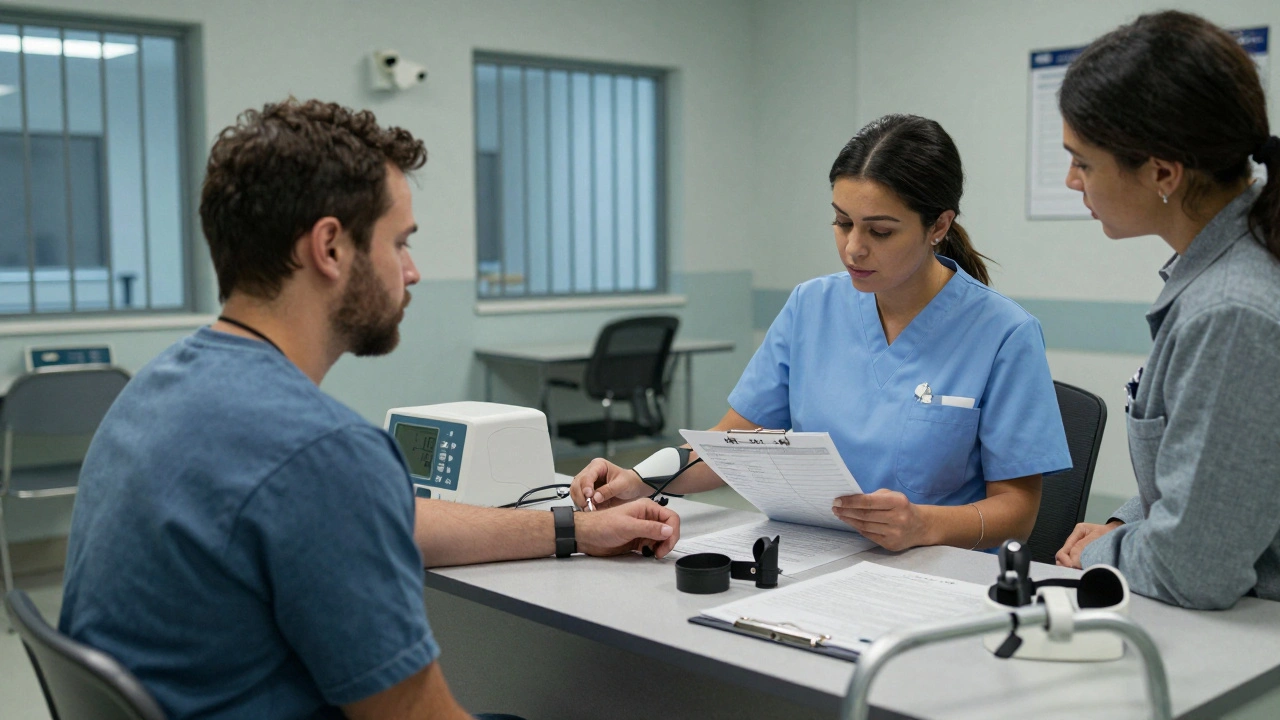
When someone is booked into a jail or prison, their health doesn’t disappear with their freedom. In fact, the moment they walk through the gates, a complex medical system kicks into gear-one designed to handle everything from a minor cold to a heart attack, all while balancing security, staffing limits, and legal obligations. This isn’t just about treating illness. It’s about meeting constitutional standards, preventing outbreaks, and giving people a chance to survive incarceration with their health intact.
Intake Screening: The First Medical Lifeline
Every new inmate, no matter the charge or sentence length, goes through a mandatory health screening within hours of arrival. This isn’t a formality. It’s a critical checkpoint. In Connecticut, for example, all first-time inmates must be screened by qualified mental health staff within 24 hours using Form HR 504. Nurses and LPNs are trained specifically for this task-covering everything from HIV risk factors to suicide indicators.The screening isn’t just a quick questionnaire. It’s a full assessment: vital signs checked, medications brought in logged, assistive devices like hearing aids or walkers noted, and past medical history dug up. Staff look for red flags: chronic cough, night sweats, unexplained weight loss, fever. These aren’t just symptoms-they’re signs of tuberculosis, HIV, or other contagious diseases that can spread fast in close quarters.
If an inmate shows signs of a serious condition-chest pain, difficulty breathing, seizures-they’re not queued for a later appointment. They’re sent straight to the emergency room. No waiting. No paperwork delays. The system prioritizes life over procedure. For those diagnosed with HIV after admission, a full physical exam (Form HR 002) must be completed within 96 hours. That’s not a suggestion. It’s policy.
Screening also includes vaccination. The CDC recommends starting the hepatitis A series for eligible inmates at intake. Hepatitis B and tetanus shots are standard. Flu shots are offered during seasonal outbreaks. These aren’t luxuries-they’re public health necessities. A single unvaccinated inmate can spark an outbreak that spreads to staff, other inmates, and even the community when they’re released.
Sick Call: Accessing Care One Request at a Time
Once the initial screening is done, inmates rely on sick call to get ongoing care. This is where most routine medical issues are handled: sinus infections, skin rashes, high blood pressure, diabetes checks, or even mental health check-ins.In Pennsylvania, every inmate who submits a sick call request is seen. No exceptions. Request forms are placed in designated bins and collected once a day. Inmates are given written and verbal instructions in both English and Spanish on how to use the system. No one should be left wondering how to ask for help.
For those in restrictive housing-solitary confinement or high-security units-the rules are even tighter. A health care provider must make daily rounds, even on holidays. In Pennsylvania, this is documented in the DC-701 log. A physician must personally visit these units at least once a week, signing off in the DC-702. This isn’t just about compliance. It’s because isolation can worsen physical and mental health. Regular check-ins catch problems before they become emergencies.
Medication management is tightly controlled. All pills are given under direct observation. Staff watch inmates swallow each dose. No hiding pills. No stockpiling. Mouth checks are standard. If an inmate doesn’t get their medication, they’re told to submit a written complaint. That complaint triggers an investigation. For chronic conditions like HIV, diabetes, epilepsy, or bipolar disorder, medications are tracked with extra care. These aren’t just prescriptions-they’re lifelines.
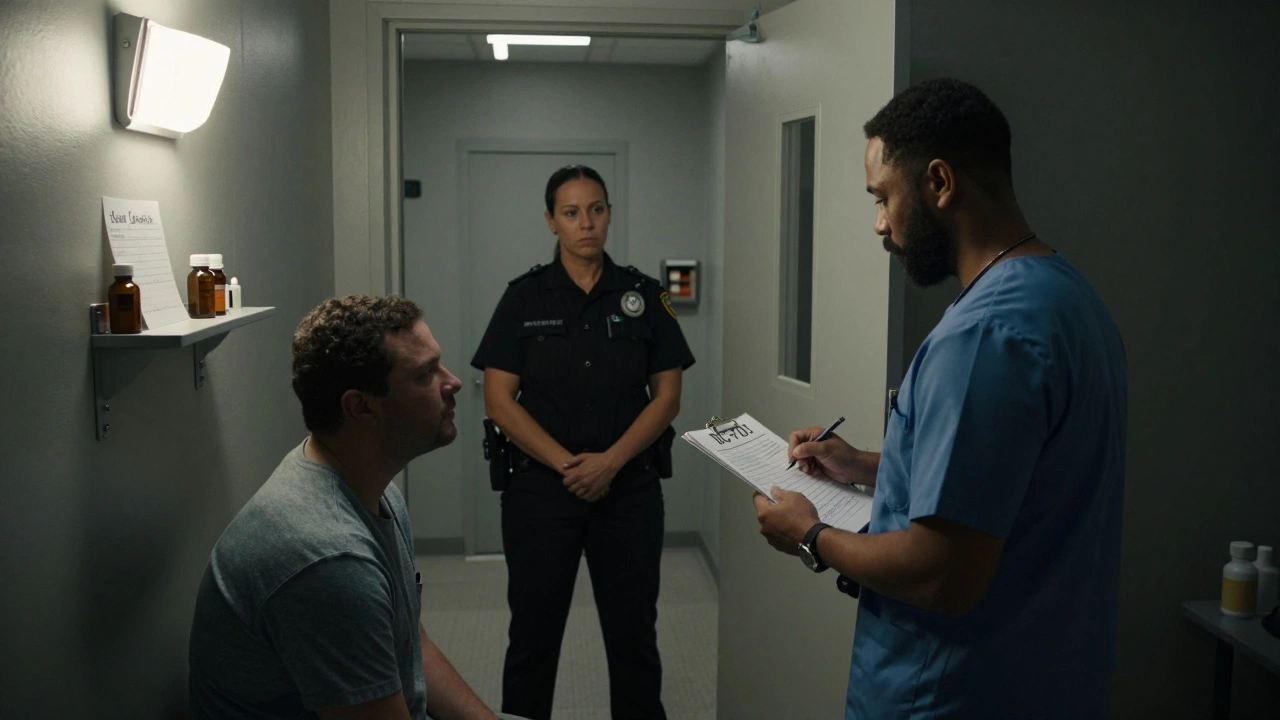
Emergency Protocols: No Delay, No Excuse
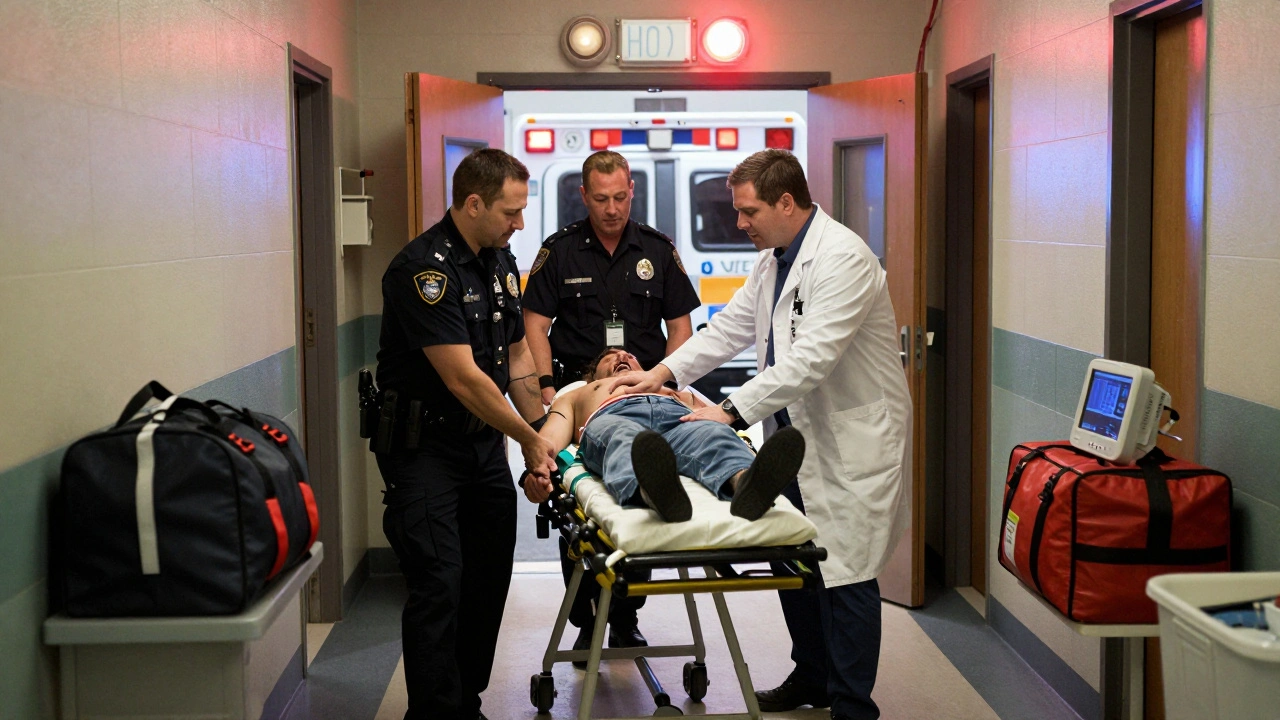
Correctional facilities don’t have ERs, but they must provide emergency care 24/7, 365 days a year. That means every jail and prison must have a plan for heart attacks, strokes, overdoses, and severe trauma.If an inmate collapses, the response is immediate. Corrections officers are trained to call medical staff right away. Medical staff respond within minutes. If the condition is life-threatening, the inmate is transported to a hospital-no waiting for paperwork, no delay for security checks. The facility coordinates with the hospital to share medical history, current meds, and behavioral notes. Emergency rooms need to know this isn’t just another patient. This is someone with a complex medical background, possibly untreated for years, and possibly in crisis.
The American College of Emergency Physicians stresses that ER staff must treat incarcerated patients with the same urgency as anyone else. No assumptions. No delays. No judgment. A diabetic in ketoacidosis doesn’t care if they’re in handcuffs. They need insulin. Now.
Privacy matters too. Female inmates must be escorted by a female officer when seeing a male provider. Exams happen in private rooms, not open areas. Records are kept confidential. These aren’t just comfort issues-they’re legal requirements under the Eighth Amendment, which prohibits cruel and unusual punishment.
Special Cases: Chronic Illness and Mental Health
A growing number of incarcerated people live with chronic conditions. Diabetes. Hepatitis C. Heart disease. Asthma. Many didn’t have consistent care before prison. Now, the system has to pick up the slack.Connecticut uses a classification system to identify who needs the most support. M3 classification means an inmate needs nursing care 16 hours a day, seven days a week. Some need 24-hour nursing. This isn’t just for the elderly. It’s for someone on dialysis, with advanced HIV, or recovering from a major surgery. These inmates get scheduled visits, medication reminders, and close monitoring.
Mental health is just as critical. Nearly half of all incarcerated people have a diagnosable mental illness. Depression. Anxiety. Schizophrenia. PTSD. The intake screening flags these early. Those who need it get referred to psychologists or social workers. Medications for psychosis or bipolar disorder are tracked daily. In restrictive housing, mental health staff check in even more often.
And here’s the hard truth: without proper treatment, mental health crises can turn deadly. Suicide is the leading cause of death in jails. That’s why screening, monitoring, and access to care aren’t optional. They’re survival tools.
Medication Rules and Formularies
Not every drug is allowed. Correctional facilities use formularies-approved lists of medications-to control costs and prevent misuse. The Bureau of Prisons has one. So do state systems. These aren’t arbitrary. They’re based on clinical guidelines, cost-effectiveness, and safety.Some medications are restricted. Sleep aids? Rarely approved. Instead, staff work with inmates on sleep hygiene: quiet hours, no caffeine, light control. Anti-seizure drugs? Allowed, but watched closely. Insulin? Always available. HIV meds? Non-negotiable. Barbiturates? Only if absolutely necessary and under strict supervision.
Each dose is documented. Who gave it. Who took it. When. If a dose is missed, someone has to explain why. This isn’t bureaucracy. It’s accountability. It’s how you prevent overdose, diversion, and neglect.
What Happens When Care Isn’t Enough?
Not every facility can handle every condition. A stroke. A cancer diagnosis. A complex surgery. When care exceeds what’s available on-site, the inmate is transferred. That could mean a hospital, a specialty clinic, or even a different facility.These transfers aren’t easy. Security protocols slow them down. Paperwork piles up. But the law requires it. If an inmate needs care the facility can’t provide, they must get it. Otherwise, the facility risks lawsuits, federal investigations, or worse-someone dying because no one acted.
And when they’re released? The system should connect them to community care. A diabetic needs insulin. A person with HIV needs ongoing treatment. Without that link, they’re more likely to end up back in jail. That’s why discharge planning is part of the protocol. It’s not just about health. It’s about breaking the cycle.
Is medical care in prisons really guaranteed by law?
Yes. The Eighth Amendment to the U.S. Constitution prohibits cruel and unusual punishment, and courts have ruled that denying necessary medical care to incarcerated people violates this right. The Supreme Court case Estelle v. Gamble (1976) established that deliberate indifference to serious medical needs is unconstitutional. This means prisons must provide timely, adequate care-not just basic first aid, but treatment for chronic conditions, mental illness, and emergencies.
Can inmates refuse medical treatment?
In most cases, yes. Inmates have the right to refuse treatment, just like anyone else. But there are exceptions. If someone is deemed mentally incompetent to make decisions, or if their refusal poses a direct threat to others (like refusing TB treatment), staff can seek court orders to proceed. Mental health evaluations are often used to determine capacity. Refusal must be documented, and staff must still monitor for worsening conditions.
Why are medications given under direct observation?
To prevent diversion-when inmates save pills to trade, sell, or hoard. Medications like benzodiazepines or opioids can be extremely valuable behind bars. Direct observation ensures the inmate takes the full dose, reduces overdose risk, and prevents drug-related violence. It also ensures people with chronic conditions like epilepsy or HIV get consistent treatment, which is critical for their survival.
Do correctional facilities have enough staff to provide care?
Often, no. Many facilities are understaffed, especially with nurses and mental health professionals. Some rely on contract providers who rotate in and out. This leads to delays in care, missed appointments, and burnout among staff. While standards exist (like those from NCCHC), funding and staffing shortages make compliance inconsistent. That’s why intake screening and sick call systems are designed to be efficient-they’re the best tools available to stretch limited resources.
What happens if an inmate dies from lack of medical care?
If an inmate dies due to deliberate indifference to their medical needs, the facility and staff can face civil lawsuits, federal investigations, or even criminal charges. The Department of Justice has investigated multiple state prison systems for systemic failures in medical care. In some cases, facilities have been placed under court supervision until they fix their systems. Deaths from treatable conditions like diabetes complications, untreated infections, or mental health crises are preventable-and they’re increasingly being held accountable.