You walk into a store or browse an online catalog and see furniture, license plates, or uniforms made by inmates. You might assume all prison jobs are the same, but the difference between a job in a federal facility and one in a state system is massive. It’s not just about who runs it; it’s about what they make, how much people earn, and why the rules exist. If you’re trying to understand where your tax dollars go, or if you’re looking for work after release, knowing the gap between UNICOR and state-level operations changes everything.
The core confusion usually stems from a single legal fact: the Ashurst-Sumners Act of 1935. Before this law, prison goods flooded the open market, undercutting free workers. Congress stepped in, banning interstate shipment of most prison-made goods. This created a split. The federal government kept its own industrial complex, while states had to navigate their own laws, many of which still restrict sales even within state lines. Today, we have two distinct ecosystems operating under different pressures.
The Federal Giant: How UNICOR Operates
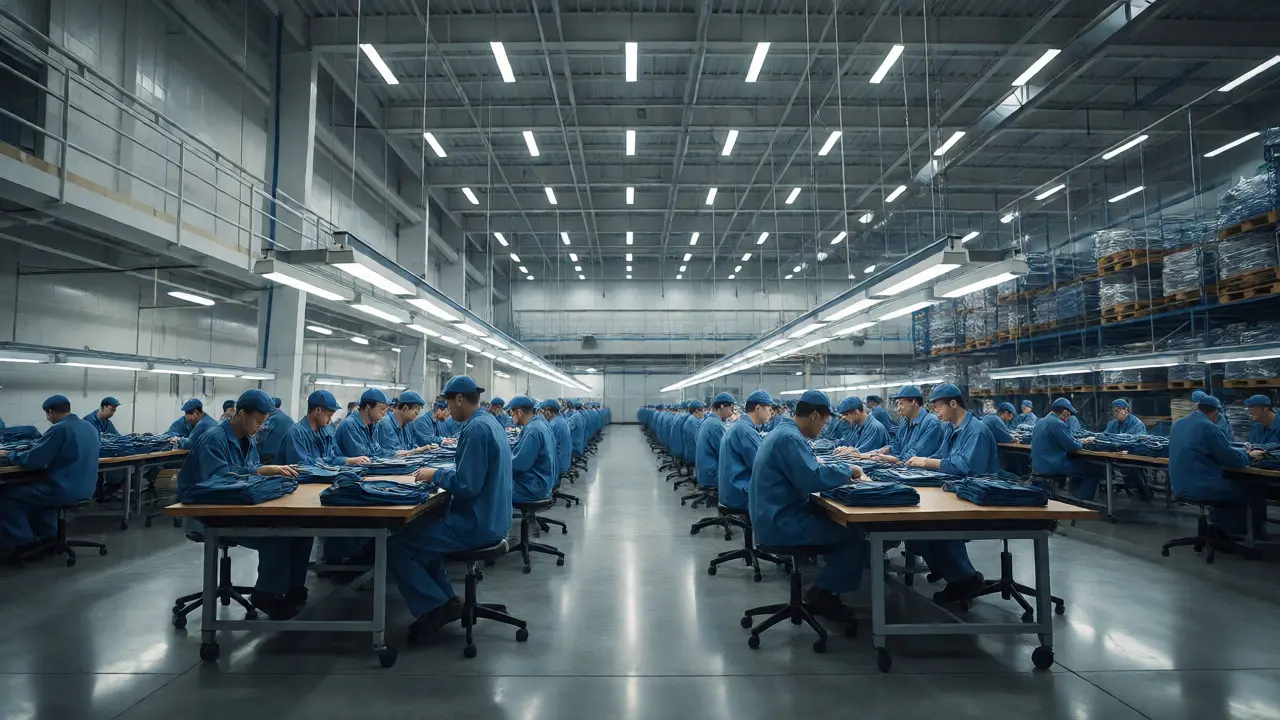
Federal Prison Industries, better known as UNICOR, is the largest manufacturer of goods for the U.S. government. Unlike private companies, UNICOR doesn’t compete for profit in the traditional sense. Its primary mission isn’t to make money for shareholders; it’s to provide meaningful work for federal inmates and produce supplies for federal agencies. Think of it as a captive supply chain. The Bureau of Prisons (BOP) needs mattresses, office chairs, and military uniforms. UNICOR makes them.
The scale here is hard to ignore. UNICOR employs roughly 10% of the federal inmate population at any given time. That’s thousands of people working in factories located inside or adjacent to federal prisons across the country. They produce over $600 million worth of products annually. But here’s the catch: these products cannot be sold on the open commercial market. They must go to federal agencies like the Department of Defense, the Coast Guard, or the Department of Homeland Security. If the Army needs boots, they buy them from UNICOR. If a civilian wants those same boots, they usually can’t buy them directly from the factory floor.
This restriction shapes the scope of work. Because UNICOR serves a guaranteed customer base, it doesn’t need to innovate as aggressively as a private firm. The product mix is stable. You’ll find heavy manufacturing-textiles, metal fabrication, electronics assembly-and increasingly, service-based work like data entry and call center support. The stability is a double-edged sword. It provides steady income for inmates, but it limits exposure to competitive market dynamics that might prepare them better for post-release jobs.
State Systems: A Patchwork of Policies
If federal prison work is a monolith, state prison work is a chaotic patchwork. There are 50 different systems, each with its own laws, budget constraints, and political climates. In some states, like California or Texas, prison industries are robust economic engines. In others, they barely exist due to strict constitutional bans on convict leasing or labor exploitation.
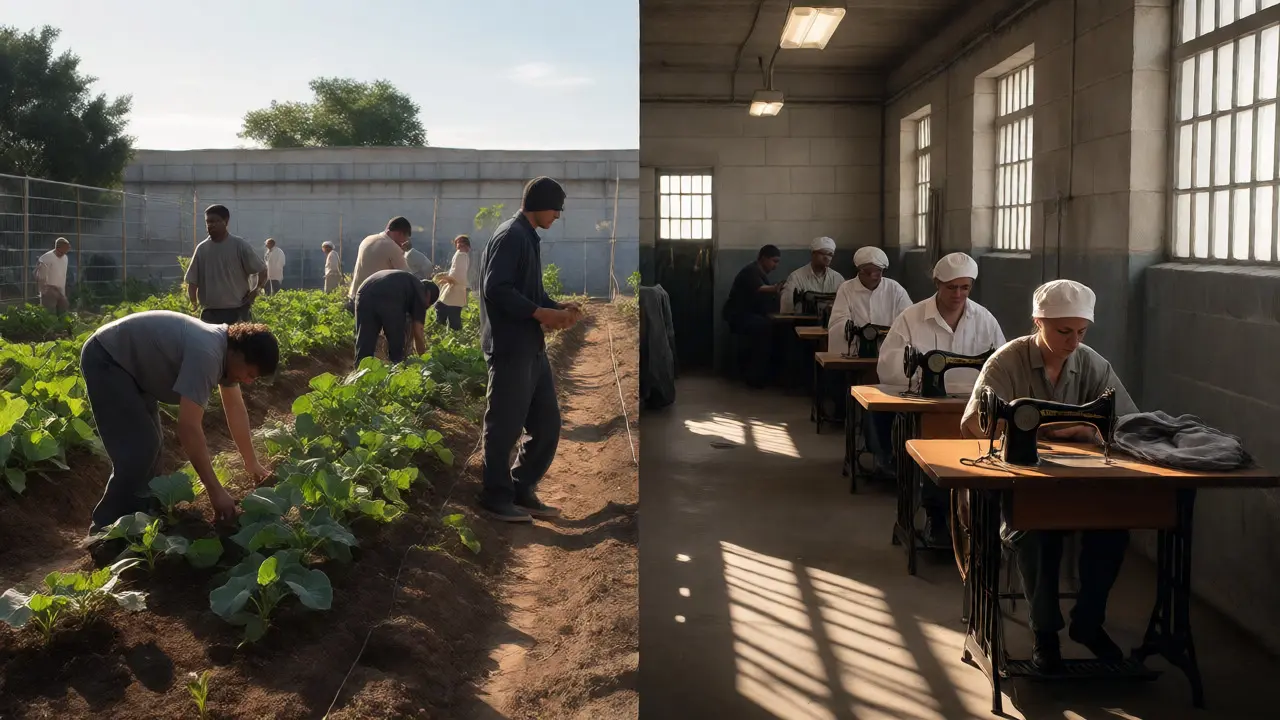
Most state programs operate under the umbrella of "correctional industries." Their scope varies wildly based on local legislation. For example, some states allow prison-made goods to be sold only to other government entities (federal, state, or local). Others permit limited retail sales within the state. Very few allow full access to the national commercial market. This fragmentation means a prisoner in Ohio might assemble parts for automotive companies, while a prisoner in Vermont might grow organic vegetables for school lunches.
The scale in state systems is generally smaller per institution than in the federal system, but collectively, it’s huge. However, efficiency often lags. State departments of corrections frequently struggle with outdated equipment and inconsistent management. While UNICOR has a centralized corporate structure, state programs are managed by individual wardens or separate boards, leading to uneven quality control. One prison might run a cutting-edge woodworking shop; the next door might rely on manual sewing machines from the 1980s.
Economic Models and Wage Disparities
Money talks, especially when discussing prison labor. The wage structures in federal and state systems differ significantly, reflecting their different legal mandates. Federal inmates working for UNICOR earn between $0.23 and $1.15 per hour. Yes, cents. This rate is set by statute and hasn’t changed much in decades. The logic? These jobs are considered vocational training, not standard employment. Plus, inmates receive room and board, so the cash wage is supplementary.
State wages vary more dramatically. Some states pay near minimum wage for certain skilled trades, especially if the work benefits a specific agency or if union contracts influence the setup. For instance, in states with strong public sector unions, prison workers might negotiate higher rates through collective bargaining agreements that cover institutional services. In contrast, non-unionized state programs might mirror federal rates closely. A common misconception is that all prison work is unpaid. That’s false. Most inmates earn something, but the amount rarely covers personal expenses without family support or savings from prior earnings.
| Metric | Federal (UNICOR) | Typical State Program |
|---|---|---|
| Primary Customer | Federal Agencies Only | State/Local Govt & Limited Retail |
| Hourly Wage Range | $0.23 - $1.15 | $0.20 - $15.00+ (Varies widely) |
| Market Access | Captive Market | Restricted / Fragmented |
| Product Focus | Uniforms, Furniture, Electronics | Agriculture, Textiles, Services |
| Management Structure | Centralized Corporate | Decentralized / Per-Facility |
Workforce Development and Reentry Impact
Does working in prison help you get a job outside? The answer depends heavily on whether you worked in a federal or state program. UNICOR emphasizes transferable skills. Because they serve sophisticated federal clients, the standards for quality and delivery are high. An inmate assembling circuit boards learns precision, adherence to specs, and teamwork under deadlines. These are soft skills employers value. Additionally, UNICOR offers apprenticeships in fields like welding and carpentry, which can lead to certified credentials recognized outside prison walls.
State programs often focus on immediate institutional needs rather than long-term career building. Farming crews maintain prison grounds. Laundry services keep facilities running. While these jobs teach discipline and reliability, they don’t always translate to high-demand external careers. However, some states have partnered with community colleges or trade organizations to enhance reentry prospects. For example, a state prison might partner with a local construction firm to train inmates in masonry, offering a pathway to union membership upon release.
Recidivism rates suggest that structured work reduces the likelihood of returning to prison. Studies indicate that inmates who participate in vocational programs are less likely to reoffend. But correlation isn’t causation. It’s also possible that motivated individuals seek out these jobs. Still, the consistency of federal programs provides a reliable baseline for skill acquisition that many fragmented state systems struggle to match.
Controversies and Ethical Debates
No discussion of prison labor is complete without addressing the ethical elephant in the room: exploitation. Critics argue that paying pennies per hour amounts to modern-day slavery, especially since inmates cannot quit, strike, or unionize easily. The 13th Amendment allows involuntary servitude as punishment for crime, creating a legal loophole that keeps wages low. Advocacy groups push for living wages, arguing that earning enough to save for release would reduce recidivism more effectively than current models.
Proponents counter that prison jobs provide purpose and structure. Without work, inmates face idleness, which breeds violence and mental health issues. They argue that market-rate wages would eliminate the jobs entirely because private companies couldn’t compete with subsidized prison labor. The debate intensifies when private corporations contract with prisons for services like food processing or data entry. Are these companies profiting off cheap labor while taxpayers subsidize the infrastructure? The line blurs when state prisons lease space to private firms, allowing them to hire inmates at below-market rates.
Federal programs face scrutiny too. While UNICOR doesn’t take profits for shareholders, critics point out that its revenue supports the BOP budget, reducing the financial burden on taxpayers. Is this fair when the workers aren’t paid market rates? The tension between rehabilitation goals and economic efficiency remains unresolved.
Looking Ahead: Technology and Modernization
The landscape is shifting. Automation threatens traditional prison industries. Why have inmates sew uniforms when automated looms can do it faster? To stay relevant, both federal and state programs are pivoting toward service-based and tech-oriented work. Call centers, IT support, and data annotation are growing sectors. These jobs require computers and internet access, which were once restricted in prisons but are now increasingly available for educational and vocational purposes.
Some forward-thinking states are experimenting with "social enterprise" models, where prison businesses sell to the public with a premium price tag marketed as "ethical sourcing." Consumers willing to pay extra for goods made by rehabilitated workers create a new revenue stream. This model could bridge the gap between charitable intent and business viability. Meanwhile, federal initiatives explore partnerships with tech startups to offer coding bootcamps inside prisons, aiming to tap into the high-demand software development market.
For policymakers, the challenge is balancing cost containment with genuine workforce preparation. Keeping prisoners busy is cheap; preparing them for success is expensive. As budgets tighten, the temptation to cut vocational funding grows. Yet, every dollar saved on successful reentry saves ten on future incarceration costs. The smartest approach treats prison industries not as cost centers, but as investment vehicles for public safety.
Can I buy UNICOR products as a regular consumer?
Generally, no. UNICOR products are primarily sold to federal agencies. However, some surplus items may be sold through government auctions or specific retail outlets depending on state regulations and surplus disposal policies. Direct consumer purchases from UNICOR factories are rare and restricted.
Why do prison workers earn so little?
Wages are determined by federal statutes and state laws that view prison work as part of the sentence rather than standard employment. Additionally, inmates receive housing, food, and healthcare at no cost, which proponents argue offsets lower cash wages. Legal restrictions on interstate commerce also limit market competition, keeping prices and wages artificially low.
Do prison jobs help reduce recidivism?
Yes, research suggests that inmates who participate in vocational training and work programs are less likely to return to prison. Work provides structure, builds skills, and fosters responsibility. However, the effectiveness depends on the quality of the training and whether the skills learned are transferable to the outside job market.
What is the main difference between state and federal prison industries?
The main difference is market access and management. Federal industries (UNICOR) sell exclusively to federal agencies and operate under a centralized corporate model. State industries vary by state law, often selling to state/local governments or having limited retail access, and are managed locally, leading to greater variability in scope and quality.
Are prison workers allowed to join unions?
In most cases, no. Inmates are not considered employees under the National Labor Relations Act, so they lack the right to form traditional unions. However, some state-level advocacy efforts have led to informal bargaining power or specific statutory protections regarding wages and conditions.