
Imagine walking into a high-security facility. The air is thick with tension. Guards are everywhere, eyes scanning for any sign of trouble. Now, imagine someone walking through those same doors who isn't there to punish or guard. They’re there to teach, to listen, and to believe in change. That person is likely a volunteer.
Volunteer organizations have become a quiet but powerful force in the world of prison rehabilitation. From faith-based groups running Bible studies to secular nonprofits teaching coding or anger management, these unpaid workers fill gaps that state-run systems simply cannot cover alone. They don’t just deliver classes; they build bridges between incarcerated individuals and the communities they will eventually return to.
The Six Core Roles of Volunteers in Corrections
It’s easy to think of prison volunteers as just people handing out books or leading Sunday services. While those activities matter, the role is far more complex. Based on data from correctional agencies like the U.S. Federal Bureau of Prisons (BOP) and state departments, volunteers typically operate in six distinct capacities.
- Direct Program Delivery: Running structured classes such as GED prep, literacy courses, vocational training (like culinary arts or construction), and cognitive-behavioral therapy (CBT) groups. For instance, Montgomery County’s Department of Correction explicitly relies on volunteers to foster skills needed for reintegration.
- Mentorship: Providing one-on-one support. This involves regular meetings, goal setting, and motivational coaching. In North Carolina, the Department of Adult Correction recruits mentors specifically to act as a "voice for positive change" for residents.
- Religious and Spiritual Services: Faith-based groups remain the largest segment. Organizations like Kairos Prison Ministry run intensive three-day retreats followed by weekly support groups, offering spiritual grounding that many inmates cite as crucial for stability.
- Psychosocial Support: Facilitating therapeutic-style groups. Programs like the Alternatives to Violence Project (AVP) use trained volunteers to lead nonviolence workshops, helping participants process trauma and develop empathy without requiring clinical licenses.
- Oversight and Advocacy: Monitoring conditions. Groups like the Pennsylvania Prison Society train "Prison Monitors" who visit facilities to report on abuse or overcrowding, indirectly supporting rehabilitation by ensuring humane conditions.
- Reentry Linkage: Connecting inmates to community resources before release. Volunteers help with resume writing, mock interviews, and linking individuals to housing or recovery groups post-release.
These roles show that volunteers aren’t just filling time; they are integral to the ecosystem of correctional care.
Does It Actually Work? The Evidence on Recidivism
You might wonder if good intentions translate to real results. Does having a volunteer mentor actually stop someone from reoffending? The research says yes, but with important caveats.
One of the most cited studies comes from Minnesota. Researchers Grant Duwe and William King analyzed 732 participants in the InnerChange Freedom Initiative, a faith-based program run by Prison Fellowship. After controlling for risk factors, graduates had a 26% lower hazard of rearrest compared to similar non-participants. Those who completed the full program saw even stronger effects. This suggests that consistent, relationship-based intervention matters.
In England and Wales, the evidence is equally compelling. A 2015 analysis by the Ministry of Justice’s Justice Data Lab looked at 2,227 prisoners who took distance-learning courses funded by the Prisoners’ Education Trust (PET). One year after release, only 19% of PET learners reoffended, compared to 28% of matched controls. That’s a 9 percentage point drop, or a relative reduction of about 32%. While PET uses some paid staff, its model relies heavily on external civil society and volunteer tutoring support.
Restorative justice programs also show promise. Meta-analyses indicate that conferences facilitated by community volunteers can significantly reduce reoffending for certain crime types. In Canada, Circles of Support and Accountability (CoSA)-largely run by volunteers supporting high-risk sexual offenders-have demonstrated recidivism reductions ranging from 30% to 70% depending on the outcome measure.
| Program/Organization | Type | Key Outcome | Source/Context |
|---|---|---|---|
| InnerChange Freedom Initiative | Faith-Based Mentorship | 26% lower rearrest hazard | Duwe & King (2013), Minnesota |
| Prisoners’ Education Trust (PET) | Education/Tutoring | 32% relative reduction in reoffending | MoJ Justice Data Lab (2015), UK |
| Circles of Support (CoSA) | Community Reentry Support | 30-70% recidivism reduction | Wilson et al., Canada |
| Alternatives to Violence Project (AVP) | Nonviolence Workshop | Reduced disciplinary infractions | Qualitative & Institutional Data |
However, not all programs work equally well. Impact depends heavily on dosage (how long someone participates), quality of facilitation, and participant selection. A one-off workshop rarely changes behavior. Long-term engagement does.

Why Volunteers Where Staff Can’t Go
If prisons have teachers and counselors, why do we need volunteers? The answer lies in continuity and perspective.
State employees often rotate jobs, retire, or lack the bandwidth for deep personal connection. Their primary mandate is security, which can conflict with the trust-building necessary for rehabilitation. Volunteers, by contrast, choose to be there. Incarcerated individuals frequently note this distinction: "They chose to come here," is a common sentiment expressed by participants. This perceived sincerity builds rapport faster than mandated interactions.
Moreover, volunteers live in the community. When an inmate is released, state programs often end abruptly due to jurisdictional limits. Volunteers, however, can continue mentoring outside the walls. This is critical for desistance-the process by which offenders stop committing crimes. Scholars like Shadd Maruna argue that changing one’s identity requires new social ties. Volunteers provide those ties, offering a bridge to prosocial networks that many ex-prisoners otherwise lack.
Flexibility is another advantage. Bureaucratic systems move slowly. Volunteer groups can pilot innovative ideas quickly. Shakespeare Behind Bars, founded in 1995, expanded across multiple states using volunteer theatre professionals to explore themes of redemption and accountability. Such creative interventions are hard to justify in rigid state budgets but thrive in nonprofit settings.
The Hidden Costs and Challenges
It’s not all smooth sailing. Relying on volunteers introduces significant vulnerabilities.
First, there’s the issue of consistency. Rural prisons or high-security facilities often struggle to attract enough volunteers. Sessions get canceled when volunteers have life emergencies, fall ill, or lose interest. During the COVID-19 pandemic, almost all in-person volunteer programs halted, exposing how fragile this system is. Inmates lost access to crucial support during a period of heightened isolation and stress.
Second, training varies wildly. Some organizations invest heavily in facilitator training, covering trauma-informed care, boundary setting, and cultural competency. Others send volunteers in with little more than a background check. This inconsistency affects quality. A poorly trained volunteer might unintentionally harm a participant by sharing too much personal information, offering unsolicited advice, or failing to recognize signs of crisis.
Third, there’s the challenge of evaluation. Many small grassroots groups lack the capacity to track outcomes rigorously. They may have glowing testimonials but no data to prove impact. As funders demand more evidence-based results, smaller organizations face pressure to professionalize or risk losing support. This trend favors larger NGOs with dedicated evaluators, potentially squeezing out local, niche initiatives.
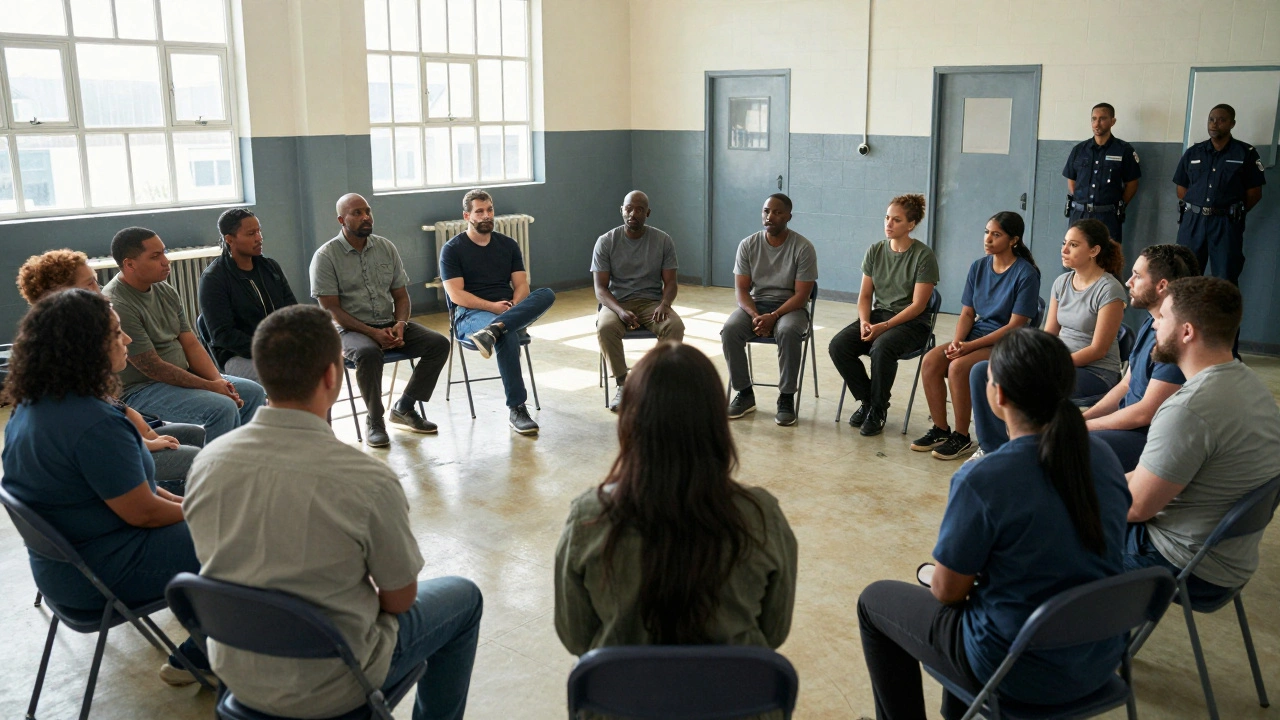
Becoming a Prison Volunteer: What It Really Takes
If you’re considering volunteering, it’s helpful to know what’s involved. It’s not as simple as showing up.
- Application and Vetting: Expect thorough background checks. Most jurisdictions require fingerprinting, criminal history reviews, and references. Some, like the Pennsylvania Prison Society, charge application fees (e.g., $40) to cover processing costs, though waivers exist for hardship cases.
- Training: You’ll need orientation on security protocols, Prison Rape Elimination Act (PREA) standards, and facility rules. Specialized programs add layers. AVP facilitators undergo multi-day trainings. Faith-based groups require theological or pastoral preparation.
- Boundary Management: This is the hardest part. You must learn to support without enabling, listen without judging, and maintain professional distance. Volunteers often struggle with knowing how to respond to disclosures of abuse or requests for money. Clear guidelines and supervision are essential.
- Commitment: Reliability is paramount. Canceling sessions disrupts programming and damages trust. Successful volunteers treat their service like a job, with fixed schedules and backup plans.
Motivations vary. Some are driven by religious calling, others by a desire to give back after personal struggles, or professional interest in criminal justice. Regardless of motive, the experience often transforms the volunteer too. Many report increased empathy, reduced prejudice, and a deeper understanding of systemic issues.
Future Directions: Professionalization and Digital Shifts
The landscape of prison volunteering is evolving. Two major trends are shaping its future.
First, digital engagement. The pandemic forced innovation. Remote tutoring, virtual religious services, and letter-writing campaigns became lifelines. While technology barriers remain-many prisons restrict internet access-hybrid models offer potential for expanding reach, especially for education and family connection programs.
Second, lived-experience leadership. There’s a growing movement to hire and train formerly incarcerated people as volunteers and staff. They bring unique credibility and insight. However, strict security rules often bar anyone with a felony record from entering facilities. Some systems are beginning to create exceptions, recognizing that excluding those with direct experience undermines the very goals of rehabilitation.
International frameworks also support expansion. The UN Nelson Mandela Rules affirm the role of civil society in supporting prisoner welfare. European Prison Rules encourage administrations to facilitate access for outside organizations. These norms provide leverage for advocates pushing for greater volunteer involvement.
Can I volunteer in prison if I have a criminal record?
Generally, no. Most correctional agencies strictly prohibit individuals with felony convictions from volunteering due to security concerns. However, some progressive programs are beginning to create pathways for vetted formerly incarcerated leaders, particularly in reentry mentorship roles outside the facility walls. Check with specific organizations like Prison Fellowship or local reentry coalitions for exceptions.
Do volunteer programs really reduce recidivism?
Yes, evidence shows significant reductions when programs are well-structured and long-term. Studies of faith-based mentorship and educational support have shown recidivism drops of 20-30%. The key is consistency and relationship-building, not just attendance.
What is the difference between a volunteer and a prison counselor?
Prison counselors are paid professionals employed by the state, often focused on clinical treatment and security compliance. Volunteers are unpaid community members who provide supplemental support, mentorship, and community linkage. Volunteers often offer longer-term relational continuity post-release, which state staff cannot always provide.
How much training is required to become a prison volunteer?
Training varies by role. Basic visitor roles may require only a few hours of orientation on security and PREA standards. Facilitators for programs like AVP or restorative justice circles need extensive multi-day training in group dynamics, trauma-informed care, and conflict resolution. Always expect ongoing refresher courses.
Are faith-based programs effective for non-religious inmates?
Research indicates that while faith-based programs show strong results for religious participants, their effectiveness diminishes for those who do not share the beliefs. Secular alternatives like CBT groups or educational tutoring are often better suited for non-religious individuals. Best practices ensure voluntary participation and availability of secular options.