
You walk out of the courthouse with a number in your head. Maybe it’s five years. Maybe it’s ten. But here is the thing about prison sentences: that number on the paper is rarely the number you actually serve. Between good time credits, work release programs, and statutory deductions, the date on your paperwork often shifts before you even finish processing intake. If you or someone you love is facing incarceration, understanding how to track and verify these credits isn't just bureaucratic nitpicking-it’s the difference between going home early or staying an extra six months.
I’ve seen families lose sleep over this because they treat the initial sentencing order as gospel truth. It isn’t. The actual release date is a living document, updated daily by correctional systems based on behavior, participation, and legal status. Getting this wrong means missing parole hearings, failing to prepare for reentry, or worse, overstaying your welcome behind bars when you could have been free. Let’s break down exactly how these credits work, who controls them, and how you can keep tabs on them without needing a law degree.
The Two Main Types of Credits You Need to Know
Not all credits are created equal. When you hear people talking about "getting time off," they’re usually mixing up two distinct categories: custody credits and conduct credits. Confusing them leads to bad math and false hope.
Custody Credits (often called pre-trial detention credit) are non-negotiable. If you spent three months in jail waiting for trial because you couldn’t make bail, those days count toward your sentence automatically. There is no judge’s discretion here; if you were held in custody, you get credit for it. This applies whether you were held locally or transferred between jurisdictions. The key attribute here is automatic accrual. As long as you were physically detained under the authority of the court handling your case, the clock ticks.
Conduct Credits (or good time credits) are different. These are earned while you are serving your sentence. They depend on your behavior, disciplinary record, and sometimes participation in educational or vocational programs. In many states, like Oregon where I live, these credits can significantly reduce a sentence-sometimes by up to 50% depending on the offense class. However, they can be revoked if you get into fights, violate rules, or fail drug tests. Unlike custody credits, these require active maintenance.
| Feature | Custody Credits | Conduct Credits |
|---|---|---|
| Source | Pre-trial detention, probation violations | Institutional behavior, program completion |
| Control | Automatic / Statutory | Discretionary / Earned |
| Revocability | Rarely revoked unless illegal detention | Frequently revoked for infractions |
| Verification Method | Jail booking records, court orders | Inmate classification sheets, disciplinary logs |
Who Actually Calculates Your Release Date?
This is where things get messy. Many inmates assume their attorney calculates the final release date. Wrong. Once the judge bangs the gavel, the attorney’s job regarding calculation ends. The responsibility shifts to the Department of Corrections (DOC) or the local jail’s records division. These are civil servants, not advocates. They follow strict algorithms defined by state statutes.
For example, in federal prison, the Bureau of Prisons (BOP) handles this. They apply a formula: 54 days per year of good time credit for sentences longer than one year. For shorter sentences, the rate changes. State systems vary wildly. Some use a flat percentage, others use tiered systems based on offense severity. Because these calculations happen internally, errors do occur. A misplaced decimal point or a missed transfer record can add weeks or months to a sentence.
Your lawyer might file a motion to correct the sentence, but once the judgment is final, it’s up to the inmate and their support network to audit the math. Don’t wait until you’re eligible for parole to check the numbers. Check them within the first 30 days of incarceration.
Step-by-Step: How to Verify Your Credits
If you’re inside, or helping someone who is, you need a systematic approach to verification. Here is the workflow that works best.
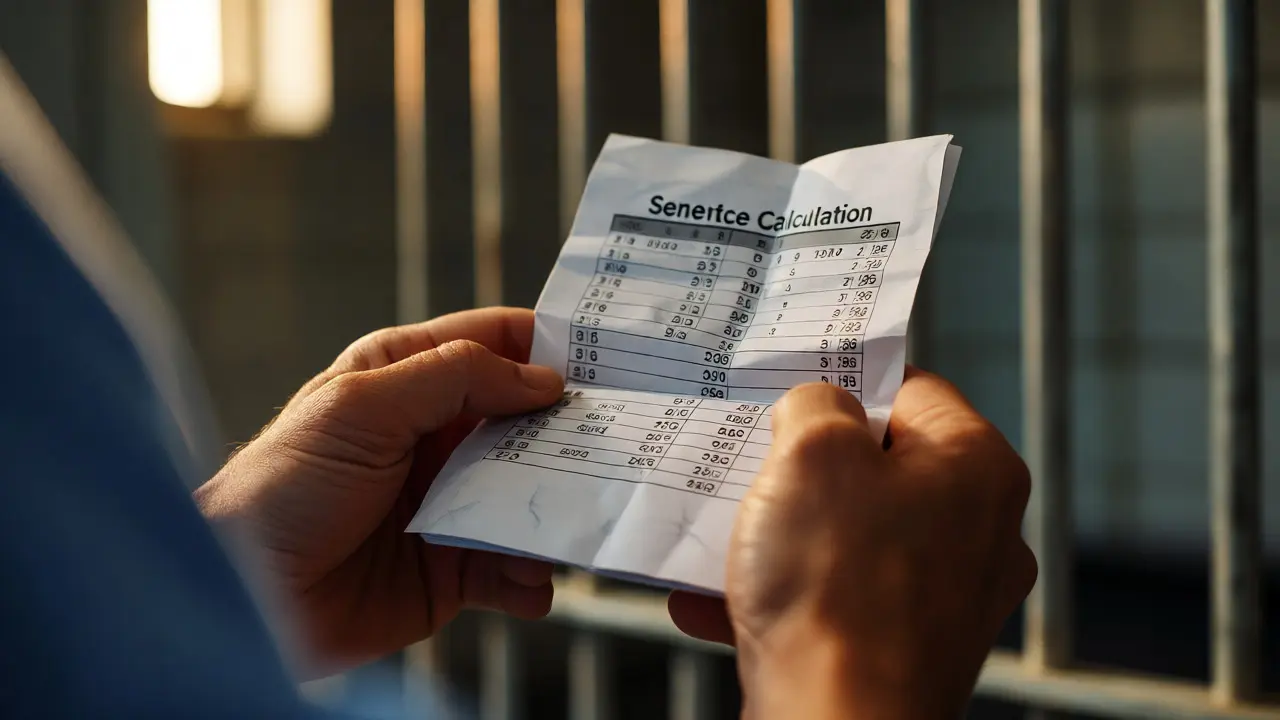
- Request the Classification Sheet: Every inmate has a master file. Ask for a copy of your current "Sentence Calculation" or "Classification Summary." This document lists every day credited to you. If the facility denies access, submit a formal records request via mail or email, keeping a copy for yourself.
- Audit the Pre-Trial Detention: Compare the dates on your classification sheet against your arrest and sentencing dates. Did you spend any nights in a county jail before being transferred to state prison? Those days must appear. If you were on electronic monitoring (ankle monitor), check your state laws-some states grant partial credit for house arrest, others do not.
- Check Disciplinary Records: Look for any "write-ups" or disciplinary actions. Each infraction might deduct a specific number of days from your conduct credits. If you believe a write-up was unfair or already expunged, note the date and appeal it through the internal grievance process immediately.
- Verify Program Participation: Did you complete a mandatory anger management course or a GED program? Sometimes, completing these grants bonus credits or makes you eligible for earlier parole consideration. Ensure these completions are logged in your file.
- Calculate the Math Yourself: Take your original sentence length. Subtract the total custody credits. Apply the state’s good time credit formula (e.g., 15% reduction). Add back any lost credits due to discipline. Compare this result to the official release date listed on your sheet.
Common Pitfalls That Add Months to Sentences
Even with careful tracking, certain scenarios routinely cause confusion. One major issue is "concurrent vs. consecutive" sentencing. If you have multiple cases open at once, the way they stack matters. If Case A and Case B run concurrently, you serve them simultaneously. If they run consecutively, you serve Case A, then start Case B. A clerical error here can double your time. Always confirm the stacking order with the clerk of court.
Another trap involves probation violations. If you violated probation and served a short stint in jail, does that time count toward your new prison sentence? Often, yes, but only if the violation was related to the same underlying case. If it was a separate incident, it might not count. This requires cross-referencing two different case files.
Finally, watch out for "hold" statuses. Sometimes, an inmate has a detainer from another jurisdiction (like a pending charge in a neighboring county). While this doesn’t always stop time credits from accruing, it can delay release procedures or affect which facility holds you, potentially impacting your ability to earn certain work-release credits.

Tools and Resources for Families Outside
If you are supporting someone inside, you can’t just call the warden and ask for updates. You need digital tools. Most modern DOC websites offer an "Inmate Locator" feature. While this primarily shows location, some advanced portals allow family members to view basic sentence information, including projected release dates. Note that these projections update weekly, not daily.
For more detailed verification, consider hiring a paralegal or a specialized post-conviction attorney for a one-time audit. It costs money, but if it saves six months of incarceration, the return on investment is huge. Alternatively, organizations like the National Association of Criminal Defense Lawyers often provide resources on state-specific credit laws.
Keep a physical binder. Include copies of the sentencing order, all arrest reports, and every letter sent to the DOC requesting credit verification. If a dispute arises, having this paper trail proves you acted diligently. Never rely solely on verbal assurances from correctional officers.
What If You Find an Error?
So, you did the math, and the numbers don’t match. What now? First, file an administrative remedy or grievance. This is the formal complaint process within the prison system. Be precise. Don’t say "I think my time is wrong." Say, "My sentence calculation dated [Date] omits 14 days of pre-trial detention from [County Jail], verified by Booking Number [Number]."
If the grievance is denied, you may need to petition the court. A motion to correct the sentence is a standard legal procedure. You don’t necessarily need a full retrial; you just need the judge to sign an amended order reflecting the correct credits. In many jurisdictions, this is a routine, low-cost filing. Just ensure you cite the specific statute governing credit accrual in your state.
Remember, time is literally what you are fighting for. Do not let bureaucracy slide. The system moves slowly, so your pressure needs to be consistent but polite. Document everything, follow the chain of command, and never assume the first answer is the right one.
Do weekends and holidays count toward prison time?
Yes, generally speaking, prison sentences are calculated in calendar days, not business days. Whether it is Christmas, Thanksgiving, or a Saturday, if you are incarcerated, that day counts toward your sentence. There are very few exceptions to this rule across US jurisdictions.
Can good time credits be taken away after I am released?
No. Once you are released from custody, your sentence is considered served. Good time credits are applied to determine the release date. If you violate parole conditions later, you go back to prison for a new period of confinement, but your original sentence's credits remain valid for that specific term.
Does time spent in a halfway house count as prison time?
This varies significantly by state. In some jurisdictions, time in a community corrections center or halfway house earns reduced credits compared to full lockdown facilities. In others, it counts fully. You must check your specific state’s statutes regarding "work release" or "community custody" credit rates.
How do I find out if I had a probation violation credit?
You need to look at the minute orders from the probation revocation hearing. If the judge ordered "credit for time served" on the violation, it should be noted there. If not, you may need to file a motion to clarify the intent of the sentencing order, especially if you spent significant time in jail awaiting the revocation hearing.
Is there a limit to how much good time credit I can earn?
Yes. Federal law limits good time credit to 54 days per year of sentence imposed. State laws vary; some cap it at 15%, others at 50%. Additionally, certain serious offenses (like violent felonies) may restrict eligibility for maximum credit levels entirely.