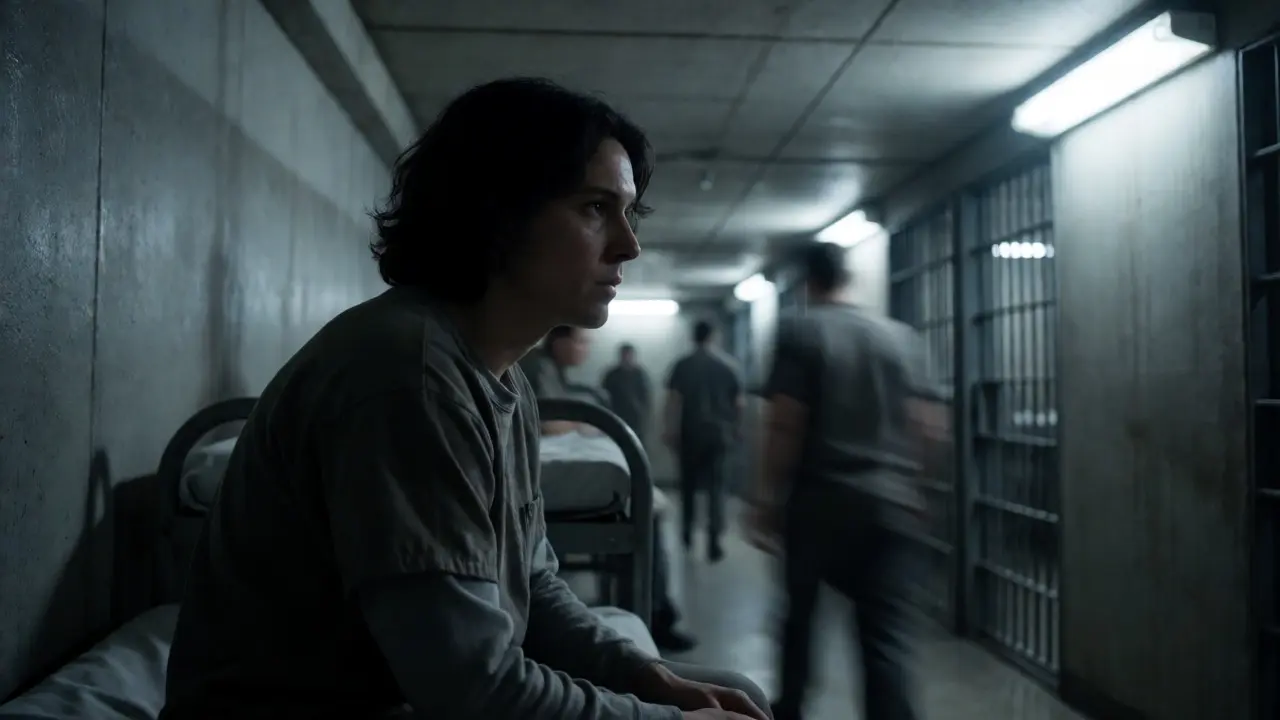
Imagine sitting in a maximum-security cell block. The noise is constant-shouting, slamming doors, the hum of fluorescent lights that never seem to dim. For many people here, this isn't just an inconvenience; it's a trigger. When you try to teach standard cognitive behavioral therapy (CBT) techniques to someone whose brain has been wired by years of survival mode, the usual worksheets and homework assignments often fall flat. Why? Because traditional therapy assumes a baseline of safety that simply doesn't exist behind bars.
This gap between clinical theory and prison reality is where trauma-informed cognitive interventions become essential. It’s not about changing the core mechanics of how we treat anxiety or depression. It’s about adapting the delivery so it actually sticks. If you’re working in corrections, education, or reentry services, understanding this shift isn't optional-it’s the difference between a program that runs on paper and one that changes lives.
The Hidden Wound: ACEs in Prison
Before we talk about treatment, we have to look at the patient population. Data from the Bureau of Justice Statistics consistently shows that incarcerated individuals report significantly higher rates of childhood adversity than the general public. We are talking about Adverse Childhood Experiences (ACEs). These aren't just bad memories; they are physiological events that alter brain development.
When a child grows up in chaos, their amygdala-the brain’s threat detection center-stays hyperactive. They learn to scan for danger constantly. In a prison setting, this survival mechanism makes perfect sense. But when you ask that same person to sit quietly and examine their thought patterns, you’re asking them to lower their guard in a place where lowering your guard can get you hurt. Standard cognitive interventions often fail because they ignore this biological reality. They ask for introspection before establishing safety.
Redefining Safety as a Clinical Tool
The first pillar of any trauma-informed approach is physical and emotional safety. In a free-world clinic, safety is assumed. In prison, it must be constructed. This means therapists and educators need to be explicit about boundaries. Who is listening? Is this conversation confidential? What happens if I say something wrong?
Consider the layout of a typical group therapy session. Often, chairs are arranged in a circle with no clear exit strategy. For a trauma survivor, having their back to a door creates immediate anxiety. A simple adjustment-allowing participants to choose seats facing the exit or keeping the door unlocked-can lower cortisol levels enough to allow learning to happen. It sounds minor, but you cannot process complex cognitive distortions while your body is screaming that it might get attacked.
We also need to rethink language. Words like "treatment," "patient," and "diagnosis" can feel disempowering. Shifting to terms like "skills," "participant," and "patterns" respects autonomy. Trauma strips away choice. Recovery begins by giving it back, even in small ways, like letting someone decide whether to write down their thoughts or speak them aloud.
Adapting CBT for Survival Brains
Traditional CBT focuses on identifying irrational thoughts and replacing them with rational ones. For example, if someone thinks, "Everyone hates me," the therapist asks for evidence. This works well for mild anxiety. But for someone with complex PTSD, their thoughts might be rooted in actual historical truths. Telling a man who was abused by his father that his belief "adults are dangerous" is irrational feels invalidating. It denies his lived experience.
Trauma-informed cognitive interventions adjust this model. Instead of challenging the validity of the thought, we explore its function. Ask, "How does believing 'adults are dangerous' help you stay safe?" You acknowledge that this belief served a purpose in their past. Then, you gently probe its cost in the present. "It kept you safe then, but is it costing you relationships now?" This collaborative approach reduces defensiveness. It positions the participant as an expert on their own life, rather than a broken machine needing repair.
| Feature | Traditional CBT | Trauma-Informed CBT |
|---|---|---|
| Primary Goal | Correct distorted thinking | Regulate nervous system & reframe beliefs |
| View of Symptoms | Pathology to be eliminated | Adaptive survival strategies |
| Therapist Role | Expert instructor | Collaborative guide |
| Pacing | Structured, linear progression | Flexible, titrated exposure |
| Homework | Mandatory worksheets | Optional micro-practices |

Somatic Anchors Before Cognitive Work
You cannot think your way out of a fight-or-flight response. Before diving into cognitive restructuring, participants need tools to regulate their physiology. This is where somatic (body-based) practices come in. Simple grounding techniques are more effective in a prison environment than deep breathing exercises, which can sometimes induce panic in those who associate closed eyes or restricted movement with vulnerability.
Try the "5-4-3-2-1" method adapted for prison. Have participants name five things they can see (the gray concrete, the blue pen), four they can touch (the denim of their jeans, the metal table), three they can hear (the distant siren, the fan), two they can smell (coffee, bleach), and one they can taste. This pulls the brain out of the traumatic flashback loop and back into the present moment. Once the heart rate slows, the prefrontal cortex comes back online. Only then can cognitive work begin.
The Power of Predictability and Choice
Prison life is defined by unpredictability. Counts change, lockdowns happen without warning, and staff turnover is high. This lack of control exacerbates trauma symptoms. Trauma-informed interventions counteract this by creating micro-environments of predictability within the therapy space.
Start every session with the same routine. Use visual schedules posted on the wall. If a session will end early due to a lockdown, warn participants ahead of time. Consistency builds trust. Trust is the currency of therapy. Without it, no amount of cognitive reframing will take root.
Also, offer choices whenever possible. Do you want to discuss anger management today or stress reduction? Would you prefer to work alone or in a pair? Even trivial choices restore a sense of agency. For people who have had every aspect of their daily existence dictated to them, choosing the topic of discussion can be a radical act of empowerment.

Addressing Stigma and Cultural Context
Incarcerated populations are diverse, and trauma manifests differently across cultures and genders. Men may express distress through aggression or withdrawal, viewing emotional vulnerability as weakness. Women often face different traumas, including sexual violence and domestic abuse, and may struggle with shame and self-blame.
A trauma-informed lens requires cultural humility. It means recognizing that a Black man’s hyper-vigilance might be a rational response to systemic racism, not just personal trauma. It means understanding that a woman’s reluctance to speak might stem from fear of being believed. Interventions must be culturally responsive. Using examples from popular culture, sports, or music relevant to the specific facility’s demographic can make abstract concepts tangible. Avoid jargon. Speak plainly. Meet people where they are, not where the textbook says they should be.
Implementation Challenges and Solutions
Let’s be real about the barriers. Prisons are underfunded. Staff are burned out. Security protocols often clash with therapeutic needs. How do you implement these ideas when guards are shouting and resources are scarce?
- Train the Guards: Therapy doesn’t stop at the counselor’s office. Correctional officers are the primary contact point. Basic training in trauma awareness helps them interpret behavior correctly. A defiant inmate might not be disrespectful; they might be triggered. A calm officer de-escalates faster than a punitive one.
- Peer Support Models: Utilize trained peer facilitators. Incarcerated individuals often trust each other more than outsiders. Peers can reinforce skills during downtime, acting as reminders in the housing units.
- Short, High-Impact Sessions: Long sessions are hard to schedule and maintain attention for. Break interventions into 15-minute modules that can be delivered in various settings-in the yard, in the library, or in cells.
Don’t aim for perfection. Aim for progress. A single grounding technique taught well is better than a failed hour-long lecture. Start small. Pilot a program in one unit. Measure outcomes not just by recidivism rates, but by disciplinary reports and self-reported wellbeing.
Beyond Release: Continuity of Care
The ultimate test of any intervention is what happens after release. Many programs fail because they don’t bridge the gap to community providers. Trauma-informed care must include discharge planning that accounts for triggers in the free world. The freedom itself can be overwhelming. Too many choices, too much noise, too little structure.
Prepare participants for this transition. Teach them to identify their support networks. Connect them with community organizations that practice trauma-informed care. Ensure that the skills learned inside-grounding, cognitive reframing, seeking safety-are portable. If the skills only work in the controlled environment of prison, they haven’t truly taken hold.
By shifting our focus from correcting behavior to healing wounds, we create a system that doesn’t just punish crime but addresses its roots. It’s harder work. It requires patience, creativity, and a willingness to challenge institutional norms. But the payoff is profound: safer facilities, healthier individuals, and communities that heal alongside those returning home.
What is the main difference between standard CBT and trauma-informed CBT?
Standard CBT typically views negative thoughts as distortions to be corrected. Trauma-informed CBT views these thoughts as adaptive survival mechanisms that were once useful. The goal shifts from eliminating the thought to understanding its function and assessing whether it still serves the individual’s current needs, prioritizing emotional safety and regulation before cognitive restructuring.
Why is safety emphasized so heavily in prison therapy?
Incarcerated individuals often have heightened threat responses due to past trauma and the volatile prison environment. Without a sense of physical and emotional safety, the brain remains in survival mode (fight, flight, or freeze), making it physiologically difficult to engage in higher-level cognitive processing. Establishing safety allows the prefrontal cortex to function effectively.
Can correctional officers play a role in trauma-informed care?
Yes, absolutely. Officers interact with inmates far more frequently than therapists. Training officers in basic trauma awareness helps them recognize that behaviors like defiance or withdrawal may be trauma responses rather than intentional misconduct. This leads to less punitive interactions and a more stable environment conducive to healing.
What are some practical grounding techniques for prison settings?
Effective techniques include the 5-4-3-2-1 sensory method (identifying things seen, touched, heard, smelled, and tasted), progressive muscle relaxation (if privacy allows), and box breathing. These methods help anchor the individual in the present moment, reducing dissociation and anxiety without requiring special equipment or extensive time.
How does trauma impact recidivism rates?
Untreated trauma often drives substance use, aggression, and poor decision-making, which contribute to reoffending. By addressing the underlying trauma through interventions like trauma-informed CBT, individuals can develop better coping skills, improve emotional regulation, and build stronger social connections, all of which are key factors in reducing recidivism.