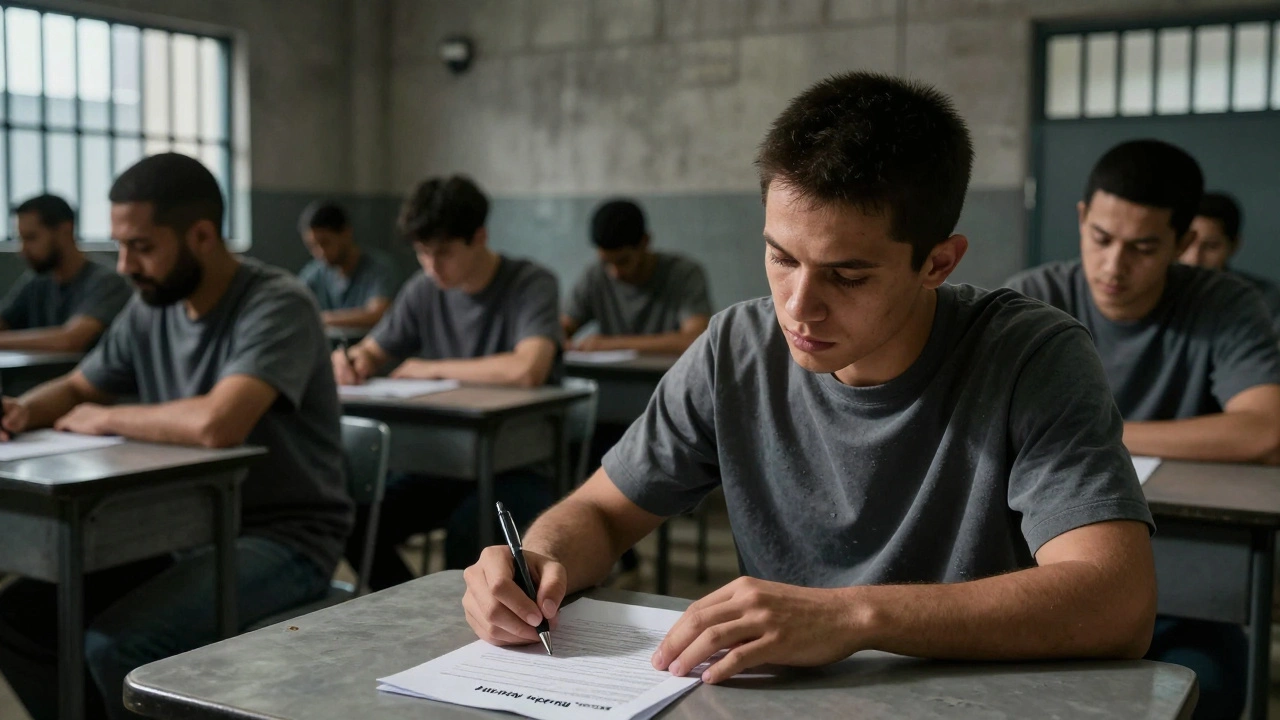
Imagine sitting in a crowded prison classroom. The walls are concrete, the air is stale, and you’re handed a stack of worksheets. You’re told to write down your "automatic thoughts" about an argument that happened in the cafeteria. It sounds like busywork. It feels juvenile. But this simple act-writing down what you think before you act-is one of the most powerful tools we have to stop people from reoffending.
In correctional settings, Cognitive Behavioral Therapy (CBT) is a structured psychological intervention designed to change criminal thinking patterns through practice and repetition. The real magic doesn’t happen during the group session. It happens between sessions. It happens when an inmate sits alone with a worksheet, forcing themselves to slow down and question their instincts. This is where homework and practice assignments come in. They are not optional extras; they are the engine of change.
Key Takeaways
- Homework drives results: Research shows well-implemented CBT programs reduce recidivism by 20-30%, largely due to consistent practice outside of sessions.
- Specific tasks matter: Effective assignments include thinking reports, anger logs, and behavioral experiments tailored to criminogenic needs.
- Compliance is key: Strategies like task modeling, public commitment, and offering choices significantly increase completion rates among offenders.
- Barriers exist: Low literacy, lack of privacy, and institutional culture can hinder progress, requiring adapted delivery methods.
- Fidelity counts: Superficial implementation or treating homework as punishment undermines the therapeutic value and can increase cynicism.
The Role of Homework in Breaking Criminal Thinking
To understand why homework is so critical, we need to look at how criminal behavior develops. Most offending isn’t premeditated murder-planning. It’s impulsive. It’s reactive. A guy gets cut off in traffic, thinks he’s being disrespected, and pulls a knife. That split-second decision is driven by "criminogenic thinking"-deeply ingrained habits like entitlement, victim stance, or minimization.
Aaron T. Beck, who formalized CBT in the 1960s, understood that changing these automatic thoughts requires more than just listening to a lecture. It requires rewiring the brain through repetition. In the context of corrections, pioneers like Robert R. Ross and Elizabeth Fabiano adapted these principles into manualized programs like "Reasoning and Rehabilitation" starting in the mid-1980s. These programs rely on the Risk-Need-Responsivity (RNR) model developed by Don Andrews and James Bonta.
The RNR model dictates that treatment must target dynamic risk factors (like antisocial attitudes) using cognitive-behavioral methods. Homework provides the "graduated rehearsal" component. If you only practice controlling your anger once a week in a safe group setting, you won’t control it when someone provokes you in the yard. You need to practice daily. A 2005 meta-analysis by Landenberger and Lipsey examined 58 studies and found that CBT reduces recidivism by roughly 20-30%. The common thread? Consistent practice assignments that bridge the gap between theory and real-life application.
Types of Practice Assignments in Correctional Settings
Not all homework is created equal. In a clinical outpatient setting, a therapist might ask a patient to meditate. In a prison, the stakes are higher, and the tasks are more specific. Here are the core types of assignments used in major correctional CBT programs like Thinking for a Change (T4C) and Moral Reconation Therapy (MRT):
- Thinking Reports: This is the bread and butter of correctional CBT. Participants document a specific situation, their automatic thoughts, the resulting emotion, and the behavior. Then, they identify the "thinking error" (e.g., "I thought everyone was laughing at me, which made me angry, so I yelled"). This forces the offender to see the link between perception and action.
- Behavioral Experiments: After learning a skill, such as assertive communication or refusal skills, participants must use it in real life. For example, an inmate might be assigned to make a polite complaint to a guard or resolve a minor conflict with a cellmate without aggression, then record the outcome.
- Self-Monitoring Logs: These track triggers over time. An "anger log" might record bodily cues (clenched jaw), thoughts, and responses across several episodes per week. Similarly, substance abusers might keep "high-risk situation" logs to identify patterns leading to relapse.
- Activity Scheduling: Especially for those with depression or low motivation, scheduling prosocial activities (education classes, job search steps, recreation) helps combat the inertia of incarceration. Tracking mood before and after these activities builds evidence that positive actions lead to better feelings.
- Moral Reasoning Steps: MRT uses written "steps" where participants reflect on moral reasoning, self-concept, and the impact of their crimes on victims. Completing these often requires writing letters or detailed personal inventories.
| Assignment Type | Primary Goal | Example Task | Target Population |
|---|---|---|---|
| Thinking Reports | Cognitive Restructuring | Identify "entitlement" error in a recent conflict | All offenders |
| Anger Logs | Emotional Regulation | Track physical cues of anger for 3 days | Violent offenders |
| Relapse Prevention Logs | Behavioral Control | List high-risk situations for drug use | Substance abusers |
| Moral Steps | Moral Development | Write a letter of apology to a victim | Sex offenders, violent criminals |

Why Compliance Is Hard (and How to Fix It)
Let’s be honest: getting inmates to do homework is tough. A study published in Criminal Justice and Behavior around 2013 looked directly at this problem. Researchers tested three strategies to boost compliance: task option, task modeling, and public commitment. The results were clear. When offenders had a choice in their assignments, saw the facilitator model the task, and verbally committed to doing it in front of the group, completion rates went up.
So, how do you apply this?
- Offer Choice: Instead of assigning one generic worksheet, give two options. "Do you want to analyze an anger incident or a situation where you resisted peer pressure?" Ownership increases buy-in.
- Model the Task: Don’t just hand out the paper. Fill one out yourself. Show them what a good "Thinking Report" looks like. Use role-play to demonstrate how to identify a thinking error. This aligns with social learning theory-you learn by watching others.
- Public Commitment: At the end of the session, have each participant state exactly what they will do before the next meeting. Social accountability works. People don’t want to look bad in front of their peers.
- Immediate Feedback: Review homework at the start of every session. Praise effort, troubleshoot obstacles, and correct misunderstandings. If you ignore the homework, participants assume it doesn’t matter.
General CBT research supports this. A meta-analysis by Kazantzis et al. (2000) found a small-to-moderate positive correlation (r = 0.20-0.30) between homework compliance and symptom improvement. While not specific to offenders, the principle holds: the more you practice, the better the outcome.
Barriers to Effective Implementation
Even with best practices, barriers remain. One major issue is literacy. According to the National Assessment of Adult Literacy (2003), roughly 70% of U.S. prisoners scored at "Below Basic" or "Basic" levels in prose literacy. Asking someone with a third-grade reading level to complete complex cognitive restructuring worksheets is futile. It leads to frustration and fake answers.
Solutions include:
- Adapted Materials: Use pictorial worksheets, oral reporting, or paired work where a literate peer helps another complete the assignment.
- Simplified Language: Break down instructions into single-step commands.
- Trauma-Informed Care: Some assignments, like reflecting on childhood trauma, can trigger distress. Facilitators must be trained to recognize signs of overwhelm and provide grounding techniques.
Environmental factors also play a role. Prisons are noisy, lack privacy, and frequently impose lockdowns. Security restrictions may limit access to paper or pens. These conditions make deep reflection difficult. Institutions must create dedicated spaces and times for homework completion to signal its importance.
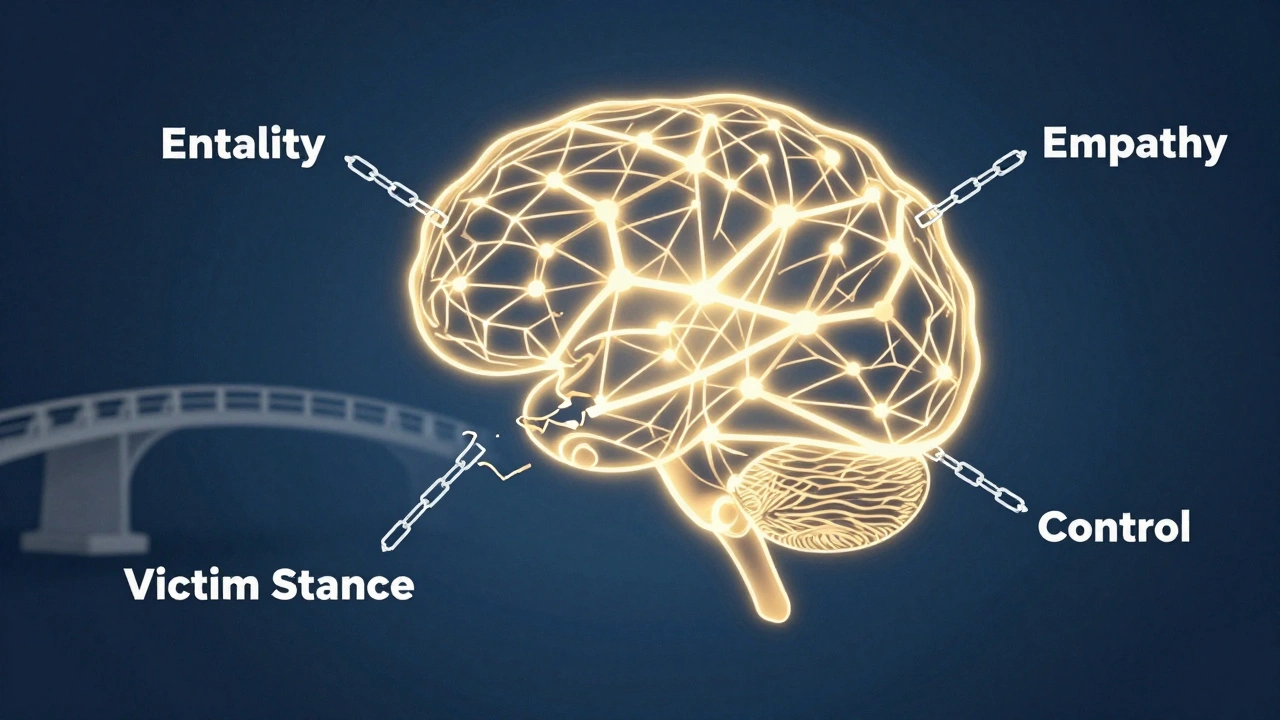
The Debate: Is It Just Busywork?
Not everyone agrees on the value of homework. Critics argue that standard CBT worksheets can feel bureaucratic and dehumanizing. Former inmates on forums like Reddit’s r/ExCons often describe MRT and T4C homework as "juvenile" or "busywork," especially when staff care more about filled-out forms than genuine discussion. If the goal is just to check a box for parole eligibility, the therapeutic value is lost.
Furthermore, some scholars in critical criminology argue that focusing solely on individual cognitive errors ignores structural issues like poverty and racism. They worry that framing crime as a "thinking error" blames the victim and absolves society of responsibility. Trauma experts caution that repeatedly revisiting offense details without proper support can re-traumatize individuals.
These critiques are valid. However, they don’t negate the efficacy of CBT. They highlight the need for fidelity and cultural responsiveness. As Bonta and Andrews warn, superficially implemented CBT-where staff just push offenders through manuals-can be counterproductive. The key is balance: using homework as a tool for insight, not as a punitive measure.
Future Directions: Technology and Personalization
The landscape is evolving. Recent trends include digitizing curricula. Some agencies are using tablets and secure kiosks to deliver psychoeducational content and track assignment completion electronically. This solves the problem of lost paper worksheets and allows for fine-grained monitoring of adherence. Interactive exercises and automated reminders can help maintain momentum.
There’s also a push for population-specific adaptations. Women, Indigenous people, and individuals with serious mental illness often require different approaches. Culturally relevant homework that respects diverse backgrounds improves engagement. Future research will likely focus on dose-response relationships-determining exactly how much homework is needed to achieve long-term reductions in reoffending.
What is the most effective type of homework in correctional CBT?
Thinking reports are widely considered the most effective because they directly target automatic thoughts and cognitive distortions. By documenting situations, emotions, and behaviors, offenders learn to identify and challenge criminogenic thinking patterns like entitlement or victim stance.
How does homework improve recidivism outcomes?
Homework facilitates "graduated rehearsal," allowing offenders to practice new skills in real-life situations. This repetition strengthens neural pathways associated with prosocial behavior and weakens impulsive, criminal responses. Meta-analyses show CBT programs with consistent practice reduce recidivism by 20-30%.
What should facilitators do if an inmate has low literacy?
Facilitators should adapt materials by using pictorial worksheets, simplifying language, or allowing oral reporting. Paired work with a literate peer can also help. The goal is to ensure the participant engages with the concepts, even if they cannot read or write complex sentences independently.
Is homework mandatory in all correctional CBT programs?
While not legally mandatory in all jurisdictions, high-fidelity CBT programs like Thinking for a Change and Moral Reconation Therapy structurally require homework for progression. Completion is often linked to program certification, which can influence parole recommendations.
How can institutions increase homework compliance?
Effective strategies include offering task options, modeling the assignment process, requiring public commitment to the group, and providing immediate feedback. Linking completion to tangible rewards or program advancement also motivates participation.