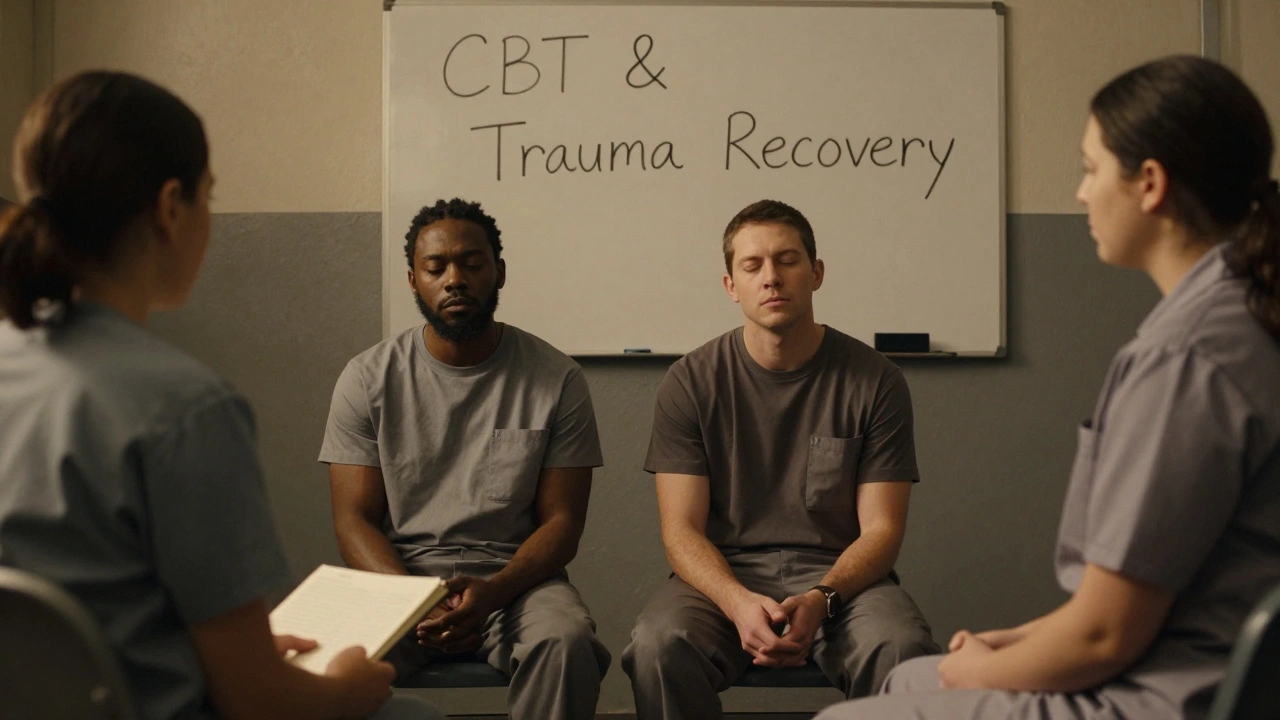
More than half of all people in U.S. prisons have a substance use disorder. But here’s the part most people don’t talk about: almost two-thirds of those same people also have a serious mental illness. This isn’t a coincidence. It’s the reality of co-occurring disorders - when addiction and mental health conditions like depression, PTSD, or schizophrenia show up together. And in prisons, this combination isn’t just common - it’s the rule, not the exception.
Yet, despite how widespread it is, fewer than 11% of people with co-occurring disorders in prison get treatment that addresses both problems at the same time. Most facilities treat addiction and mental illness as separate issues - if they treat either at all. That approach doesn’t work. Treating just the drug use without touching the trauma or the psychosis? It’s like putting a bandage on a broken bone. The person walks out of prison with a clean bill of health on paper, but they’re still falling apart inside. And they’re almost certain to end up back behind bars.
Why Integrated Treatment Is the Only Way Forward
There’s a reason experts keep saying the same thing: integrated treatment saves lives and reduces crime. Integrated treatment means one team - one set of counselors, one treatment plan - handles both the substance use disorder and the mental illness together. No handoffs. No gaps. No ‘we’ll get to your depression after we finish your detox.’
Studies show this approach works. In Colorado, researchers ran a study comparing two groups of inmates with co-occurring disorders. One group got standard mental health services. The other went through a Modified Therapeutic Community - a long-term, structured program that combines group therapy, skill-building, and peer support, all focused on both addiction and mental health. After one year, only 5% of the integrated treatment group were back in prison. The other group? 33%. That’s not a small difference. That’s a revolution in outcomes.
Why? Because addiction and mental illness feed each other. Someone with PTSD might use alcohol to numb flashbacks. Someone with bipolar disorder might binge on stimulants during manic episodes. If you don’t treat the root cause - the trauma, the anxiety, the hallucinations - the drugs will keep coming back. Integrated treatment breaks that cycle by teaching people how to cope without substances, while also managing their mental health symptoms.
What Integrated Treatment Actually Looks Like
It’s not just therapy sessions. Effective programs include a mix of evidence-based tools:
- Screening at intake - Every person entering jail or prison should be screened within 24 hours using validated tools like the CAGE-AID or the MINI. This isn’t optional. It’s the first step.
- Cognitive Behavioral Therapy (CBT) - This is the gold standard. CBT helps people recognize triggers, challenge distorted thinking, and build healthier habits. For someone with a history of violence or theft, CBT can rewire criminal thinking patterns.
- Medication-assisted treatment (MAT) - For opioid or alcohol dependence, medications like buprenorphine or naltrexone reduce cravings and prevent relapse. Yet, only 1 in 5 prisons offer MAT. That’s a failure.
- Trauma-informed care - Most incarcerated people have experienced abuse, neglect, or violence. Treatment must acknowledge this. Trauma isn’t just background noise - it’s the engine driving addiction.
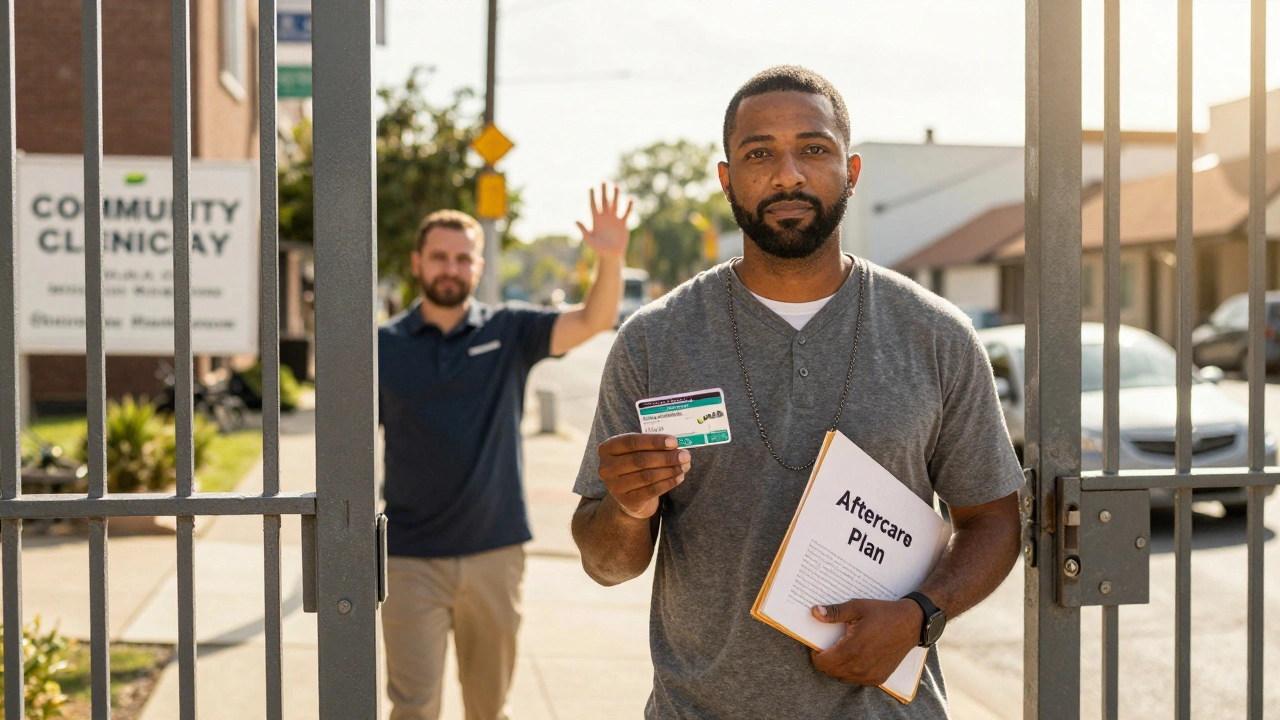
- Pre-release planning - Treatment can’t stop at the prison gate. Case managers must start working with community providers months before release to arrange housing, Medicaid enrollment, job training, and outpatient therapy.
One jail diversion program in Ohio did something radical: they gave people a choice. Instead of sentencing someone to jail time, they offered probation - but only if they agreed to a 90-day treatment plan. Clinical staff met with them daily, stabilized their meds, connected them to a sober living home, and assigned a case manager who visited them weekly. At 12 months, this group had fewer arrests and better housing than those who went to jail. Even though they used drugs more at three months, they were clean by the end of the year. Why? Because they had support.
The Jail vs. Prison Divide
Not all correctional settings are the same. Jails hold people for days or weeks - often just after arrest. Prisons hold people for years. That difference changes everything.
In jails, treatment is usually crisis-driven. Detox. Stabilize. Refer. That’s it. There’s not enough time to build trust, let alone change behavior. Many jail programs don’t even have licensed therapists on staff. They rely on nurses to hand out pills and volunteers to lead group sessions. It’s not enough.
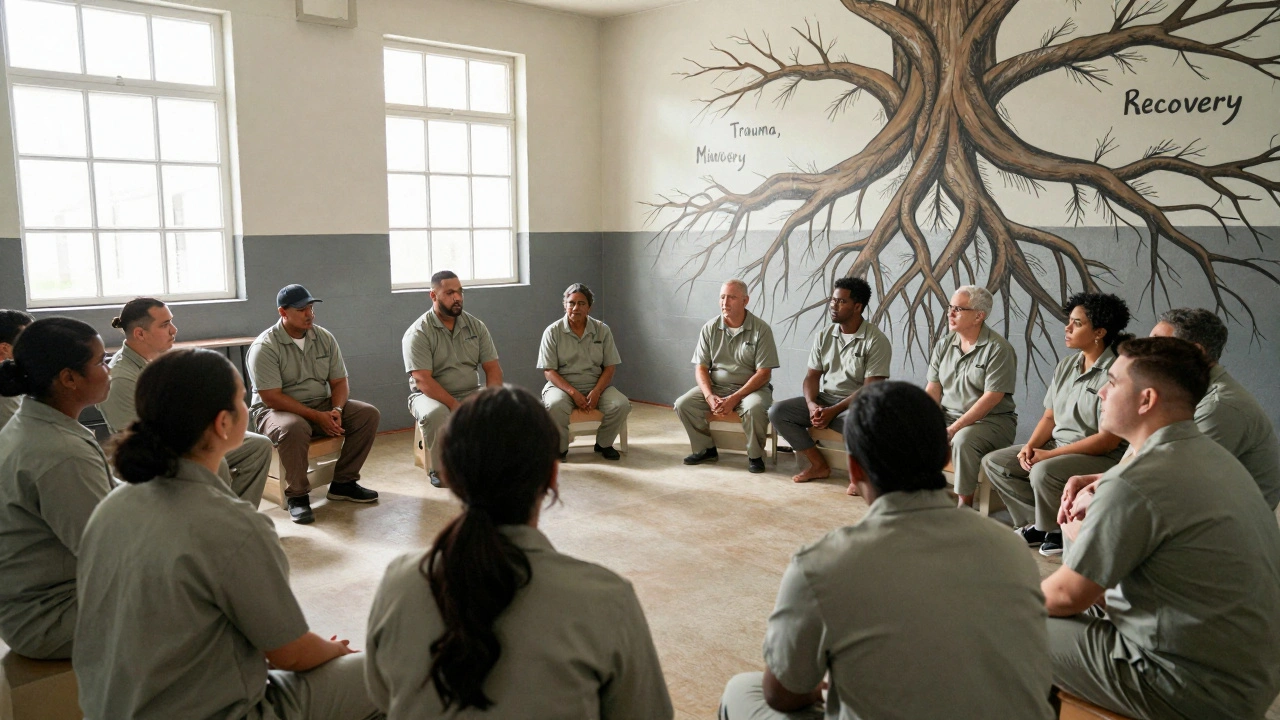
Prisons have the time. That’s why Modified Therapeutic Communities work so well there. These are residential programs that last 6 to 18 months. Inmates live together, follow strict routines, attend daily therapy, and earn privileges through progress. They learn to manage emotions, hold jobs within the facility, and support each other. And crucially - they start planning for life after prison from day one.
The Colorado study showed the power of continuity. The group that went from prison-based MTC straight into an aftercare MTC had the lowest recidivism rates. That’s not luck. That’s design. When treatment flows from prison to community without a break, people stay on track.
The Stark Reality: Too Few Programs, Too Many Gaps
Here’s the uncomfortable truth: only 26 state prison systems in the entire U.S. have any kind of comprehensive integrated treatment program. That’s out of 50 states. And even those programs are underfunded and understaffed.
Most correctional systems still treat mental illness as a medical issue and addiction as a disciplinary one. Someone with depression gets a pill. Someone with heroin addiction gets sent to solitary. And solitary? It makes everything worse. Studies show isolation increases suicidal thoughts, paranoia, and hallucinations - especially in people already struggling with psychosis or trauma. It’s not punishment. It’s torture that pushes people deeper into crisis.
The federal Second Chance Act was supposed to fix this. It created grants to help states build better programs. But funding is inconsistent. Many states use the money for one-time trainings or equipment, not long-term staffing or aftercare. And without continuity - without someone checking in after release - progress vanishes.
One national survey found that 7% of jail inmates had ever received treatment for both addiction and mental illness. Seven percent. That means 93% were left to figure it out on their own. That’s not a system. That’s neglect.
The Path Forward: What Works Now
Change is possible. It’s not about more money - though that helps. It’s about changing how we think.
First, screen everyone. Every person who walks through the jail or prison door needs a mental health and substance use assessment. No exceptions. Second, train staff. Correctional officers, nurses, and case managers need to understand trauma, addiction, and mental illness - not just how to control behavior. Third, build bridges. Partner with community clinics, housing agencies, and employers before release. Don’t wait until the gate opens.
And fourth - stop using solitary for mental health crises. It’s not a solution. It’s a crisis multiplier.
There are models out there that work. The RNR (Risk-Need-Responsivity) framework gives correctional systems a roadmap: match treatment intensity to risk level, target criminogenic needs (like antisocial thinking or substance use), and adapt methods to how the person learns. When you do that, outcomes improve.
One study found that inmates who completed a full year of integrated treatment were 50% less likely to be re-arrested. Another found that those who received aftercare were three times more likely to stay sober for a year. These aren’t theoretical numbers. These are real people - fathers, mothers, siblings - who got a second chance because someone finally treated them as whole human beings.
What Happens If We Don’t Change?
If we keep treating addiction and mental illness as separate problems - or worse, ignore them entirely - the cycle will keep spinning. People will be arrested, jailed, released, relapse, arrested again. Families will break apart. Communities will stay unsafe. Taxpayers will keep paying for prisons instead of prevention.
And the cost? It’s not just financial. It’s human. Every time someone with a co-occurring disorder is sent to solitary, or denied medication, or released with no plan - we’re not just failing them. We’re failing everyone.
There’s no magic fix. But there is a clear path. Integrated treatment. Continuity of care. Trauma-informed practices. And the willingness to see people behind bars not as criminals first - but as people who need healing.
What are co-occurring disorders in prison?
Co-occurring disorders (COD) happen when a person has both a substance use disorder and a mental illness - like depression, PTSD, or schizophrenia - at the same time. In prisons, this is extremely common: over half of incarcerated people have a substance use disorder, and nearly two-thirds of them also have a diagnosable mental illness.
Why is treating addiction and mental illness separately a problem?
Treating them separately ignores how they feed each other. Someone with PTSD might use drugs to numb flashbacks. Someone with bipolar disorder might use stimulants during manic episodes. If you only treat the drug use, the mental illness will drive them back to substances. If you only treat the mental illness, the addiction will keep them unstable. Only integrated treatment breaks this cycle.
What’s the most effective treatment for co-occurring disorders in prison?
Modified Therapeutic Communities (MTCs) have the strongest evidence. These are long-term, residential programs that combine group therapy, skill-building, medication support, and trauma-informed care - all focused on both addiction and mental illness. When followed by community-based aftercare, MTCs cut recidivism by more than half compared to standard care.
Do jails provide the same treatment as prisons?
No. Jails typically hold people for under 90 days, so treatment is limited to detox, medication stabilization, and referrals. Prisons have the time to run intensive, year-long programs like MTCs that rebuild behavior, teach coping skills, and plan for life after release. Jails are crisis response. Prisons can be transformation.
Why do so few prisons have integrated treatment programs?
Funding is inconsistent, staff are undertrained, and mental health is still treated as secondary to security. Many prisons lack licensed clinicians, don’t offer medication-assisted treatment, and rely on solitary confinement instead of therapy. Only 26 state prison systems have any comprehensive COD program - meaning most inmates get no real help.
How does solitary confinement affect people with co-occurring disorders?
Solitary confinement worsens mental health symptoms - increasing anxiety, paranoia, hallucinations, and suicidal thoughts. For someone with a co-occurring disorder, it can trigger a crisis that leads to longer sentences or hospitalization. It’s not treatment. It’s punishment that makes recovery impossible.
What role does aftercare play in reducing recidivism?
Aftercare is critical. People released from prison without housing, medication, or counseling are at high risk of relapse and re-arrest. Programs that link inmates to outpatient treatment, job training, and case management after release cut re-incarceration rates by up to 50%. Continuity of care saves lives.